
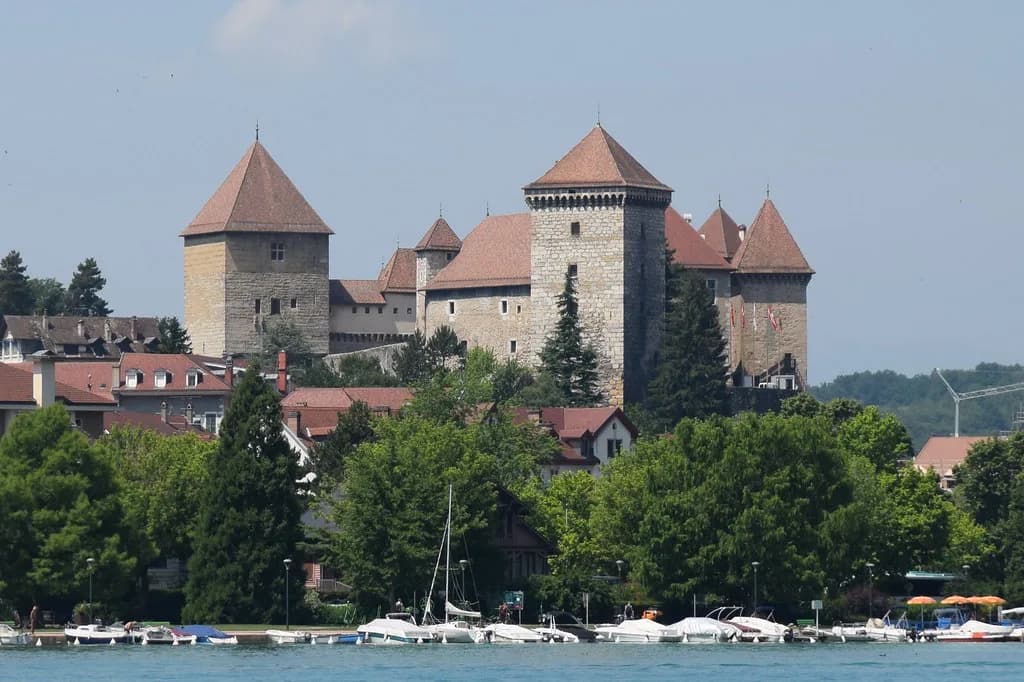
Château d'Annecy: what to see inside the Musée-Château
The Château d'Annecy is a medieval castle above the Vieille ville that has housed the Musée-Château since the 1950s. A visit covers both the building and its collections, and the castle's position gives views over the lake and mountains as well as over the rooftops of the old town. Plan on roughly an hour inside, and check the day of the week before you climb up, because the museum closes on Tuesdays.
What the Château d'Annecy is
The castle was the residence of the counts of Geneva in the 13th and 14th centuries, and later passed to the Genevois-Nemours. Abandoned as a residence in the 17th century, it served as a military barracks until 1947, and the city bought it from the ministry of defence in 1953. The first museum exhibition opened three years later, and the castle has been classed as a monument historique since 1959.
For a short break in Annecy, this is the one sight that combines a medieval building with a museum collection, so it earns a place on a two- or three-day itinerary even if you normally skip museums. The visit is compact rather than exhaustive: the collections are shown through temporary exhibitions and permanent holdings, so what is on display changes over time.
Where it sits and how to get there
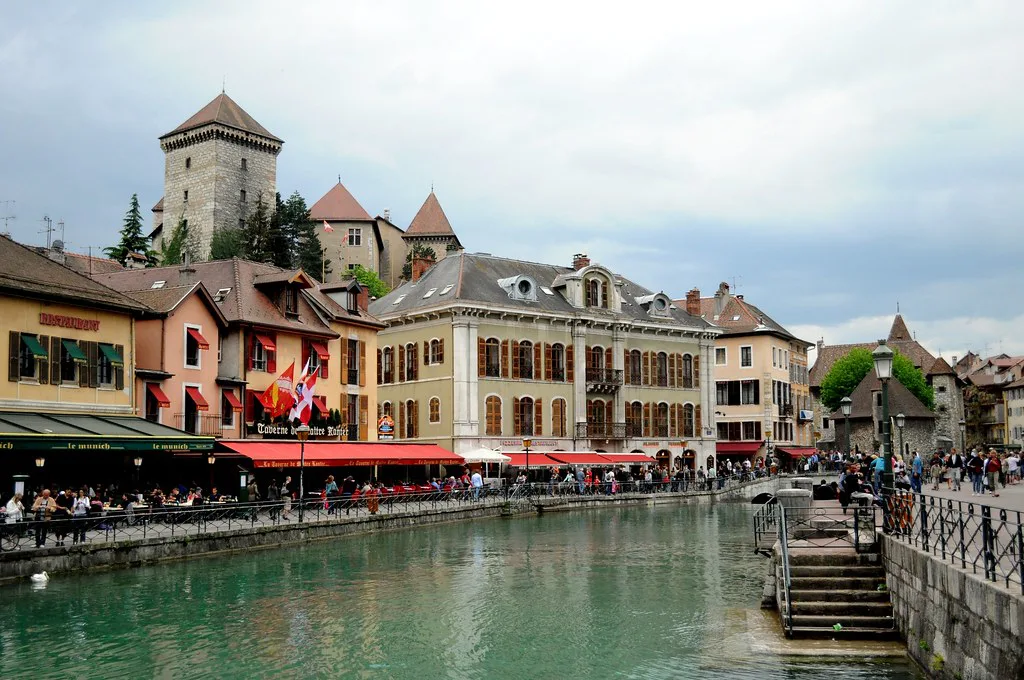
The address is 1 place du Château, in the 74000 code, on the rise above the Vieille ville and its canals. From the old town you walk up through the streets rather than take public transport, and the climb is the main physical effort of the visit. Paid parking is available nearby, which matters if you arrive by car rather than by train.
Treat the walk up as part of the outing: the castle sits in town, with views over the lake and the mountains from its position. If you are building a day around the old town, this is a natural stop between the canals and the waterfront, and the Annecy Attractions: 6 Visitor Guides page lists the other sights you can pair with it.
Opening days and closures
The museum opens every day except Tuesday. It also closes on 1 January, Easter Monday, Ascension Day, 1 May, 8 May, 1 November, 11 November and 25 December. If your weekend in Annecy falls on a Tuesday, move the castle to another day and use Tuesday for the lakeside or the old town instead.
Tickets and free entry
Prices depend on the season. From September to June the full rate is 6.50 euros and the reduced rate 3.50 euros; in July and August it is 7 euros full and 4 euros reduced. Adult groups pay 5 euros per person from September to June and 6 euros in July and August, with the group threshold given as more than five people in the first case and more than ten in the second.
Entry is free for under-12s, press, holders of the Pass'Région card, children accompanied by an adult, and teachers. Payment is accepted by bank card, cheque and cash. If you are visiting with children, the under-12 rule makes the castle a cheap add-on to a day in the old town.
The free first Sunday
Entry is free for everyone on the first Sunday of the month from October to May. That concession does not run through the summer, so a July or August first Sunday is charged at the summer rates. If your trip falls in the free window, go early: a free Sunday is the busiest slot in the castle's week.
What's inside the museum
The collections cover regional heritage, lake archaeology, medieval sculpture, landscape painting, contemporary art and animation film. Temporary exhibitions run alongside them, so a repeat visit a year apart can look quite different. Lake archaeology is the strand most visitors do not expect in a castle, and it ties the museum to the history of the lake below.
The building itself
Look for the named parts of the castle rather than walking through the rooms as a single blur. The Tour de la Reine stands in a dominant position over the castle gate. The old logis in the centre of the main wing shows a great hall evolving over a cellar with columns, and the Logis Perrière marks an important stage of 15th-century construction.
Around 1535 the Logis Nemours brought the French Renaissance style to the castle, the same style developing in the Île-de-France at that moment. That mixture, defensive medieval architecture on one side and Renaissance elegance on the other, is what gives the building its particular look. If you only read one panel, make it the one explaining the successive building campaigns.
How long to allow
Allow about 60 minutes for the visit, which is the castle's own approximate duration. With an hour you can see the collections and the main architectural spaces without rushing. If you have less time, prioritise the building: the Tour de la Reine, the old logis and the Logis Nemours tell the story even on a quick pass.
Guided or self-guided
The museum offers free individual visits as well as guided individual and group tours, and it holds the Musée de France label with a guide-conférencier on the team. A bookshop sells material to take away. Self-guided is the sensible default for a short break; a guided visit makes more sense if you want the architecture explained room by room.
Practical trade-offs
The two things to plan around are the Tuesday closure and the climb from the old town. Neither is a reason to skip the castle, but both shape how you slot it into a weekend. Pair it with a walk through the Vieille Ville afterwards rather than before, so you are heading downhill when your legs are tired.
The Palais de l'Isle is the obvious second museum. It sits on its own island in the canal below the castle, and it opens free of charge for the European Heritage Days, as does the Musée-Château. If you would rather compare old-town sights before committing, our guide to the things to do in Annecy sets the two side by side.
Nearby after your visit
Coming down from the castle puts you back in the old town, a short walk from the canals and the lakefront. The Pont des Amours is a level stroll along the waterfront and makes an easy end to the afternoon.
Shops in the old town set their own hours, so check individual businesses rather than assuming a uniform pattern. The Annecy guide covers how the quarters fit together if you want to plan a full day around the castle, and it also lists the things to do in Annecy beyond the castle walls.
Plan Your Visit
Build the Château d'Annecy into a morning or an afternoon rather than a whole day, and check the calendar for Tuesday before you go. The September-to-June rates make it a modest addition to a city break, and the free first Sunday from October to May is the cheapest way in if your dates line up.
Explore more Annecy guides
Frequently Asked Questions
Is the Château d'Annecy free to visit?
Not generally. Entry is free for under-12s, press, Pass'Région holders, children accompanied by an adult, and teachers. Everyone else pays, except on the first Sunday of the month from October to May, when entry is free for all.
What day is the Château d'Annecy closed?
The museum closes on Tuesdays. It also closes on 1 January, Easter Monday, Ascension Day, 1 May, 8 May, 1 November, 11 November and 25 December.
How long does a visit to the Château d'Annecy take?
Allow about 60 minutes. That is enough to see the collections and the main architectural spaces, including the Tour de la Reine, the old logis and the Logis Nemours.
What is inside the Château d'Annecy museum?
The Musée-Château shows temporary exhibitions alongside collections on regional heritage, lake archaeology, medieval sculpture, landscape painting, contemporary art and animation film.
How much is entry to the Château d'Annecy?
There are two seasonal price bands, September to June and July to August, and both pair a full rate with a reduced rate for those who qualify. The castle publishes the current figures on its ticket page, and several groups, including under-12s and Pass'Région holders, get in free.
Who owns the Château d'Annecy now?
The city of Annecy bought the castle from the ministry of defence in 1953 and opened the museum there three years later.
Can I visit the Château d'Annecy without a guide?
Yes. The museum offers free individual visits as well as guided individual and group tours, so self-guided is the default for most short-break visitors.