
Palais de l'Isle, Annecy: What to See Inside the Old Prisons
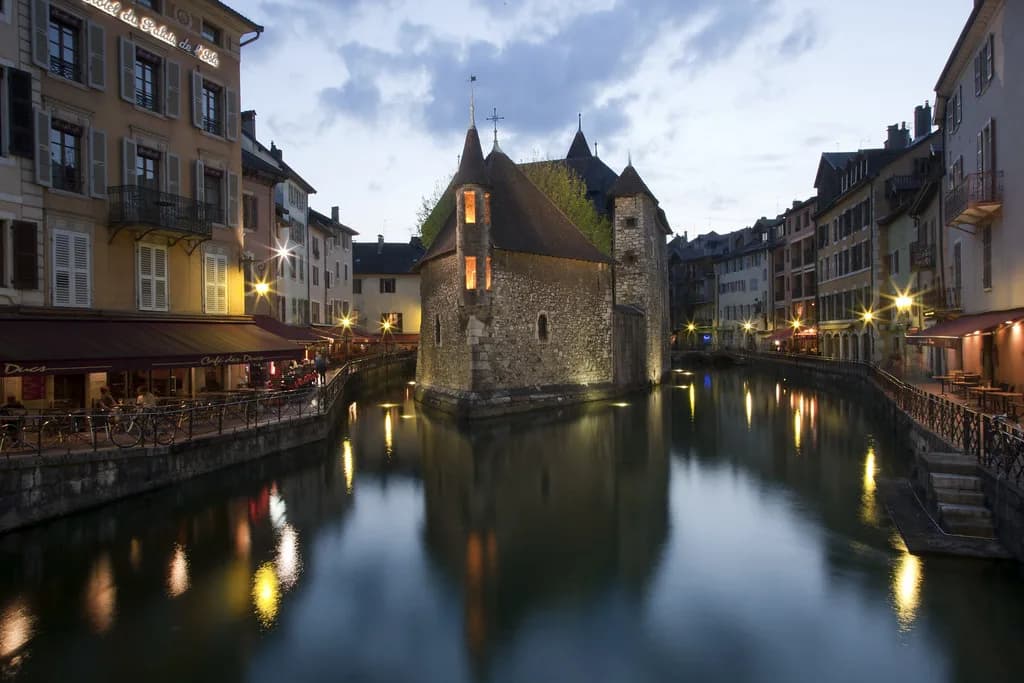
The Palais de l'Isle is a small, fortress-like building on a rocky island in the Thiou, in the middle of Annecy's Vieille Ville, and you can go inside. Its draw is the building itself as much as the displays: a triangular stone hull in the river, medieval cells below and courtrooms above. An hour covers it comfortably, which makes it the easiest cultural stop to slot into a weekend in Annecy.
Think of it as a compact heritage visit rather than a full museum morning. The ticket also covers the heritage interpretation centre with its temporary exhibitions, so you pay once for the cells and whatever is showing. Opening days and prices are fixed by the city, so check the official page before you set out.
What the Palais de l'Isle actually is
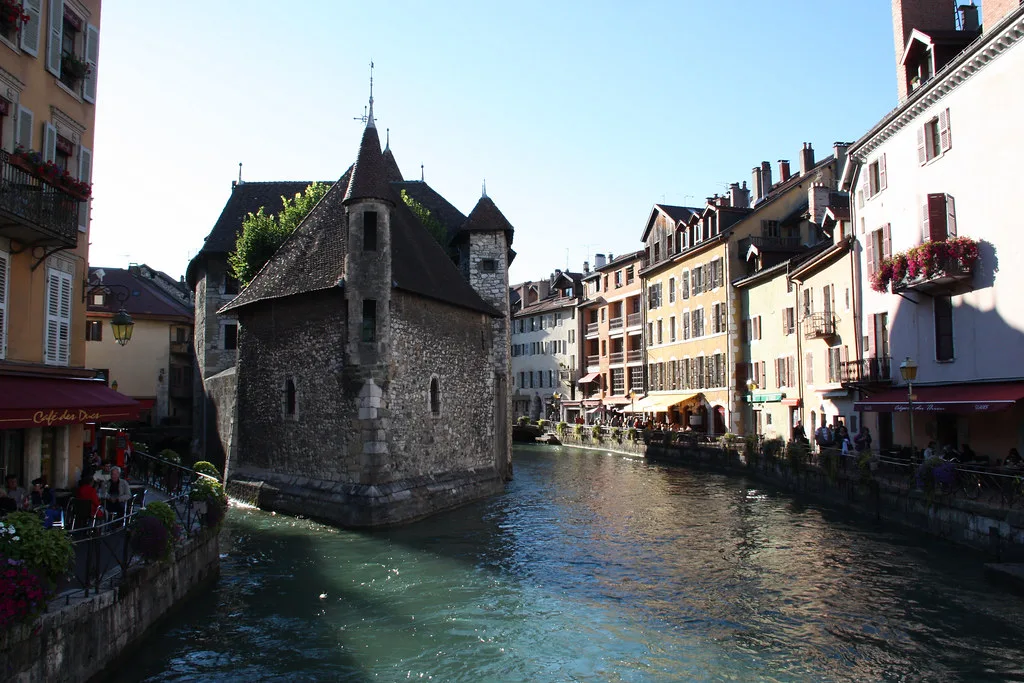
The building sits on a rock in the Thiou, the short river that drains Lake Annecy through the old town, and it is a listed historic monument used as an exhibition and heritage interpretation centre. It is known locally as the old prisons, a name that sticks because the building spent centuries as a jail. The water around it once sat level with the cells, which is the detail that makes the dungeons worth the stairs.
Do not confuse it with the Château d'Annecy up the hill, which is a far larger museum with different collections and its own ticket. The Palais is the quick, atmospheric stop; the Château is the long one. If you only have time for one interior in Annecy, pick according to how much time you have rather than which sounds more famous.
Where it sits and how to reach it on foot
You reach the Palais on foot through the Vieille Ville; its island position in the Thiou means no road runs past the door in the usual way, and the narrow lanes around it are pedestrian territory. From the old town's main squares the walk is short, so treat it as part of a wander rather than a separate trip. Annecy's sights cluster tightly on both sides of the river, and the station quarter is within easy walking distance of the canal-side streets.
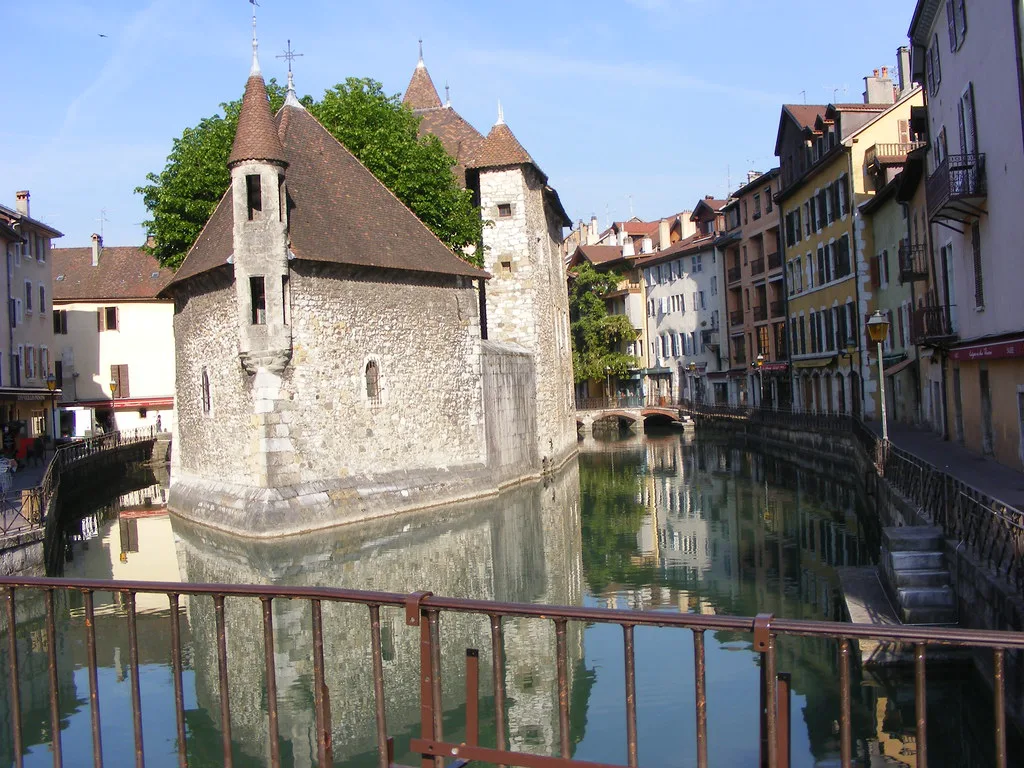
The classic view is from the Pont Perrière, the bridge that frames the building's prow against the water. That is the photograph most people come away with, and it costs nothing. Come here first for the exterior, then walk round to the entrance.
A short history you can hold onto
The building is first mentioned in 1325 as a fortress, and over the following centuries it served as a mint for the counts of Geneva, then a courthouse, and later a prison again until 1864. In the early twentieth century it was used as a stonemasonry drawing school and a gymnasium. By the time it had become uninhabitable the city council considered demolishing it, and it was saved through the intervention of the novelist André Theuriet and the monuments inspector Charles Suisse, leading to its listing on 16 February 1900.
It was rehabilitated between 1983 and 1985 and fully renovated by the city in 2018, which is why the interior reads as clean stonework rather than damp masonry. Keep that timeline in mind when you are inside: what you see is a rescued and restored building, not an untouched medieval ruin. The displays explain the phases of use, which is more interesting than a list of dates suggests.
Inside: cells, chapel and courtrooms
The highlight is the old cells and dungeons, where the interpretation makes plain how grim detention was in a building encircled by water sitting level with the prisoners' floors. You also see the chapel and the courtrooms, both included in the same visit. The route is short but vertical, so expect to climb.
The heritage interpretation centre inside stages temporary exhibitions on architecture and heritage, and they are covered by the entry ticket. That means the visit changes with whatever is on, so the building is worth a second look on a later trip. During the Annecy Paysages festival the site is often used to show contemporary art in the Thiou canal nearby.
Opening hours and the Tuesday closure
It opens daily except Tuesday. From 1 October to 31 May the hours are 10:00 to 12:00 and 14:00 to 17:00, so there is a lunchtime gap to plan around. From 1 June to 30 September it runs continuously from 10:30 to 18:00.
The Tuesday closure is the one to remember when you are arranging a short break, because a Tuesday in Annecy loses this stop entirely. Build the day around the Château museum or the lakeside instead and keep the Palais for another morning. In the winter season the midday break rules out a long lunch if you want the full visit before closing.
Tickets, child rates and the combined ticket
Entry is 3.80 euros, with a reduced child rate of 2 euros and free admission for under-12s. A combined ticket covering both the Château museum and the Palais de l'Isle costs 7.20 euros, and an annual pass is 20 euros.
The combination is worth weighing against your plans. If you plan to visit both interiors, the combined ticket saves money against two separate entries; if you only want the cells and the view, the single ticket is cheaper and the visit is short enough that a second museum on the same day may be too much. Families with young children pay nothing for under-12s either way, but check current prices at the Annecy tourist office before you go.
How long to allow, and the stairs
Budget about an hour. The building is small and the route is quick, but there are numerous staircases, which the city flags as an issue for visitors with reduced mobility. Anyone with a pushchair or a heavy bag will find the circuit awkward rather than impossible, and there is no long level gallery to rest in.
If stairs are a genuine obstacle, the honest trade-off is to enjoy the exterior from the bridge and spend the hour on the flat riverside instead. The canals, quays and gardens along the Thiou give you the same view of the building without the climb, and the lakeside promenades are level walking. Save the interior for another visit or another member of the party.
Nearby after your visit
Right beside the entrance is the Café des Arts, slightly away from the busiest spots, decorated with works by various artists and serving a small selection of quality food and drink. It is the obvious place to sit after the cells if you want a drink without walking far. The surrounding old-town streets hold plenty of restaurants serving Savoyard specialities if you would rather eat properly.
To stretch the walk, follow the Thiou towards the lake, where the Pont des Amours crosses the canal in a leafy setting. It is a short add-on rather than a destination in itself, and it pairs naturally with a loop back through the old town. The area guides break down which quarter you are actually walking through if you want to plan a route.
Who it suits and who can skip it
The Palais suits anyone who wants a genuine piece of Annecy's history in under an hour, especially travellers who would rather see a building than read panels all morning. It is also a sensible rainy-day stop in the old town, and cheap enough that a brief look does not feel like a waste. Children tend to engage with the cells more than with the courtrooms.
Skip it if you are short of time, if stairs are a problem, or if you have already committed to a long morning at the Château, which covers far more ground. The building is at its best seen from the bridge, and that view is free. Decide with your timetable rather than a list of must-sees.
Plan Your Visit
The Palais de l'Isle is a one-hour stop with a strong sense of place: cells below, courtrooms above and a river pressing at the walls. Check the day of the week before you go, since Tuesday closes it, and weigh the 7.20-euro combined ticket against a single entry depending on whether the Château is on your list.
Pair it with the bridge view, the Café des Arts and a flat walk along the Thiou, and you have a solid half-day in the Vieille Ville without rushing. Save the longer museum visit for a morning when you have the energy for it.
Explore more Annecy guides
Frequently Asked Questions
Is the Palais de l'Isle worth visiting in Annecy?
Yes, if you want a short, atmospheric dose of the town's history rather than a full museum. The building is a listed fortress on an island in the Thiou, and an hour covers the medieval cells, the chapel and the courtrooms. If you would rather spend a longer morning indoors, the Château d'Annecy is the bigger choice.
How much does entry to the Palais de l'Isle cost?
The city publishes adult, child and under-12 rates, a combined ticket with the Château museum, and an annual pass on the official Annecy tourism page. Check that page for the current price list before you travel, since rates are set by the city and can change.
Is the Palais de l'Isle open on Tuesdays?
No. It opens daily except Tuesday. From October to May the hours are 10:00 to 12:00 and 14:00 to 17:00, while from June to September it stays open from 10:30 to 18:00. Plan a Tuesday around the Château or the lakeside instead.
How long does a visit to the Palais de l'Isle take?
Allow about an hour. The circuit is compact but vertical, with the cells and dungeons below and the courtrooms and chapel above. Temporary exhibitions in the heritage interpretation centre are included and can stretch the stop if something interests you.
Can you go inside the Palais de l'Isle?
Yes. The building is open as a museum and heritage interpretation centre, and the ticket includes both the historic rooms and the temporary exhibitions. There is a short lunchtime closure in the winter season, so time your arrival around it.
What was the Palais de l'Isle used for?
It is first mentioned in 1325, served as a mint for the counts of Geneva, later as a courthouse, and held prisoners until 1864. It was saved from demolition and listed in 1900, restored in the 1980s and fully renovated by the city in 2018.
Where do you get the best photo of the Palais de l'Isle?
The Pont Perrière, the bridge that frames the building's prow against the water, is the classic shot and costs nothing. Go there first for the exterior, then walk round to the entrance for the visit.
Is the Palais de l'Isle suitable for wheelchair users?
The route involves numerous staircases, which the city identifies as a difficulty for visitors with reduced mobility. If that is a barrier, the bridge and the flat riverside paths give you the exterior and the setting without the climb, and the interior can wait for another visit.