
Vieux Port Antibes: A Visitor's Guide to the Old Harbour
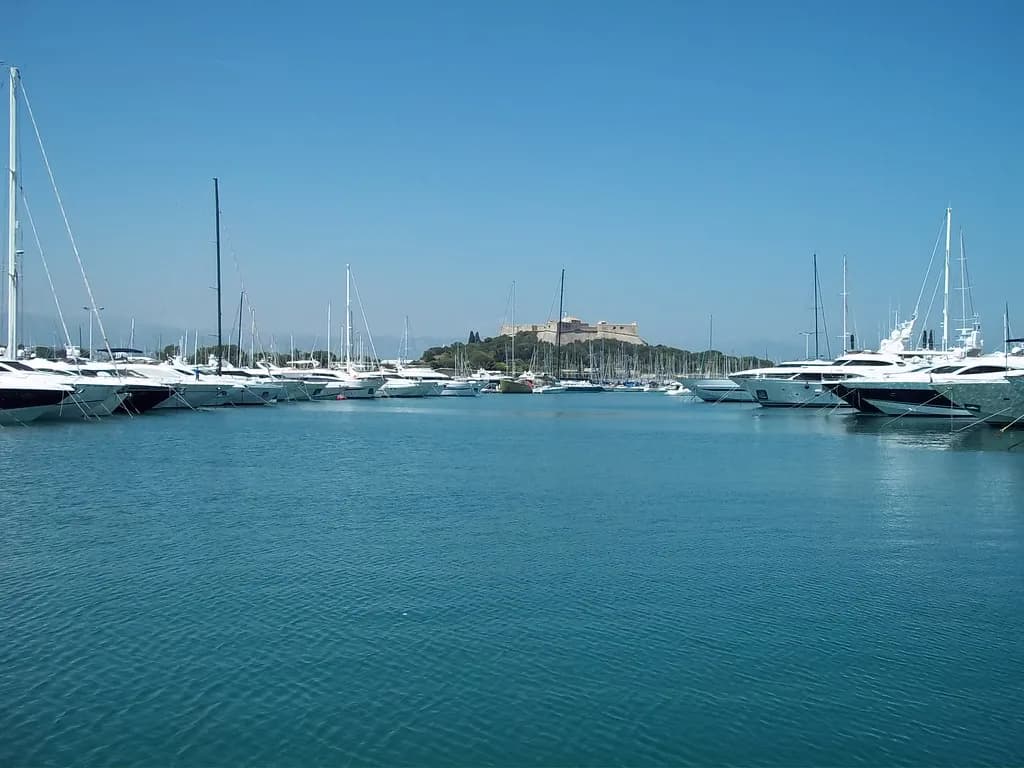
Antibes' Vieux Port is the old harbour tucked directly below the walled town, a free stretch of quays, masts and sea air that costs nothing to walk and needs no ticket. It sits beside Port Vauban, the larger marina, with the Château Grimaldi and its Picasso collection on the ramparts above. Treat it as your orientation point for the day rather than a sight in itself: you can cross it in fifteen minutes, or spend an hour watching the boats.
Where the old harbour sits in Antibes
The Vieux Port lies at the southern edge of the old town, on the sheltered side of the peninsula, with the ramparts rising behind and Port Vauban opening out alongside. The Musée Picasso's address, Promenade Amiral de Grasse in 06600 Antibes, puts it in the heart of the historic centre just south of Port Vauban, so the museum terrace and the quays are minutes apart on foot. Coming from the station, you walk south through the old town and reach the water in roughly twenty minutes.
Arriving by train from Nice or Cannes puts you at Antibes station, with a walk of roughly twenty minutes south through the old town down to the harbour. If you are building a wider weekend, keep this page focused on the port and use the city guide for the rest of the town.
What to see around the harbour edge
Walk the quay in either direction and the harbour gives you two things: the old town walls seen from below and the boats themselves, from small fishing craft to the oversized yachts of the neighbouring marina. The Château Grimaldi stands on the acropolis site above, on ground used since the Greek city of Antipolis, and the terrace looks straight down over the water and the rooftops of the vieille ville.
The museum building itself is a former medieval castle bought by the town in 1925 and turned over to Picasso's work in 1966. Picasso worked there between mid-September and mid-November 1946, leaving 23 paintings and 44 drawings on deposit when he returned to Paris, and the collection now runs to around 245 of his works.
The terrace carries sculptures by Germaine Richier and others, set against the sea, and is the reason many people rate the setting as highly as the paintings. Give the museum about an hour, as the regional tourism board suggests, and expect the harbour views to slow you down on the way out.
Musée Picasso above the harbour: what to plan for
The museum is closed on Mondays and on 1 January, 1 May, 1 November and 25 December, and opens 10:00 to 13:00 then 14:00 to 18:00, with a continuous day from mid-June to mid-September. Those hours matter when you are slotting the harbour into a short break: a Tuesday to Sunday visit works, a Monday one does not. Access includes a wheelchair loan and adaptations for visually and hearing-impaired visitors.
Read the full breakdown of rooms, works and access in the dedicated guide to the Musée Picasso Antibes, then plan the harbour around it rather than the other way round. With the museum closed on Mondays, a Monday in Antibes becomes a quayside and old-town day.
Fort Carré, the harbour's outer defence
Fort Carré guards the approach to Antibes from the north-east and was one of the first Renaissance strongholds built under Henri II, with a rampart walkway 43 metres up and four hectares of Mediterranean gardens around it. The walkway is the payoff: it gives you the harbour, the town and the sea in one sweep.
In 2026 the fort charges a full fare of 5 euros, a reduced rate of 3 euros for students, groups of ten or more, large families and teachers, and a 15 euro multi-site card covering the municipal museums over seven consecutive days. Booking by telephone on +33 (0)4 92 90 52 13 is recommended, and the site closes without notice in bad weather or for security reasons.
Opening days: the Monday problem
Both harbour-side sights shut on Mondays: the fort is closed that day and runs 10:00 to 17:00 from 1 September to 30 June and 10:00 to 18:00 from 1 July to 31 August, with the last visit half an hour before closing. It also closes on 1 January, 1 May, 1 November and 25 December.
The Musée Picasso shares the Monday closure, which leaves the port, the old streets and the market as the Monday plan. Budget roughly an hour for the museum and a further hour for the fort's ramparts if you want both on another day.
Eating near the quays: use the market hall as your anchor
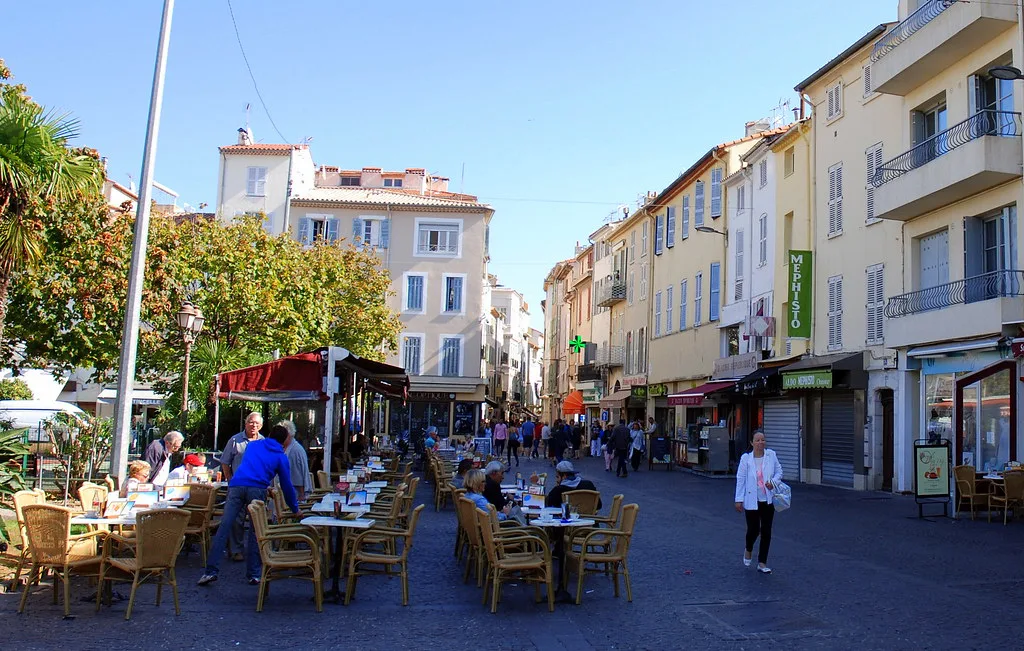
The practical reference point for food near the harbour is the covered hall on cours Masséna, where the Provençal market sets up every morning from 7:30 to 13:00, or 13:45 from 1 June to 31 August, except Mondays from 1 September to 31 May. Come before lunch and you can assemble a picnic from cheese, Corsican produce and cut flowers, then eat it on the quay.
Place De Gaulle and place Jean Aude host stallholder markets on set mornings, and there is a flea market on place Nationale on Thursdays and Saturdays from 7:30 to 18:00. The Marché Provençal, Antibes guide covers the stalls and their rhythms in more detail before you set out.
How long to allow and how to combine the sights
Give the harbour itself half an hour to an hour, the museum an hour and the fort an hour, then add walking time between them. A realistic day is museum in the morning, market lunch, fort in the afternoon, with the quay as the connective tissue between all three. Staying in the old town means you can split the day and come back to the water in the evening.
If you only have half a day, choose one ticketed sight and let the harbour carry the rest. The Vieil Antibes streets behind the quays fill the gap nicely, and the archaeology museum is a short walk if the weather turns.
When to come: morning, midday or evening
Mornings work best: the market is at full pitch until 13:00, the light on the water is clean and the museum queues are shorter at opening. Mid-June to mid-September the museum stays open through the middle of the day, which makes a long lunch by the quay less of a scheduling problem.
Evenings are for the harbour itself rather than the sights, since both the museum and the fort close in the late afternoon. In July and August the craft and night markets run on the Promenade du Soleil at Juan-les-Pins and at Pré-des-Pêcheurs in Antibes from 18:00 to midnight, which gives you a reason to walk the coast after dinner.
Nearby: the Safranier district, the cathedral and the water
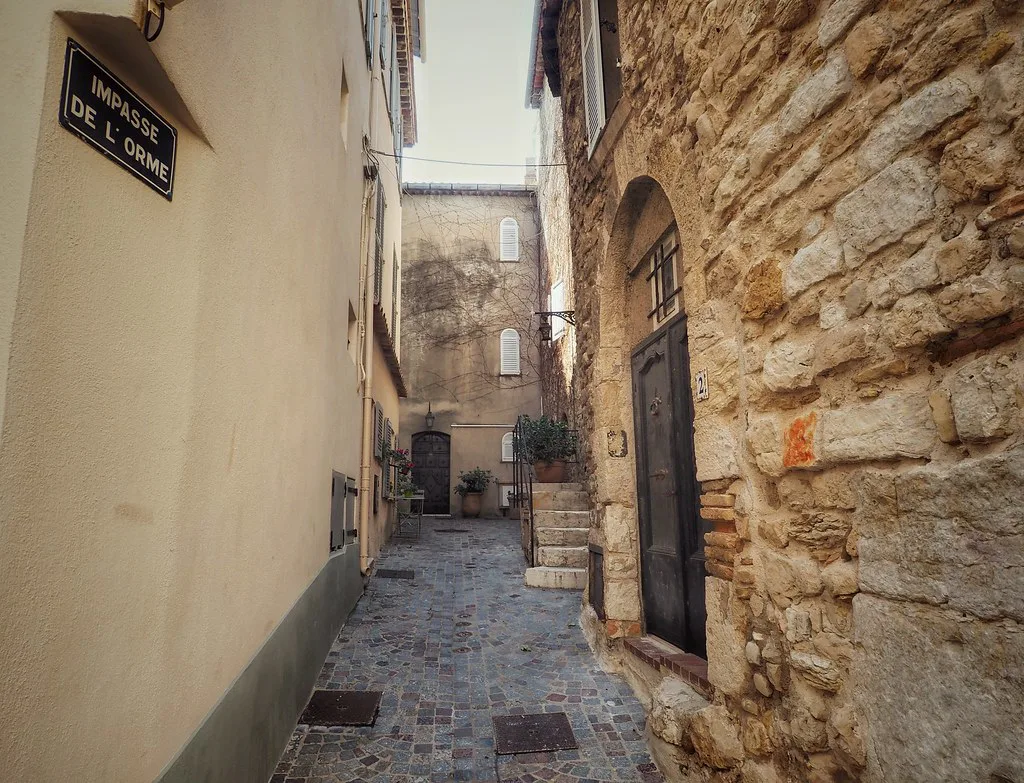
Behind the museum, the Safranier district is the old quarter Picasso knew, with narrow lanes and small galleries, and the Cathédrale Notre-Dame-de-l'Immaculée-Conception d'Antibes sits a few streets inland. Both are five minutes from the quays and worth adding to a harbour walk rather than a separate outing.
For a wider list of what to do in town, from the Musée d'Archéologie Antibes to the beaches at Cap d'Antibes and the Garoupe plateau, the city guide covers the ground.
Practical notes: sun, surfaces and crowds
The quays are flat and paved, easy on the feet, but there is little shade along the water and the stone reflects heat in summer: plan the walk for early or late in the day. The stroll up to the museum and the climb to the fort ramparts are the only real inclines.
Cruise and day-trip traffic concentrates around midday in high season, so the early market slot gives you the harbour at its calmest. Note that the fort closes without warning in poor weather, so a windy or stormy forecast is a reason to put the museum first.
Plan Your Visit
Antibes' Vieux Port is a free, open orientation point rather than a destination in itself, and it works best as the spine of a day built around the Musée Picasso and Fort Carré. Book Tuesday to Sunday, start at the market hall on cours Masséna, and keep Monday for the quays, the old town and the water.
Check the museum and fort timetables and the weather before you travel, since both have fixed closures and the fort can shut at short notice. With those confirmed, the harbour needs nothing but a pair of shoes and an hour to spare.
Frequently Asked Questions
Is the Vieux Port in Antibes free to visit?
Yes. The harbour is an open quayside with no ticket and no gate, so you can walk it at any hour. The two sights above and beside it, the Musée Picasso and Fort Carré, are separate visits with their own entry arrangements; check the tourist office pages for those before you go.
How long do you need at the old port of Antibes?
Allow half an hour to an hour to walk the quays and take in the view back up to the ramparts. If you add the Musée Picasso, set aside about an hour inside, and roughly a further hour for the Fort Carré rampart walk. A full day covers all three without rushing.
When is the Musée Picasso in Antibes closed?
It closes on Mondays, plus 1 January, 1 May, 1 November and 25 December. On other days it opens in the morning, breaks for lunch outside high summer, and reopens in the afternoon; from mid-June to mid-September it stays open through the middle of the day.
How much does Fort Carré cost?
The tourist office lists 2026 rates: a full fare, a reduced rate for students, groups, large families and teachers, and a multi-site card covering the municipal museums over seven consecutive days. Booking by telephone is recommended, and the fort shuts without notice in bad weather.
What day should I avoid for the harbour sights?
Monday. Both the Musée Picasso and Fort Carré close that day, so the harbour, the old streets and the market hall become the plan. From Tuesday to Sunday you can pair the quays with one or both sights.