
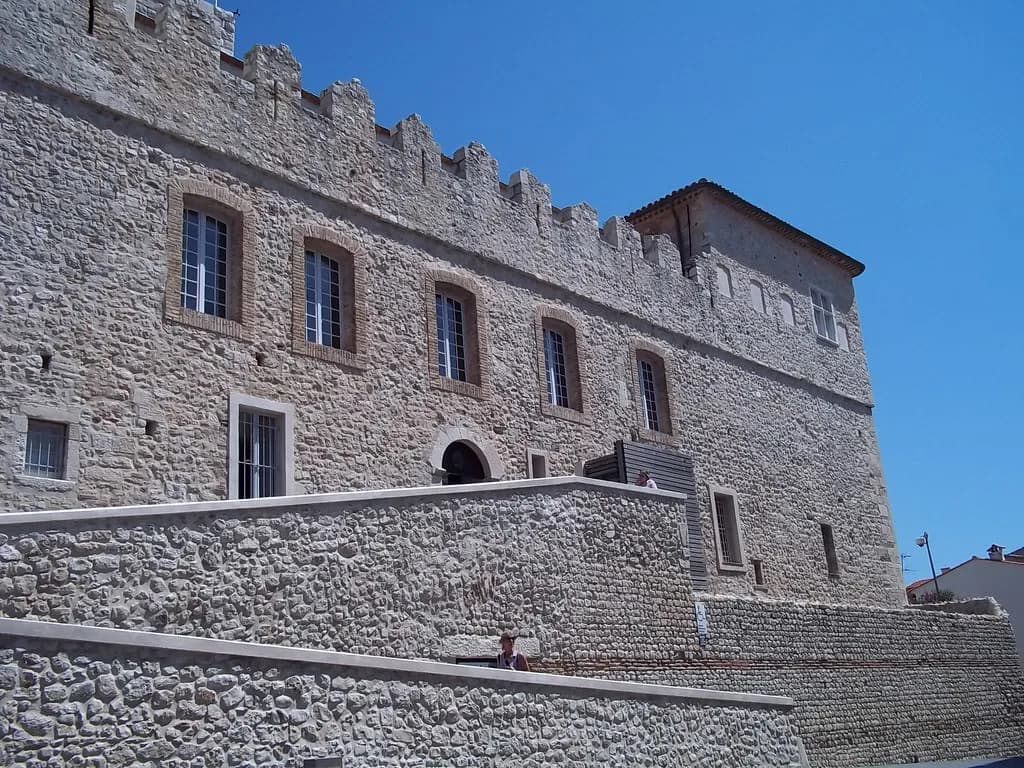
Musée Picasso Antibes: A Visitor's Guide to Château Grimaldi
The Musée Picasso Antibes occupies the Château Grimaldi, a classified medieval fortress on the headland above Antibes old town, and holds roughly 245 works by Picasso. It is the place to go if you want the painter's own Antibes output — the pictures he made in these rooms in 1946 — rather than a general survey of his career. Plan on about an hour inside, and treat the château's terrace and the lanes below as part of the outing.
What the Musée Picasso Antibes is
Pablo Picasso was given the chance to install his studio in the Château Grimaldi in 1946, when the curator Romuald Dor de la Souchère offered him the use of the rooms. Between mid-September and mid-November that year he produced a body of work there, including Les clés d'Antibes. When he returned to Paris he left 23 paintings and 44 drawings on deposit, and that deposit is the reason the collection exists.
The city bought the château in 1925 to turn it into a museum, and in 1966 the building was formally dedicated to Picasso. The museum's holdings have since grown through gifts, purchases and the 1991 dation by Jacqueline Picasso, which settled inheritance tax with works of art. A visit therefore reads as a collection built around one autumn of production, then enlarged for decades afterwards.
Where it is in Antibes
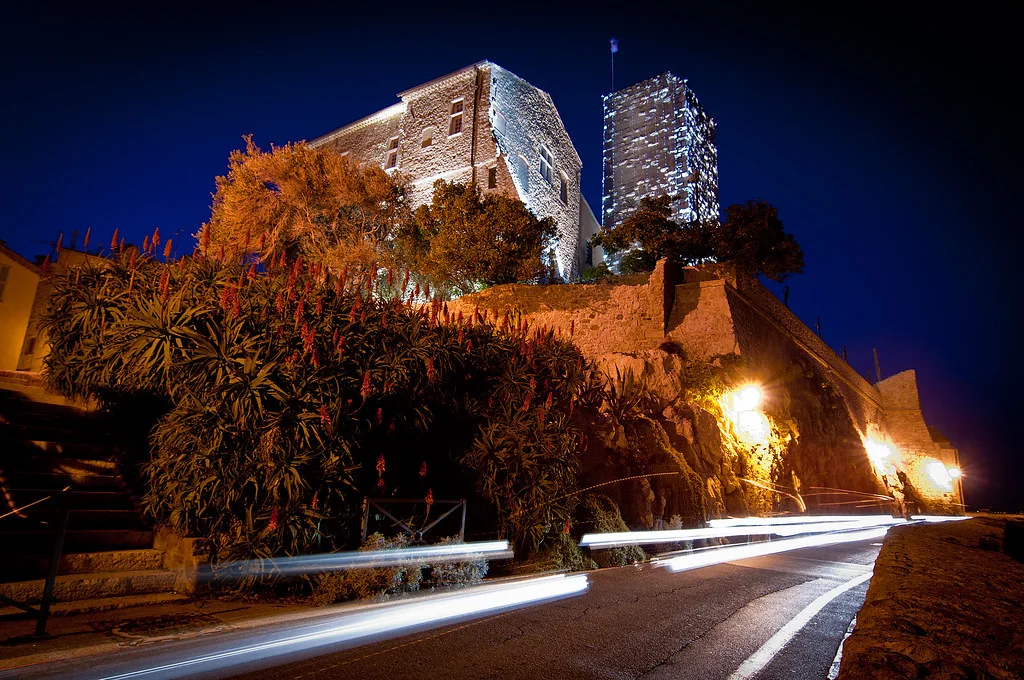
The museum address is Promenade Amiral de Grasse, 06600 Antibes, in the heart of the historic centre and just south of Port Vauban. The château stands on the acropolis of ancient Antipolis, the Greek city that preceded Antibes, with a Roman castrum on the same rock and the bishops of Antibes resident here in the Middle Ages before the Grimaldi family of Monaco took it on.
Because it sits inside the old town, the museum is best approached on foot through the streets rather than by car. Arrive from the port side and you climb gently through the lanes to the château; the reward is the position, roughly twenty metres above the water, looking back over the bay and the rooftops. Read the museum as the hinge of an Antibes day rather than a detour from it, alongside the wider set of Antilles-side sights covered in the Antipolis Attractions: 6 Visitor Guides.
Getting there and walking in
Antibes is served by its own station on the coastal line between Cannes and Nice, and the old town and port are a short walk downhill from there. From the port, head for the Promenade Amiral de Grasse and follow the walls up to the château entrance. Driving into the old town is a poor idea: the lanes are narrow and parking sits outside the historic centre, so leave the car and walk in.
The climb is short but real, and the approach through the Safranier district and the market streets adds ten or fifteen minutes to the outing in the best way. If you are building a full day, the Marché Provençal Antibes and the harbour front sit naturally before or after the museum.
The building itself
The Château Grimaldi is a classified monument historique, and the structure is half the visit. It served as an episcopal residence, then passed to the Grimaldi family, and was bought by the city in 1925; a restoration campaign between 2006 and 2008 returned much of its original appearance. Look for the traces of the older layers as you move between rooms, including the Roman castrum foundations that Picasso's signature is said to mark.
Picasso's Antibes period
Picasso had been a fixture on the Côte d'Azur since before the war, and in Antibes he worked under the influence of the light and the coastline. The Antibes pictures are characterised by their Mediterranean palette and by experiments with whatever was to hand — cardboard, driftwood, painted walls. That improvisation is what makes this collection feel local rather than ceremonial.
In 1957 the town made him a citoyen d'honneur, and he kept returning to the coast for the rest of his life, eventually settling at Mougins, where he died in 1973. Keep that wider arc as background only: the museum in Antibes is about the 1946 stay and what it left behind.
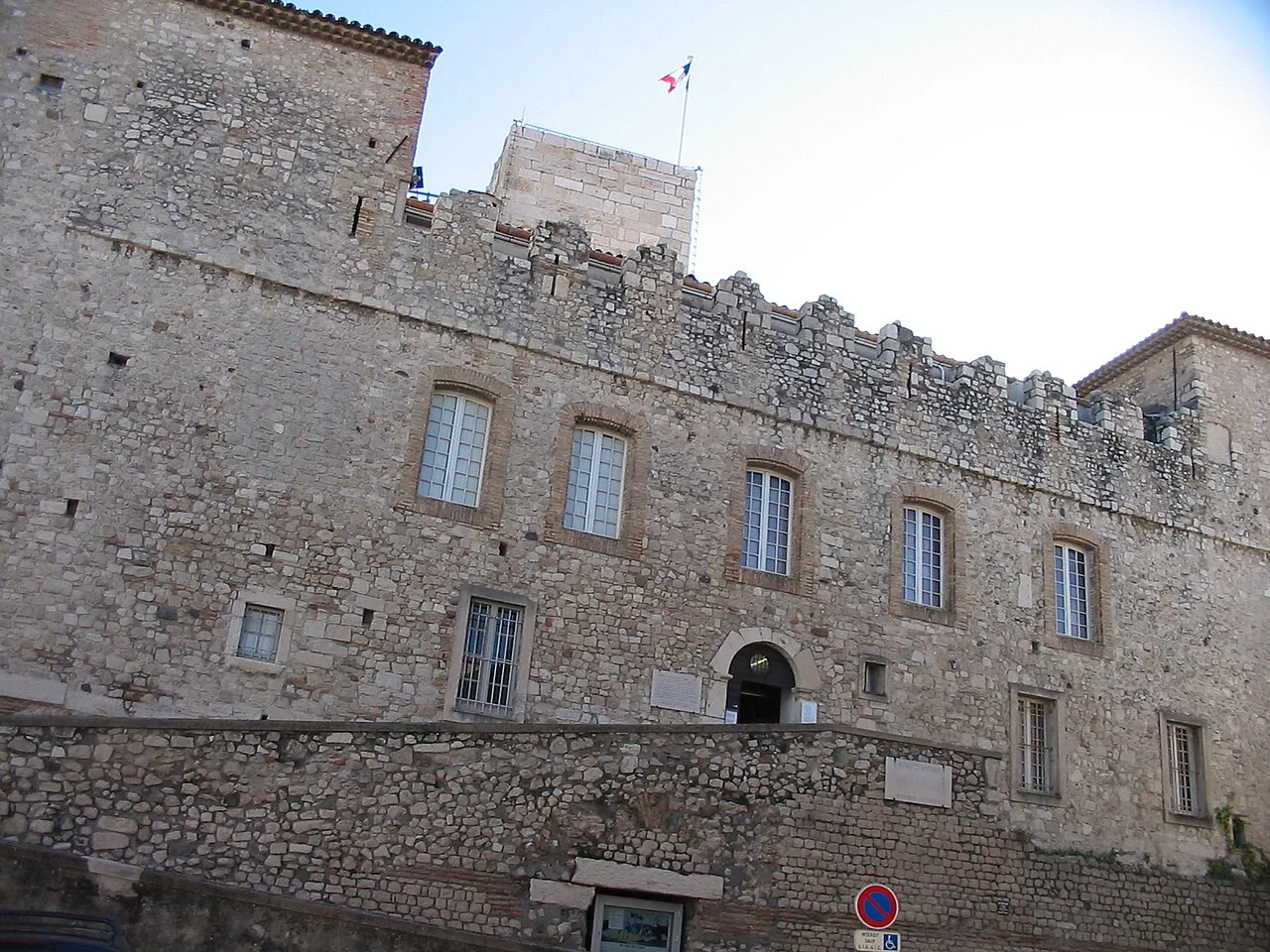

What to see inside
The Picasso core runs to around 245 works, and the named pieces give you a route through it: La Joie de vivre, Satyre, faune et centaure au trident, Nature morte à la chouette et aux trois oursins, La Femme aux oursins and La Chèvre. Give the first rooms your full attention and let the smaller drawings carry you through the rest; an hour is realistic if you are selective.
Picasso's works are shown alongside a modern art collection begun in 1951 by Dor de la Souchère, with pieces by Fernand Léger, Nicolas de Staël, Joan Miró, Germaine Richier and others. This is the part most visitors rush, and it is worth twenty minutes: the contrast between the Picassos and the artists around him is the argument the museum is making.
The terrace and the view
The château terrace functions as an open-air sculpture gallery, with works by Germaine Richier, Joan Miró, Bernard Pagès and Anne and Patrick Poirier set against the bay. It is the most photographed part of the museum and the reason to slow down at the end rather than hurry out. Come back to it after the rooms rather than before, so the collection lands first.
From the terrace the view runs across the old town rooftops to the Mediterranean, with the harbour and the ramparts in the foreground. Photographs work best in softer light; the terrace is exposed, so a hat in summer matters. This is also the moment to look down at the town and decide where to walk next.
Opening hours and closures
The museum is closed on Mondays and on 1 January, 1 May, 1 November and 25 December. Standard hours are 10:00 to 13:00 and 14:00 to 18:00, becoming continuous from mid-June to mid-September. Build the midday break into your day outside high summer: arrive for the morning slot, then take lunch in the old town before returning.
Opening arrangements can change, so confirm the day and hours on the museum's own site before you travel. If your weekend falls on a Monday, put the museum on the Saturday or Sunday and use Monday for the town's outdoor sights instead.
Tickets and booking
Tickets are bought for a timed visit to a small château, so queues form at busy periods even when entry is straightforward. Check the current entry price, concessions and any booking requirement directly with the museum before your trip, since these change with the season. Whatever the ticket costs, budget for an hour inside and no more.
Accessibility
The museum lends wheelchairs and is adapted for visitors with visual and hearing impairments. The building is a medieval château on a hill, so some floors and thresholds are uneven even with adaptations in place. Ask at reception when you arrive about the route through the rooms if mobility is a concern.
How long to allow
The official guidance is about one hour for the visit. In practice, the terrace, the modern collection and the walk through the old town stretch that to a half-day outing. Treat the hour as the floor, not the ceiling, and leave room for the streets around the château.
If you are short of time, do the Picasso rooms and the terrace and skip the modern collection; if you have a full afternoon, pair the museum with the cathedral and the market streets. Either way, the museum works best as the anchor of an old-town wander rather than a stand-alone appointment.
Trade-offs and what to expect
This is a small museum in a hilltop château, not a blockbuster gallery: a handful of rooms, a terrace and a view. If you want an encyclopaedic Picasso survey, you will leave wanting more; if you want the Antibes chapter in the place where it happened, it delivers. Set expectations accordingly and it will be the highlight of your day.
The climb, the small rooms and the summer crowds are the costs of the position. Go early in the day outside high season, and accept that the museum is one component of an Antibes visit rather than its whole purpose.
Nearby after your visit
The Safranier district of old Antibes, with its painted walls and narrow lanes, begins just below the château and rewards a slow walk back towards the port. The ramparts and the harbour front are minutes away, and the Musée d'Archéologie Antibes is close if you want the deeper history of Antipolis after the château.
For a longer day, the Fort Carré, Antibes sits across the port and gives a contrasting military view of the same coastline. Combining the two makes a coherent half-day on foot without needing a car, and if you later push along the coast, the things to do in Cannes make an easy next stop on the same rail line.
Plan Your Visit
The Musée Picasso Antibes is a one-hour museum in a building worth an hour on its own, set above the port and the old town. Go on a Tuesday to Sunday, arrive in the morning outside high summer, and let the terrace and the lanes below fill the rest of the outing.
Frequently Asked Questions
What paintings are in the Picasso Museum Antibes?
The collection holds around 245 Picasso works, including La Joie de vivre, Satyre, faune et centaure au trident, Nature morte à la chouette et aux trois oursins, La Femme aux oursins and La Chèvre. These sit alongside a modern art collection begun in 1951 with works by Fernand Léger, Nicolas de Staël, Joan Miró and Germaine Richier.
How long does the Picasso Museum in Antibes take to visit?
Allow about one hour inside, which is the official guidance. The terrace, the modern art rooms and the walk through the old town usually stretch this into a half-day outing.
Is the Musée Picasso Antibes closed on Mondays?
Yes. The museum is closed on Mondays and on 1 January, 1 May, 1 November and 25 December. Standard hours are 10:00 to 13:00 and 14:00 to 18:00, with continuous opening from mid-June to mid-September.
Where in Antibes is the Picasso Museum?
It is at Promenade Amiral de Grasse, 06600 Antibes, inside the Château Grimaldi in the historic centre and just south of Port Vauban. It is best reached on foot through the old town rather than by car.
What else is there to see at the Château Grimaldi besides Picasso?
The modern art collection begun in 1951, with works by Léger, de Staël, Miró and Richier, and the terrace sculpture by Richier, Miró, Bernard Pagès and Anne and Patrick Poirier. The château itself is a classified monument with Roman and medieval layers.
Do you need to book Musée Picasso Antibes tickets in advance?
Check the current price, concessions and any booking requirement with the museum before you travel, as these change with the season. Queues can form at busy periods even when entry is straightforward.
Is the Picasso Museum in Antibes accessible for wheelchair users?
The museum lends wheelchairs and is adapted for visitors with visual and hearing impairments. The building is a medieval château on a hill with uneven floors, so ask at reception about the route through the rooms.
What is the history of the Picasso Museum Antibes?
The city bought the Château Grimaldi in 1925. In 1946 Picasso was invited to use it as a studio and left 23 paintings and 44 drawings on deposit, and in 1966 the building was formally dedicated to him as the Musée Picasso.