
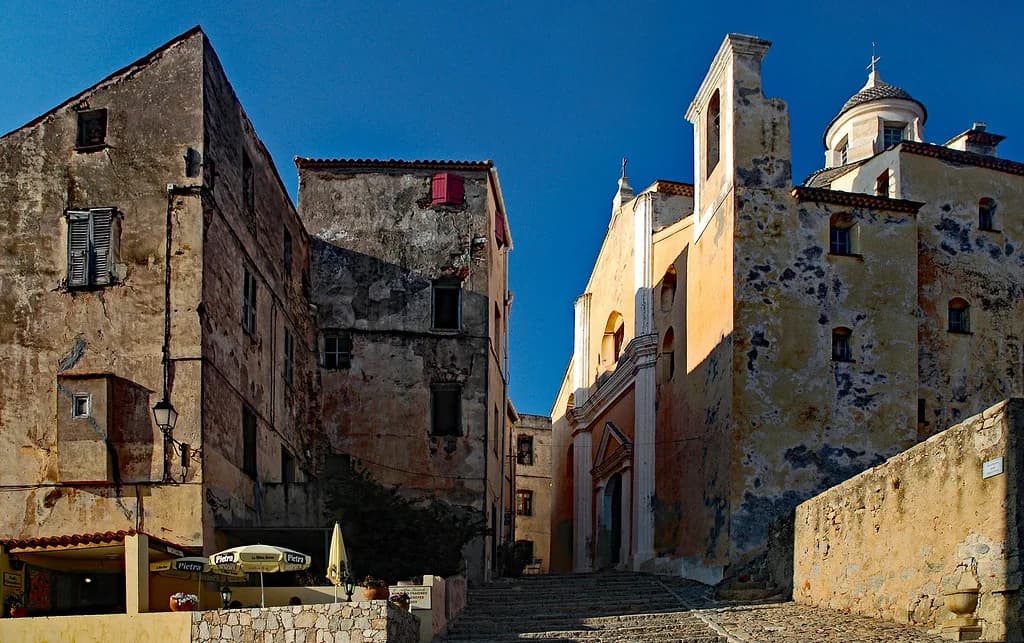
Calvi Cathedral (Cathédrale Saint-Jean-Baptiste): A Visitor's Guide
Calvi Cathedral, the Cathédrale Saint-Jean-Baptiste, is the Baroque church at the heart of Calvi's Haute-Ville citadel, and entry is free. It takes about 20 minutes if you want a quick look, or 45 minutes to an hour if you work slowly through the altarpieces, the Black Christ and the pulpit.
The building is a working piece of Corsican Baroque rather than a museum set piece: a Greek cross under an octagonal dome, crowded with marble altars and gilded wood. It belongs on any short list of things to do in Calvi, and it slots naturally into an hour in the citadel.
What Calvi Cathedral is and where it sits in the Haute-Ville citadel
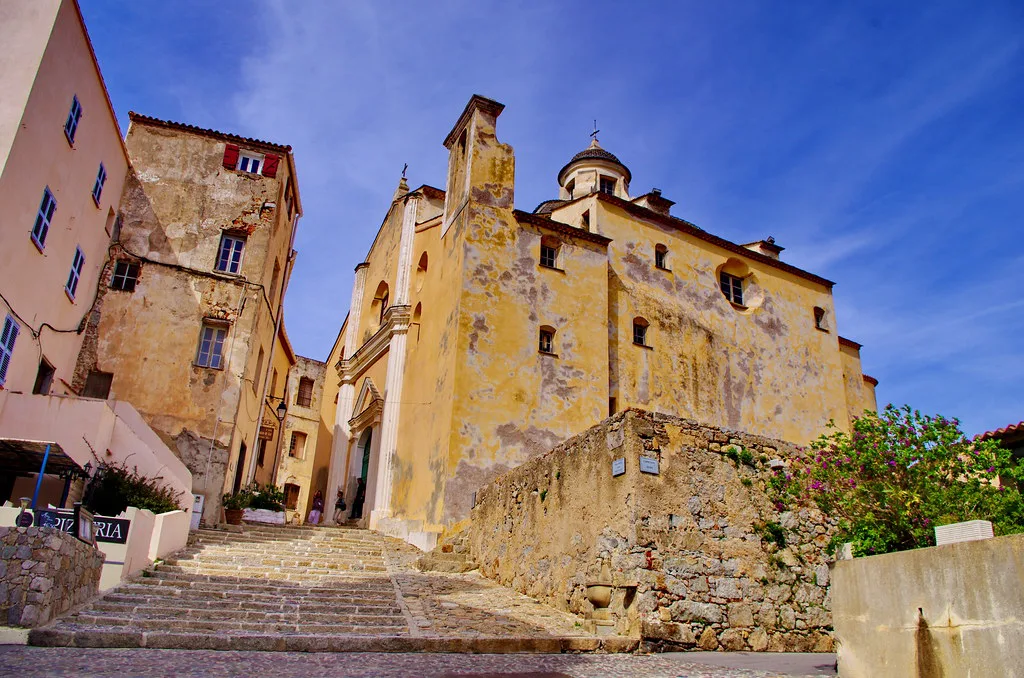
The cathedral stands in the Haute-Ville, the walled upper town that rises above the harbour. It is the focal church of the citadel, founded at the end of the 13th century and rebuilt and enlarged repeatedly up to the 18th century — the reason its plan and decoration read as a layered history rather than a single campaign.
It was dedicated to Saint John the Baptist in 1528 and raised to cathedral rank by Pope Gregory XIII in 1576. Treat it as the anchor of a citadel walk: arrive here first, then let the lanes and ramparts fill the rest of the morning.
How to reach the cathedral and the walk up into the citadel
From the lower town and Calvi Marina (Port Xavier Colonna) you walk up through the citadel gate and climb the lanes to the church. Allow 10 to 15 minutes from the port at an easy pace; the ascent is short but steady, and the cobbles are uneven enough to make proper shoes worthwhile.
The tourist office lists the cathedral as open all year round, daily, without publishing specific times. If you are making a special trip, confirm that day's access with the tourist office before climbing up, since a short closure would otherwise cost you the walk.
The building itself: Greek-cross plan and octagonal dome
Look up first. The interior is centred on a Greek cross capped by an octagonal dome, so the space gathers you in the middle rather than pointing you down a long nave. That compact plan is what makes the church feel different from a standard Corsican parish church, and it also means you can see most of the furnishings from a single spot.
Walk the four arms of the cross in turn. The best works sit in the side chapels and around the choir, so a slow circuit beats standing at the back, and the small scale of the building rewards it.
The Barbagelata altarpiece of 1498 and the Annunciation
The standout work is a signed altarpiece by Barbagelata, dated 1498, showing the Annunciation surrounded by saints, with scenes from the life of the Virgin along the predella. Find it early in your visit: the painted panels set the tone for the polychrome marble and gilded wood that follow, and the predella is easy to miss if you only look at the main panel.
Give the altarpiece five minutes rather than one. The saints flanking the Annunciation and the small narrative scenes below are where the detail lies, and they are the reason an art-focused visit here runs closer to an hour than to 20 minutes.
The high altar and the Rosary Altar with the Virgin of the Rosary
The high altar is polychrome marble in the Ligurian Renaissance manner, donated by a Calvaise family in the 17th century. To its left, the Rosary Altar, also in polychrome marble, holds the processional statue of the Virgin of the Rosary, which came from Spain in the 16th century and remains an object of strong local devotion.
The marble work is the point here as much as the statues. Look at how the coloured stone is cut and matched across the altar fronts; that craft is the thread running from the high altar to the chapels around it.
The Black Christ of Miracles and the 1569 baptistery
Opposite the Rosary Altar, a stucco lustro altar displays the Black Christ of Miracles, a painted wooden figure in Florentine style wearing an embossed silver perizonium. Its cult is tied to the lifting of the siege of 1555, which gives the figure a civic as well as a religious weight.
Nearby, the marble baptistery was donated by Giovan Antonio Vincentello in 1569, a piece that records the wealth Calvi's expatriates brought home from the New World. The two works sit close together, so pair them in the same pause rather than treating them as separate stops.
The 1757 gilded wood pulpit
The pulpit is gilded wood, dated 1757, and it completes the run of Baroque furnishings. It is often the last thing visitors notice on the way out, so turn back before you leave the nave to give it a proper look.
With the pulpit, the altarpiece and the Black Christ covered, you have seen the building's four essentials. Anything beyond that is repetition, which is a useful signal to move on into the rest of the citadel.
How much time to allow and when to go
A quick look takes 20 minutes: dome, altarpiece, high altar, Black Christ, pulpit. An art-focused visit with the Baptistery and the Rosary statue properly read runs to 45 minutes to an hour, which is still modest for a building this dense.
Because the church is open daily throughout the year, the more useful choice is time of day. The Haute-Ville is at its calmest early, before the cruise and beach crowds come up from the port, and the interior is small enough that a handful of other visitors changes the atmosphere.
Is entry free and do you need to book
Admission is free, and there is no indication that booking is needed. You simply walk in during opening hours; groups and guided visits are a different matter and are arranged through the numbers listed by the tourist office.
Mass times are not published in the sources available here, so do not build your day around one. Ask at the tourist office or the presbytery if attending a service matters to you, and go with the knowledge that the building itself is the reliable part of the plan.
What else is close by in the citadel
The cathedral is one stop in a compact walled quarter. The citadel's lanes, ramparts and viewpoint over the bay are within a couple of minutes' walk, so plan the church as part of a single loop rather than a separate trip.
Above the town, Notre-Dame de la Serra, Calvi sits on the hillside and is reached on foot from the lower town; it pairs well with the cathedral for anyone prepared to walk further for the view back over the bay.
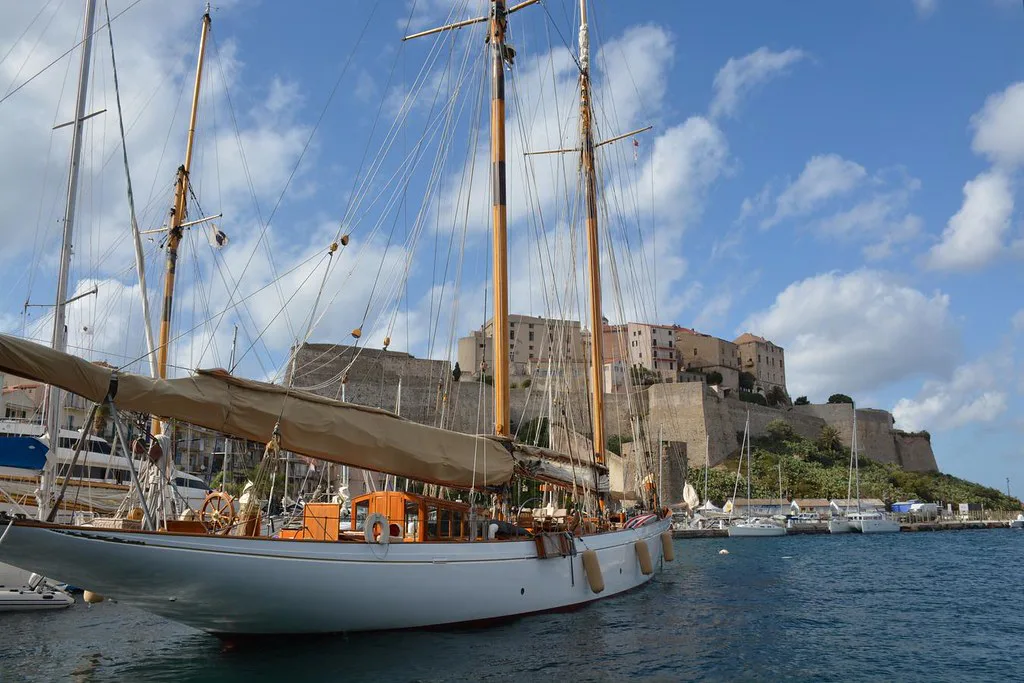
The harbour below is the natural end point: Calvi Marina (Port Xavier Colonna) has the waterfront cafés and the quay walk, and it is where you will likely have started. A cathedral visit plus the citadel and a slow descent to the port fills a comfortable morning.
Practical points before you set off
Pets are not accepted inside, and the tourist office lists a defibrillator on site and parking nearby. The building is a place of worship, so dress and behave accordingly, and keep voices low when others are praying.
The walk up is on cobbles and short flights of steps, so footwear matters more than on a flat city break. Carry water in summer; the citadel offers little shade on the approach.
If your Corsica trip also takes in Ajaccio or the mainland coast, the same Baroque church-going applies elsewhere: Ajaccio Cathedral and Antibes Cathedral both reward a short, focused stop of the kind described here.
Plan Your Visit
Calvi Cathedral is a free, compact, daily-open stop that earns 20 minutes from anyone and an hour from anyone interested in religious art. Go up early, see the altarpiece, the high altar, the Black Christ and the pulpit, then let the citadel lanes take the rest of the morning.
Pair it with the ramparts and the harbour below for a half-day that needs no tickets and no bookings. Check the day's opening with the tourist office if the church is the reason for your walk up.
Frequently Asked Questions
Is Calvi Cathedral free to enter?
Yes. The Balagne tourist office lists access as free, so there is no ticket to buy at the door. Guided visits and groups are handled separately through the tourist office.
What can you see inside Calvi Cathedral?
The highlights are the Barbagelata altarpiece of 1498 showing the Annunciation, the polychrome marble high altar, the Rosary Altar with the Virgin of the Rosary, the Black Christ of Miracles, the 1569 marble baptistery and the gilded wood pulpit dated 1757. The interior is a Greek cross under an octagonal dome, so most of these are visible from the centre.
How long does a visit to Calvi Cathedral take?
Allow 20 minutes for a quick look at the dome, altarpiece, high altar, Black Christ and pulpit. If you want to study the Baptistery and the Rosary statue properly, plan on 45 minutes to an hour.
Where is Calvi Cathedral in the citadel?
It stands in the Haute-Ville, the walled upper town above the harbour, and is the focal church of the citadel. From Calvi Marina (Port Xavier Colonna) the walk up through the citadel gate takes about 10 to 15 minutes at an easy pace.
When was Calvi Cathedral built?
The church was founded at the end of the 13th century and was destroyed and enlarged several times up to the 18th century. It was dedicated to Saint John the Baptist in 1528 and erected as a cathedral by Gregory XIII in 1576.