
Place de Jaude: Clermont-Ferrand's Central Square

Place de Jaude is the central square of Clermont-Ferrand, in the Puy-de-Dôme, and the natural starting point for a short break in the city. It is ringed by monuments from several centuries, crossed by the tram, and free to walk through at any hour of any day. Treat it as a square to read rather than a single sight to tick off, and you get far more out of it.
The tourist office describes it as the epicentre of the city, lined with buildings from different periods, and notes the square is open every day throughout the year and free to enter. That makes it an easy anchor for a morning or afternoon, whether or not you have a plan for the rest of the day.
What Place de Jaude Is
Place de Jaude is not a single monument but a square whose edges do the work. The tourist office describes it as bordered by monuments from different periods, with a church, a theatre, department stores and two statues all facing the open central space. Walk the perimeter first, then stand back in the middle, and the square's layering becomes obvious.
In practice it is a busy, working square with shops and passing traffic rather than a hushed heritage set piece. That is the trade-off: you come for the buildings around the edge and the city life in the middle, not for quiet contemplation. It repays twenty minutes of deliberate looking far more than a quick photo stop.
Where It Sits and How to Reach It
The square sits in the centre of Clermont-Ferrand, an easy reference point for the whole city. The tourist office lists a tram stop called Jaude on line A, plus a c-vélo bike station on the square, so you can arrive by tram or pick up a bike without crossing town on foot.
If you are driving, the square has parking including paid and underground options, so it works as a base for a few hours in the centre. Parking in a central square is rarely the cheapest way to start a day, but it is the simplest. For a wider view of how the sights fit together, the guide to Clermont-Ferrand attractions maps out the main stops.
The Statues: Desaix and Vercingétorix
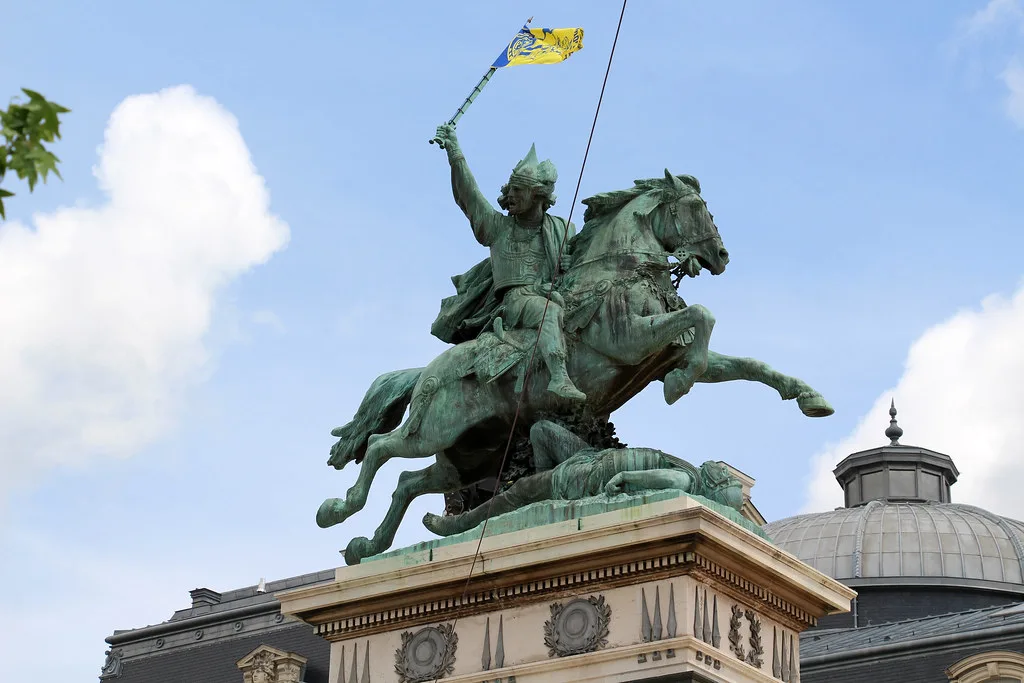
Two statues stand on the square: General Desaix, by Nanteuil, and Vercingétorix, by Bartholdi. The pairing sets a military republican hero alongside the Arverni leader associated with the Auvergne, which gives the square a political as well as a decorative charge. Look at them as a pair rather than as incidental ornament.
The Vercingétorix is the one most visitors stop for, and it is worth circling to see how the figure is posed against the square behind it. There is no charge and no queue; the statues are simply there, part of the open square, at any time you pass.
The Buildings Around the Edge
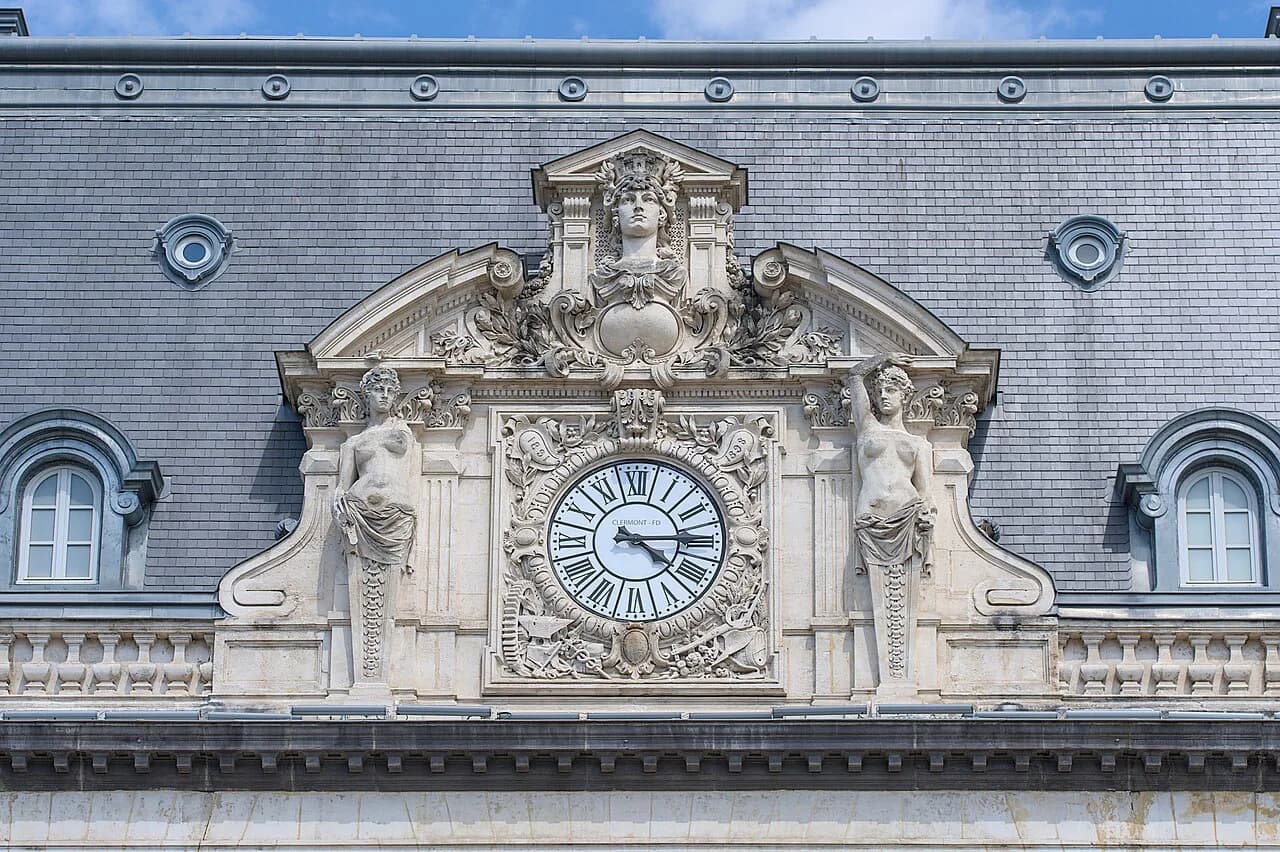
The church of Saint-Pierre-des-Minimes was built in the 17th century in Jesuit style and crowned with a dome in the 19th, which is why it reads as two periods in one façade. The theatre also dates from the 19th century and was built on the site of a former cloth market, a detail that ties the square back to its commercial past.
The department stores known as the galeries de Jaude date from the early 20th century and were modelled on famous Parisian examples. That makes the square a compact lesson in how a French provincial city imported metropolitan retail architecture. You do not need to shop to appreciate them; look at the façades above the ground floor.
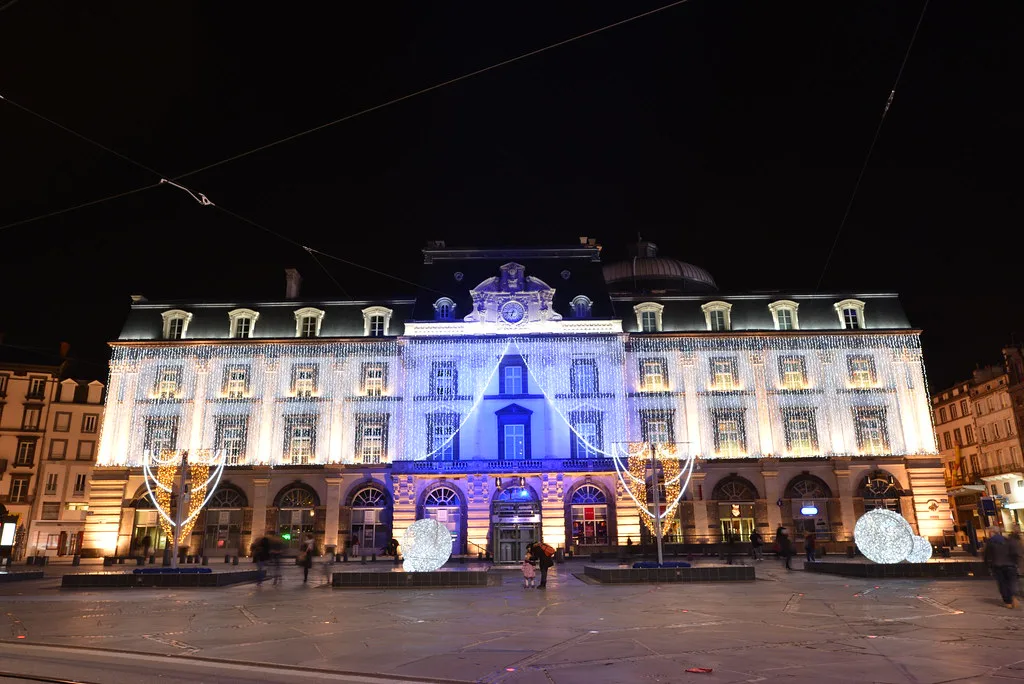
The Opéra-Théâtre is the other named landmark on the square, a 19th-century building on the site of the old cloth market. Programming changes through the season, so check what is on if you want to go inside rather than admire the exterior.
The 21st-Century Redesign and the Tram
The square was elegantly reworked for the 21st century and now carries the tram line across it. That redesign is why the square feels open and walkable rather than congested, and why the tram stop sits right on the space itself. It is also why the square works as a crossing point between the shopping streets and the older quarters.
For a short break, this matters practically: you can step off line A, look round the square, and walk on without needing another ticket or a long detour. Use the tram as your spine and the square as the hinge between the day's stops.
Why the Square Slopes
Place de Jaude is not flat, and the tilt is real rather than an optical illusion. Local reporting has covered the slope and its explanation, so expect a gentle gradient underfoot as you cross.
Practically, it means the view changes as you walk, and the buildings on the higher side sit differently against the sky than the ones below. Pick your standing point deliberately if you are photographing the statues or the church dome.
How Much Time to Allow
An hour covers the square comfortably: the two statues, the church façade, the theatre and the department stores, with time to sit or cross to the shops. Add a second hour if you want to browse the surrounding streets, which the tourist office flags as the square's shopping role.
Because the square is free and always open, it fits neatly at the start or end of a day rather than as a fixed appointment. Build it into a walk between the city's other sights rather than making it a separate trip.
What to See Nearby
Place Saint-Pierre and Place Royale are both close by and documented alongside Place de Jaude, which makes a natural short circuit of central squares. Each has its own character, and walking between them shows how the city's open spaces were laid out at different times.
The Cathédrale Notre-Dame-de-l'Assomption is the other essential central stop, built in dark volcanic stone and unmistakable once you see it. It pairs well with the square in a half-day walk through the centre.
The Basilica of Notre-Dame du Port, in the older quarter, is a Romanesque church worth a separate stop rather than a glance. If you are planning a longer city break, the wider list of things to do in Clermont-Ferrand helps you fit it in with the rest.
An Honest Trade-Off
Place de Jaude is a working shopping square, not a quiet monument, and it is busy with city life rather than curated for visitors. The monuments around the edge are the reason to come; the shops, terraces and passing trams are the setting you get them in.
If you want calm, the churches and the older streets give it; if you want to understand how Clermont-Ferrand actually functions, start here. Pairing the square with a museum or a garden makes a balanced day.
Plan Your Visit
Place de Jaude is free, open every day and easy to reach on tram line A, which makes it the simplest fixed point in a Clermont-Ferrand weekend. Give it an hour, walk its edges, look up at the façades and let the statues and the slope do the rest. If you like comparing how other French cities organise their central squares and old quarters, our Lyon city guide makes a useful counterpoint.
From the square, the cathedral, the Basilica of Notre-Dame du Port and the central squares all sit within a walk or a short tram ride, so it slots into a half-day rather than a whole one. Everything else in the city, including L'Aventure Michelin and the Musée d'Art Roger-Quilliot, is a short trip from this centre.
Explore more Clermont-Ferrand guides
Frequently Asked Questions
Do you need tickets to visit Place de Jaude?
No. The tourist office lists the square as free and open every day throughout the year. There is no gate, no ticket desk and no booking needed to walk across it, see the statues or look at the buildings around the edge. Any café, shop or theatre performance you add on is a separate matter.
How do you get to Place de Jaude by tram?
The square has its own stop, called Jaude, on tram line A, so you can step off directly onto the space. There is also a c-vélo bike station on the square if you prefer to cycle. Coming by car, the square offers paid and underground parking in the centre.
Who are the statues on Place de Jaude?
Two figures face the square: General Desaix, sculpted by Nanteuil, and Vercingétorix, by Bartholdi. The pairing deliberately places a republican military hero next to the Arverni leader tied to the Auvergne. Both are outdoors and free to look at at any time.
Why does Place de Jaude slope?
The tilt is real, not an optical illusion, and local reporting has set out why the square is not level. Expect a gentle gradient as you cross, which shifts the view of the statues and the church dome depending on where you stand. It is slight enough not to trouble most walkers.
What else is near Place de Jaude?
Place Saint-Pierre and Place Royale are close by, making a short circuit of central squares, and the Cathédrale Notre-Dame-de-l'Assomption in dark volcanic stone is an easy walk. The Basilica of Notre-Dame du Port in the older quarter is worth a separate stop rather than a glance.
How long should you spend at Place de Jaude?
An hour is enough for the two statues, the church façade, the theatre and the early 20th-century department stores known as the galeries de Jaude. Add a second hour if you want to browse the surrounding shopping streets. Because it is free and always open, it slots easily into the start or end of a day.