
Campo Santo, Perpignan: the cloister-cemetery beside the cathedral
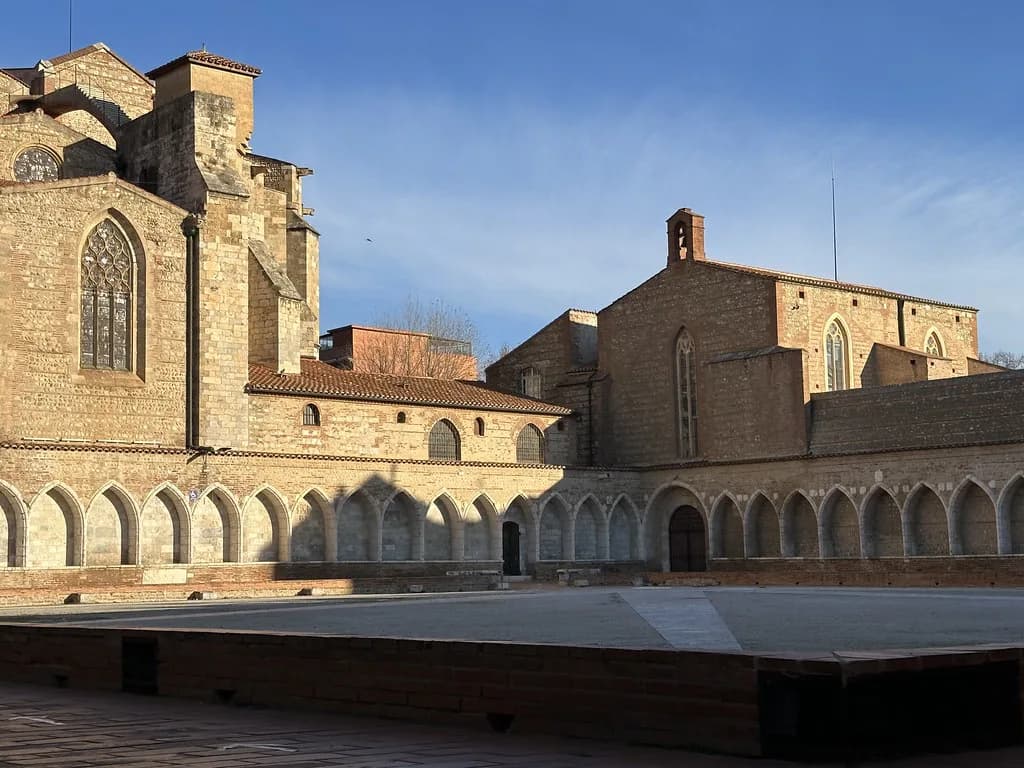
Campo Santo is a walled burial cloister in the old town of Perpignan, built between 1300 and 1330 against the flank of the Gothic Cathédrale Saint-Jean-Baptiste. Its name means holy field, and the Catalan form is Camp Sant, though the Italian-style Campo Santo has stuck. It is a stone square to walk into and pause in, not a museum with a route through it.
Where Campo Santo sits in Perpignan
The cloister occupies the south side of the cathedral, reached from the rue de la Révolution Française in the heart of Vieux-Perpignan. Four galleries once enclosed the square, and the site reads as a large open room without a roof. Coming from the cathedral's main door, walk round the building rather than expecting a separate entrance from the square in front.
Because the site is embedded in the street grid, it is easily missed. Look for the low chapels that escort the cloister: the Chapelle du Dévôt-Christ and the Funéraria, both of which sit on the cathedral side of the ensemble. Treat the cathedral and the cloister as one stop, and the streets around them as the walk between sights.
How the cloister is laid out
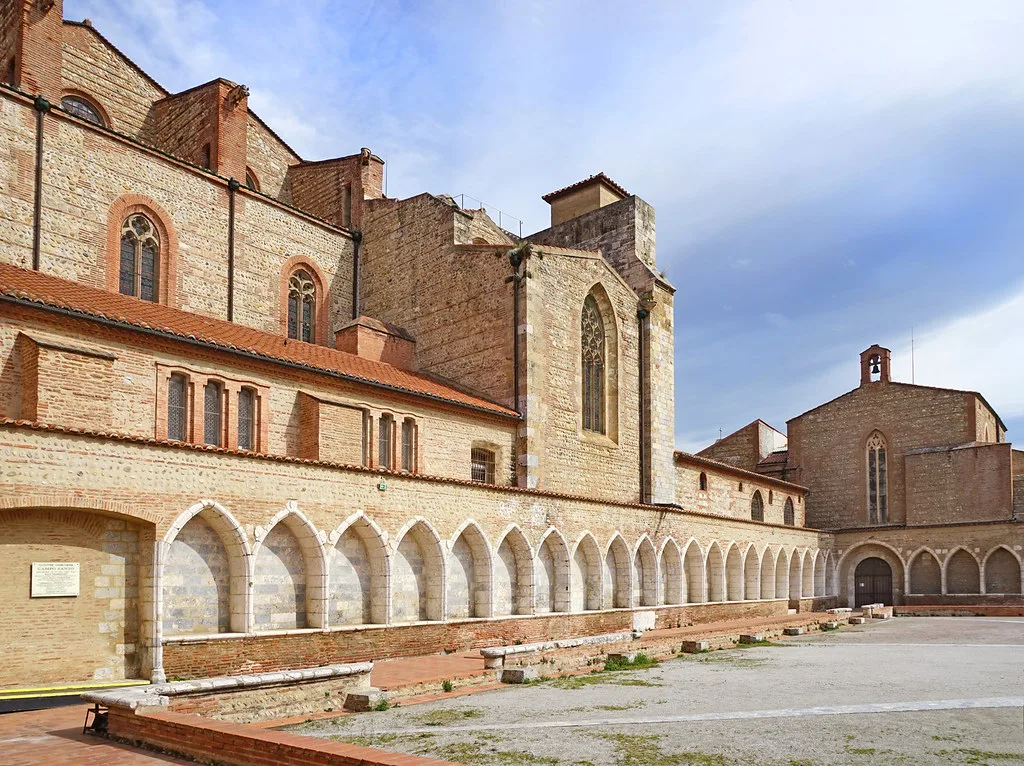
Four arcaded galleries once enclosed the square, three of them lined with tall tomb niches cut into white marble from the Baixas quarries. In 1321 the garden at the centre was dug out to hold a large ossuary, a common grave for the poor. That sunken middle is what gives the square its odd, open, slightly below-street-level feel today.
Only three of the four sides now survive. The west gallery was pulled down in 1825 to make room for a diocesan seminary, and the building later passed to the gendarmerie, which stayed until 1984. After the modern buildings were cleared, the monument authorities decided in 1991 not to rebuild the lost side but to suggest it instead, which is why one edge of the square now reads as a deliberate asymmetry rather than a ruin.
The enfeus and family blasons
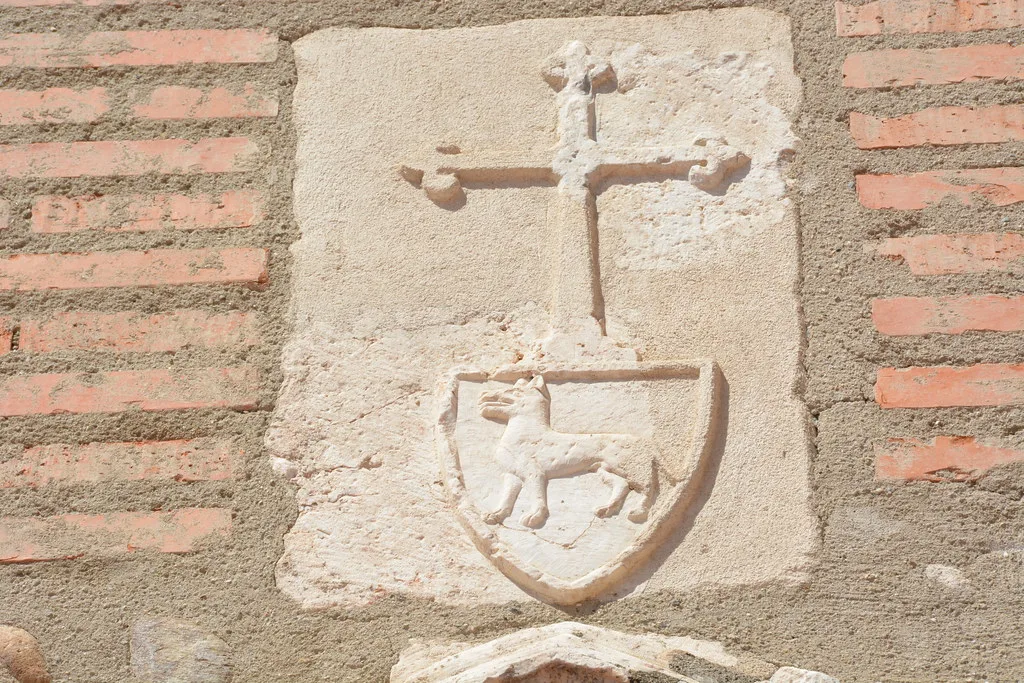
The pointed niches, or enfeus, were family tombs, and several still carry the coats of arms of the Perpignan aristocracy and bourgeoisie who bought burial space here. Many marble slabs set into the floor are ecclesiastical graves, their grey and white stones legible underfoot. Reading them takes a few minutes; the pleasure is in spotting how families jostled for position close to the cathedral wall.
Set in a region that was part of the Kingdom of Majorca and later passed between Spain and France, the cloister carries a distinctly Catalan reading of death and status. If you want that history in more depth, the medieval layout of the old town is covered in the area guides for Perpignan.
The Funéraria chapel in the north-east corner
The Funéraria, or Chapelle Saint-Jean-l'Évangéliste, stands in the north-east angle of the cloister and dates from the late 14th century. It is Gothic, with carved corbels showing faces and foliage, and it stopped serving as a burial chapel early, being used by the university in the 15th century and as a chapter house from 1601. Look up at the corner where two galleries meet, or you will walk straight past it.
Since 1999 the chapel has held contemporary stained glass by the American artist Shirley Jaffe, made with the master glazier Jean Mauret. The windows are abstract and highly coloured, a sharp modern note in a medieval stone setting. They are the strongest reason to step inside the chapel rather than admire it from the courtyard.
The Chapelle du Dévôt-Christ next door
The Chapelle du Dévôt-Christ opens onto the cloister but is a separate building, added in the 16th century to house a crucifix of about 1307, probably from the Rhineland. The carved figure is known for its gaunt realism, and the wood has darkened with age. Visitors often treat it as part of the same stop, so allow for both.
The crucifix is carried out each Good Friday for the Procession de la Sanch, the hooded penitents' procession for which it is the central image. Outside that day, the chapel is a quiet room rather than an event.
How long to allow
Give Campo Santo and the two chapels 20 to 30 minutes if you read the inscriptions and look at the glass, or ten minutes for a quick circuit. The courtyard is small and there is no fixed route, so the visit is a pause rather than an attraction with displays. Combine it with the cathedral next door for a half-day in the old town.
The square is a working piece of the neighbourhood as much as a monument: students use the low walls as seats, and locals cross it on foot. Expect company rather than silence at busy times, and shade rather than much of it in high summer, when the stone courtyard traps the heat.
Entry, hours and what to check
Opening arrangements for the cloister and the Funéraria are not consistent across sources, so confirm times at the cathedral or the tourist office before you build a day around it. There is no published ticketing detail to plan around, which suggests treating the visit as a short, free-standing stop rather than a booked slot. If the chapels are shut, the courtyard alone still repays the detour.
What is nearby in Vieux-Perpignan
The cathedral is the immediate neighbour, and the streets of the old town around the rue de la Révolution Française, the Loge de Mer and the place de la République are a short walk away. Le Castillet, the red-brick gate and former prison, stands at the edge of the old town and makes a natural next stop on foot.
The Palais des Rois de Majorque lies across the old town and takes longer to reach, so it suits a separate part of the day rather than the same hour. For a wider shortlist of sights, the things to do in Perpignan guide groups the options by area.
If you want a museum after the cloister, the Musée Hyacinthe Rigaud holds the city's fine art collection near the old town, and the Musée Casa Pairal covers Catalan life and traditions. Both make sensible wet-weather substitutes when the courtyard is less appealing.
Plan Your Visit
Campo Santo is the kind of sight that rewards knowing where to look: the north-east corner for the Funéraria, the surviving three galleries for the tombs, and the modern glass that makes the chapel worth entering. It costs little time and sits directly beside the cathedral, so build it into a morning in the old town rather than a trip of its own.
Explore more Perpignan guides
Frequently Asked Questions
What does Campo Santo mean in English?
It translates as holy field. In Perpignan the Catalan name is Camp Sant, but the Italian form Campo Santo is the one in everyday use for this burial cloister beside the cathedral.
Is Campo Santo in Perpignan free to visit?
Ticketing arrangements are not set out consistently, so ask at the cathedral or the tourist office when you arrive. Plan the stop as a short visit that does not depend on a booked ticket.
How old is the Campo Santo in Perpignan?
The cloister was built between 1300 and 1330, and the central ossuary was dug in 1321. The Funéraria chapel in the north-east corner dates from the late 14th century.
What are the Shirley Jaffe windows in the Funéraria?
They are abstract stained-glass windows installed in 1999, designed by the American artist Shirley Jaffe and made with the master glazier Jean Mauret. They are the main reason to step inside the chapel.
How long do you need at Campo Santo Perpignan?
Allow 20 to 30 minutes if you read the tomb inscriptions and look at the glass, or about ten minutes for a quick circuit. Most visitors combine it with the cathedral next door.
Was Campo Santo ever rebuilt?
The west gallery was demolished in 1825 for a seminary, and the site later held a gendarmerie. In 1991 the authorities chose to evoke the lost side rather than rebuild it, so the square is deliberately uneven today.