Beaune Old Town: A Walking Guide to the Historic Centre
Plan a walk through Beaune old town: the Hôtel-Dieu, Notre-Dame, the ramparts and the wine museum, plus what to see and how to order your day.
On this page
Beaune old town packs its headline sights into a few walkable streets: a flamboyantly roofed hospice, a Romanesque collegiate church, a wine museum in a former ducal palace and a ring of preserved ramparts and moats. Give it a half day minimum, a full day if you want the wine museum and a park pause at the edge of the vines. It rewards slowness rather than box-ticking.
The town sits in the Côte de Beaune on the Route des Grands Crus, and the vineyards of the Côte d'Or begin at the built-up edge. Treat the centre as a half-day of architecture and the surrounding vines as context, not a separate excursion. Our wider guide to things to do in Beaune covers the sights beyond the old town walls.
What Beaune Old Town Is and Why It Rewards a Slow Walk
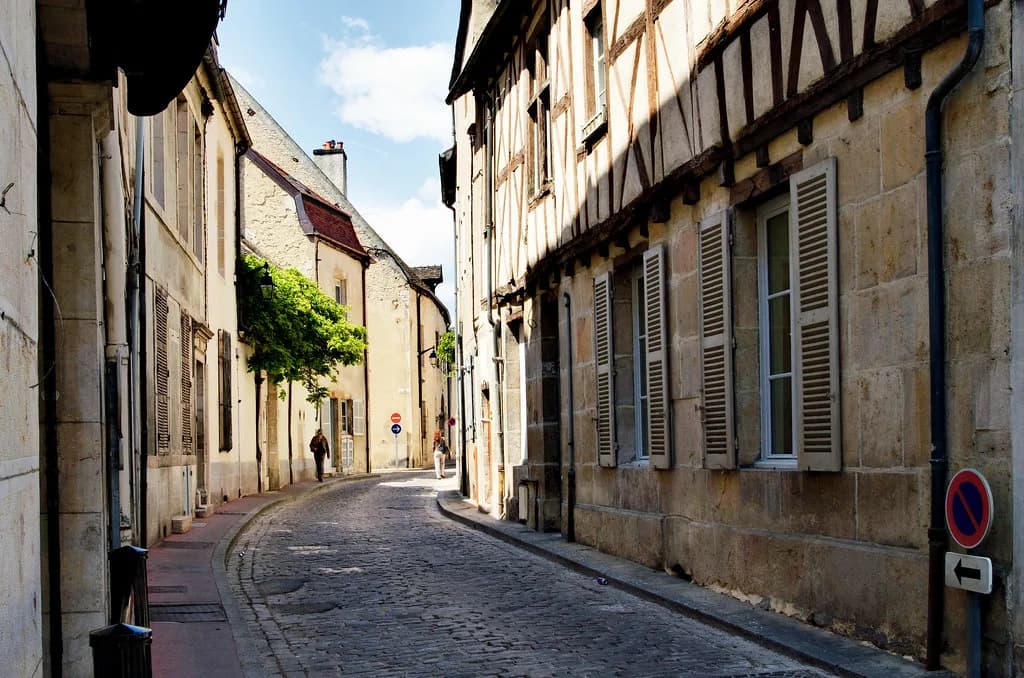
Beaune is a small Côte d'Or town whose historic centre holds architecture from its period as capital of the Dukes of Burgundy, alongside its best-known building, the Hôtel-Dieu. The centre is dense: half-timbered houses, ancient ramparts and small squares sit close together, so a route between sights is short. The reward is in looking up at roofs, courtyards and church stone rather than rushing between ticket desks.
This is a place to walk without a strict schedule and stop when a courtyard or arcade catches your eye. Set a realistic total for the day and decide before you arrive whether the wine museum is a must or a maybe. That single decision shapes whether you need half a day or a full one.
How the Old Town Is Laid Out: Ramparts, Moats and the Historic Core
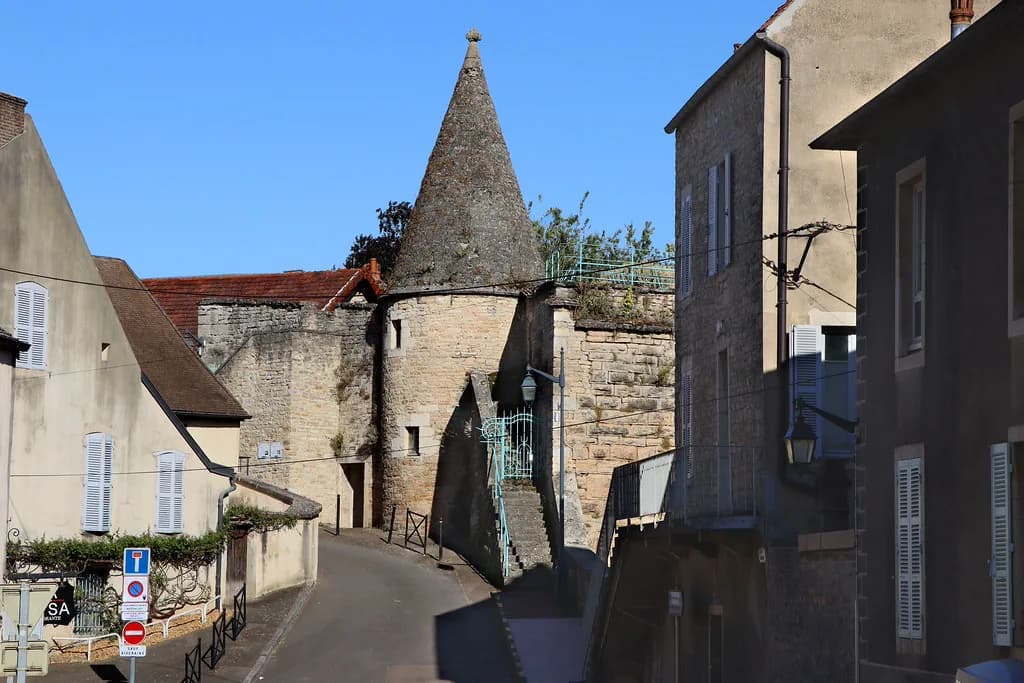
The medieval town walls survive with their original ramparts and moats, which gives the centre a clear edge you can follow on foot. Inside that ring, the Hôtel-Dieu and the Basilique Notre-Dame sit close together near the middle, and the Musée du Vin de Bourgogne occupies a former palace nearby. Orient yourself by the ramparts first, then work inwards.
A short loop of the walls gives you the shape of the town before you commit to any interior. The streets between the landmarks are short enough that the order of your stops matters less than how much time you give each one. Pick two interiors for a half day and three for a full day.
The Hôtel-Dieu: The Glazed-Roof Hospice That Anchors the Visit
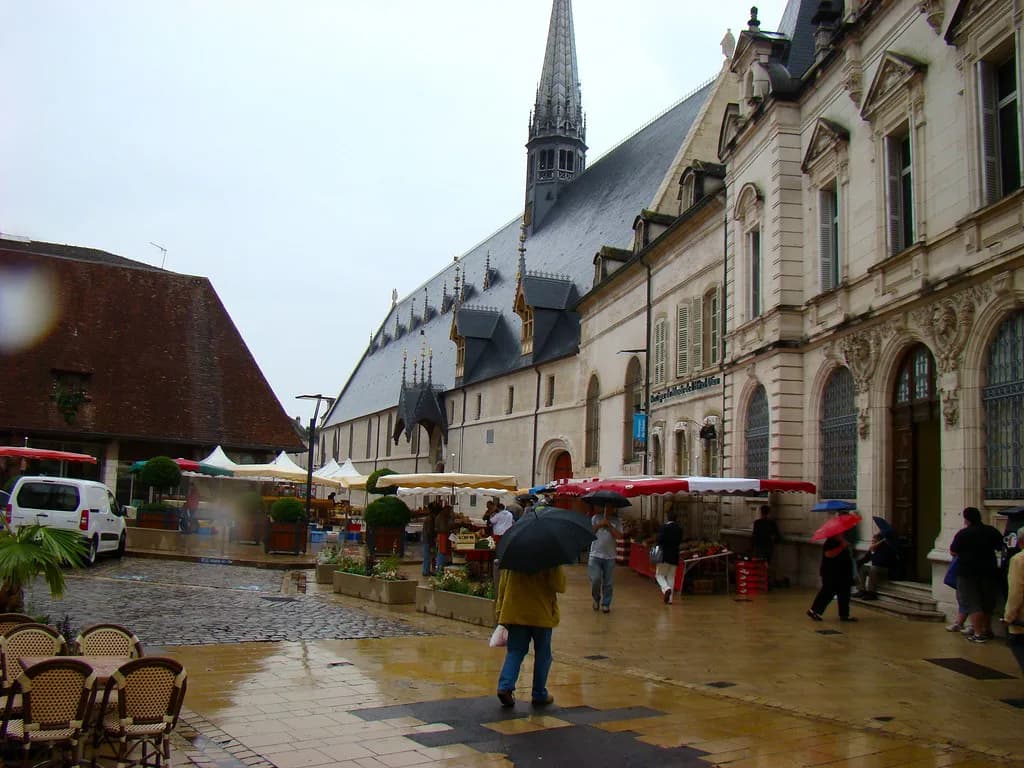
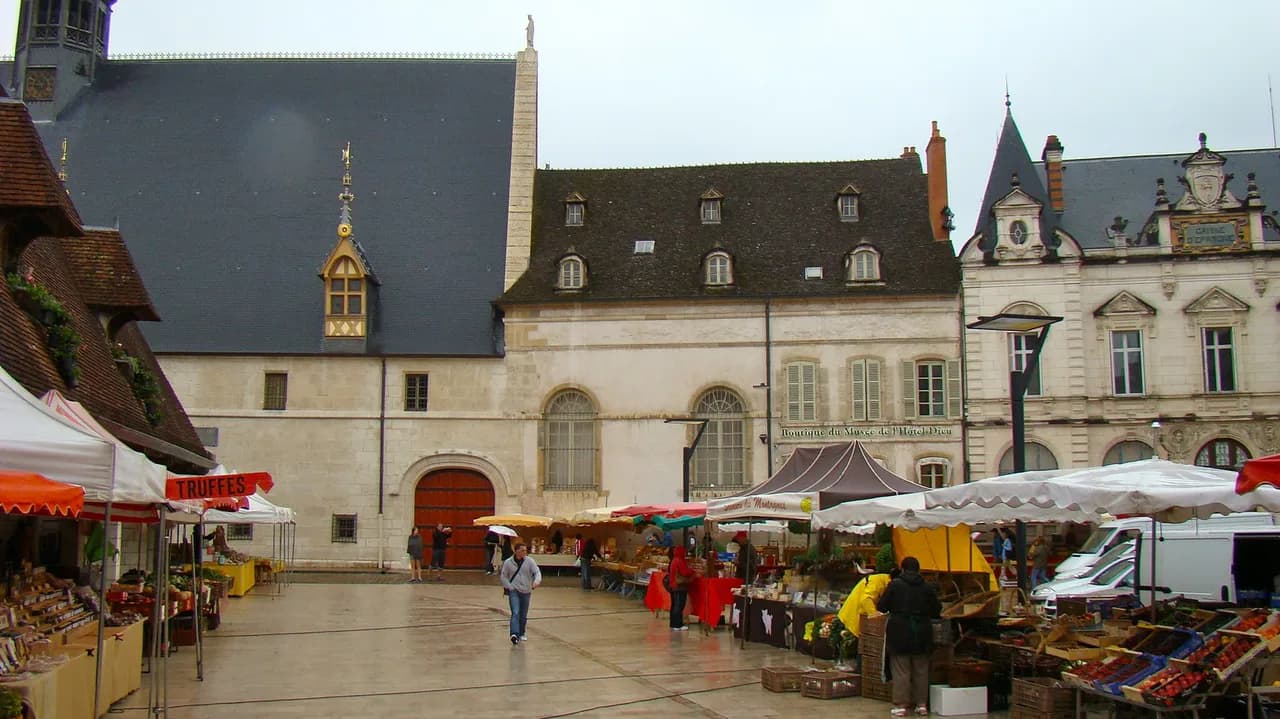
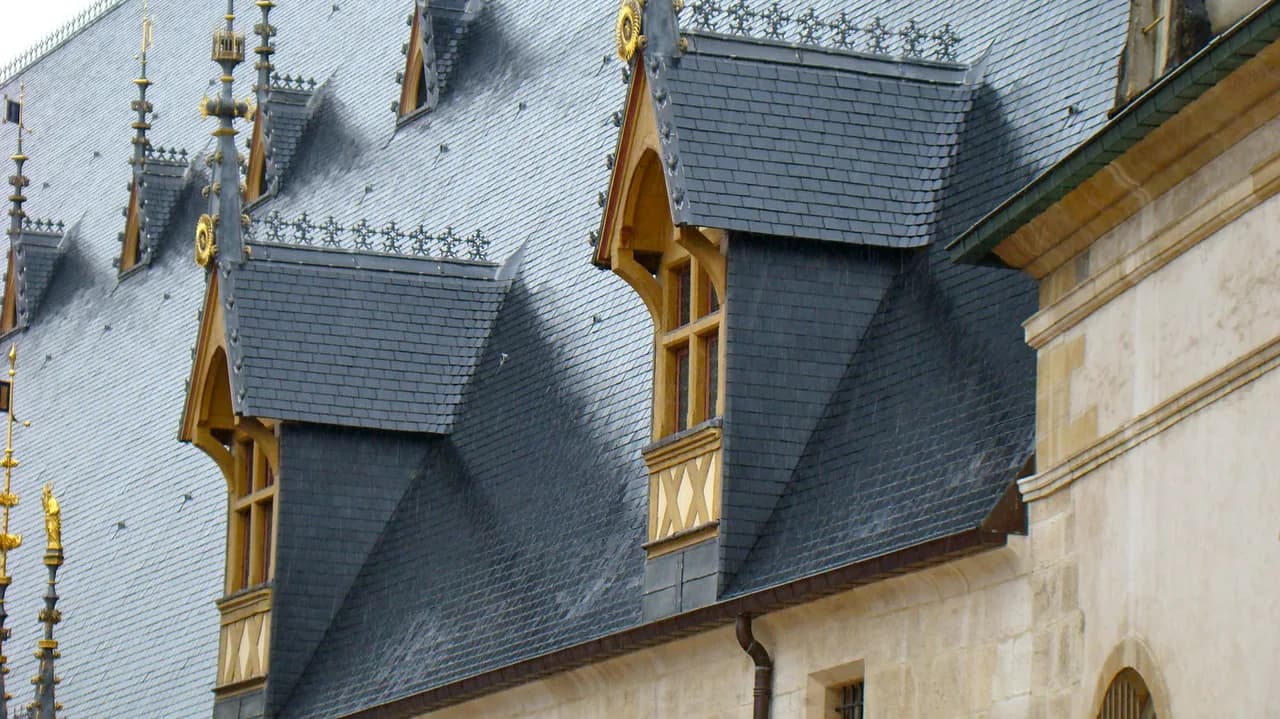
The Hôtel-Dieu, home of the former Hospices de Beaune, is the building most visitors come for: a flamboyant Gothic structure with glazed Burgundy tiles in colourful geometric patterns across its roof. It was founded in 1443 by Nicolas Rolin, chancellor to the Duke of Burgundy, and his wife. Start here, because everything else in the centre is a short walk away.
Give the interior a proper slot rather than treating it as a photo stop, since the themed rooms carry the story of the place. If your weekend allows only one paid interior, this is the one to choose. Our Hôtel-Dieu – Hospices de Beaune guide goes deeper on the building itself.
Inside the Hôtel-Dieu: the Room of the Poor, the Apothecary and the Last Judgement
The best-known room is the ward known as the room of the poor, with two rows of beds draped in crimson curtains; it appeared in the film La Grande Vadrouille. Two further rooms hold an old apothecary, with its counter and shelves lined with bottles, earthenware jars and phials. Budget your time around these three spaces.
Another room houses an altarpiece of the Last Judgement, commissioned by Nicolas Rolin and painted by the Flemish artist Rogier Van der Weyden. Knowing this in advance helps you decide how long to book for the visit and whether to pay for an audio guide.
Basilique Notre-Dame and Its Position Near the Hôtel-Dieu
The Romanesque Basilique Notre-Dame stands near the Hospices de Beaune, which makes it an easy next stop after the hospice rather than a separate outing. Step inside for the Romanesque stonework, then use the surrounding streets to link back towards the centre. Keep it as a 20-minute pause unless you want to sit with the building longer.
Musée du Vin de Bourgogne in the Former Palace of the Dukes of Burgundy
The Musée du Vin de Bourgogne occupies a 14th-century palace, the former Palace of the Dukes of Burgundy, and traces the history of viticulture and wine from ancient times to the present day. It is the natural counterweight to the Hôtel-Dieu: one building for charity and civic history, the other for the trade that made the region.
If you add this museum, it becomes the pivot of a full-day visit rather than a half-day one, because it needs real time inside. Pair it with a shorter look at the old centre and skip a second paid interior if you are short on hours.
The Ducal Palace Buildings in the Town Centre
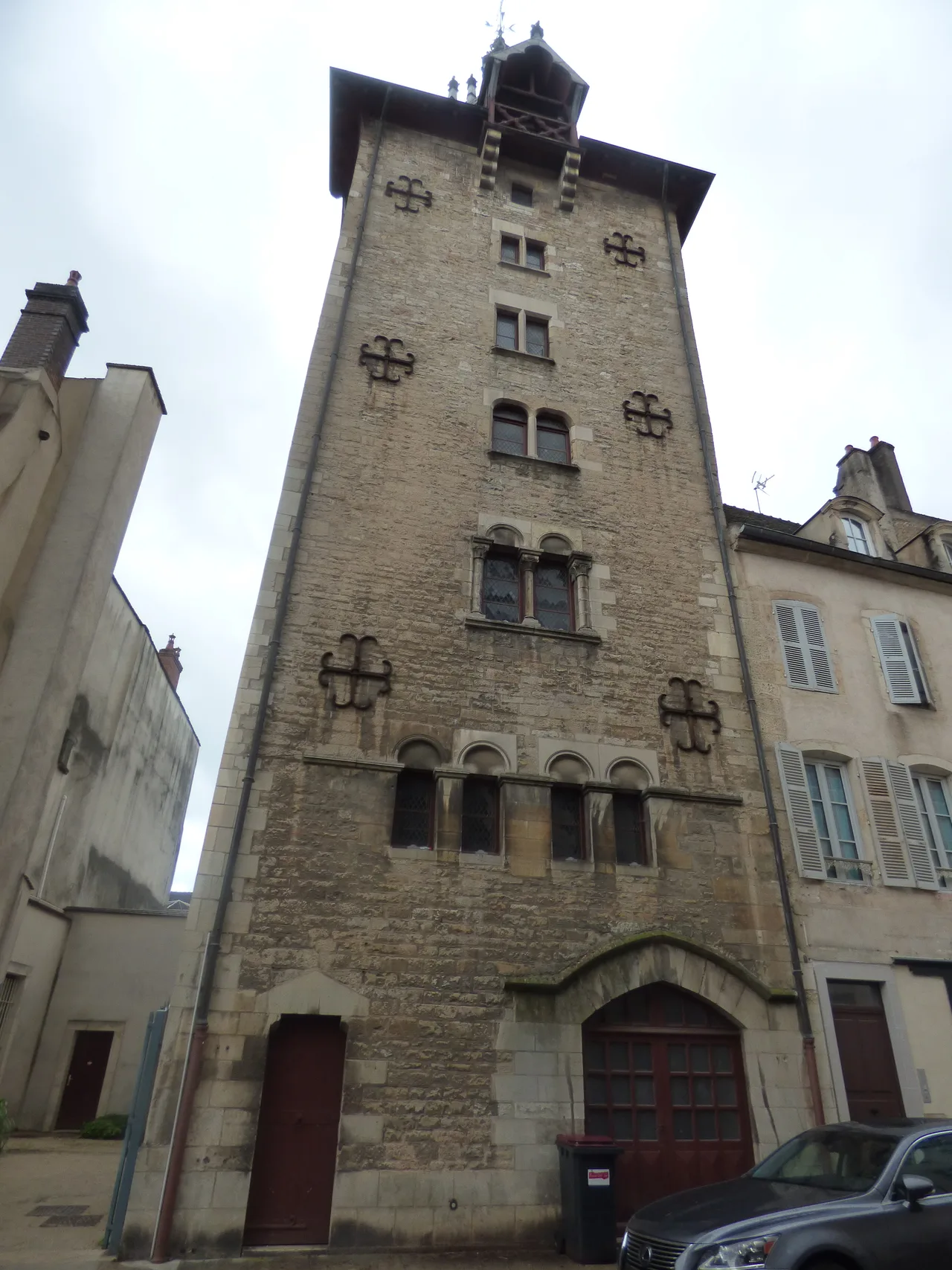
Beaune's architectural wealth comes partly from its period as capital of the Dukes of Burgundy, and the old ducal palace buildings remain visible in the town centre. Look for them as you walk between the Hôtel-Dieu and the wine museum rather than treating them as a separate stop. They reward a slow look at façades and courtyards.
Place Carnot and the Vineyards at the Edge of Town
Place Carnot is the western edge from which a signed loop runs out into the vineyards above Beaune, connecting the town to the vines. You do not need to complete the full route to get the view: walk out far enough for the town to fall behind you and turn back. The setting, on the Route des Grands Crus with the Côte de Beaune around it, is the reason many people come.
Treat the vineyard edge as a 45-minute add-on to the town walk rather than a separate day. Wear shoes that cope with uneven ground if you plan to go beyond the first rows.
A Half-Day Walking Route Through the Centre
Start at the Hôtel-Dieu when it opens and give the interior an unhurried hour, then cross to the Basilique Notre-Dame for a short look inside. Walk the old centre streets towards the former ducal palace buildings, then finish along the ramparts for the shape of the medieval town. That sequence keeps the paid interior first, when you are freshest.
Leave the wine museum for another visit if you are doing the half-day version, and put the time into the streets and squares instead. The whole centre is walkable, so you will not need transport between stops.
A Full-Day Version: Add the Wine Museum and a Park Pause
A full day lets you take in the Hôtel-Dieu properly in the morning, then spend the afternoon in the Musée du Vin de Bourgogne before a slow walk out along the vines from Place Carnot. This version suits a weekend where the second day is given over to Beaune instead of a day trip.
Parc de la Bouzaise: the 19th-Century Park at the Foot of the Vines
Parc de la Bouzaise lies at the foot of the vineyards and was created in 1883 around the source of the Bouzaise, with land bought up from the 1880s and the acquisition completed around 1910. It is a low-cost pause for the end of a walking day rather than a sight in its own right. Go for the trees and the water after the churches and museums.
If you have time for only one green space, this is the one to choose: it sits between the centre and the vineyards, so you can fold it into the walk back into town. A short loop adds a different kind of stop after a day of stone and glass.
When to Go: the Hospices Wine Auction and the Seasons
Every year, on the third Sunday of November, the Hospices de Beaune holds an auction of wines from the 60 hectares of vineyards it owns, in the courtyard of the Hôtel-Dieu. If you are in town that weekend, expect the centre to be busy with visitors; if not, plan the auction as a fixed date you can work around.
Outside that period, the town's centre is compact enough to enjoy in any season, so the question is how much time rather than whether to come at all. Check the Hospices and museum booking before you set a date.
Trade-offs: Crowds, Museum Time and How Much Fits
The main trade-off in Beaune old town is between interiors and streets. The Hôtel-Dieu and the Musée du Vin de Bourgogne both need real time, and doing both plus the ramparts is a full day, not a morning. If you have a weekend, put one paid interior in each day rather than crowding both into a single afternoon. It is the same choice you face in the Aix-en-Provence old town, where one carefully chosen interior beats a rushed circuit of several.
Be around the Hôtel-Dieu early if you want photographs of the glazed roof without company. A single afternoon is enough for the old town itself, so do not plan a large evening on top of it.
Practical Planning Notes for the Day
Beaune sits around 30 miles south-west of Dijon, and the A6 motorway links it with Paris and Lyon; by train, high-speed services stop at Beaune station on routes via Dijon and Lyon. If you are coming for a weekend from the UK, the train is the simpler way to arrive without a car.
Everything in the centre is within walking distance, so the main planning decision is the order of your paid interiors. Book the Hôtel-Dieu in advance for the auction weekend and set a start time early enough to walk the streets afterwards. Linger over lunch between stops rather than rushing from one ticket to the next.
Plan Your Visit
Beaune old town works best as a compact walk: the Hôtel-Dieu, Notre-Dame, the Musée du Vin de Bourgogne and the ramparts all sit within easy reach of one another. Pick the interiors that matter to you and leave the rest of the day for streets, courtyards and the vineyard edge.
If you are planning a weekend, our best restaurants in Beaune guide helps slot lunch and dinner around the walking. A half day is enough for the centre alone; a full day lets you add the wine museum and finish in the vines.
Explore more Beaune guides
Frequently Asked Questions
What is there to see in Beaune old town?
The main stops are the Hôtel-Dieu, with its glazed roof and the room of the poor; the Basilique Notre-Dame; the Musée du Vin de Bourgogne in the former Palace of the Dukes of Burgundy; and the surviving ramparts and moats. The old duke's palace buildings and the streets between these landmarks fill the gaps.
How long does it take to walk around Beaune old town?
Half a day covers the core on foot: the Hôtel-Dieu, Notre-Dame and the main streets and squares. Add the Musée du Vin de Bourgogne and a walk out to Parc de la Bouzaise and you need a full day. The centre itself is short distances, so the time goes on interiors, not walking.
Is Beaune old town worth visiting for a day?
Yes, if you want the Hôtel-Dieu and one other interior. The centre gathers its best architecture within a few streets, so a day gives you room to look slowly rather than just tick off the hospice. If you have only a morning, do the Hôtel-Dieu and the church and leave the rest.
What is Beaune most famous for?
Beaune is best known for the Hôtel-Dieu and its Hospices de Beaune, with the flamboyant Gothic building and patterned glazed-tile roof. It is also the wine capital of the Côte de Beaune and sits on the Route des Grands Crus.
Where is the Hôtel-Dieu in Beaune?
It is in the historic centre, close to the Romanesque Basilique Notre-Dame, and within walking distance of the Musée du Vin de Bourgogne. Its courtyard and roofline are the visible anchor of the town centre.
What wine region is Beaune in?
Beaune is in Burgundy, on the Côte de Beaune, within the Côte d'Or department of Bourgogne-Franche-Comté. The town sits on the Route des Grands Crus, and its Hospices owns 60 hectares of vineyards in the area.
Sources
Notes for French city breaks
Optional updates to our guides.
You might also like
Continue reading
More guides you'll find useful