
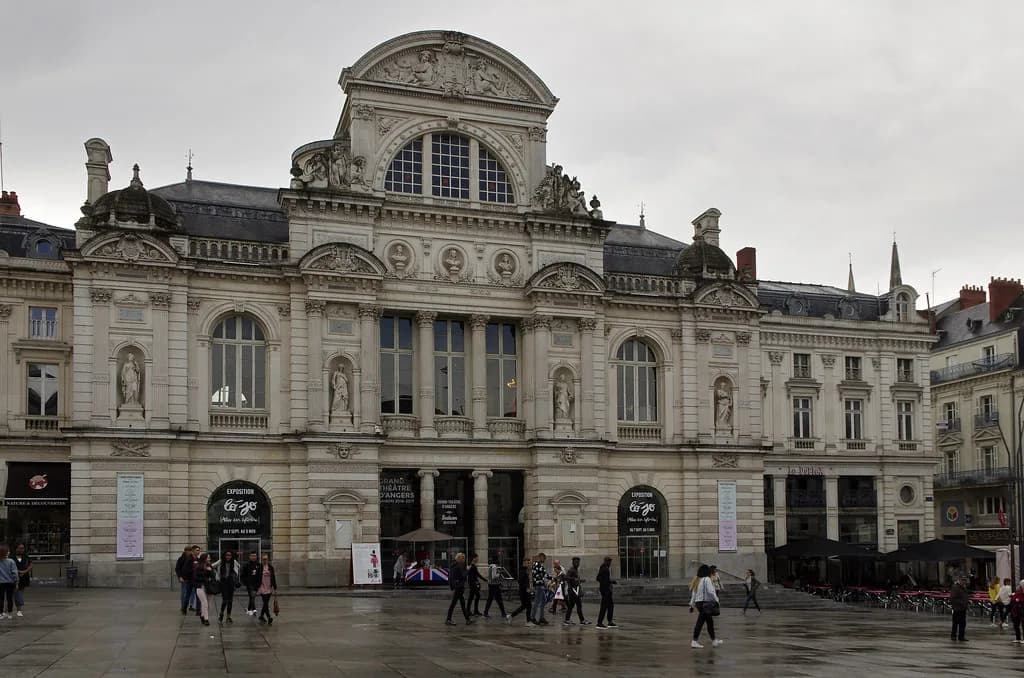
Place du Ralliement, Angers: The Heart of the City Centre
Place du Ralliement is Angers' central square, a largely pedestrian crossroads threaded by the tram and ringed by busy shopping streets. It is not a sight that fills an afternoon, but it is the natural place to start a short break in the city: find it and you have found your bearings.
The square earns its importance from what surrounds it rather than from anything on it. The Grand Théâtre stands on the square, and the streets running off it lead into the heart of central Angers, which makes the Ralliement a useful fixed point when you are planning a day on foot.
Where the Ralliement sits in central Angers
The square occupies the middle of Angers' centre-ville in Maine-et-Loire, and the sources describe it as a central point of the urban area. That position is why it reads as a crossing rather than a destination: streets feed into it from several directions and pedestrians pass through constantly.
Treat the Ralliement as the pin in the middle of your map and the rest of the centre arranges itself around it. A weekend route that starts here can head off into the surrounding streets on foot and return to the square when you need the tram or a café.
Three churches before there was a square
The site has a longer religious history than its secular present suggests. In the Middle Ages three churches stood where the square now lies: Saint-Maimbœuf, Saint-Maurille and Saint-Pierre. All three were demolished at the end of the eighteenth century, and the open space that replaced them became the place du Ralliement.
The name refers to the gatherings once held there, which included public executions. That is a sobering origin for what is now a shopping square, and it is worth knowing before you settle at a terrace table.
The square's commercial heyday
The nineteenth century turned the Ralliement into a retail address. The city archives record a cluster of businesses arriving from the 1880s: the Audas et Joudon haberdashers in 1881, the Grand-Hôtel in 1883, the Belle-Jardinière in 1886 and the Pelé grocery in 1888, with the Nouvelles Galeries and the Dames de France opening nearby in 1901 and 1906.
The years before the First World War were the square's peak, when it held nine cafés and served as a social rendezvous. One of them, the café Gasnault, brought cinema to Angers in 1896, a year after the Lumière brothers' Paris demonstration.
These are historic names, not a current directory, so do not expect to find the Belle-Jardinière or the Pelé grocery trading today. Use them to read the square's past rather than to plan a shopping list. The later twentieth century went the other way, with the post office leaving in January 1938 and the last of the old cafés thinning to a single one by 1963.
What to see on and around the square
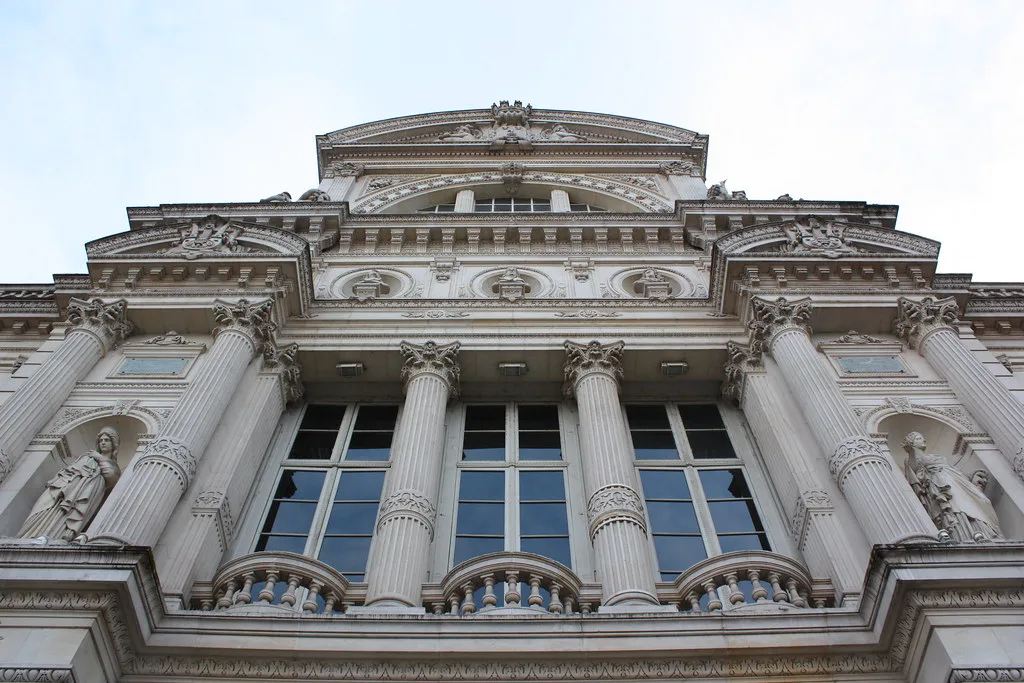
The Grand Théâtre d'Angers is the square's principal building and the one sight worth naming. It sits on the place itself, so you will pass it whether or not you have a ticket for anything.
Beyond the theatre, the appeal is the streets. The square is ringed by shopping thoroughfares, and the historic tour of 1914 names the surrounding arteries as the frame for its commerce: rue Saint-Denis, rue d'Alsace, rue Saint-Maurille, rue Lenepveu, rue de la Roë and rue des Deux-Haies all meet or skirt the square.
Walk one of those streets rather than circling the square itself; the Ralliement is the hinge, and the surrounding blocks hold the shops and cafés. If you want a contrast with the dense centre, the Lac de Maine offers open water and parkland a short ride away, while Saint-Aubin covers another slice of the city's neighbourhoods.
The tram and the square's pedestrian present
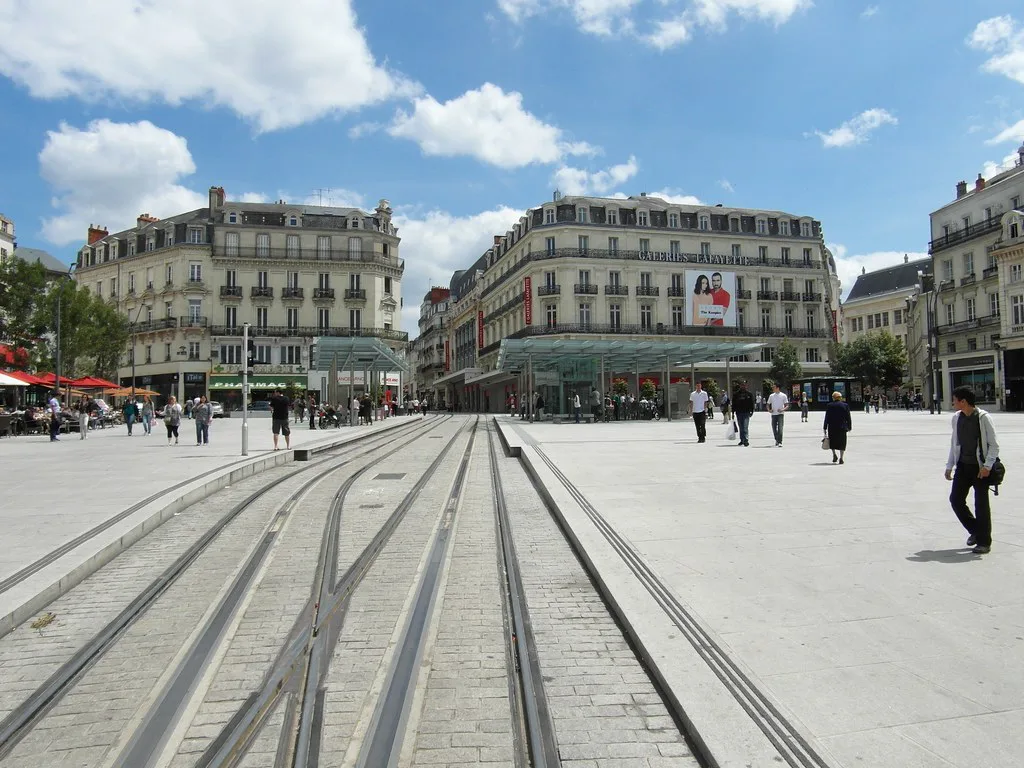
Wiki-Anjou states that the square is served by the tram, and that it became entirely pedestrian in the early 2010s when the tramway was laid through it. The same page notes an earlier tram era, when lines from Érigné and Saint-Jacques ran into the Ralliement.
That history explains the layout you will meet: no through traffic, rails across the paving, and a square built around people on foot. The archives add that a redevelopment inaugurated in September 1994 reshaped the esplanade, widened pavements and added a summer café on the central strip.
Angers' tram network and the Ralliement stop have their own published maps and timetables, so consult the Irigo network site on the day for routes and times. Tram access makes the square an efficient place to begin or end a day, and a lift back here saves a long walk at the end of an afternoon.
Café terraces and what the square is like today
The square's reputation rests on its café life. The archives describe the pre-1914 years when nine cafés created an animation without equal, and a 1994 chronicle records that the redeveloped Ralliement reversed the square's long decline in activity.
Those accounts are historical, so treat the terrace culture as the square's character rather than a list of cafés to seek out. Sit down wherever the tables look busy and the clientele is local, and expect a view of passing shoppers rather than a monument.
Eating around the Ralliement
The square is a location people notice, and one online review of a restaurant at the Ralliement criticises the food sharply, calling a steak almost entirely gristle. A single review is not a verdict on the district, but it is a reminder that a prime address does not guarantee a good meal.
Look down the side streets rather than committing to the first table you see on the square. Compare a couple of menus, check what is on nearby plates, and keep your lunch flexible; the centre rewards a little scouting.
Who the Ralliement suits, and who it does not
The district suits anyone who wants the city centre on foot: shoppers, tram users, and travellers who like a busy crossroads with cafés to lean on. It works well as an orientation base for a weekend because so much of central Angers is within easy walking distance.
It is less well suited to travellers hoping for a quiet, monumental square to linger in. The Ralliement is a thoroughfare, and its interest lies in the surrounding streets and buildings rather than in the paving underfoot. If you want residential calm or open space, look elsewhere in the city.
How to use the square as a walking base
Arrive by tram and start at the theatre, then take one of the streets off the square and follow it until something catches your eye. The Ralliement's geometry makes it hard to get lost: every route can be walked back to the same open space.
Build a half-day loop around the square rather than a whole day pinned to it. The city's wider sights are covered in the Angers neighborhood guides, and a central base lets you break the day at a café and head out again. If you are weighing a second Loire stop, the things to do in Amboise make a useful comparison for a similarly compact town centre.
When the square is at its best
The square's own history points to summer as its liveliest season: the archives quote a contemporary describing summer Sundays when café terraces ran together from one establishment to the next. That is a description of the early twentieth century, but the seasonal pattern it captures is a useful expectation-setter.
Beyond that, the square's rhythm follows ordinary city life. Check current opening times for the theatre and any shops you want to visit before you build a day around them.
Plan Your Visit
Place du Ralliement is best understood as Angers' front door: a tram-served, pedestrian crossroads where the city's shopping streets meet and a historic theatre gives the space its anchor. Give it half an hour of wandering and let the surrounding streets do the rest of the work.
Use it to orient yourself on arrival, check the tram operator's site for current routes, and confirm opening details before you go. One final practical note: the square is a start point, not the main event, so plan your day around the centre rather than around the paving.
Explore more Angers guides
Frequently Asked Questions
What is Place du Ralliement in Angers known for?
It is the city's central square, known for the Grand Théâtre d'Angers and for a long commercial and café history. The archives record a cluster of department stores and shops around the square from the 1880s, and nine cafés operating there before the First World War. Today the square is largely pedestrian and carries the tram through it, so it functions as a busy crossroads rather than a quiet monument.
Is Place du Ralliement worth visiting on a weekend in Angers?
Yes, but as an orientation point rather than a standalone sight. The square itself takes half an hour at most; its value is the streets that meet there, so use it to start a walk into the surrounding shopping quarter and to pick up the tram when your legs give out. Travellers wanting open space or residential calm are better served by neighbourhoods such as Lac de Maine or La Madeleine.
How do I get to Place du Ralliement by tram?
The square is served by the Angers tram, which was laid through it when the space became fully pedestrian in the early 2010s. Route numbers, frequency and fares are published by the network operator; check the current map and timetable before you travel.
What was on the site of Place du Ralliement before the square was built?
Three churches stood there in the Middle Ages: Saint-Maimbœuf, Saint-Maurille and Saint-Pierre. All three were demolished at the end of the eighteenth century and the cleared ground became the square, whose name refers to the gatherings once held on it, including public executions. That origin is worth keeping in mind given the cafés and shops that occupy the space now.
Where can I eat near Place du Ralliement?
The square is lined with terraces and the surrounding streets hold plenty of places to eat, but addresses change and quality varies. One review of a restaurant on the square criticises the food sharply, which is a fair warning against choosing purely on location. Compare menus in the side streets off the square and check recent reviews before you commit to a table.
When is the square busiest?
No source sets out particular quiet or busy hours for the square, so plan around general city-centre habits rather than a published pattern. The archives describe summer Sundays before 1914 when café terraces ran together from one establishment to the next, which suggests the square's social life has long been strongest in warm weather. Check the Grand Théâtre's programme and any shop opening times before building a day around it.