Things to Do in Angers: A Weekend Guide to Anjou's Capital
Plan a short break in Angers with the château and Apocalypse Tapestry, the old town, La Doutre and river walks, plus how long the city needs.
On this page
Angers is worth a weekend because one morning at the Château d'Angers buys you a walled fortress, formal gardens and the Apocalypse Tapestry, and the rest of the city is a short walk away. The historic centre sits largely pedestrianised on the left bank of the Maine, with the Doutre district across the water and the parks on the edge. Two full days covers the core comfortably; a single day gets the castle and a decent wander.
The city was the seat of the Plantagenet dynasty in the Middle Ages, and that history left a compact old town of half-timbered houses, a remarkable cathedral and a fortress described as impregnable. It is also the capital of Anjou, in the Pays de la Loire. Treat the castle as the fixed point of your plan and build the rest around it.
What Angers is best known for, and how long you need
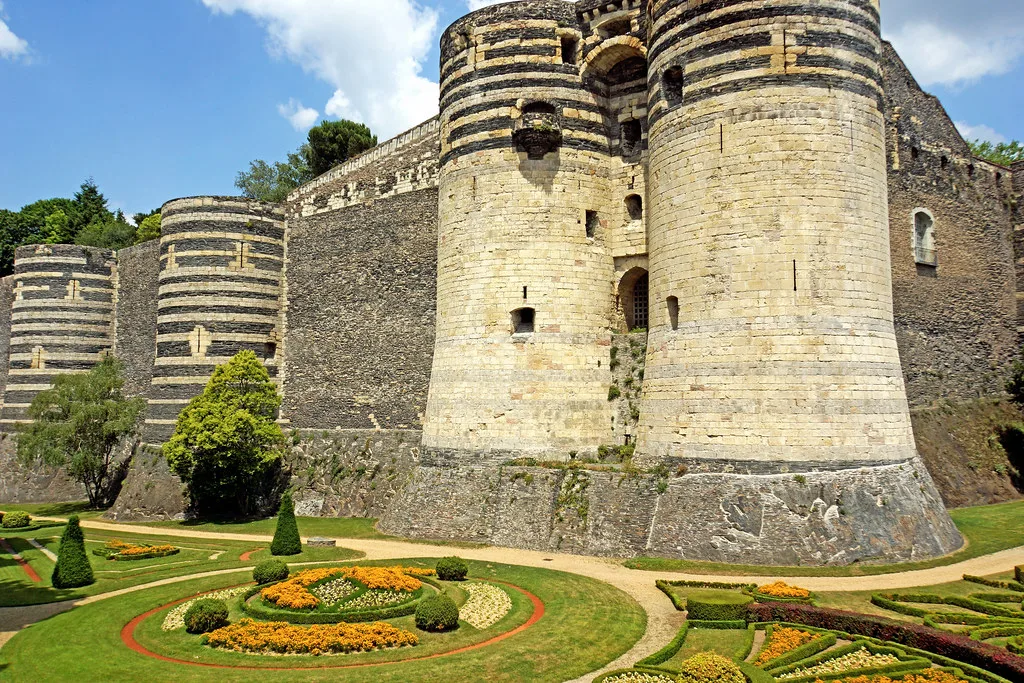
The headline sight is the Château d'Angers, a fortress with 17 towers that holds the Apocalypse Tapestry, a 103-metre hanging cycle and the largest surviving set of medieval tapestries. The tourist office treats the castle as the first stop of any day in the city. Give it a clear morning.
Beyond the castle, Angers rewards slow walking: the Galerie David d'Angers, the gardens of the Musée des Beaux-Arts, the Maison d'Adam and the riverside views at La Cale de la Savatte. One day gets the castle, a lunch and a loop of the centre; two days adds the Doutre, the parks and a museum. A third day is day-trip territory rather than city time.
Angers at a glance: how the city is laid out around the Maine
The city spreads along the Maine just before it meets the Loire. The largely pedestrianised historic centre sits on the left bank, the Doutre district faces it across the river, and the newer districts with their parks and lakes form an outer ring. Grouping your day by quarter saves you from zig-zagging.
In practice that means castle, old town and Place du Ralliement in one block, the Doutre across the water as a short add-on, and Parc Balzac, the Lac de Maine and the Étang Saint-Nicolas kept for a separate outing or a spare afternoon. The train station sits within easy reach of the centre, which makes a car unnecessary for a city break.
Start at the Château d'Angers: ramparts, gardens and the Apocalypse Tapestry
Begin at the Château d'Angers, also called the Château des Ducs d'Anjou. Inside the walls you find gardens with roses and clipped hedges, and the castle kitchen garden and vines on the ramparts. Walk the walls for the best view over the town before you leave.
The Apocalypse Tapestry is the reason to slow down: over a hundred metres of medieval hangings depicting the Apocalypse of Saint-John, displayed in a dedicated setting. An audio guide comes in French, English, German, Italian and Spanish and lets you take the rooms at your own pace. Two hours in the castle is a sensible allowance, though you could easily stretch it.
On the way out, drop down to the Promenade du Bout du Monde for one of the finest views of the city and the river. It costs nothing and takes minutes. If your ticket timing works, that view is a better use of ten minutes than queueing anywhere else.
Old town on foot: Place Sainte-Croix, Maison d'Adam and Rue Saint-Aubin
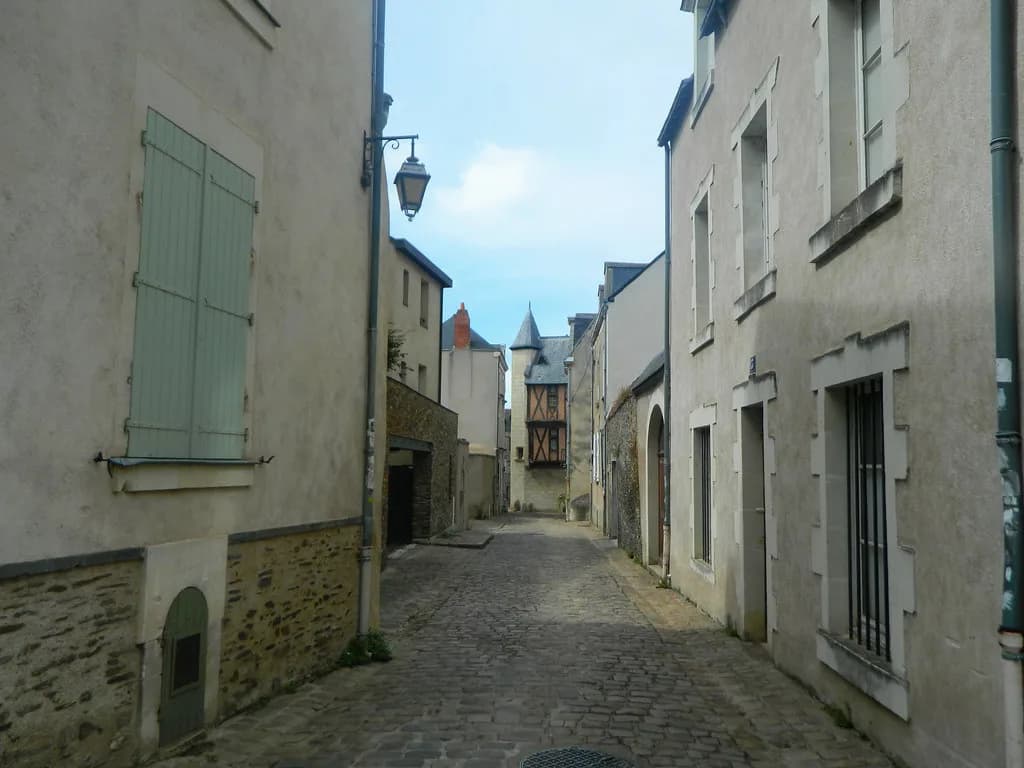
Leave the castle and the old town begins immediately. Place Sainte-Croix is a small, photogenic square where the half-timbered Maison d'Adam stands, and the Cathédrale Saint-Maurice is a stone's throw away, with carvings, stained glass and tapestries inside. Both are free to look at from outside and quick to see.
From Place Saint-Eloi, marked by the Igor Mitoraj statue, follow Rue Saint-Aubin, one of the oldest streets in the city. This is the stretch for the city's sweet speciality, almond and caramel chocolates called Caramandes, if a shop window tempts you.
The Collégiale Saint-Martin, a few steps on, shows remains of the original church, foundations and a sarcophagus. It suits anyone with an interest in layers of building history rather than polished museum display.
Museums and galleries: Galerie David d'Angers and the Musée des Beaux-Arts gardens
The Galerie David d'Angers displays the sculptor's work inside a former abbey church capped with a contemporary glass roof, so the light does as much work as the plinths. It sits a few steps from the castle, which makes it the natural next stop after the ramparts. The gardens of the Musée des Beaux-Arts next door are a favourite local breathing space and free to walk through.
For a wet afternoon, this cluster around the castle and Place Saint-Eloi is the strongest hand: gallery, cathedral interior and the arcaded shopping streets are all within a few minutes of each other. Check the gallery's current opening days and any admission charge with the tourist office before you commit the afternoon to it.
Place du Ralliement and the pedestrian shopping streets
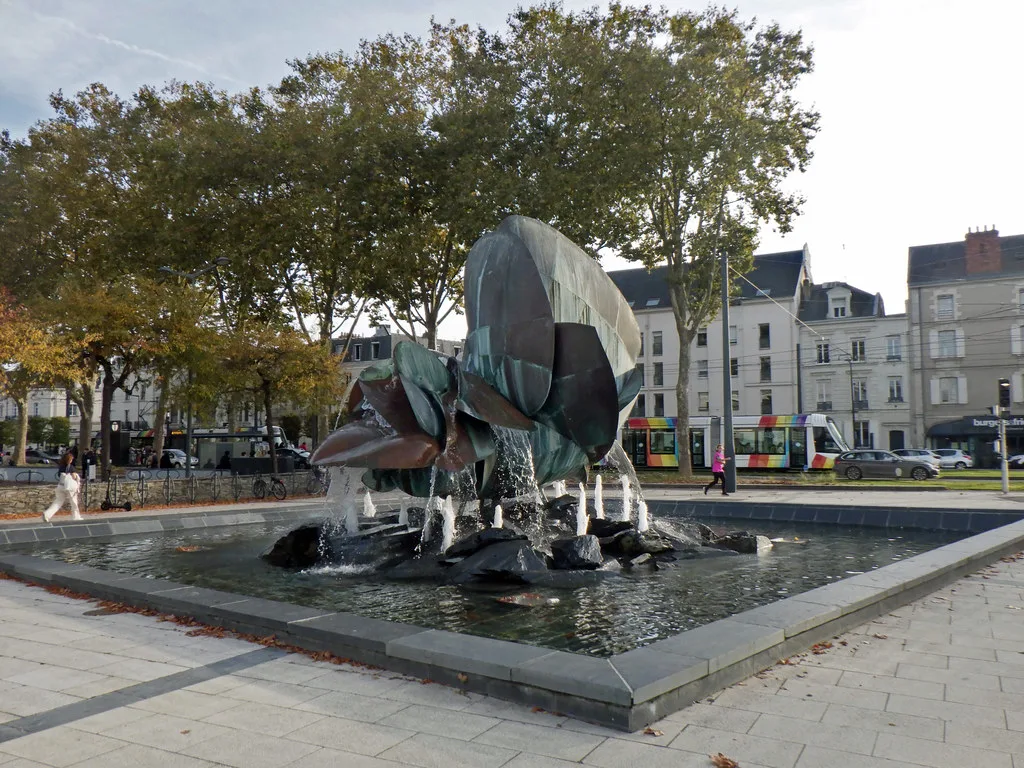
Place du Ralliement is the city's main meeting point, and its Grand Théâtre, an Italian-style theatre, is one of the most striking façades in town. The surrounding district is fully pedestrianised, which makes it the place for a shopping spree or a drink on a terrace.
This is also the practical centre of a short break: you can cross it on foot between sights without planning transport. If browsing shops is part of your trip, the streets here and Rue Saint-Aubin are where to spend that time, and a Sunday arrival is the moment to look up what is actually open.
Crossing to La Doutre and the riverbanks
Cross the Maine to La Doutre, where private mansions and half-timbered houses line the streets and the pace drops. The tourist office suggests ending a day there with a glass of Anjou wine in one of the city's wine bars. It is an easy extension rather than a separate outing.
The riverside itself is the other half of the appeal: the castle seen from La Cale de la Savatte is one of the classic views, and the banks of the Maine give you a flat, free walk between quarters. On a fine day, walk the Doutre and come back along the water rather than retracing your steps through the centre.
Green spaces: Parc Balzac and the Lac de Maine
Parc Balzac looks over the Maine and has walking trails, bike paths and a guinguette — an open-air food hall and bar that often hosts music and dancing. It is a good evening wander with a different angle on the castle, and a low-cost way to end a day.
Further out, the Lac de Maine and the Étang Saint-Nicolas sit in the newer belt of the city, along with green spaces such as the Parc de Balzac, so they belong to a half-day rather than a lunch break. If the weather turns, these are the first things to drop.
Eating in Angers: crêpes, riverside wine bars and Caramandes
Angers sits in the Loire, close enough to Brittany for crêpes to be a local staple. The tourist office points to the Crêperie du Château, in the heart of the historic quarter, for quality galettes, a fireplace in winter and a small summer terrace — and notes it is popular with locals and worth booking.
For a no-frills alternative, the Crêperie Marie Mil'Goules serves classic crêpes with a quirky interior and cocktails, including one built on Guinolet, a local cherry liqueur. Either works for a sit-down lunch between sights.
If you want small plates with a view, a péniche moored on the Maine serves as a bar à vin with a terrace and indoor tables on the boat, popular enough in summer to expect a short wait. The riverside is also where the tourist office suggests a glass of Anjou wine to close the day.
How many days Angers needs, and how to fill a wet afternoon
Two days is the honest answer for a first visit: castle and tapestry in the morning, old town and Place du Ralliement after lunch, then the Doutre and the riverbank on day two, with a park or a museum slotted in. A single day works if you accept the castle, a crêpe and one loop of the centre.
For rain, head indoors: the Apocalypse Tapestry rooms, the Galerie David d'Angers and the cathedral interior are all within a few streets of each other, so you can move between them without a long soaking. Shops under the arcades around Place du Ralliement fill another hour.
Practical points: getting around on foot, by bike or by bus
The centre is compact enough to cover on foot, and cycling is easy too, with buses for anything further out. The tourist office sells an Angers City Pass 24h that bundles free entry to 25 visits and cultural sites, discounts on local products, and advantages on parking, public transport and souvenir shopping at the tourist office — worth doing the sums on if you plan several paid sights.
The Loire à Vélo cycle route passes through the area, so a bike gives you the riverbanks and the parks without relying on timetables. Ask at the tourist office for current ticket prices and the exact list of sites included before buying any pass.
Angers with a weekend to spare: what to save for next time
Save for a second visit the signs of Anjou beyond the city: Terra Botanica, the plant-themed park north of town, and Savennières, reachable in about 15 minutes by regional train. The Loire Valley châteaux such as Brissac and Plessis-Bourré sit roughly 15 kilometres out, so they suit a car or a dedicated half-day rather than a spare hour.
One year-round note: walking the city is the point, so build in a slow lunch and an unhurried riverside loop rather than trying to tick off every museum. Angers rewards that pace more than a checklist.
Plan Your Visit
Book the castle into your first morning, keep the old town and Place du Ralliement for the afternoon, and spend day two on La Doutre, the riverbanks and one green space. Check the tourist office for current opening days, ticket prices and City Pass inclusions before you travel, since those details shift.
If you are still weighing up whether the city justifies the trip, our honest answer on is Angers worth visiting goes deeper, and the same approach works for other French cities such as things to do in Aix-en-Provence. Smaller cities with a compact, walkable centre reward the same two-day rhythm here.
Explore more Angers guides
Frequently Asked Questions
How many days do you need in Angers?
Two full days covers the Château d'Angers and the Apocalypse Tapestry, the old town around Place Sainte-Croix and Rue Saint-Aubin, the Galerie David d'Angers, La Doutre and the riverbanks. One day is enough for the castle, a crêpe lunch and a loop of the pedestrian centre.
Why is Angers famous?
Angers is known for the Château d'Angers with its 17 towers and the Apocalypse Tapestry, a 103-metre medieval hanging cycle. It was the seat of the Plantagenet dynasty, and its old town of half-timbered houses, the Maison d'Adam and the Cathédrale Saint-Maurice are the other draws.
What can you do for free in Angers?
You can walk the pedestrian old town, see the Maison d'Adam and Place Sainte-Croix, cross the Maine to La Doutre, and take in the river views from La Cale de la Savatte and the Promenade du Bout du Monde without a ticket. The gardens of the Musée des Beaux-Arts are free to walk through.
What food is Angers known for?
Crêpes and galettes are a local staple, served at places such as the Crêperie du Château and the Crêperie Marie Mil'Goules. The city's sweet speciality is Caramandes, almond and caramel chocolates sold around Rue Saint-Aubin, and Anjou wines are poured in the local wine bars.
Is Angers good for a weekend break from the UK?
Yes. The historic centre is pedestrianised and compact, so two days covers the castle, the old town and the Doutre without needing a car, and the train station is close to the centre. Save Terra Botanica and the Loire Valley châteaux for a longer stay.
How do you pronounce Angers?
The city name is pronounced roughly as ahn-ZHAY, with a soft g and a nasal ending. Locals will understand English attempts, and saying it correctly is a small courtesy worth having ready.
Sources
Notes for French city breaks
Optional updates to our guides.
You might also like
Continue reading
More guides you'll find useful