Shopping in Angers: Streets, Markets and Sunday Closures
A practical guide to shopping in Angers: the central streets, the Saturday grand marché at Place Leclerc, neighbourhood markets and what to buy in Anjou.
On this page
Angers works well for shopping because the retail core sits in a small, flat centre that you can cross on foot in under half an hour. The real draw is not the chain stores but the food: a big Saturday market, a twice-weekly market near the station and a string of neighbourhood markets that give each morning of the week its own errand. Plan your weekend around the market days first and fit the shops in between.
This guide covers where the shops actually sit, which market runs on which morning, what Anjou produce is worth carrying home, and how to fill a wet afternoon. For the wider sightseeing picture, our guide to things to do in Angers sets the shopping streets in context.
What shopping in Angers looks like
Angers is compact enough that shopping is a matter of strolling rather than planning routes. The commercial streets cluster in the centre-ville, between the castle and the Maine, so you can move from a food hall to a clothes shop to a market square without a bus ride. A weekend is ample time to cover the core on foot and still leave an afternoon for a museum.
Two things shape a shopping trip here. First, the market calendar: the city's markets are spread across the week and across neighbourhoods, so the day you visit decides which one you get. Second, the food is the souvenir. Anjou's growers, livestock farmers and winemakers fill the stalls, with asparagus, strawberries, apples and pears, quinoa grown in Anjou, Rouge des Prés beef and locally grown roses among the produce on offer.
If you are still deciding whether the city justifies a weekend at all, our honest answer on whether it is worth visiting covers what a short break actually delivers.
Rue Saint-Aubin and the central shopping streets
The streets that carry most of the city's independent and chain retail sit together in the centre: Rue Saint-Aubin, Rue Lenepveu, Rue d'Alsace and Rue Saint-Laud, with Place du Ralliement as the hub around which they cluster. Rue Saint-Aubin has the most character of the group, with small boutiques rather than only the big names, and it rewards a slow pass rather than a targeted dash.
Treat these four streets as one loop rather than four separate trips. Start at Place du Ralliement, work up Rue Lenepveu and Rue d'Alsace, cut across to Rue Saint-Laud for the practical shops and finish on Rue Saint-Aubin. Because the distances are short, you can break the loop for coffee and pick it up again without losing time.
Place du Ralliement is the square to use as a meeting point, and the surrounding blocks hold the densest concentration of shops in the city. It is also the natural place to start a walk into the old town, where the streets narrow and the retail gives way to cafes and heritage.
Local food shopping: what Anjou produces
Anjou's strength is fresh produce, and the market is where it shows best. Old-variety tomatoes, farm-raised chicken, mushrooms from Saumur and the traditional crémet d'Anjou dessert all turn up on stalls in the city and surrounding villages, alongside fish, flowers, spices and wine. Buy what you can eat before you fly or train home, and treat anything fragile as a last-morning purchase.
For a souvenir that survives the journey, think shelf-stable: wine from the Loire, dried goods, tinned fish or a boxed crémet. Market stalls often sell the same producers' wares that the city's chefs buy for their kitchens, so a Saturday morning spent shopping is also a look at what the restaurants are cooking with.
If you want to go deeper on stall-by-stall detail, we keep a dedicated guide to the city's markets and what each one specialises in.
The Saturday grand marché at Place Leclerc
Saturday is the big day. The grand marché fills Place Leclerc and Place Mendès-France from 8am to 1.30pm, between the town hall, the courthouse and the convention centre, and it carries the widest choice of any market in the city. Expect organic and sustainable growers from the nearby area alongside conventional fruit and vegetable sellers, plus fish, flowers, wine, spices, clothing and kitchen equipment.
Queues can be long at peak times, so arrive early or accept a slower lap. Once you have bought what you need, the cafes on Rue Jules Guitton are where market-goers settle in for a drink, which makes a natural end to the morning.
If the crowd is too much, two quieter alternatives run on the same morning: the organic market at Place Molière, which has a handful of produce stalls and a popular crêpe stand by the river, and the Marché bio centre-ville, also 8am to 1.30pm. Both give you the produce without the scrum.
The French-language shopping guide to Angers lists the same central streets for browsing, which confirms that the market and the shops sit within walking distance of each other rather than in separate districts.
Place Imbach flea market and the La Fayette market
Antique hunters should head to Place Imbach on Saturday mornings, where a flea market runs alongside the food market and sells everything from furniture and trinkets to old coins and stamps. It is a browse-first affair, best paired with the grand marché rather than treated as a separate outing.
The La Fayette market, a few steps from the station, runs on Wednesday and Saturday from 8am to 1.30pm. It is smaller than the grand marché but has a strong range of produce from established local producers, and the city's chefs are often seen shopping there. Expect original stalls selling organic fruit juices, dried flowers, loose goods and wool socks, and food trucks on Wednesday lunchtimes.
On Saturday lunchtimes, Brasserie Lafayette is where regulars take their just-bought charcuterie, oysters or cheese to eat with a drink. That makes La Fayette a good option if you are arriving by train and want to shop and eat in one stop.
Neighbourhood markets by day of the week
The city spreads its markets across the week, so your visiting day determines which one you get. On Tuesday, both the Marché Ney at Place Ney and the Marché Justices on Rue de Villesicard run from 8am to 1.30pm. On Wednesday, the Monplaisir-Allonneau market on Boulevard Allonneau runs the same hours.
Friday brings the Deux-Croix Banchais market at Place Camille-Claudel, 8am to 1.30pm. Sunday morning has the Monplaisir-Doyenné market on Boulevard du Doyenné, also 8am to 1.30pm, nicknamed Marrakech for its spices, noisy vendors and exotic produce. It is a lively way to close out a weekend.
The Doutre district, across the river, holds its own markets on Thursday mornings at Place Bichon and Saturday mornings at Place Grégoire. The Friday evening micro market on Rue Saint-Julien suits a lie-in on Saturday, and Belle-Beille market runs on Fridays.
How to fit a market morning into a short break
With one Saturday, protect the morning for the grand marché at Place Leclerc and treat the afternoon as flexible. With a Friday arrival, use the Friday evening micro market on Rue Saint-Julien for a light first-night shop and save the serious buying for Saturday.
If you are staying in the Doutre, the Thursday morning Place Bichon and Saturday Place Grégoire markets mean you do not need to cross the river to shop. For a Sunday departure, the Monplaisir-Doyenné market gives you a final morning errand before the train.
Markets outside the city are worth a detour only if you have a car or a bicycle. Chalonnes-sur-Loire has one of the area's biggest markets on Tuesday mornings, with Saturday mornings on a smaller scale, and Bouchemaine and Savennières hold Sunday morning markets reachable by bike along the Loire à Vélo route.
Sunday and public-holiday shopping
Sunday is the day to plan carefully. Markets run at Monplaisir-Doyenné in the city and at Bouchemaine and Savennières along the river, but the central retail streets are a different question, and you should not assume the Rue Saint-Aubin loop will be trading.
Travellers regularly ask whether anything opens in Angers on a Sunday; the answers are mixed and often out of date, so treat forum threads as a starting point for a phone call or a check of individual shop pages rather than as fact.
Public holidays follow their own pattern, and the safest approach is to build the day around a market you know is running and a museum or monument that fills the afternoon. That way, if the shops are shut, the day is not lost.
A rainy afternoon: the castle and the Apocalypse Tapestries
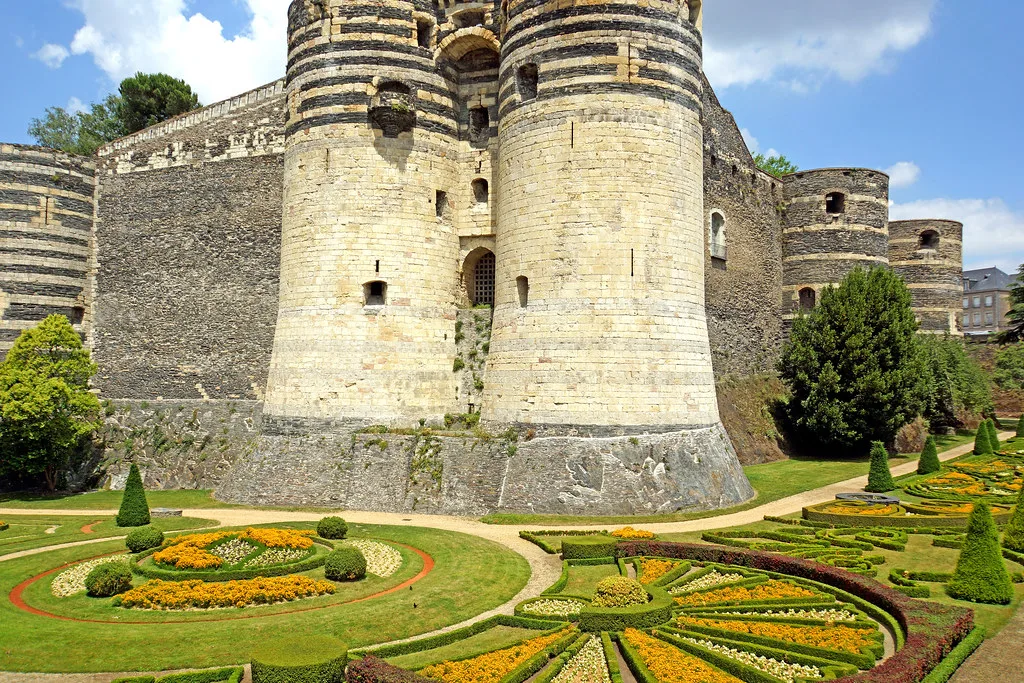
When the weather turns, the Château d'Angers is the obvious indoor answer. Its Apocalypse Tapestries were woven in Paris between 1377 and 1382, commissioned by Louis I, first Duke of Anjou, and given to Angers cathedral by his grandson René in 1480. The set comprises six tapestries each about 20 feet high and almost 79 long, with 90 scenes in total, of which 14 scenes and two readers were lost and the sixth tapestry suffered the worst damage.
Thirty further fragments discovered in a Parisian art gallery in 2020 were donated to the castle museum, so the display continues to grow. Give the tapestries an hour rather than a quick glance; they are the reason many visitors come to Angers in the first place.
For the rest of the city's sights, including the castle and the surrounding heritage, see our Angers Attractions: 6 Visitor Guides hub.
Two-day shopping and market plan
Day one: start at Place du Ralliement and work the Rue Lenepveu, Rue d'Alsace, Rue Saint-Laud and Rue Saint-Aubin loop in the morning, break for lunch and spend the afternoon at the Château d'Angers and the tapestries. If you arrive on a Friday, add the Rue Saint-Julien micro market in the evening.
Day two: if it is Saturday, the grand marché at Place Leclerc and Place Mendès-France from 8am to 1.30pm is the morning, with the Place Imbach flea market on the way back and a drink on Rue Jules Guitton afterwards. If it is Wednesday, use La Fayette from 8am to 1.30pm instead, which is easier to combine with a train.
If you are coming from a city with a comparable shopping scene, our guides to shopping in Annecy and shopping in Antibes make useful comparisons for how French provincial retail works.
Practical points: language, cards and carrying purchases
Markets are cash-friendly and many stallholders prefer it, so carry euros in small notes. Cards are widely accepted in the centre-ville shops, but a market stall selling a few euros of strawberries may not take one.
Carry a foldable bag. Market produce arrives in paper or plastic, and a tote makes the walk back to the hotel or the station much easier. If you are buying wine, ask the stallholder to wrap it or plan to drink it before you travel.
A few words of French go a long way at the market: bonjour on arrival, merci on leaving, and je voudrais for pointing at what you want. It is not required, but it is noticed.
For a wider view of what the city offers beyond the shops, our things to do guide covers the sights that fill the rest of the weekend.
Plan Your Visit
Angers rewards a shopper who plans around the market calendar rather than the shop opening hours. Saturday morning at Place Leclerc is the centrepiece, La Fayette on Wednesday and Saturday is the convenient alternative near the station, and the neighbourhood markets fill the rest of the week.
Build the rest of the day around the castle and the Apocalypse Tapestries, and keep the central streets for a slow wander between the two. For an honest verdict on whether a weekend here is worth it, read our answer on is angers worth visiting, and check current opening times and ticket prices with the Château d'Angers before you travel.
Explore more Angers guides
Frequently Asked Questions
Is Angers good for shopping?
Angers is good for food shopping rather than fashion. The centre-ville has a compact cluster of streets including Rue Saint-Aubin, Rue Lenepveu, Rue d'Alsace and Rue Saint-Laud around Place du Ralliement, but the real draw is the market scene: a Saturday grand marché at Place Leclerc, La Fayette twice a week and neighbourhood markets scattered across the city by day.
Where are the main shopping streets in Angers?
The main shopping streets are Rue Saint-Aubin, Rue Lenepveu, Rue d'Alsace and Rue Saint-Laud, all close to Place du Ralliement in the centre-ville. They form an easy loop on foot and sit within walking distance of the Saturday market at Place Leclerc.
What is the big market in Angers?
The grand marché at Place Leclerc and Place Mendès-France on Saturdays from 8am to 1.30pm is the biggest and most varied market in the city, with produce, fish, flowers, wine, spices and clothing. Queues can be long, so an early start helps.
Are shops open in Angers on a Sunday?
Sunday is the day to plan carefully. Markets run at Monplaisir-Doyenné in the city and at Bouchemaine and Savennières along the river, but the central retail streets should not be assumed to be trading. Check individual shop pages before you rely on them.
Which day is the market in Angers?
It depends which market. Saturday has the grand marché at Place Leclerc plus La Fayette, Place Molière, Place Grégoire, the organic centre-ville market and Place Imbach. Tuesday has Ney and Justices, Wednesday has La Fayette and Monplaisir-Allonneau, Thursday has Place Bichon, Friday has Deux-Croix Banchais and Belle-Beille, and Sunday has Monplaisir-Doyenné.
What local food should I buy in Angers?
Look for Anjou produce: asparagus, strawberries, apples and pears, quinoa grown in Anjou, Rouge des Prés beef and locally grown roses. Crémet d'Anjou is the traditional dessert to try, and Loire wine is easy to find on market stalls.
Is there a flea market in Angers?
Yes. A flea market runs at Place Imbach on Saturday mornings alongside the food market, selling furniture, trinkets, old coins and stamps. It pairs naturally with a visit to the grand marché at Place Leclerc.
How do I fill a rainy afternoon in Angers?
Head to the Château d'Angers for the Apocalypse Tapestries, woven in Paris between 1377 and 1382 and given to the cathedral by René in 1480. The set comprises six tapestries with 90 scenes in total and is the city's standout indoor sight.
Sources
Notes for French city breaks
Optional updates to our guides.
You might also like
Continue reading
More guides you'll find useful