
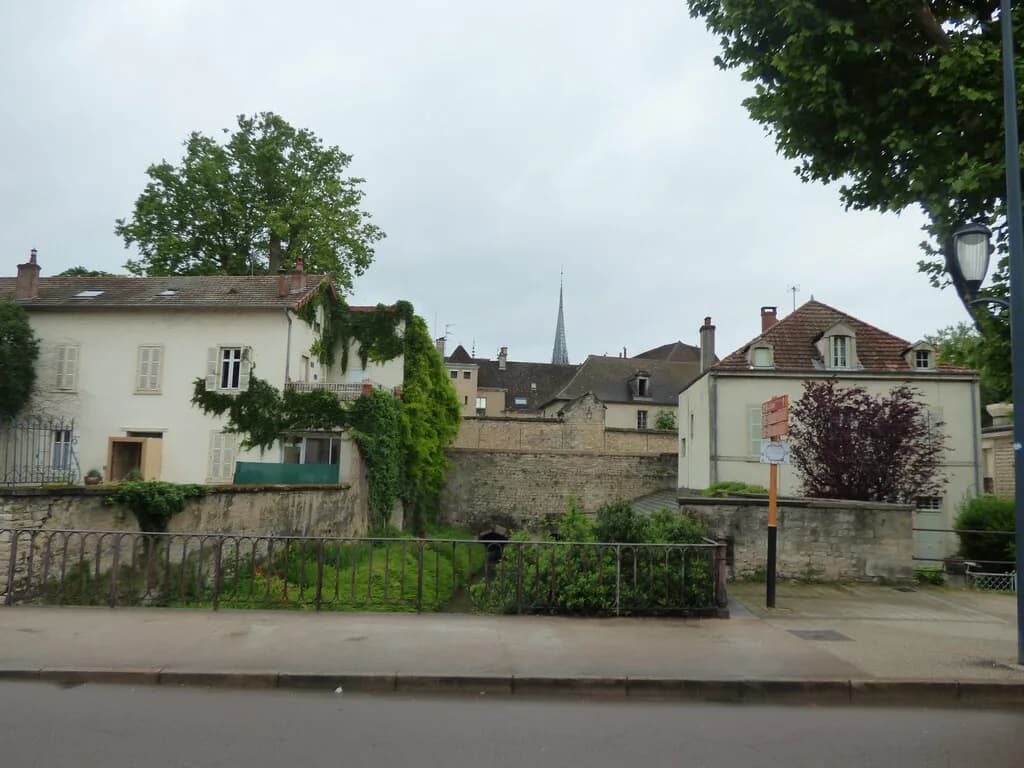
Quartier de la Bouzaize: Beaune's Green, Quiet District
The Quartier de la Bouzaize is Beaune's green, residential western quarter, and its anchor is the Parc de la Bouzaize, a five-hectare English-style park with a lake created around the source of the Bouzaize stream. Treat the district as a calm base with the town centre a short walk east, not as a sightseeing quarter in its own right.
Come here if you want trees, space for children and a flat path for a morning run before the museums open. Skip it if your idea of a weekend involves stepping out of your door into a café and coming back to a bar at midnight.
What the Quartier de la Bouzaize Is
This is a low-rise district on Beaune's western side, gathered around the park and the streets that ring it. Its character is residential and quiet rather than commercial, so it works best as somewhere to sleep and walk rather than somewhere to shop. The wider layout of the town, with the old centre inside its walls, helps you place it: the quarter sits outside that historic core.
Beaune itself sits on the Route des Grands Crus in Burgundy, roughly 30 miles south-west of Dijon and around 90 miles north of Lyon, with the A6 motorway running past the town. That geography is why the quarter feels like the edge of a town that opens straight onto vineyards rather than a dense urban neighbourhood.
Why the Parc de la Bouzaize Anchors the Area
The park is the reason most visitors cross town to this quarter at all. It covers five hectares in an English-style layout, built around a plan d'eau fed by the Bouzaize, and the description of the site emphasises its quiet and its water. That combination of a lake, open lawns and paths is unusual in a town of Beaune's size, and it gives the surrounding streets their unhurried feel.
The park covers five hectares on the source of the Bouzaize and includes a pond and games for children roughly aged 5 to 12. If you are travelling with younger children, that play area is the practical reason to build the park into your day rather than just walking past it.
The Park's History in Brief
The park was laid out in 1883 around the source of the Bouzaize, and the water supply was the original motive: the mayor of the day, Paul Bouchard, bought land so the town could draw on the spring. Acquisition began in 1886 with the plots around the lake and the Bourgeoise fountain, and further parcels were added gradually through sales and inheritances, including vineyards cleared after phylloxera. The purchases were wrapped up around 1910.
Knowing this changes how you read the place. It is a Victorian-era municipal park built for water and public health, not a private garden, which explains the generous lawns and the lack of formal gates and ticketing you might expect at a château.
What to Do in the Park
The core of a visit is simple: walk the paths around the plan d'eau, find the spring that gave the park its purpose, and let children loose on the play equipment. A leisurely loop with stops takes about an hour, which makes it an easy add-on to a day centred on the old town. There is no need to plan an elaborate itinerary here; the pleasure is in the shade and the water.
The park is best in the morning or late afternoon, when the light is softer and the lawns are less busy. Bring water, because the nearest shops are back towards the centre rather than on the park's edge.
Layout and Orientation
Think of the quarter as a ring of streets around the park on Beaune's western side, with the historic centre to the east. Walking in from the centre is straightforward and mostly flat, and you will pass through residential streets rather than along a commercial high street. The Porte Saint-Nicolas and Place Carnot are the landmarks locals and route planners use to anchor the approach from town.
If you are comparing areas, Saint-Jacques, Beaune lies within the same town, with a population of around 2,826 residents and an average age of 42. It is a useful reference point for understanding how Beaune's outer quarters are laid out, but it is a separate district with its own character and its own reasons to visit. For a contrast beyond Beaune, things to do in Dijon show how a larger Burgundian city organises its old town, museums and markets for a weekend.
Who the Quartier Suits
This quarter suits visitors who want green space on the doorstep: families with young children, runners who like a flat morning loop, and anyone who prefers quiet evenings to a lively street scene. It also works for cyclists, because the park is a natural start point for routes heading out towards the vineyards.
It suits people who are happy to walk ten or fifteen minutes into the centre for dinner and then walk back. If that sounds like a chore after a long day of tasting rooms and museums, this is not your quarter.
Who It Does Not Suit
Travellers who want breakfast, a bakery and an evening bar within a minute of the hotel door will find the Bouzaize quarter too sleepy. The district has no commercial centre of its own, so every meal and every coffee means a walk or a short ride into town.
It also disappoints anyone hoping to be based in the thick of Beaune's historic streets. If your priority is stepping out of your accommodation into the old town's arcades and squares, base yourself closer to the centre and visit the park as an excursion instead.
Walking and Running Routes from the Park
The park makes a natural start and finish for a run. Recorded loops from Beaune include a 9.97 km circuit linking the Parc de la Bouzaize with the Porte Saint-Nicolas, mostly on surfaced paths, and a longer 15.8 km loop from the Porte Saint-Nicolas through the park that climbs around 230 metres. The shorter option is the sensible choice for a weekend morning when you still want to see the town afterwards.
For something more ambitious, a 21.4 km loop starting from Place Carnot heads out through the vineyards and climbs around 360 metres. That is a proper half-day on the bike or a hard run, so save it for a trip where the park is your base rather than a quick stop.
Eating and Drinking Near the Park
The quarter has no restaurant cluster of its own, so plan to eat in the centre and walk back. Budget for that rhythm: an early dinner in town, a short walk west, and a quiet evening. If you want a late drink, have it before you head back rather than counting on finding somewhere open near the park.
For daytime, carry what you need. A picnic on the lawns beside the plan d'eau is the obvious move and saves you the walk back into town at lunchtime.
Getting There and Getting Around
On foot, the park is a straightforward walk west from Beaune's historic centre, and walking is the easiest way to arrive. Beaune's nearest mainline station sits a couple of kilometres from the outer quarters, so a taxi or a bus from the station makes sense with luggage. Cycling is a good option once you are settled, with the park as a natural start point for vineyard routes.
Two high-speed train services serve Beaune station: one running between Paris and Chalon-sur-Saône via Lyon and Dijon, and the Dijon–Nice line, which also stops at Lyon and Marseille. Check times with SNCF before you book, since not every service stops here.
How Long to Allow
Give the park an hour if you are fitting it around the old town, or half a day if you want to walk the surrounding streets and let children use the play area properly. A simple decision rule: if you have under two hours, do the park loop only; if you have a morning free, add the residential streets and a coffee back in the centre.
Do not over-schedule this quarter. Its value is as breathing space between Beaune's museums and cellars rather than as a tick-list of sights.
Where the Quarter Fits in a Two-Day Beaune Itinerary
Use the first morning for the old town's headline sights, including the Hôtel-Dieu with its glazed Burgundy roof tiles and Rogier van der Weyden's Last Judgement altarpiece, then walk west to the park in the late afternoon. The second day can start with a run or a bike loop from the park before you head back into town.
If you are weighing up which quarter to sleep in, note that Saint-Nicolas is another Beaune neighbourhood close to the centre and the park, so it is worth reading both before you commit to a base.
Honest Trade-offs
The main trade-off is distance: you are outside the historic centre, so every museum, restaurant and station transfer involves a walk or a ride. Evenings are quiet, which is either the point or the problem depending on your trip.
The second is that the quarter's appeal is largely the park and the green edge of town. If you visit in poor weather, or you are travelling without children and without a bike, its pull is much weaker.
The Quarter in One Decision
Choose the Quartier de la Bouzaize if you want a calm, green base with a five-hectare park on the doorstep and are content to walk into Beaune for meals and museums. Choose the centre or Saint-Nicolas if you want the town's life on your doorstep and would rather visit the park as a morning excursion.
Explore more Beaune guides
Frequently Asked Questions
Where is the Quartier de la Bouzaize in Beaune?
It sits on Beaune's western side, outside the historic centre, gathered around the Parc de la Bouzaize. You reach it on foot from the old town in a straightforward walk west, and the Porte Saint-Nicolas and Place Carnot are the usual landmarks for the approach.
How big is the Parc de la Bouzaize?
It covers five hectares and is laid out in an English style around a plan d'eau fed by the Bouzaize stream. It includes a play area for children roughly aged 5 to 12, which makes it a practical stop for families.
When was the Parc de la Bouzaize created?
The park was created in 1883 around the source of the Bouzaize. Land purchases began in 1886 under mayor Paul Bouchard and were completed around 1910, as plots were added through sales and inheritances.
Is the Quartier de la Bouzaize a good area to stay in Beaune?
It suits park-first visitors, families and runners who want quiet evenings and green space. It does not suit anyone who wants a café and a bar on the doorstep, because the quarter has no commercial centre and meals mean walking into town.
How long should I allow for the Parc de la Bouzaize?
Allow about an hour for a loop around the lake and play area if you are fitting it around the old town. Give it half a day if you want to combine the park with the surrounding residential streets.
Can you run or cycle from the Parc de la Bouzaize?
Yes. Recorded routes include a 9.97 km loop from the park to the Porte Saint-Nicolas on mostly surfaced paths, a 15.8 km loop via the Porte Saint-Nicolas with about 230 metres of climbing, and a 21.4 km vineyard loop from Place Carnot with about 360 metres of climbing.
Sources
- Parc de la Bouzaise – Itinéraires randonnée & vélo | Komoot
- Quartier Saint-Jacques à Beaune (21200) - Avis, Données et Statistiques | Chacun Son Lieu
- Beaune Travel Guide: Best of Beaune, Bourgogne-Franche-Comté Travel 2026 | Expedia.co.uk
- Parc de la Bouzaize - Beaune
- Place à la détente et à la tranquillité dans le parc de la ...