
Saint-Nicolas, Beaune: What to See and Who It Suits

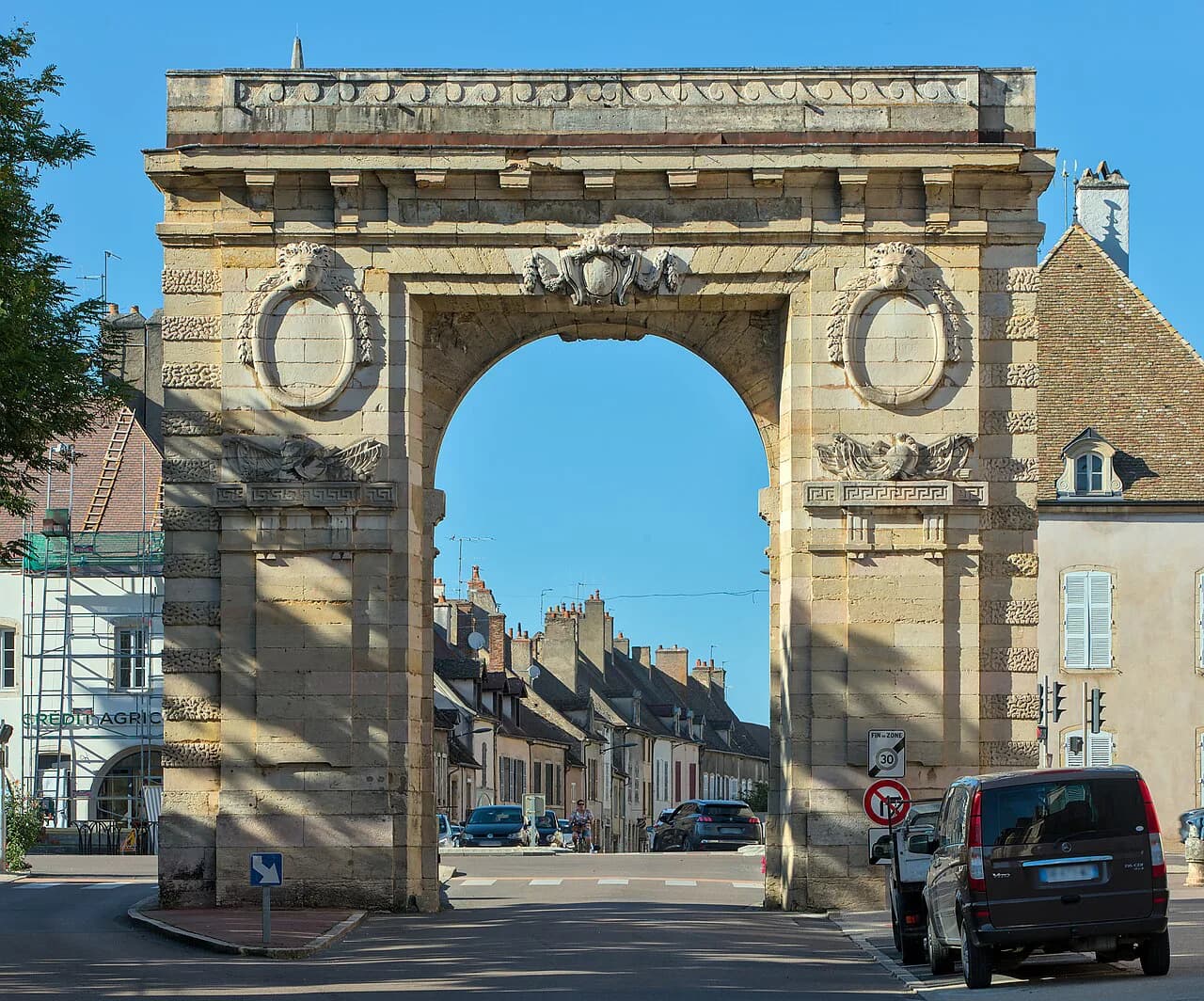
Saint-Nicolas is a small district just outside Beaune's old walls, and its reason to visit is one building: the Église Saint-Nicolas, a 13th-century Romanesque church with a porch carved with chimeras and a bell tower topped by a tufa spire added in the 15th century. It sits on Rue du faubourg Saint-Nicolas at the corner of Rue des Dominicaines, so you reach it by leaving the historic circuit rather than by wandering into it.
Treat the area as a half-day add-on to a city break in Beaune, not as a destination in its own right. The rewards are a quieter street, a close look at Romanesque stonework and an easy pairing with the Collégiale Basilique Notre-Dame back inside the centre. If you are choosing which of the town's districts to base yourself in, compare them side by side in the Beaune Neighborhoods guide. Check current opening times with the parish before setting out.
What Saint-Nicolas is and where it sits in Beaune
This is a faubourg — the strip of streets that grew up outside a town's gates — and its identity hangs on the church that gives it its name. Burgundy Tourism lists the address as Rue du faubourg Saint-Nicolas, at the corner of Rue des Dominicaines, in 21200 Beaune, which tells you it belongs to the approach roads rather than the walled core. The name is the giveaway: a faubourg is literally 'outside the walls'.
Beaune itself sits in Burgundy, in the Bourgogne-Franche-Comté region, and is best known for the Hôtel-Dieu – Hospices de Beaune, the medieval hospital with its tiled roof, which pulls most short-break visitors into the old town. Saint-Nicolas works as a counterweight to that busy circuit: same town, different tempo. Use the Beaune Attractions guides if you want to see how the church fits alongside the town's other monuments.
Who the district suits and who should look elsewhere
Saint-Nicolas suits travellers who have already seen the centre and want a calm hour on foot, and anyone driving into Beaune who would rather park on the edge than thread a car through the ramparts. The setting is residential and the church is the single set-piece, so it rewards people who enjoy Romanesque architecture or a quiet streetscape rather than a cluster of sights.
It does not suit a first-timer with 24 hours and a wishlist, or anyone who wants restaurants and shops on the doorstep. Base yourself inside the old town for that, and come out here as a walk. If you are weighing up which edge-of-centre district to stay in, the Quartier de la Bouzaize has the park and the Faubourg Madeleine sits on another approach road, so compare those before committing.
The 13th-century church: Romanesque porch, chimeras and a tufa spire
The Église Saint-Nicolas is a 13th-century Romanesque church, and Burgundy Tourism singles out two features: a porch decorated with chimeras and a bell tower with a tufa spire added in the 15th century. Look up at the tower to see how the porous tufa stone has weathered compared with the main body of the church — that two-phase construction is the story of the building.
Give the porch a proper look rather than a photo and a shrug. The chimeras are carved figures, and finding them takes a slow walk around the entrance rather than a glance from the pavement. Combine the visit with the walk out and back — the round trip is the point, and the church is the reward at the end.
The Collégiale Basilique Notre-Dame and its 16th-century glass
Back inside the centre, the Collégiale Basilique de Notre-Dame is the natural second church of the morning. The St. Nicholas Center records an early 12th-century building with a triple nave of four spans, apses rebuilt in the 16th century and stained glass of that period. The dual dedication, to Notre-Dame and Saint Nicolas, links it neatly to the faubourg you have just walked from.
Pairing the two buildings gives you a compact lesson in local church-building: Romanesque stonework with a later spire outside the walls, an earlier nave with 16th-century glass inside them. The glass is the reason to linger here, so time your visit for daylight and allow longer than you would for a quick look. Both churches are a walk apart, which makes one morning cover both.

Street layout and how the area sits in relation to the old centre
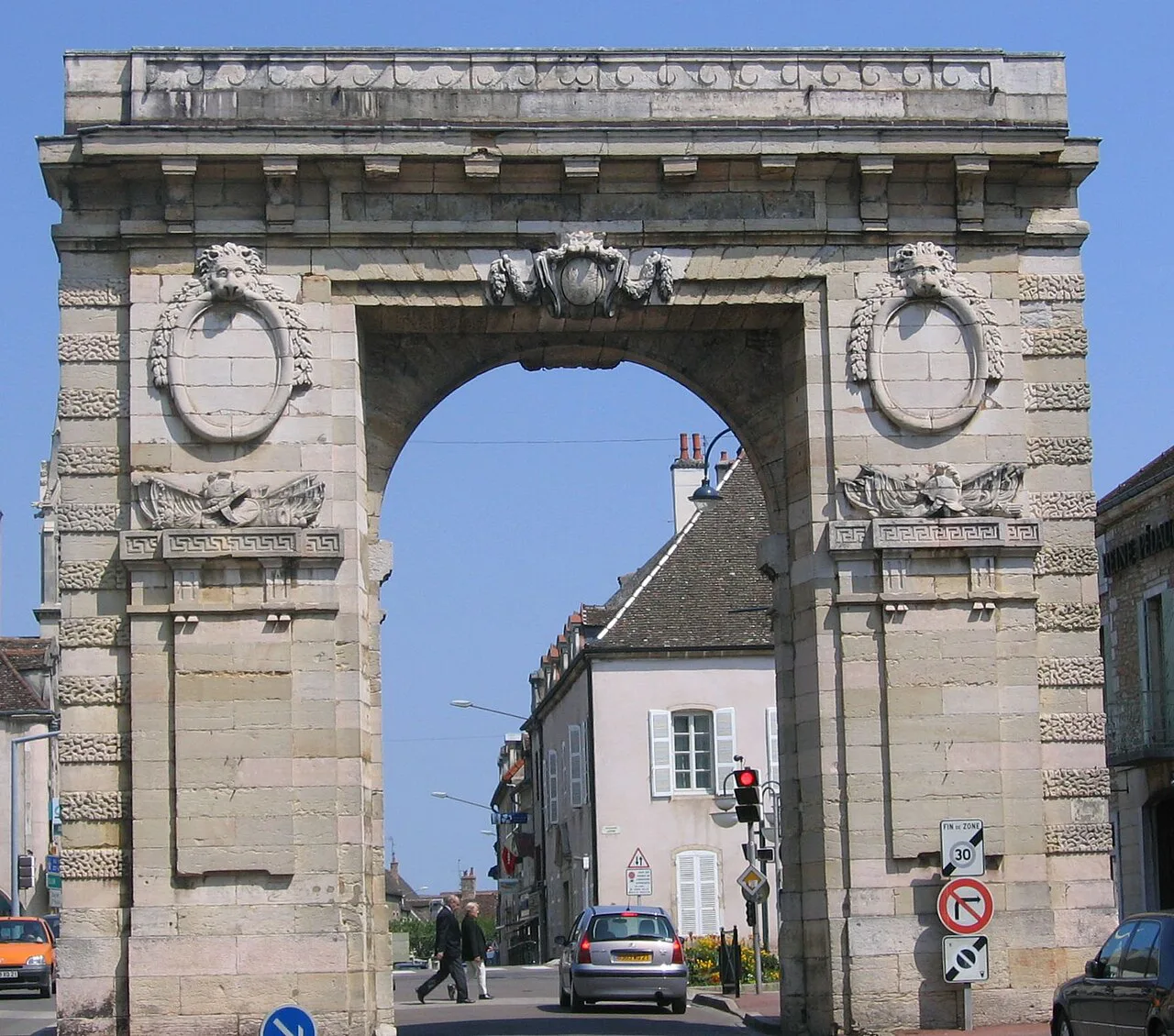
The geography is simple once you hold one fact in mind: the church is outside the walls, so you reach it along the Rue du faubourg Saint-Nicolas rather than through the old-town lanes. That also means it is not on the route between the Hospices de Beaune and the main square. You have to decide to go, then walk out and back.
Think of it as a loop: ramparts to faubourg, church and porch, then back into the centre via Notre-Dame. Walking is the realistic way to do this, and the out-and-back shape makes it a deliberate stroll rather than a sight you trip over. If you want the full picture of the town's districts first, the Beaune Neighborhoods: 4 Area Guides page sets out how the pieces fit.
Arriving by car or train and getting around on foot
Beaune is easy to reach from the UK by train, with Eurostar to Paris and a TGV onward to Dijon, Montbard, Mâcon Loché TGV or Le Creusot-Montchanin TGV, and Burgundy Tourism puts London–Dijon at 460 miles. From a Burgundy TGV station, a connecting train or a short drive brings you into Beaune. Once there, the faubourg is a walking proposition, and Burgundy Tourism lists parking for the church.
On foot, walk out from the old town rather than hunting for a bus, and use the journey to see the transition from ramparts to faubourg. Pets are not allowed at the church, according to Burgundy Tourism, so leave dogs at the hotel for this leg. If you have limited mobility, plan the walk in daylight and at an unhurried pace rather than bolting it onto a packed schedule.
Eating and drinking in and near the district
The faubourg reads as a residential strip rather than a restaurant quarter, so plan to eat in the old town and treat Saint-Nicolas as the walk between meals. That is the honest trade-off: you gain quiet and lose the doorstep choice of tables. For a short break, it means one deliberate evening stroll in each direction.
Practical approach: walk out to the church in the late morning, see the porch and the tower, then return into the centre for lunch and an afternoon at the Hospices. If you prefer your food stops to be the anchor of the day, look at the Faubourg Madeleine, on another approach to the town, instead. If you want a broader list of what to do when you are back inside the walls, the things to do in beaune guide covers the town's main visits, and you can weigh the same trade-offs in another Burgundy city with our things to do in Dijon.
Short-break shape: what to do on a slow first afternoon
Use the first afternoon for the centre, not the faubourg. Check in, see the Hôtel-Dieu – Hospices de Beaune while you still have energy, then walk the ramparts and get your bearings. That way the outing to Saint-Nicolas is a fresh morning rather than an afterthought at the end of a travel day.
If you arrive early and want to stretch your legs straight away, do the faubourg loop first and leave the Hospices for the next morning. Either order works; the point is not to try to do both churches and the hospital in one push. A slow afternoon with one main sight and a wander beats a checklist every time on a weekend.
What fills a second day, and what to save for next time
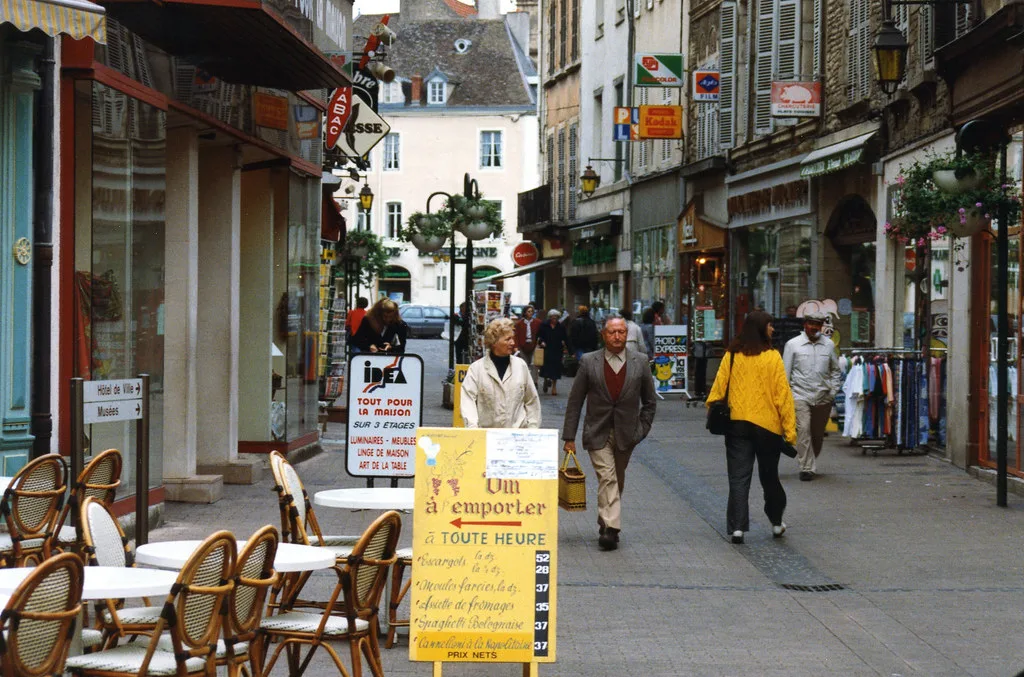
The second day is the church morning: out along the faubourg to the Église Saint-Nicolas, back to the Collégiale Basilique Notre-Dame, and lunch in the centre. That gives you two religious monuments of genuinely different dates and styles in a single unhurried block.
Save the wider Burgundy countryside for another trip. A weekend is enough for Beaune's centre, the two churches and one slow afternoon, and stretching it further means rushing what you have. If you want a second, contrasting district to explore on foot after the churches, Saint-Jacques, Beaune sits inside the old town and gives you a different street pattern to compare.
Trade-offs and practical notes for a weekend stay
The main trade-off is distance for calm. Saint-Nicolas gives you a quiet street and a landmark church, at the price of a walk whenever you want dinner, a shop or the main sights. For a two-night break that is a fair swap if you like walking and a poor one if you do not.
Burgundy Tourism's listing carries an all-year-round date range that is page metadata, not a promise of access, so check the parish site linked from that listing before making the walk the centrepiece of a day. The same listing gives a phone number and the parish website, which is where service times and any closures sit.
Pack for walking and keep the faubourg leg flexible: if the weather turns, swap it with an indoor morning at the Hospices and go out when the sky clears. The Quartier de la Bouzaize, with its park, is the other obvious outdoor option if you want green space instead of stone. Both work as half-days, which is exactly what a weekend needs.
Plan Your Visit
Saint-Nicolas is a one-sight district and a good one: a 13th-century Romanesque church with a chimera porch and a 15th-century tufa spire, set just beyond Beaune's walls. Walk out deliberately, pair it with the Collégiale Basilique Notre-Dame, and you have a satisfying morning without padding the itinerary. The Beaune Neighborhoods guide helps you decide where the rest of your time should go.
Explore more Beaune guides
Frequently Asked Questions
What is Saint-Nicolas in Beaune?
It is the faubourg, or outside-the-walls district, on Rue du faubourg Saint-Nicolas at the corner of Rue des Dominicaines. Its landmark is the Église Saint-Nicolas, a 13th-century Romanesque church with a porch decorated with chimeras and a bell tower with a tufa spire added in the 15th century.
Is the Église Saint-Nicolas worth visiting in Beaune?
Yes, if you like Romanesque architecture and a quiet walk. The porch chimeras and the later tufa spire are the specific things to see, and the church pairs well with the Collégiale Basilique Notre-Dame back inside the centre. It is not a cluster of sights, so treat it as a half-day rather than a full one.
How far is Saint-Nicolas from central Beaune?
It sits just outside the old walls on the faubourg of the same name, so it is a walk from the centre rather than a trip across town. The out-and-back route is the point of the visit. Plan it as a deliberate stroll on foot in daylight.
What is Beaune famous for?
Beaune is best known for the Hôtel-Dieu – Hospices de Beaune, the medieval hospital with its distinctive tiled roof, in the old town. The town also has a strong church heritage, including the Église Saint-Nicolas outside the walls and the Collégiale Basilique Notre-Dame in the centre.
Who is Saint Nicholas in France?
Saint Nicholas is a widely venerated saint associated with the feast day in early December, and several French churches carry his name or a joint dedication. In Beaune, the Collégiale Basilique de Notre-Dame holds a dual dedication to Notre-Dame and Saint Nicolas, which ties it to the faubourg church.