
Bourgogne, Orléans: A Guide to the City's Old 'Village' Quarter
Bourgogne is the old 'village' quarter of central Orléans: a pocket of narrow, paved side lanes and traditional low-rise buildings set around the broad Place Saint-Aignan, a short walk from the city's main shopping streets. It is a walking neighbourhood rather than a ticketed sight, best treated as an hour or two of your Orléans weekend rather than a destination in itself. Its identity comes from having grown up apart from the main thrust of the city's historic development, which left it with the feel of a village folded into the centre.
What Bourgogne is: Orléans's old 'village' quarter
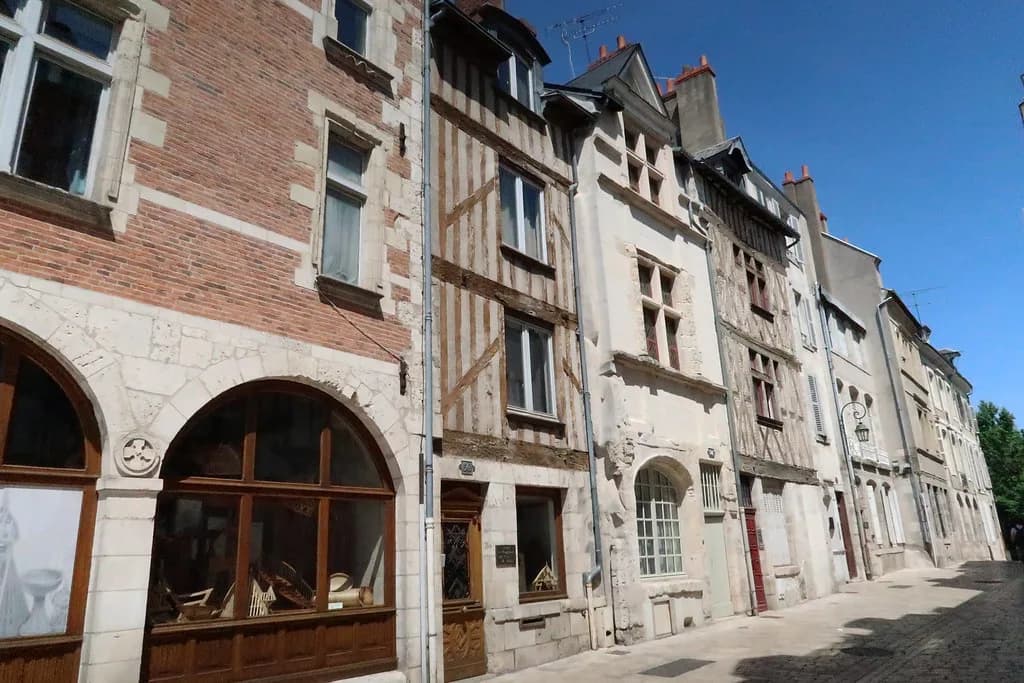
The city describes this part of the centre as having stayed on the sidelines of Orléans's historic growth, keeping a distinct 'village' identity. That shows in the fabric of the streets: many secondary lanes are narrow, paved, picturesque and intimate, and driving through them is not always easy. Expect a dense, small-grained quarter of traditional, village-style buildings rather than grand boulevards or monumental set-pieces.
Treat the quarter as a place to wander rather than a list of attractions to tick off. The pleasure is in the lane-to-lane detail, the changed scale after the busier shopping streets, and the sense of a self-contained enclave inside the city. It rewards a slower pace and a willingness to loop back on yourself.
Where it sits: rue de Bourgogne, the historic spine
Rue de Bourgogne runs through the quarter as Orléans's main street since antiquity, the line of the former Roman decumanus crossing the city east to west. Reading the city from this axis helps: the quarter sits on the central spine, so you can enter it on foot from the heart of the centre rather than making a separate journey.
Because the street is the historic main axis, it also makes the simplest orientation device for a short break: follow it east or west and you pass through Bourgogne rather than detouring to it. Pair it with the neighbouring quarters when you plan your days, using our Orléans Neighborhoods: 4 Area Guides to decide which district gets which half-day.
Character and layout: intimate lanes, stone-built streets
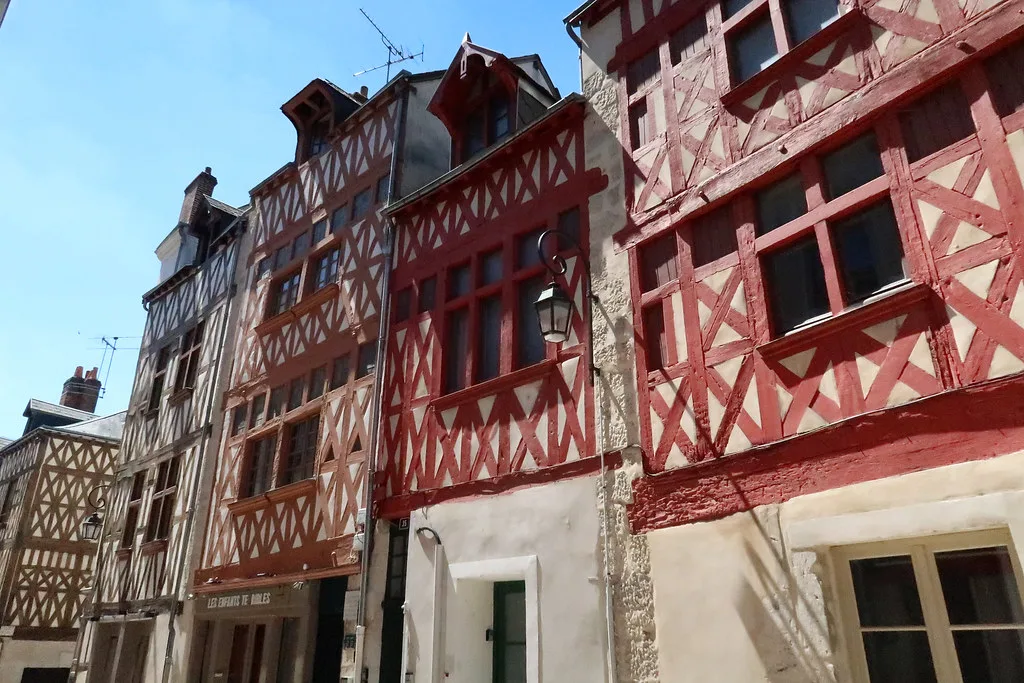
The street pattern is the attraction: secondary lanes that are narrow, paved and intimate, lined with mostly traditional buildings in a village register. This is a quarter to read slowly, looking at doorways and rooflines as much as at any single monument. Walkers who like tight, human-scale streets will find plenty to hold their attention in a small area.
Those same lanes are the quarter's practical limitation. The city notes that circulation is not always easy in these narrow streets, so plan on foot and leave the car out of the equation where you can. For a weekend, that means comfortable shoes and a loose route rather than a driving tour.
Place Saint-Aignan: the square that anchors the quarter
Place Saint-Aignan is the quarter's broad, open anchor, and the city describes it as unchanged since its creation and organised on itself. In a district of tight lanes, that makes it the natural pause: a wide space to reset your bearings before diving back into the side streets. Any future animation of the square is part of a longer public-realm programme rather than something to plan a visit around.
Use the square as a hinge for your walk. Approach through the lanes, cross the open space, and pick a different exit; the quarter is small enough that you will not lose time by looping.
Greenery: courtyard gardens, not street planting
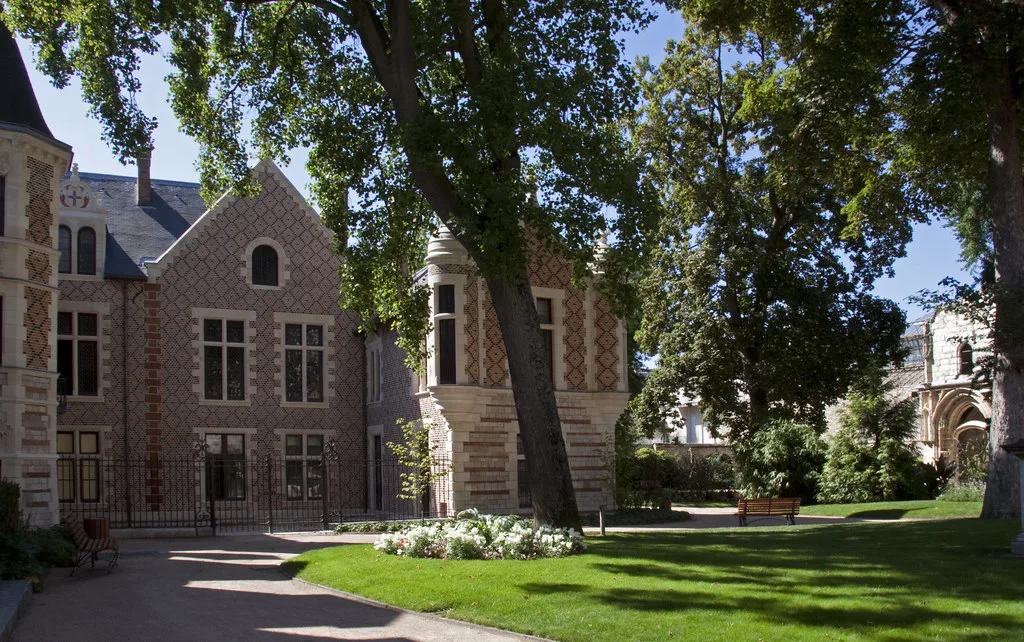
Green space here sits mostly in enclosed gardens in the heart of the blocks, not along the street edge. The city is explicit that vegetation is essentially present in these closed jardins en cœur d'îlots. The result is a stone-built feel at eye level, with greenery glimpsed rather than strolled through.
If you want a park bench or a lawn in your afternoon, this is not the quarter for it; plan your green time elsewhere in the city. What Bourgogne offers instead is shade, narrow streets and the quiet of enclosed courtyards you cannot enter.
Who Bourgogne suits, and who it does not
Bourgogne suits travellers who enjoy aimless walking, small-scale architecture and streets that feel removed from the retail centre. It is a good fit for a slow morning, a photographic wander, or an hour between two fixed stops. It suits people who are happy to look rather than to be entertained by attractions.
It is less comfortable if you need step-free, wide pavements throughout, or if you are travelling by car and expect easy parking at the door. The city acknowledges that traffic in the narrow lanes is not always straightforward and that parking around Place Saint-Aignan is being reorganised. Travellers with limited mobility should treat the quarter as an optional extra rather than a core stop.
The pedestrian rue de Bourgogne and calm walking routes
Rue de Bourgogne has been pedestrianised as part of the current experiment, and the city reports strong support for that change since the project began. Three test zones were set up at once: the pedestrian rue de Bourgogne, the streets around the Charles-Pensée and Saint-Paul-Bourdon-Blanc schools, and the approaches to Place Saint-Aignan. The aim is calmer circulation and more space for people on foot.
A straightforward route is to walk rue de Bourgogne end to end, then take the side lanes towards Place Saint-Aignan and back through the smaller streets. Rue de la Tour-Neuve, rue du Bourdon-Blanc and rue Dupanloup have been switched to one-way south-to-north, and rue Neuve-Saint-Aignan is one-way. Expect the layout to shift as the experiment is adjusted.
The Bourgogne Village project: what has changed on the ground
The city's Bourgogne Village programme, framed as a way to continue the transformation of the centre begun over twenty years, launched its experiment in February 2025 after consultation with residents. Temporary 'tactical urbanism' installations were tested for roughly five months across three zones, and residents were invited to give feedback before permanent requalification work.
The timetable matters for visitors. The city says technical studies began in the first half of 2026, with an access-control bollard for the pedestrian zone due on rue de Bourgogne in December 2026, and further resident meetings during 2027. The overall project envelope is estimated by the city at 30 million euros, covering public spaces, planting and support for housing and shops. The traffic plan may be adjusted during the experiment, so expect changes street by street.
If you live in a pedestrian street in the quarter and need to drop shopping or reach a garage, the city issues an access sticker from the Mairie de proximité centre-ville at 5 place de la République. Visitors do not need one, but it explains why some vehicles pass where you might not expect them.
The heritage exhibition along rue de Bourgogne
Since June 2025, a heritage exhibition has been on show in the quarter, presenting the work of Laurent Mazuy, the city's expert on architectural, urban and landscape heritage. It runs from 108 rue de Bourgogne up to the top of rue de Solférino, passing Place Saint-Aignan, with archive images and captioned plans explaining the district's identity. Look for it as you walk rather than as a museum stop.
The city has not published an end date for the display, so treat it as something you may or may not find on any given street corner. It is an unstructured layer on top of the walk, and it works best if you read the panels as you pass rather than seeking them out.
Eating and drinking in the quarter
Bourgogne is a residential, village-feeling quarter rather than a restaurant district, and it makes sense to treat eating as a matter of what you find on the day rather than a booking-led plan. Check menus posted outside before committing, and expect the choice to be small. The broader choice of restaurants and cafés sits in the surrounding centre, which is a short walk away.
If you want a wider spread of places to eat, head for Rue des Carmes, where Carmes, Orléans has far more going on at street level and a denser cluster of food addresses. Bourgogne is better used for a coffee stop or a simple lunch between walks than for a planned dinner.
Getting there and getting around on foot
The quarter is central enough to reach on foot from the middle of Orléans, and walking is the only sensible way to see it. Arrive via rue de Bourgogne, use Place Saint-Aignan as a landmark, and expect narrow lanes with one-way traffic where the experiment has reorganised flows. The city signposts the main entrances to the test zone while the scheme is live.
If you arrive by car, park outside the quarter and walk in; the streets themselves are not designed for cruising. A residents' scheme has reserved 140 places for locals at Parking Aristide Briand, which tells you the pressure on kerbside space is real. Plan your timing around a single visit rather than repeated loops.
How long Bourgogne needs within an Orléans weekend
Give Bourgogne an hour or two on a weekend in Orléans: enough to walk rue de Bourgogne, cross Place Saint-Aignan and explore a few side lanes without rushing. It slots neatly into a morning before or after a museum, or into a late afternoon when the centre is busier. It is not a half-day destination on its own.
Across the river, Saint-Marceau, Orléans makes a natural contrast: broader riverside space and a different pace after the tight lanes of Bourgogne. Fold it into the same afternoon if you want a second, quieter walk, and treat the two quarters as complementary rather than competing stops. If you are weighing up similar small-scale historic centres elsewhere in the region, our guide to things to do in Chartres covers another compact cathedral city worth comparing.
Plan Your Visit
Bourgogne rewards a short, unhurried walk rather than an itinerary. Go for the narrow paved lanes, the village-scale buildings and the open space of Place Saint-Aignan, and accept that some streets are one-way and changing under the city's experiment. Pair it with another quarter or a museum to fill a day.
Before you go, check the city page for the current state of the Bourgogne Village works and the pedestrian zone arrangements. For a wider sense of how the neighbourhood fits into the city, the district guides give useful context.
Explore more Orléans guides
Frequently Asked Questions
Where is the Bourgogne quarter in Orléans?
It sits in the centre of Orléans, threaded by rue de Bourgogne, the historic east-west axis of the city, and anchored by the broad Place Saint-Aignan. Because it lies on the central spine, you can walk into it from the main shopping streets rather than making a separate trip, and it works best as an hour or two folded into a day in the centre.
Is rue de Bourgogne pedestrianised?
The city has pedestrianised the street as part of its Bourgogne Village experiment, alongside test changes around the Charles-Pensée and Saint-Paul-Bourdon-Blanc schools and the approaches to Place Saint-Aignan. An access-control bollard for the pedestrian zone is scheduled for rue de Bourgogne in December 2026, and the city notes that the traffic plan may be adjusted during the experiment, so check the city page before you travel if you need to arrive by vehicle.
How long does it take to walk around Bourgogne?
An hour or two covers rue de Bourgogne, Place Saint-Aignan and a handful of side lanes at an unhurried pace. The quarter is compact and the lanes short, so it does not need a half-day of its own; use it as a slow morning or a late-afternoon wander between bigger sights, and combine it with a riverside walk or another district.
Is Bourgogne worth visiting on a weekend in Orléans?
Yes if you like small-scale streets, traditional buildings and a village feel inside a city centre. It is less appealing if you want ticketed attractions or need wide, step-free pavements throughout, since the lanes are narrow and traffic arrangements are being reworked. Treat it as a contrast stop rather than the headline of your weekend.
What is there to see in Bourgogne?
The draw is the street pattern itself: narrow, paved lanes, traditional village-style buildings, the open expanse of Place Saint-Aignan, and enclosed courtyard gardens glimpsed behind the street frontages. A heritage exhibition has also been laid out along rue de Bourgogne and the surrounding streets since June 2025, with archive images and annotated plans on panels you read as you walk.