
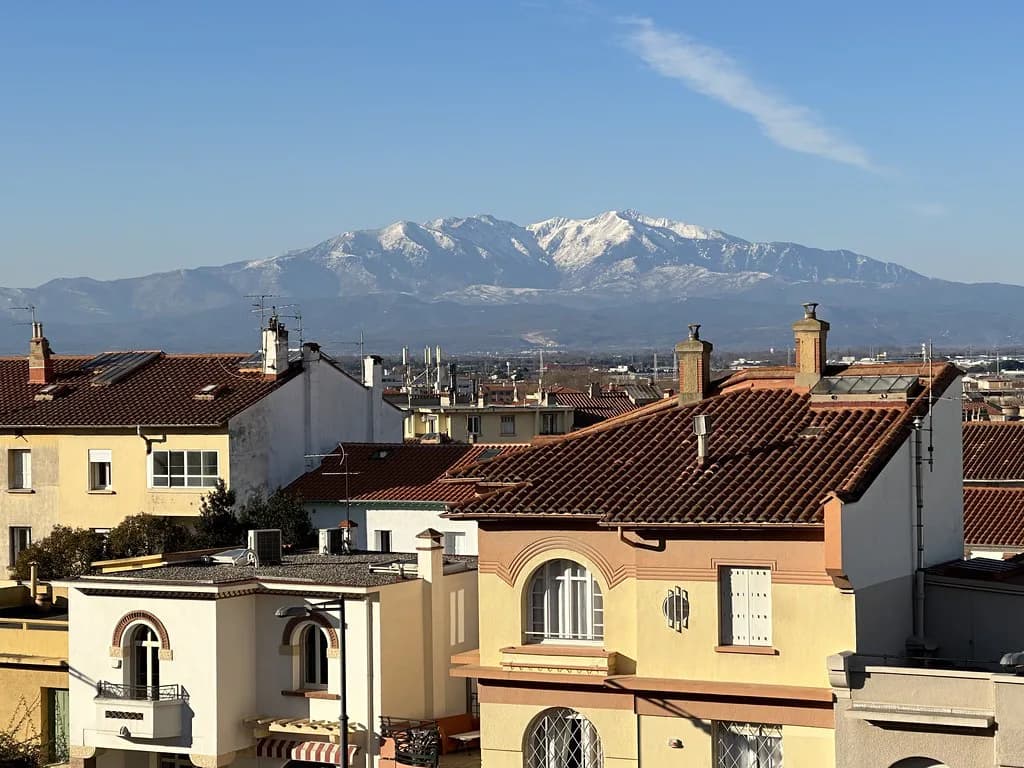
Saint-Mathieu, Perpignan: the medieval grid beside the old centre
Saint-Mathieu is a densely built, working quarter of central Perpignan, laid out on a deliberate grid in the 13th century and still only a few minutes from the city's hypercentre. It suits travellers who like real neighbourhoods more than polished ones, and it gives you a parish church, a stretch of medieval street pattern and a lively bar strip without leaving the centre.
The quarter sits west of the old town on the left bank of the Basse, bounded roughly by rue Grande-la-Monnaie, rue des Lices and avenue Foch, with the citadel ramparts, place Arago and the quays framing it. Its straight, narrow streets are the point of the visit: this was planned extension, not organic growth.
Where Saint-Mathieu sits in Perpignan
Saint-Mathieu occupies the left bank of the Basse, in the heart of Perpignan, between the citadel ramparts, place Arago, the quays and the Saint-Martin crossroads. The boundary streets run through rue Grande-la-Monnaie, rue des Sureaux, rue des Lices, rue Lieutenant Pruneta, rue des Jotglars and avenue Foch, with the area between rue Porte d'Assaut, the quai Jean Delattre de Tassigny and rue Pierre Cartelet added to the same polygon.
That makes it one of the most central districts of the city, a few steps from the hypercentre rather than a suburb to be reached by bus. Place Arago and the Basse quays work as the natural approach points, so you can fold the quarter into a walk between the old town and the water.
Why the streets run straight
The grid is deliberate. Saint-Mathieu was built from scratch in the mid-13th century, like its twin Saint-Jacques, as an urban extension driven by population growth under James I of Aragon. The land had been market gardens outside the walls; the Franciscans built their monastery here at the start of the 13th century, and the road that left Perpignan through the gate at today's place Arago ran west past it.
Construction came in phases: concessions were granted through the 1240s, more building followed between 1265 and 1272, and a final campaign between 1278 and 1282 gave the quarter the shape it keeps today. The main axis, first the carrer nou and later the carrer Sant Francesc, passed through several names before becoming avenue Foch.
When the kings of Majorca arrived, Saint-Mathieu had already stood for 50 years; they built their palace on the higher ground and created the fourth parish, La Réal. The older spelling Saint Matthieu survives in historical writing, while the quarter is now written Saint-Mathieu with one T.
Église Saint-Mathieu, the heart of the quarter
The parish church gives the district its name and stands roughly at its centre. The present building is a 17th-century church put up to replace an older one on the citadel glacis that had to be demolished; it is known for the richness of its decoration and the way that decoration is shown off, with a fine chapel immediately on the right as you enter.
The parish is dedicated to the evangelist Matthew, remembered as a tax collector for the Roman occupiers who followed Jesus. Set aside a short stop rather than a sightseeing slot: the church is a working parish, so time your look inside around services.
Franciscan survivals along avenue Foch
The Franciscan convent was one of the oldest in Perpignan, founded in the 13th century outside the town walls by a mendicant order that built around a four-sided cloister with three churches and numerous convent buildings. Its remains now sit behind the dalle Arago inside the departmental buildings, so expect fragments embedded in later structures rather than a visitable complex.
The Chapelle Notre-Dame-des-Anges, along rue Foch, belonged to that convent and is the most legible piece of it. The quarter also held a Benedictine priory of Saint-Martin dependent on Saint-Michel de Cuxa, a Mercedarian convent and church that have disappeared, a Sainte-Madeleine priory from 1261, and the Saint-Martin barracks built in the second half of the 12th century to house officers around a trapezoidal courtyard.
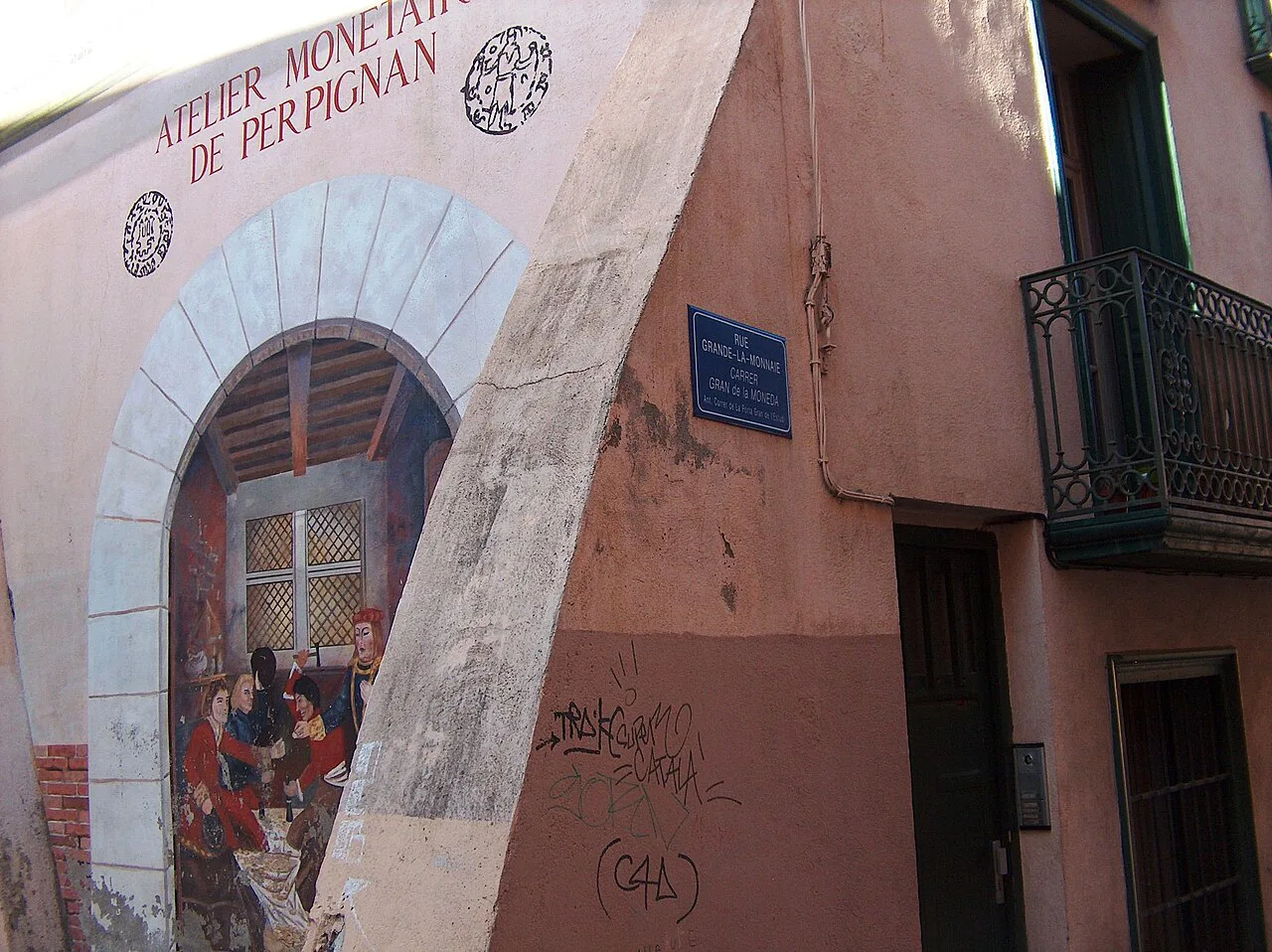

What the quarter is like on foot
Walking here feels different from the old town. The buildings are old, mostly small blocks of two storeys, and some read as visibly worn; the streets are long and narrow with regular blocks between them, and pavements are sometimes missing altogether because the roadway is too tight.
Surfaces vary: parts of the street network have been redone at intervals and the pavements, where they exist, are in decent shape. The ground falls slightly towards the Basse, and there is no true central square, since the space that might have served as one was remade as a small garden and a school.
Who it suits, and who it does not
Saint-Mathieu is popular, cosmopolitan and mixed, home to young couples and to part of Perpignan's immigrant population, with modest incomes dominating. It has become something of a dormitory quarter, having lost much of its commercial energy, and it is not especially well provided with cultural or administrative facilities, though it holds more than might be assumed: the former Franciscan convent, the old military hospital, the conservatory, the chapel and the courthouse.
Come for atmosphere, street pattern and a genuine sense of an old working district, not for a museum quarter. Travellers who want galleries, boutiques and open squares in easy reach will find the old centre and the neighbouring districts better suited, and this is a place to pass through rather than base a whole weekend around.
Rue des Augustins was once the shopping street the whole city used; today only local shops remain, which tells you what to expect. The upside is space and quiet: the streets are rarely crowded, and the closeness of the hypercentre means you can dip in and out.
Eating and drinking on avenue Foch
Avenue Foch, the old main axis, is where the quarter gathers: it carries a concentration of bars and restaurants, and locals tend to head there rather than to any central square. Rue des Augustins, with its remaining local shops, is the other strip to walk.
Use avenue Foch as your lunch or early-evening stop on a walk between place Arago and the Basse quays, and treat it as a neighbourhood strip rather than a destination dining street. Individual opening days vary, so read the posted hours at the door before committing to a specific place.
Getting there and around
The quarter is in the heart of Perpignan, so the practical approach is on foot from place Arago or the Basse quays: cross into the grid and you are immediately among the narrow streets that lead to the parish church. The defined boundaries make it easy to know where you are, with avenue Foch as the eastern edge and the citadel ramparts to the north.
Allow a couple of hours to walk the grid, look into the church and follow avenue Foch, and longer if you stop to eat. Wear shoes that cope with uneven surfaces and missing pavements rather than anything smart, and keep a map on your phone for the smaller streets.
Practical timing
Plan the church visit around parish services and check the current times before you go, since these change with the liturgical calendar. The medieval streets, the exterior of the Chapelle Notre-Dame-des-Anges and the avenue Foch strip can be seen at any hour.
For bars and restaurants, confirm specific hours at the door or by phone the same day, as they vary by venue and season. Perpignan runs on French city rhythms, with businesses commonly shutting for a midday break or a weekly closing day, so build that into your timing.
Where it fits in a Perpignan weekend
Pair Saint-Mathieu with the hypercentre: walk in from place Arago, see the church and the Franciscan remains, take avenue Foch for a drink, then cross back east. It works best as a half-day loop rather than a separate excursion, and it combines naturally with the Basse quays as a return route.
If you want contrast, continue to Saint-Jacques, its twin quarter of the same 13th-century expansion, or climb towards La Réal around the palace the kings of Majorca built. Les Platanes, further out, is a different proposition entirely and better saved for a trip built around the wider city. If you are weighing Perpignan against a larger nearby city for a short break, our guide to things to do in Montpellier covers a comparable decision.
Plan Your Visit
Saint-Mathieu rewards an hour or two of curiosity: a medieval grid you can read in the street plan, a richly decorated 17th-century church, fragments of a Franciscan convent and an everyday bar strip on avenue Foch. Come for the texture of a real Perpignan neighbourhood close to the centre, not for a sightseeing checklist.
Walk in from place Arago, keep to the boundary streets so you know where the quarter begins and ends, and check church and restaurant times for the day you are there before setting out.
Explore more Perpignan guides
Frequently Asked Questions
What is the Saint-Mathieu district of Perpignan like?
It is a dense, working quarter on the left bank of the Basse, a few minutes west of the hypercentre. Its buildings are mostly small two-storey blocks, the streets are long and narrow, and pavements are sometimes missing where the roadway is too tight. It is cosmopolitan and modest in income, with local shops on rue des Augustins and a concentration of bars and restaurants along avenue Foch.
Is Saint-Mathieu worth visiting on a Perpignan city break?
Yes, as a half-day walk rather than a headline sight. You come for the 13th-century grid, the 17th-century Église Saint-Mathieu with its decorated chapel, the Franciscan remains behind the dalle Arago and the Chapelle Notre-Dame-des-Anges. Travellers looking for galleries, boutiques and open squares will find the old centre better suited.
How old is the Saint-Mathieu quarter?
The quarter was built as a planned extension from the mid-13th century, on land that had been market gardens outside the walls. Concessions were granted through the 1240s, further building followed between 1265 and 1272, and a final campaign between 1278 and 1282 gave it the shape it keeps today. By the time the kings of Majorca arrived it had already stood for about 50 years.
What can you see in Saint-Mathieu, Perpignan?
The parish church of Saint-Mathieu, rebuilt in the 17th century, is the heart of the district and is worth a short look inside. Along avenue Foch, the Chapelle Notre-Dame-des-Anges is the most legible survival of the Franciscan convent, whose remains sit behind the dalle Arago. The wider street pattern itself is the attraction, with the old axis that became avenue Foch running through it.
How do you get to Saint-Mathieu from Perpignan old town?
Walk. The quarter begins just west of place Arago, so you can cross into the grid on foot and reach the parish church within a few minutes. The Basse quays make a natural return route, and the boundary streets — rue Grande-la-Monnaie, rue des Lices and avenue Foch among them — let you see exactly where the quarter starts and ends.