
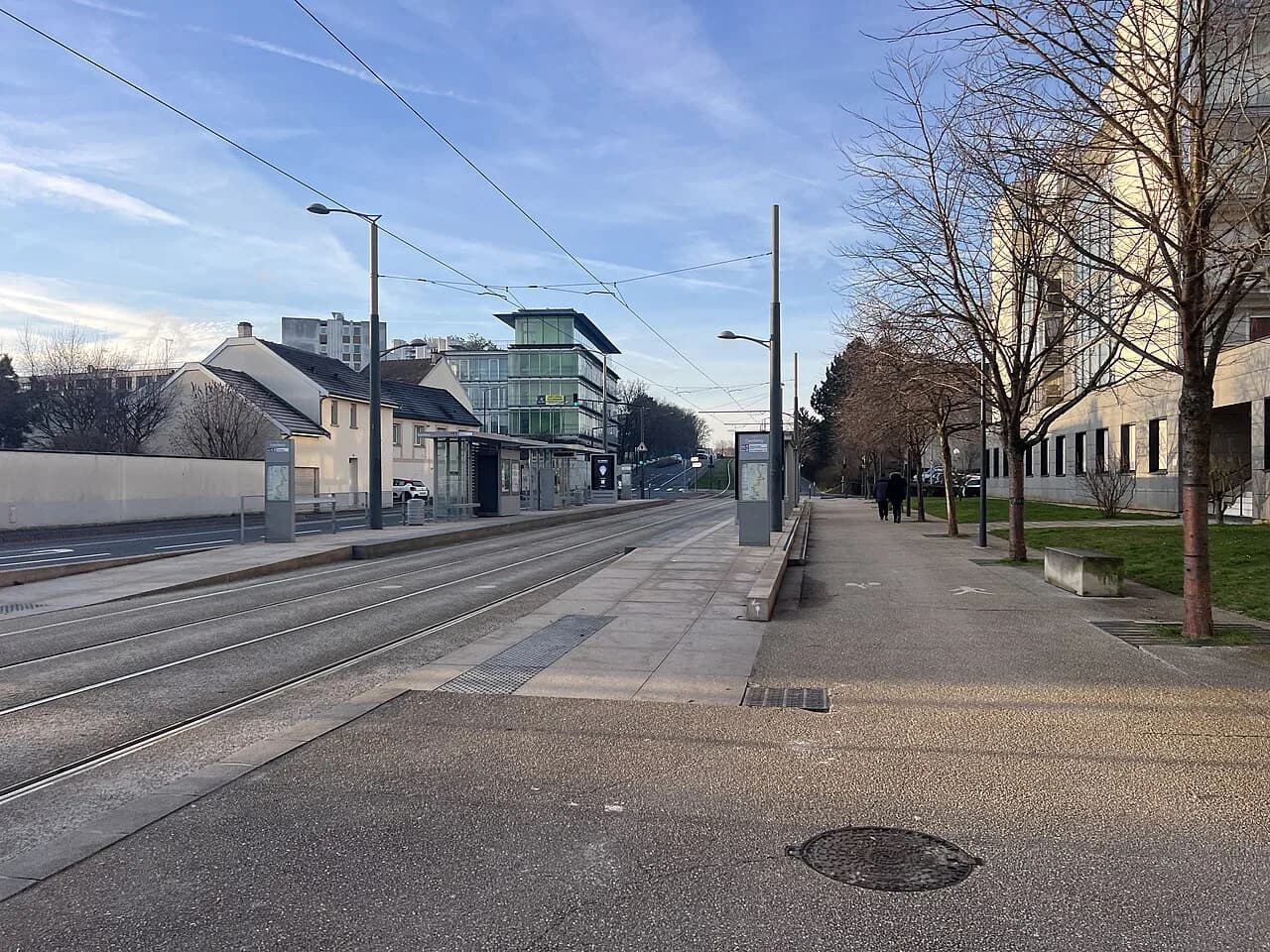
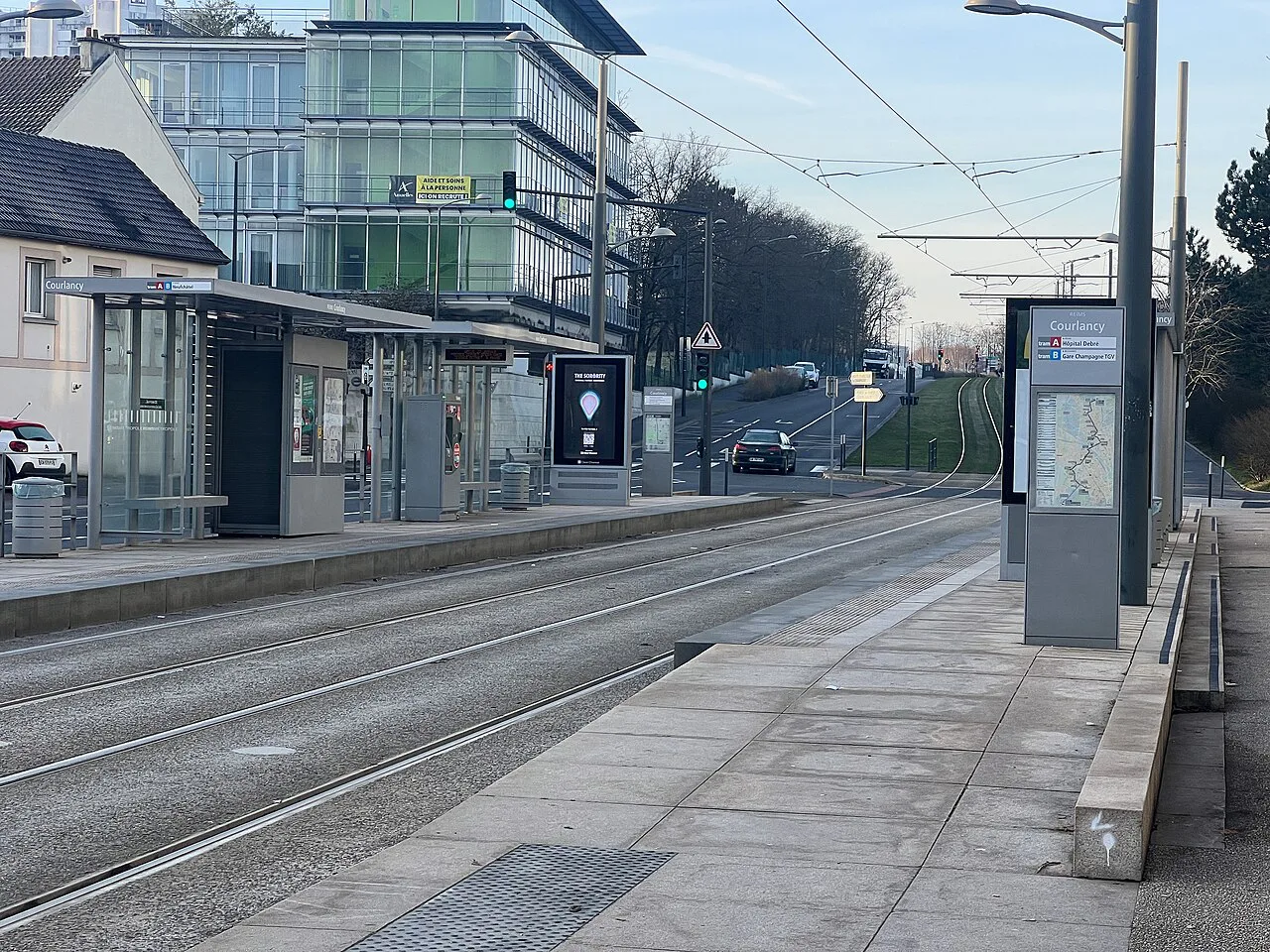
Courlancy, Reims: what the district is like and how to use it

Courlancy sits south of central Reims and works as a residential base rather than a sightseeing quarter. Book it if you want calm evenings and are happy to walk or take transit north for the cathedral, the Champagne houses and the Boulingrin market.
The trade-off is straightforward: you get a quieter, day-to-day face of Reims, but you give up stepping out of your door into the sights. Your weekend needs a loose plan built around the market mornings and the cathedral area, and the walking distance north is the detail that decides whether the quarter suits you.
Where Courlancy sits in Reims
Courlancy occupies the southern edge of Reims, with the canal corridor running nearby and the historic centre a walk to the north. Central Reims compresses several sights into a small area, with Place Drouet d'Erlon, the cathedral and the Boulingrin market all reachable on foot from each other, which is what makes a southern base workable.
Porte de Mars marks the old northern approach to the city and is the largest surviving Roman arch of its kind, standing free in the street and free to look at from the pavement. Place du Forum, a short step from it, keeps a Roman cryptoportique half in and half out of the square's surface, with café terraces alongside.
Character and who it suits
This is a district of ordinary Reims life, and that is the whole appeal: less foot traffic, fewer terraces built for visitors, and a calmer rhythm in the evening. It suits a couple or a solo traveller who wants a proper city neighbourhood and does not mind a fifteen- or twenty-minute walk to start the day.
It suits less well anyone whose priority is rolling out of bed into a cellar tour or a cathedral visit, or who plans to spend the whole weekend between Place Drouet d'Erlon and the Champagne houses. If that is your trip, aim for a central base instead and treat Courlancy as somewhere you pass through.
If your interests lean towards the abbey quarter, Saint-Remi on the city's south-east side carries its own touring logic, pairing the basilica with the museum in the old abbey. That gives you a second southern option to weigh against Courlancy when you choose where to sleep, and if you are comparing old-town bases across the region, our guide to things to do in Troyes covers a similar compact historic quarter.
Getting there and getting around
Reims is roughly 45 minutes from Paris by train, which makes the city an easy two-night break rather than a pitched expedition. From the station and the centre, the walk south into Courlancy is short enough to do with a cabin bag, and the city's main sights sit within walking distance of each other.
Once you are in the quarter, legs do the work. Walk north along the canal side or straight up towards the centre, and keep a tram or bus ride in reserve for the evening return when you would rather not walk back after dinner.
The canal and waterside walking
The canal corridor south of the centre is the quarter's concrete draw: a flat, straightforward route into town without traffic noise or detours around one-way streets. Use it as your morning walk north and your evening walk back, and you have a fixed spine for the day.
Beyond the city, the wider Champagne region has more than 450 km of greenways, and cycling routes run from Epernay past Damery and Aÿ-Champagne along the Marne. That is a separate day out rather than something to bolt onto a canal stroll in Reims.
The cathedral, Palais du Tau and the old centre
Notre-Dame de Reims is the city's defining sight, founded in 1211, with 33 French monarchs crowned there and a Smiling Angel that has become the city's emblem. The stained glass includes modern windows by Chagall, and the tower climb runs to 250 steps, with tickets bought at the Palais du Tau next door.
The Palais du Tau, the archbishop's former residence and cathedral museum, holds the coronation gown of Charles X, the last king crowned here in 1825. Build the cathedral and palace into one morning rather than splitting them across the weekend.
In summer a free sound-and-light show plays on the cathedral façade each evening, with the timing shifting as darkness falls. Plan dinner around it or deliberately skip it and eat earlier, because the show lands in the middle of the evening.
Champagne cellars and how they fit a Courlancy weekend
The cellars are the other half of any Reims weekend, and the big houses run tours that finish with a tasting. Below the streets lies a network dug from chalk and linked by some 200 km of tunnels, with millions of bottles maturing in cool, still conditions.
Cellars sit at roughly 10°C year-round, so bring a jumper even in a warm month. Reserve the cellar tour you most want before you travel, then slot the rest of the days around that fixed appointment.
A Reims City Pass, sold at the tourist office in one-, two- and three-day versions, covers more than ten museums plus city public transport and gives discounts at shops and restaurants. Price it against your actual plans: it pays off on a museum-heavy weekend and less so on a cellar-and-cathedral one.
Markets and food shopping
The Boulingrin covered market, built in 1927 and restored, is the anchor for a food morning and opens on Wednesday, Friday and Saturday. Work your weekend dates around those three days if market shopping matters to you, because a Monday arrival misses it entirely.
Rue de Mars runs from near the market and packs the food shops together: the chocolaterie Maison Caffet, the Boulangerie les Halles, Fromages et Vins, and Aux Gourmets des Halles for charcuterie. Shop the street in one pass after the market rather than criss-crossing the centre.
Regional buying is specific: Chaource and Langres cheeses, Reims ham with Clovis mustard, and bouchon de champagne chocolates shaped like a cork and filled with marc de champagne. The pink biscuit from Fossier, sold from its pink shopfront on Cours Jean-Baptiste Langlet, is the usual edible souvenir, traditionally dipped in champagne.
For a sit-down meal, the streets around the covered market hold wine bars and small restaurants, including Le Clos for a glass in the evening. Place Drouet d'Erlon is the denser, more tourist-facing option, with the Fontaine Subé in the middle of the street and terraces filling it on sunny days.

Place Drouet d'Erlon, Place du Forum and the Roman remains
Place Drouet d'Erlon is the city's busiest strip of restaurants and bars, and on a sunny day the outdoor seating takes over the pavement. It is convenient rather than charming, so use it when you want choice without planning and eat elsewhere when you want calm.
Place du Forum is the better bet for a drink: smaller, more characteristic, with a few terrace cafés and the Roman cryptoportique sitting half-sunken in the square. In summer the gallery opens in the afternoon, and open-air concerts sometimes run in the evening.
Practical timing for a Courlancy-based weekend
Two nights covers the city comfortably: one day for the cathedral, Palais du Tau and the old centre, one for a cellar tour and whatever museum you have chosen. Anything beyond that belongs to the region rather than to Reims itself.
Anchor the plan on Wednesday, Friday or Saturday for the market, and keep one wet-weather option in reserve among the museums. The Musée des Beaux-Arts, the Musée Saint-Remi and the Automobile Museum each fill a different half-day, and a Foujita Chapel ticket also admits you to the Beaux-Arts.
Check opening days and tour times with each museum and Champagne house before you book travel, since those two details decide the shape of the weekend.
Is Courlancy Right for Your Reims Weekend?
Choose Courlancy if you want a residential base, a flat canal-side walk north and a lower-key evening, and if you are content to build each day around the market, the cathedral and one cellar booking. Skip it if you want the sights at your doorstep or plan to spend the weekend entirely around Place Drouet d'Erlon.
Whichever way you decide, the district works best as a base with a plan rather than a destination in itself, and the market days are the first thing to fix in the diary.
Explore more Reims guides
Frequently Asked Questions
Is Courlancy a good area to stay in Reims?
It suits travellers who want a quiet residential base within walking distance of the centre and do not need to step out of the door into the sights. It is a poor fit if your weekend is built around Place Drouet d'Erlon and the Champagne houses, where a central base saves you the walk.
How far is Courlancy from Reims city centre?
The quarter lies just south of the historic centre, and the cathedral, Place Drouet d'Erlon and the Boulingrin market are reachable on foot. Allow a walk of roughly fifteen to twenty minutes to the cathedral area and use the canal corridor as a flat route north.
What is there to see in Courlancy, Reims?
Courlancy is residential rather than monumental, and its concrete draw is the canal-side walking route into the centre. The sights themselves are north of the quarter: Notre-Dame de Reims, the Palais du Tau, Porte de Mars and Place du Forum.
Can you walk from Courlancy into central Reims?
Yes. The main sights sit within walking distance of each other in Reims, so a walk north from Courlancy puts you in the cathedral and market area without needing transport. Keep a tram or bus ride for the evening return if you would rather not walk back after dinner.
What days is the Boulingrin market in Reims open?
The covered market opens on Wednesday, Friday and Saturday. If market shopping is part of the plan, set your travel dates around those days, since a Monday or Tuesday arrival will not catch it.
How many days do you need in Reims based in Courlancy?
Two nights covers the city: one day for the cathedral, Palais du Tau and the old centre, and one for a cellar tour plus a museum. Add days only if you want to explore the wider Champagne region rather than Reims itself.