
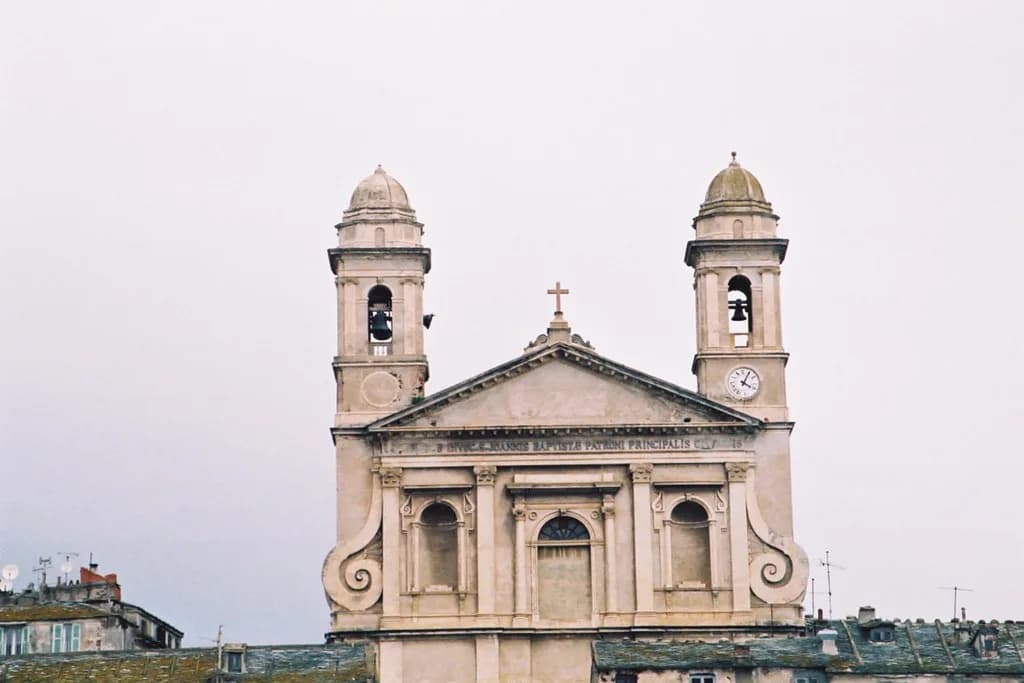
Cathédrale Sainte-Marie de Bastia: What to See Inside the Citadel Church
Bastia's Cathédrale Sainte-Marie is a small Baroque church packed into the Citadelle, the walled quarter above the old port. It was built between 1604 and 1619 and is now styled a pro-cathedral, which is the name you will see on some maps and signs.
Plan on 20 to 30 minutes inside. That is enough to see the silver processional Virgin, the crowded 19th-century sanctuary decoration and the two oddities most visitors miss: the bishops' hats hung from the choir vault and the oversized papier-mâché Assumption above the main altar.
It fits naturally into a walk through the Citadelle rather than a trip of its own. Start at the church, then work back down through the lanes towards the Vieux-Port and the rest of Bastia.
Where the cathedral is
The address is 12 Rue Notre Dame, 20200 Bastia, inside the Citadelle quarter on the hill above the port. The tourist office lists the same address, which is the simplest thing to put into a phone.
Place Saint-Nicolas, the long square along the waterfront, makes a useful landmark reference: the Office de Tourisme Intercommunal de Bastia sits on it and can point you uphill if the Citadelle lanes confuse you. From there the church is a short climb on foot, not a taxi ride.
The Citadelle is a compact historic core rather than a single monument, so treat the church as one stop within it. If you want the wider picture of the walls, terraces and lanes, start with the citadel guide before you walk up.
How to get there on foot from the old port
From the Vieux-Port, head uphill into the Citadelle; the lanes are steep and stepped in places, so wear shoes that cope with cobbles. Allow a leisurely ten to fifteen minutes for the climb if you stop for photographs.
If you are coming from Place Saint-Nicolas, walk west along the waterfront and then turn inland towards the Citadelle gate. The whole approach is walkable, and the climb is the reason the church sits above the noise of the port.
Slot the church into a Citadelle loop rather than treating it as a standalone outing: church first, then the lanes and viewpoints, then back down to the port for a late lunch. The Jardin Romieu below the Citadelle is a shaded option on the way back if the climb has been hot.
The building in context
The church was built from 1604 to 1619 and dedicated to the Assumption of the Virgin. That makes it a young building by Corsican standards, and its interior is a largely 19th-century layer over the original shell.
It is described as a former cathedral now known as a pro-cathedral, which explains why guidebooks and maps use both names for the same building. Do not let the prefix put you off: it is still a working parish church, and its Baroque decoration is the reason to step inside.
The setting does much of the work: the church is set within the Citadelle, so the plaster and marble inside contrast sharply with the stone fortifications outside. Take a minute on the steps to look back over the roofs before you go in.
What to see inside: the silver Virgin
The star piece is a silver processional statue of the Virgin dated 1852. It stands in a niche to the right as you enter the sanctuary, so look there before you start scanning the walls.
The same statue is carried through the streets of Bastia in procession every 15 August. If your weekend falls on that date, expect the church and its surroundings to be busier and the statue to be the focus rather than a quiet detail.
The sanctuary itself is a dense display of gilding and images. Give it a few minutes up close rather than a glance from the door, because the detail is the point of this church.
The sanctuary decoration
Inside, the decoration was largely enriched in the 19th century and is deliberately showy: paintings by named masters, marble and polychrome wood statues, marble and stucco throughout. Look up as well as forward, because the scheme wraps around the nave.
The marble statues and painted wood figures are the pieces to linger over if you are short of time. They are spread around the church rather than grouped in one chapel, so a slow circuit of the nave and side walls works better than standing in one spot.
Because the interior is small, the whole decorative scheme is visible from the entrance. That makes the church a good short stop for anyone travelling with companions who are not church enthusiasts, since nobody has to be patient for long.
The curious details: bishops' hats and a crypt
Either side of the choir vault hang the ceremonial hats of bishops buried in the crypt below the sanctuary. They are easy to miss because most people look at the altar rather than the ceiling, so deliberately look up when you reach the crossing.
The crypt lies beneath the sanctuary, and the hats are a visual link to the people interred there. This is the sort of detail that rewards a second slow pass around the church before you leave.
Photography conditions inside vary with services and light, so if a shot of the ceiling matters to you, take it quietly and be ready to put the camera away. Respect any cordoned area near the sanctuary.
The 2.6-metre Assumption above the main altar
Above the main altar stands a large 19th-century Assumption of the Virgin, 2.6 metres tall. The surprise is the material: it is made of papier-mâché, not stone or marble.
Look at it from a distance first, then move closer to see how the surface is worked. Set against the marble and stucco elsewhere, the difference in material is the point of interest.
Pair it with the silver Virgin for the two images that define the church. If you see nothing else, those two and the hats above the choir are the ten minutes that justify the climb.
How much time to allow
Twenty to thirty minutes covers the church comfortably, including the silver Virgin, the sanctuary decoration and the ceiling details. Add ten minutes if you want to sit for a while or read the information available on site.
The visit is short enough to pair with a broader half-day in the Citadelle. If you are planning a full weekend, the city guide sets out how the Citadelle, the port and the squares fit together across two days.
Do not build a morning around the church alone. Use it as the opening stop of a Citadelle walk, then continue through the lanes and down to the port for the rest of the day.
Nearby in the Citadelle and old town
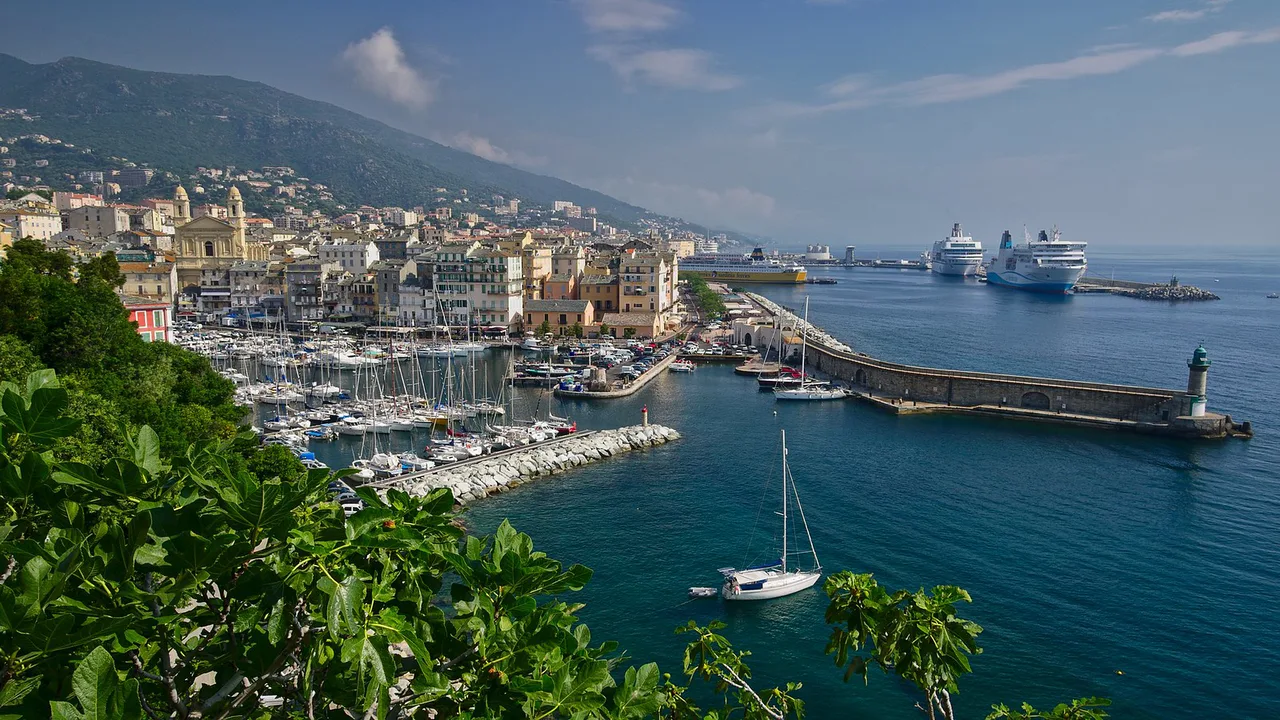
The Citadelle around the church holds most of what you need for a half-day, including the lanes, the walls and the views down over the port. The Citadel guide explains the layout so you do not waste the climb on the wrong gate.
The Musée de Bastia sits in the same historic quarter and makes an obvious second stop if the weather turns or you want the history behind the streets. Check its own opening days before you build a plan around it, since museum schedules vary through the year.
Other Bastia churches, including Saint-Jean-Baptiste and Sainte-Croix, are within easy walking distance of the old port if you want to compare interiors. Treat them as nearby options on the same wander rather than separate outings.
Practical points before you go
The tourist office page gives the address and the history but no visitor opening hours, entry price or booking rule. Check the parish or tourist office directly before you climb up, particularly if you are visiting on a Sunday or around a service.
If you are comparing Corsican churches on your trip, Ajaccio Cathedral is the obvious counterpart on the west coast, with a different history and setting. Reading both before you travel helps you decide which interiors deserve your limited time.
Bastia's old town is best covered on foot, so plan your day around walking rather than transport. Anything you cannot confirm in advance, confirm on arrival at the tourist office on Place Saint-Nicolas.
Is the Cathédrale Sainte-Marie Worth It?
Yes, if you are already heading up to the Citadelle. It is a compact, richly decorated church with three memorable details: the 1852 silver Virgin, the bishops' hats over the choir and the papier-mâché Assumption above the altar.
It is not worth a separate trip across Bastia, and 15 August is the one date that changes the experience because the silver Virgin is carried through the streets. On any other day, treat it as a calm 20-minute stop on a Citadelle walk.
Explore more Bastia guides
Frequently Asked Questions
Where is Bastia cathedral?
Cathédrale Sainte-Marie is at 12 Rue Notre Dame, 20200 Bastia, inside the Citadelle quarter above the old port. The easiest approach on foot is from Place Saint-Nicolas along the waterfront, then uphill into the Citadelle lanes.
How old is the Cathédrale Sainte-Marie in Bastia?
It was built between 1604 and 1619 and dedicated to the Assumption of the Virgin. The interior decoration was largely enriched in the 19th century, which is why most of what you see inside is later than the shell.
What is there to see inside Bastia cathedral?
Look for the silver processional Virgin dated 1852 in a niche to the right as you enter the sanctuary, the marble and polychrome wood statues, the bishops' ceremonial hats hung either side of the choir vault, and the 2.6-metre papier-mâché Assumption above the main altar.
Why is it called a pro-cathedral?
It is a former cathedral that now carries the title of pro-cathedral, so maps and signs use both names for the same building. It remains a working church rather than a museum.
Is Bastia cathedral free to visit?
Entry price and booking rules are not set out on the tourist office page; the parish or the Office de Tourisme Intercommunal de Bastia on Place Saint-Nicolas can give them.
When is the silver Virgin carried through Bastia?
The silver Virgin is carried in procession through the streets of Bastia every 15 August. If you visit on that date, expect the church to be busier than usual.
How long do you need at Bastia cathedral?
Allow 20 to 30 minutes to see the main sights inside, including the silver Virgin, the sanctuary decoration and the ceiling details. Add a little more if you want to sit quietly or read the information on site.
What else is near Bastia cathedral in the Citadelle?
The Citadelle lanes, walls and viewpoints are on the doorstep, and the Musée de Bastia is in the same historic quarter. Other churches such as Saint-Jean-Baptiste and Sainte-Croix are a short walk down towards the old port.