
La Croisette: Cannes' Seafront Promenade
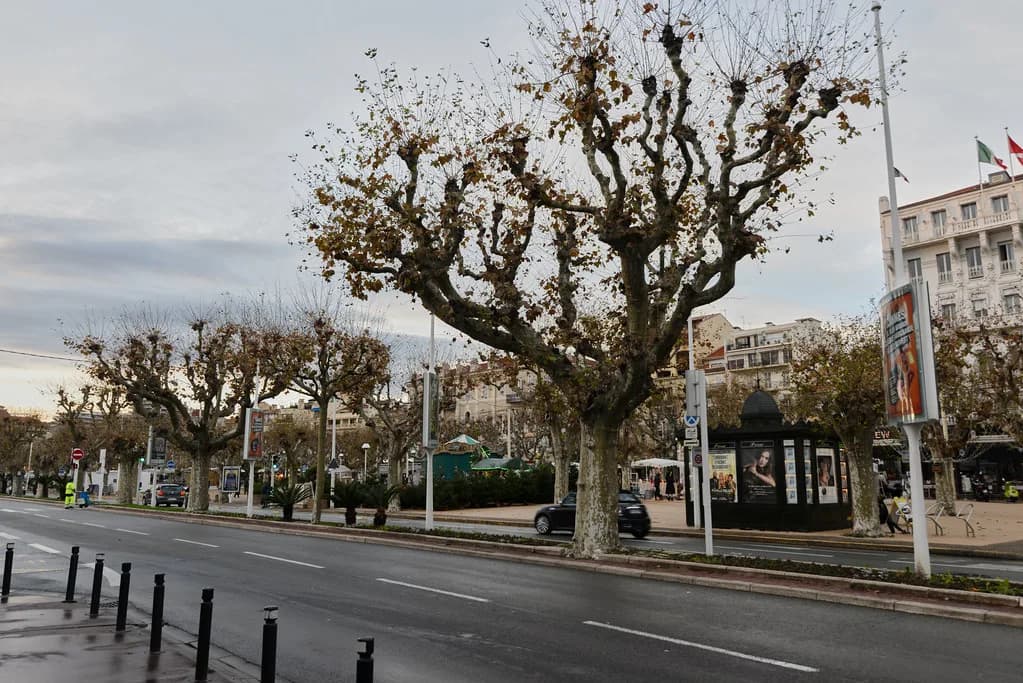
La Croisette is Cannes' seafront promenade, a palm-lined boulevard that runs about two kilometres along the Mediterranean shore from the Palais des Festivals towards the Pointe Croisette. It carries the city's famous beaches, luxury hotels and the red-carpeted festival steps on one continuous stretch of pavement, which makes it the natural starting point for a short break in Cannes. This guide is one of six Cannes Attractions: 6 Visitor Guides covering the city's main sights.
What La Croisette Is and Where It Runs
The Promenade de la Croisette is a prominent road on the Cannes shoreline, roughly two kilometres long, following the curve of the bay of Cannes. It is addressed as Boulevard de la Croisette, 06400 Cannes, and the surface is a wide paved walkway with a separate road for traffic beside it. Think of it as the city's front room: everything that defines Cannes in the popular imagination is arranged along this single line.
The city tourist office describes the Croisette as the beating heart of Cannes, where the shoreline concentrates beaches, luxury shopping and the city's flamboyant side. That is a fair summary of what you get in one walk: sand on your right, shop windows and grand facades on your left, and the sea opening up ahead. The whole promenade is accessible at all hours, so there is no gate to plan around if you want an early or late stroll.
Where La Croisette Sits in Cannes
La Croisette occupies the seafront between the Palais des Festivals at its western end and the Pointe Croisette at its eastern end. The Old Port sits just behind the Palais, and the old town of Le Suquet climbs the hill immediately west of the port. That means the promenade connects the two halves of a Cannes weekend: the event-and-marina end and the beach-and-hotel end.
The Palais des Festivals et des Congrès, Cannes is the landmark to orient yourself by. Its red-carpeted steps face the boulevard, and the building has hosted the Cannes Film Festival since 1982. You do not need to go inside to use it as a meeting point; the exterior steps and the surrounding pavement are the reference everyone in Cannes understands.
How to Reach La Croisette
Cannes station sits about 600 metres from the seafront, which is a walk of under ten minutes to the Palais des Festivals end of La Croisette. Turn downhill from the station towards the sea and you will meet the boulevard near the Palais. If you are arriving by train for the day, you can reach the promenade on foot without a taxi.
The nearest point of La Croisette to the station is the stretch in front of the Palais, around Boulevard de la Croisette, 06400 Cannes. Approaching from the Old Port side also works well: Quai Saint-Pierre puts you at the marina, and the Palais is a few minutes' walk around the harbour. Either way, the promenade itself has no entrance and no ticket.
Walking the Promenade: What You Pass
Start at the Palais end and the first thing you meet is the red-carpeted staircase and the exterior of the Palais des Festivals et des Congrès, Cannes. The building's film-festival association is the reason most visitors stop here for a photograph. Walk east and the boulevard settles into its rhythm: pavement, palm trees, beach entrances and hotel frontages on repeat.
Near the Palais, look for the Allée des Étoiles du Cinéma, where handprints of directors and actors are set into the pavement. It is a small, free detail that takes a couple of minutes and gives the promenade a purpose beyond strolling. The handprints are the closest thing to a free attraction on the boulevard, and they are easy to miss if you keep your eyes on the sea.
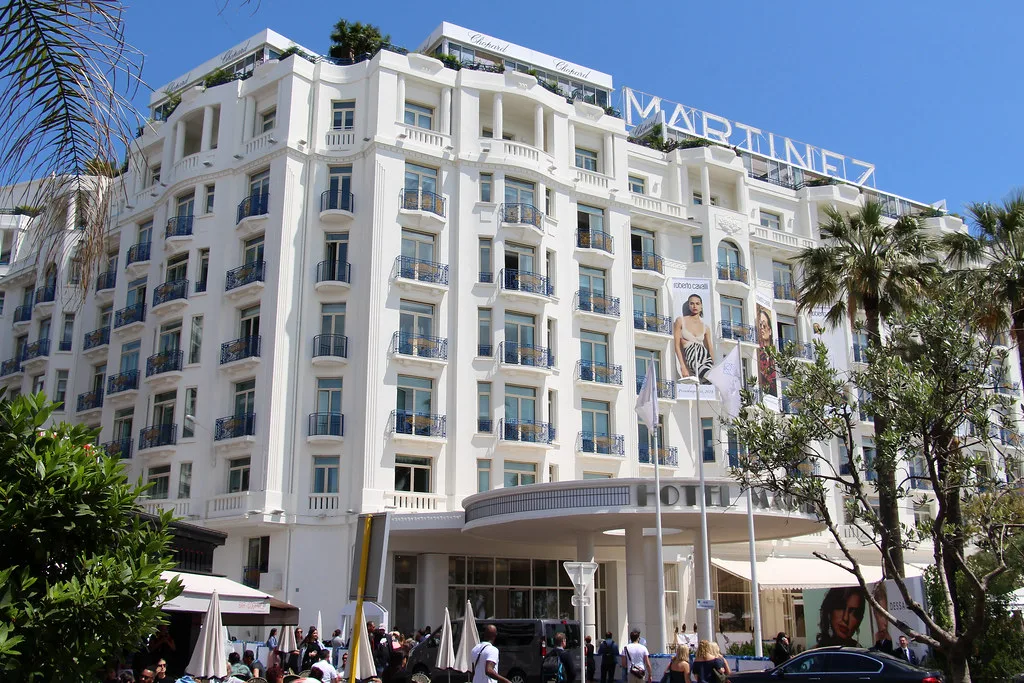
Continue east and you pass the long line of beach establishments and hotel facades that have made the Croisette a shorthand for Riviera glamour. The tourist office frames this stretch as a place of idleness, parties and shopping, and that is what it feels like: a promenade built as much for being seen as for seeing. The walking is flat and continuous, so you can cover it at whatever pace suits the day.
The Beaches: Public Sand and Private Beach Clubs
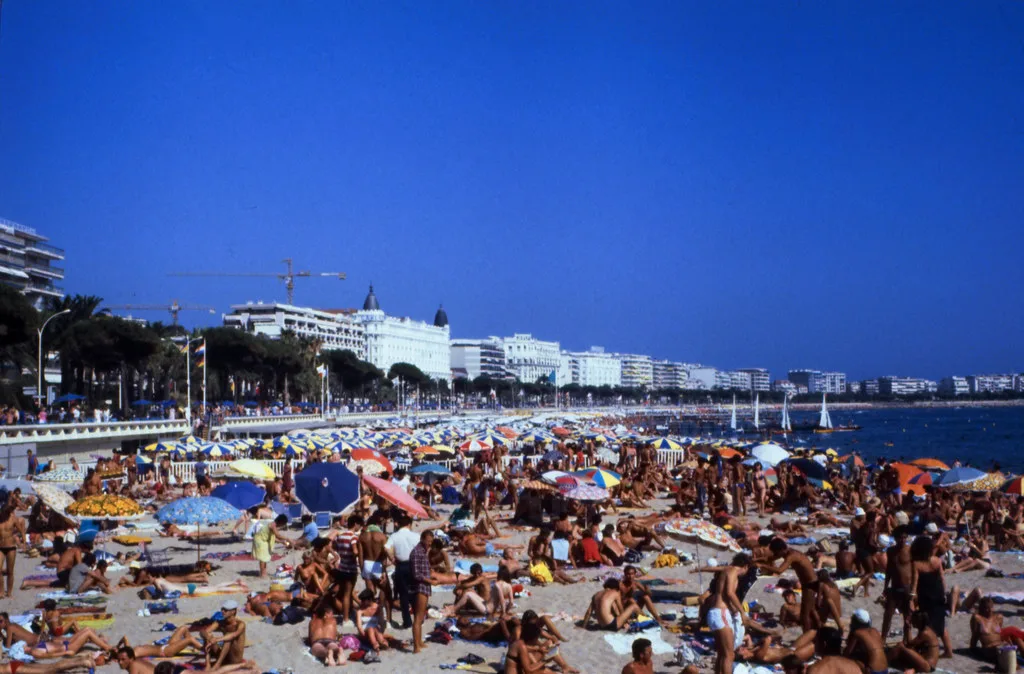
The same stretch of sand holds both free public beaches and private beach clubs, and the difference is visible on the ground. Public sections are open to anyone and need no booking; club sections have rows of loungers, service and a frontage that signals you are entering a paid space. If you want a swim without spending, walk until you find a public entrance rather than assuming the first beach you reach is open to all.
The private clubs on La Croisette charge for access, but no current rate is set out in the material available here, so ask at the entrance or check the club's own signage before committing. Treat the beach clubs as an optional upgrade rather than the default: the public sand is free and puts you on the same water. For a weekend budget, plan the swim as the free part of the day and spend elsewhere.
The Gardens, Palms and Sunset Views
The palm-lined walk is the point of La Croisette as much as any single sight. In the late afternoon the light comes in low from the west, and the Estérel massif turns pink across the bay, which is the view most often photographed from the promenade. Aim to be on the western half of the boulevard, near the Palais and the Old Port, for that light.
For a quieter viewpoint, the Observatoire de la Californie sits on a residential hill above the bay, on Boulevard de la Californie, and is accessible during daylight hours. It looks out over the bay, the Lérins Islands and the Estérel, with fewer people than the central promenade. It is a sensible alternative if the Croisette is busy and you want the same view from higher up.
Rue d'Antibes: The Everyday Alternative
Rue d'Antibes runs parallel to La Croisette, one block inland, and is Cannes' main shopping street. It mixes high-street brands with smaller independent shops and is a more affordable alternative to the luxury addresses on the seafront. Shops generally open from 10:00 to 19:00, which makes it an easy stop before or after a promenade walk.
Use Rue d'Antibes deliberately rather than as a shortcut: it gives you cafés, bakeries and practical shops within a minute of the seafront, and it shows a side of Cannes that is not staged for visitors. If the Croisette boutiques feel out of reach, this is where the everyday city happens. It also gives you a route back to the station without retracing the whole promenade.
The Western End: Old Port and Le Suquet
At the western end of La Croisette, the Old Port of Cannes mixes fishing boats with the superyachts that arrive for the film festival and the boat shows. Its harbourside restaurants and cafés make it a natural stop for a coffee or lunch while watching the marina. The port is directly beside the Palais, so it fits into the same walk without a detour.
From the port, Le Suquet climbs the hill above the bay, with narrow cobbled streets, pastel houses and the 12th-century Tour du Suquet watching over the harbour. The climb rewards you with one of the best panoramic views of the bay and the Lérins Islands, particularly in late afternoon light. Treat the Old Port and Le Suquet, Cannes as one short add-on to the promenade rather than a separate outing.
Le Suquet is Cannes' original fishing village, and the contrast with the Croisette is the reason to make the climb. You go from uniform glamour to stepped lanes and small squares in ten minutes on foot. If you have time for only one detour off the boulevard, make it this one.
How Much Time to Allow
A straight end-to-end walk of the roughly two-kilometre promenade takes most people under half an hour at a normal pace. That is enough to get your bearings, see the Palais steps and understand how the city is laid out. Add the climb into Le Suquet and you are looking at a comfortable half-day rather than a quick stroll.
For a slower version, allow two to three hours: walk the boulevard, stop for a swim at a public beach, cut inland to Rue d'Antibes and finish at the Old Port and Le Suquet. That pace suits a weekend where La Croisette is one part of the day rather than the whole of it. If the beach clubs and shopping are the main draw, give the seafront a full afternoon.
When to Go
Morning gives you softer light, fewer people and the best chance of an uncrowded pavement along the central stretch. Late afternoon brings the sunset view towards the Estérel and the moment when the beach clubs are at their busiest. Both are worth planning around, but they suit different trips: a morning walk for orientation, a late one for photographs.
The promenade is a working through-route, and during major events it changes character. During the Film Festival in May, popular activities can sell out quickly and the city fills up, so plan around the crowds if your dates overlap. The Palais steps and the Allée des Étoiles du Cinéma are still on the boulevard, but access around the building can be busier than usual.
Practical Trade-offs
The main trade-off on La Croisette is free versus paid: public beaches and the promenade itself cost nothing, while the beach clubs and the private loungers carry a charge. The second is crowds: the central stretch near the Palais is the busiest, and the eastern end towards the Pointe Croisette is quieter. Walking east when the middle feels packed is a simple fix.
There is also a time trade-off. The promenade rewards you most if you keep it simple: walk it, stop at the handprints, take the beach and leave the shopping for Rue d'Antibes. Try to do everything and you will spend the day in queues and changing rooms. The best use of La Croisette is as the spine of a day, not the whole of one.
Plan Your Visit
La Croisette is free, open at all hours and easy to reach on foot from Cannes station, which makes it the most efficient first stop on a weekend in the city. Walk it once end to end to understand the layout, then use it as a base for the Palais steps, a public beach, Rue d'Antibes and the Old Port. Check beach-club rates at the entrance on the day, since access and charges vary by establishment. If you are weighing how to spend a whole weekend here, our guide to the things to do in Cannes makes a useful next read.
For the rest of the city, the Cannes Attractions: 6 Visitor Guides page links to the other main sights, including the Marché Forville, Cannes, whose covered market runs on set mornings rather than daily. Build the promenade into your first morning and leave the market and the old town for the second day.
Explore more Cannes guides
Frequently Asked Questions
Where is La Croisette in Cannes?
La Croisette is the seafront boulevard along the bay of Cannes, running from the Palais des Festivals at its western end towards the Pointe Croisette. It is addressed as Boulevard de la Croisette, 06400 Cannes, and is about two kilometres long. The Old Port and Le Suquet sit immediately behind its western end.
Is Croisette beach free?
Part of it is. The promenade has both free public beaches and private beach clubs, which are separated by frontage and rows of loungers. Public sections need no ticket or booking; club sections charge for access. Ask at the entrance before settling on a club section.
How long does it take to walk La Croisette?
A straight end-to-end walk of the roughly two-kilometre promenade takes most people under half an hour at a normal pace. A slower version with a swim, a detour to Rue d'Antibes and the climb into Le Suquet is a comfortable two to three hours.
What is there to see along La Croisette?
The main sights on the boulevard are the red-carpeted steps of the Palais des Festivals, the Allée des Étoiles du Cinéma handprints nearby, the beaches and their clubs, and the sunset view towards the Estérel massif. Rue d'Antibes runs one block inland for shopping, and the Old Port and Le Suquet sit at the western end.
Is Rue d'Antibes near La Croisette?
Yes. Rue d'Antibes runs parallel to La Croisette, about one block inland, and is Cannes' main shopping street. It mixes high-street brands with independent shops and cafés, and is a more affordable alternative to the seafront boutiques. Shops generally open from 10:00 to 19:00.
Sources
- Things to Do in Cannes | Best Activities & Fun Experiences
- Le Suquet | Cannes, France | Attractions - Lonely Planet
- Latest Palais des Festivals Map,Address, Nearest Station & Airport 2026 | Trip.com
- The Croisette, temple of idleness, parties and shopping
- Promenade de la Croisette
- Boulevard De La Croisette - Cannes