
Place de la Comédie, Montpellier: A Visitor's Guide to the City's Main Square
Place de la Comédie is the main square of Montpellier and the natural first stop on any weekend in the city. It is free, always open, and sits at the point where the tram network, the pedestrian lanes of the Écusson and the area around Montpellier Saint-Roch station all meet. Treat it as your orientation point rather than a sight to tick off, and the rest of the centre falls into place around it.
Place de la Comédie at a glance
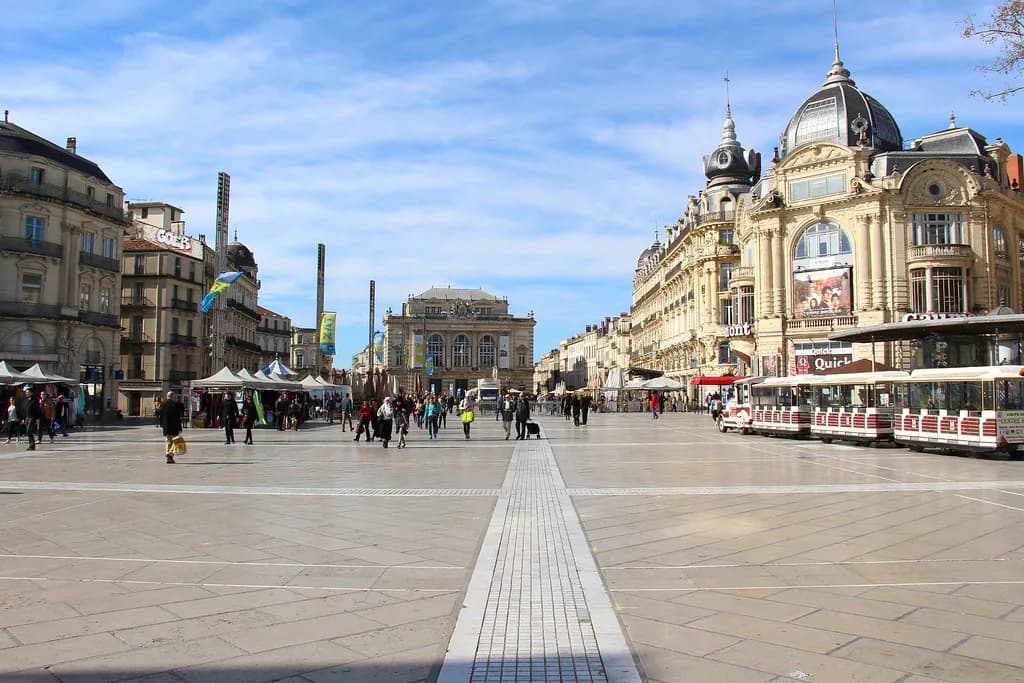
The square is a broad pedestrian plaza lined with cafés, shops and historic buildings, with the Opéra Comédie standing at one end. Its shape explains the local nickname: an oval, which earned it the name Place de l'Œuf, or 'egg square'. It is the busiest open space in the centre and the obvious place to pause and work out your bearings before heading into the old streets.
There is no ticket, no gate and no closing time for the square itself. That makes it the easiest thing to do in Montpellier when your train lands mid-afternoon or you have an hour to fill before dinner. Budget 20 to 30 minutes if you only want a look and a coffee, or half an hour more if you plan to sit on a terrace.
Where the square sits in central Montpellier
Place de la Comédie lies at the southeastern edge of the Écusson, Montpellier's historic centre, and the lanes of the old town run northwest from it. Montpellier Saint-Roch station is a short walk away, which means most visitors arrive on foot without needing to plan any transport at all. From the square, Rue de la Loge and the surrounding pedestrian streets lead directly into the medieval grid.
The Esplanade Charles-de-Gaulle runs alongside the square and gives you a second, leafier route into the centre, with the Pavillon Populaire photography venue on it. Both are free to walk through and neither requires any planning; they simply extend the time you spend between the tram stop and the museum quarter.
How to get to Place de la Comédie
On foot, the square is the reference point for central Montpellier: the Écusson lanes fan out from it and almost every central sight is within walking distance. By tram, the network of five colourful lines connects the historic centre with the stations and outer neighbourhoods, and the square has its own stop. A single TaM ticket covers unlimited bus and tram travel for 90 minutes, so one ticket handles a journey in and a short hop later.
By train, Montpellier Saint-Roch is the central station and sits close to the square, while Montpellier Sud de France lies outside the historic centre and connects in by tram. Direct TGV INOUI services from Paris Gare de Lyon take a little over three hours, which makes the square reachable for a late-afternoon arrival. Check current TaM fares and route changes on the app before you travel.
What to see at Place de la Comédie
The Opéra Comédie anchors the square, an Italian-style opera house completed in 1888, and it is worth a look from the outside even if you are not attending a performance. In the middle stands the Fountain of the Three Graces. The original 1776 marble sculpture is protected inside the opera house and the version on the square is a replica, which is the sort of detail that rewards a second look rather than a quick photo.
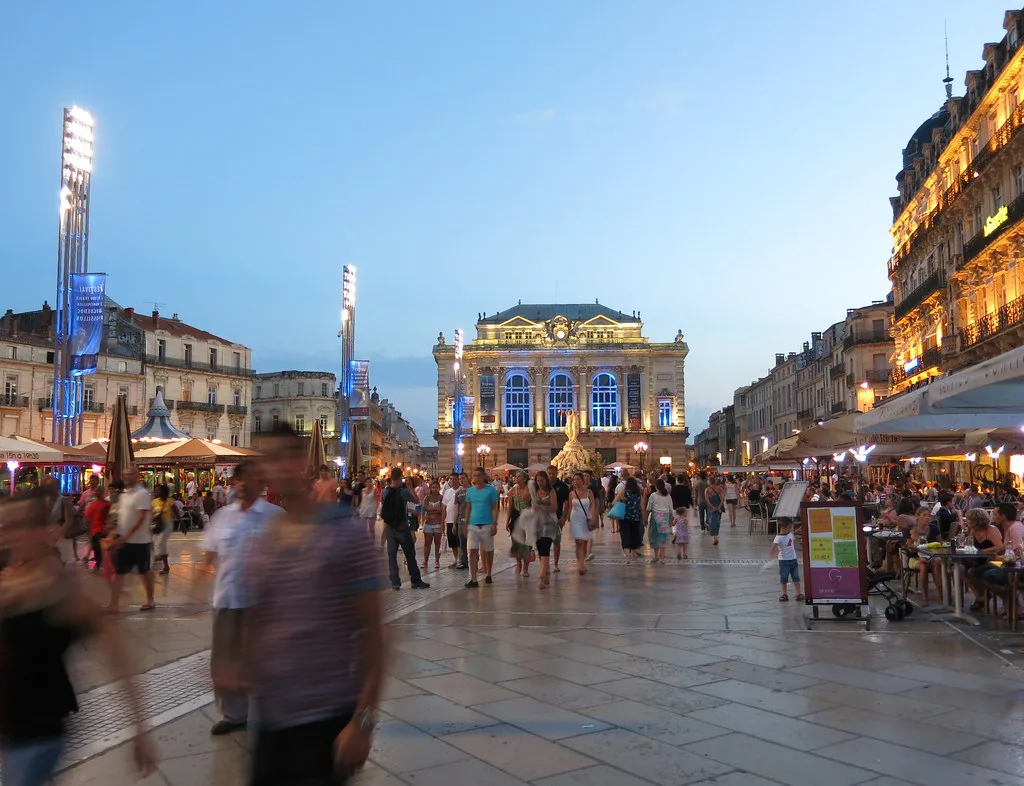
Beyond the two landmarks, the square works as street theatre: café terraces, buskers and a constant flow of people crossing between the tram stop and the old town. The tourist office sits at the eastern end of the square, useful for picking up a map or asking about guided walks into the Écusson's courtyards. Allow a little time for this if you want context before walking the lanes.
A short history of the square
Place de la Comédie became the symbol of Montpellier's prosperity in the 18th and 19th centuries, and the buildings around it still read as a statement of civic confidence. The opera house is the clearest marker of that period, and the square's role as the city's main meeting point has outlasted the architecture that created it. Knowing this makes the walk from the tram stop feel less like an entrance and more like an arrival.
Café terraces and street life
The square is lined with café terraces, and sitting down for a drink is the main thing to do here rather than a detour from sightseeing. On a sunny day the terraces fill quickly, so an early coffee or a late-afternoon pause works better than a midday table. Expect square-side prices rather than neighbourhood ones, and treat the setting as what you are paying for.
For a quieter pause, walk a few minutes into the Écusson to Place de la Canourgue, a small tree-lined square surrounded by 17th-century mansions, or to Place du Marché aux Fleurs. Both give you the same café culture with less foot traffic. The contrast is the honest trade-off: the Comédie has the buzz, the smaller squares have the calm.
How long to allow and when to come
For the square alone, 20 to 30 minutes is enough to see the opera house, the fountain and the shape of the place. Add 45 minutes if you want a drink at a terrace, and treat that as the realistic minimum rather than an optimistic one. Most visitors will spend longer in the lanes behind it than on the square itself.
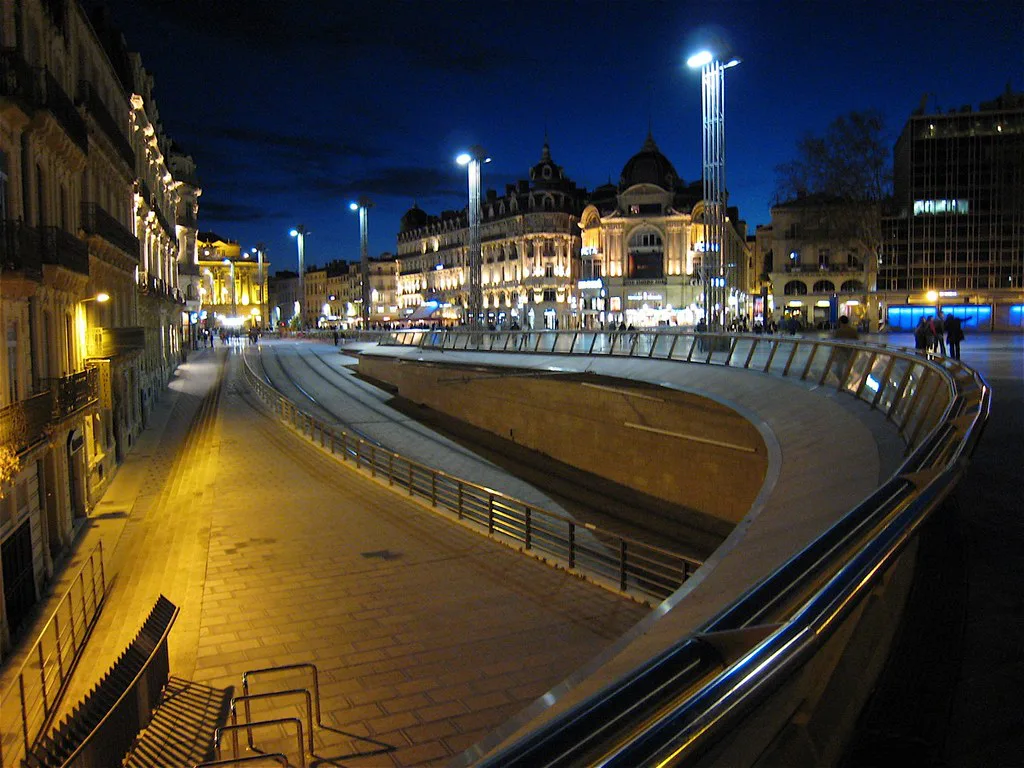
Early morning brings fewer people and better photographs of the opera house façade; after dark the square is illuminated and stays lively. Midday in summer is the least comfortable time to stand in the open, so plan a terrace or a museum for that slot. Neither end of the day requires a ticket or a booking.
What is within walking distance
The Écusson starts immediately northwest of the square, and its narrow pedestrian streets hold the cathedral, small squares and historic townhouses. Montpellier Cathedral (Cathédrale Saint-Pierre) is a short walk away, known for its fortress-like Gothic exterior and enormous porch pillars; admission is free, but the cathedral generally closes over lunchtime. Combine it with the nearby Jardin des Plantes for a half-day loop.
Musée Fabre, one of the city's main art museums, is a 10- to 15-minute walk from the square and holds European paintings and sculpture from the medieval period to contemporary work. It is generally open Tuesday to Sunday from 11am to 6pm, and the permanent collection is free on the first Sunday of each month. Plan at least two hours inside.
In the other direction, the Antigone district is a free 20-minute walk along wide neoclassical avenues designed by Ricardo Bofill, ending at the Lez river and the Esplanade de l'Europe. It is a complete change of register from the medieval lanes and worth an hour if modern architecture interests you. Further west, the Promenade du Peyrou offers elevated views, the Arc de Triomphe and the Saint-Clément Aqueduct.
Practical points for a visit
Carry some cash alongside a card: small vendors and some shops in the centre have a cash-only policy for low-value purchases, which matters if you are buying a pastry or a bottle of water. Most restaurants serve lunch until around 2.30pm and then reopen for dinner, so a late-afternoon meal near the square needs planning. Many shops and restaurants in the centre close on Sundays, though the square itself stays open and busy.
Tickets for the TaM network are sold through the app and at ticket machines, and a single ticket allows 90 minutes of bus and tram travel. Validate your ticket when you board. The square is step-free and pedestrianised, which makes it easy with luggage or a pushchair, and the tourist office at the eastern end is the place to confirm local opening days.
Plan Your Visit
Place de la Comédie earns its place as the first stop in Montpellier because it does three jobs at once: it orients you, it feeds you, and it puts the Écusson, the Esplanade and the tram network within a few minutes' walk. Give it half an hour, then use it as the hinge for the rest of your weekend.
Build the day around the square rather than on it: coffee on arrival, the lanes and cathedral before lunch, a museum in the afternoon, and a return to the terraces in the evening. Use the Montpellier Attractions: 6 Visitor Guides hub to slot in the cathedral, Musée Fabre and the western sights without criss-crossing the city.
Explore more Montpellier guides
Frequently Asked Questions
What is there to see at Place de la Comédie in Montpellier?
The main features are the Opéra Comédie, an Italian-style opera house completed in 1888, and the Fountain of the Three Graces in the centre of the square. The original 1776 marble sculpture is kept inside the opera house and the fountain shows a replica. The square itself is a broad pedestrian plaza lined with cafés and shops, and the tourist office sits at its eastern end.
Why is Place de la Comédie called Place de l'Œuf?
The nickname comes from the square's oval shape, which resembles an egg. It is an informal local name rather than an official one, and you will see it used alongside the standard name Place de la Comédie.
How do I get to Place de la Comédie from Montpellier Saint-Roch station?
Montpellier Saint-Roch is the central station and sits a short walk from the square, so most visitors simply walk. The tram network also serves the centre, and a single TaM ticket covers unlimited bus and tram travel for 90 minutes. Montpellier Sud de France, the other main station, is outside the historic centre and connects in by tram.
How long should I spend at Place de la Comédie?
Allow 20 to 30 minutes to see the opera house, the fountain and the layout of the square. Add around 45 minutes if you want a drink at a café terrace. Most of your time in the area will go on the Écusson lanes, the cathedral and the museums within walking distance.
What is within walking distance of Place de la Comédie?
The Écusson historic centre begins immediately northwest of the square, with Montpellier Cathedral and the Jardin des Plantes a short walk away. Musée Fabre is roughly 10 to 15 minutes on foot. In the other direction, the Antigone district and the Promenade du Peyrou are both walkable, the latter for views, the Arc de Triomphe and the aqueduct.
Is Place de la Comédie free to visit?
Yes. The square is a public space with no ticket and no closing time, and walking through it costs nothing. You pay only for what you consume at the cafés and shops around it, and café terraces on the square tend to charge more than those in the surrounding streets.
When is the best time to visit Place de la Comédie?
Early morning is quietest and best for photographs of the opera house façade, while after dark the square is illuminated and lively. Midday in summer is the least comfortable time to stand in the open. None of these times requires a ticket or a booking.