Free Things to Do in Perpignan: What Costs Nothing
Free things to do in Perpignan, from the cathedral and Campo Santo to Hôtel Pams and Casa Xanxo, plus which small tickets are worth paying for.
On this page
Perpignan packs an unusual number of free sights into a small, flat centre, so a weekend here can be cheap without feeling like a compromise. The cathedral, the cloister cemetery beside it and two historic houses with courtyards all cost nothing to enter. The catch is that several of these are single rooms or small courtyards rather than half-day attractions, so the pleasure comes from stringing them together on foot.
This guide separates the genuinely free from the small paid tickets, because the two sit almost next door to each other and it helps to know which is which before you set out. The old town and the citadel hill hold nearly everything worth seeing, and the city rewards a slow loop rather than a checklist. If you want the fuller picture first, our guide to the best things to do in Perpignan covers the paid sights in more depth.
How the Free Sights Cluster
Almost everything free in Perpignan sits in the old town around the Cathédrale Saint-Jean-Baptiste, with the citadel hill a short climb away. The cathedral, the Campo Santo cemetery cloister and the Casa Xanxo merchant house are close enough to visit in a single unhurried morning. Le Castillet, the city's emblem, stands at the edge of this cluster on the old northern gate line.
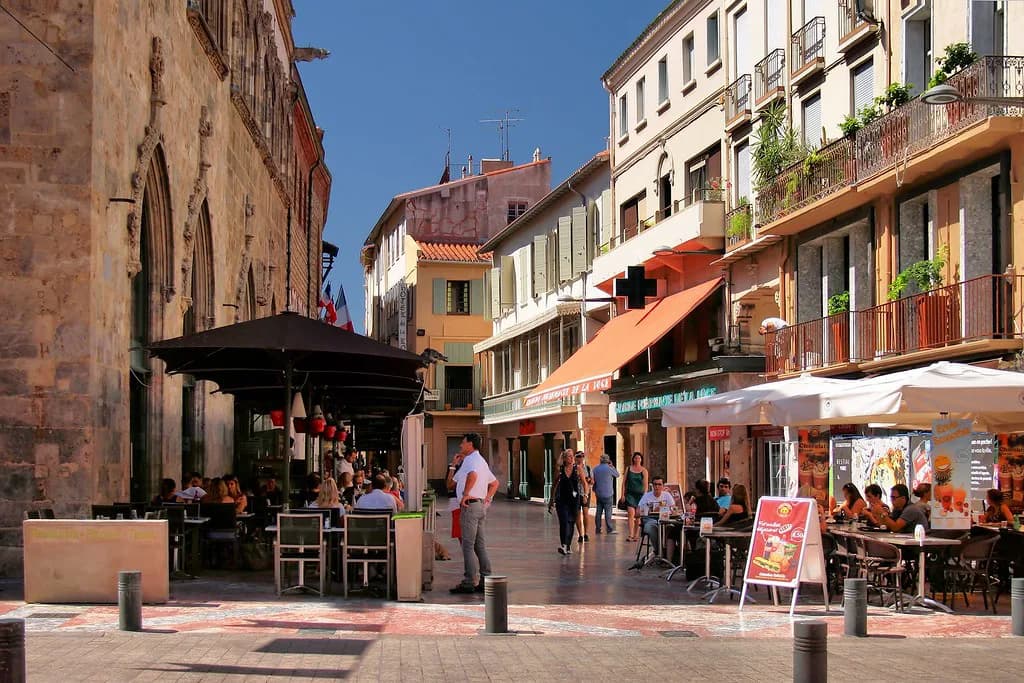
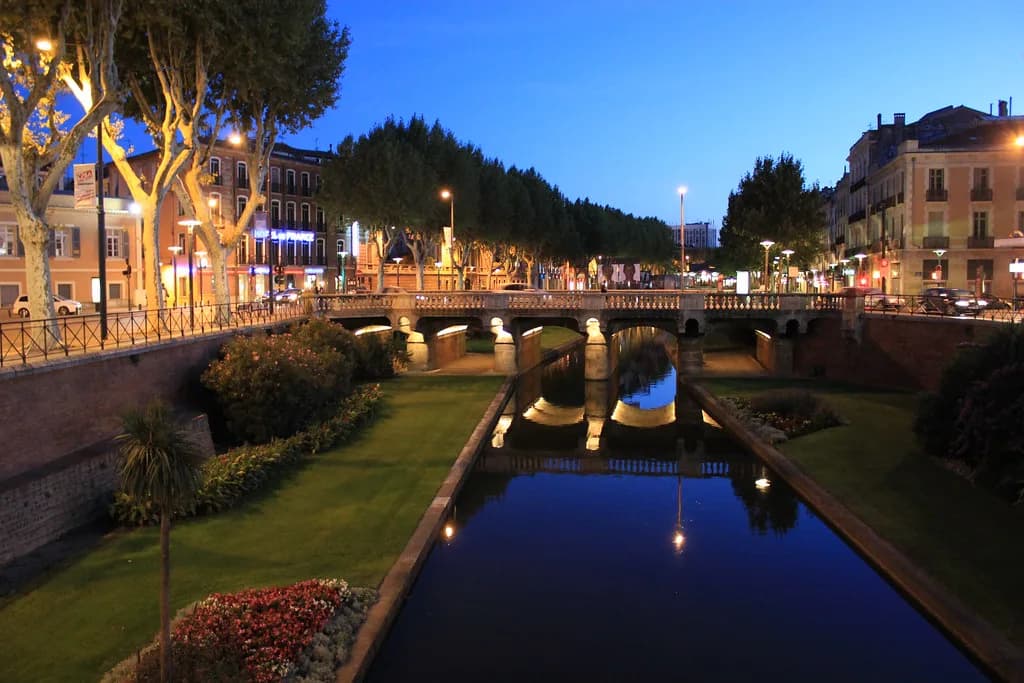
That compactness is the reason a day here works: you spend your time looking rather than travelling. The streets themselves are part of the appeal, lined with vividly coloured buildings and palms, and the centre is easy to walk end to end. Set the cathedral as your anchor and everything else follows within minutes.
Cathédrale Saint-Jean-Baptiste
The cathedral was begun in 1324 in a southern Gothic style and not completed until 1509, which explains the mix of soaring nave and later additions. Inside, painted chapels run around the perimeter of the nave, giving you plenty to look at without paying an entry fee. The porch and bell tower came later still, in the seventeenth and eighteenth centuries, so the building reads as a layered history of the city rather than a single moment.
Step in for the scale of the nave and the colour of the chapels, then walk around the exterior to see how the cathedral sits within the tight old-town streets. The cathedral does not charge for entry, which makes it the natural first stop of any free day.
Campo Santo: The Cloister Cemetery
Just beside the cathedral, the Campo Santo is a cloister cemetery built around an open courtyard, with arched galleries running along its sides. The central ground held ordinary burial plots while wealthy families were interred in the gallery vaults, and you can still pick out coats of arms on the walls as you walk the perimeter. It is a quiet, slightly solemn place, and all the more striking for sitting in the middle of a busy town.
Treat it as a five-minute pause rather than a sight in its own right, and go quietly: this is a burial ground, not a monument. Combined with the cathedral next door, it makes an easy free pairing before you head deeper into the old town.
Mairie de Perpignan: The Patio and Wedding Hall
The town hall, also known as the Palace of the Delegation, dates from the thirteenth century and ranks among the oldest municipal buildings in France. The draw is inside: a patio with a statue and fountain framed by Tuscan columns from the sixteenth century, and the Wedding Hall, whose ornate Hispano-Moresque ceiling was designed for a visit by Napoleon I that never took place. Both are free to look at, and both take only minutes.
This is the clearest example in Perpignan of a free sight that is really one or two rooms. Go for the ceiling and the courtyard, then move on; it slots neatly into a loop between the cathedral and the Castillet.
Hôtel Pams: Art Nouveau for Nothing
Hôtel Pams is the star of the free sights, a nineteenth-century city mansion with an onyx, marble and stucco staircase, ceremonial salons decorated in Art Nouveau style and a courtyard turned garden filled with plants and sculptures. It began as a warehouse bought by Pierre Bardou, whose family built the J.O.B. cigarette paper business, and his daughter turned it into the residence you see today. Entry is free, but the opening pattern changes with the seasons, so time your visit accordingly.
From October to May it opens 11am to 5.30pm and closes on Mondays; from June to September it opens 10.30am to 6.30pm every day. A Monday city break in the cooler months therefore rules it out, which is worth planning around. Allow half an hour to do it justice, more if the courtyard garden tempts you to linger.
Casa Xanxo: A Merchant's Courtyard
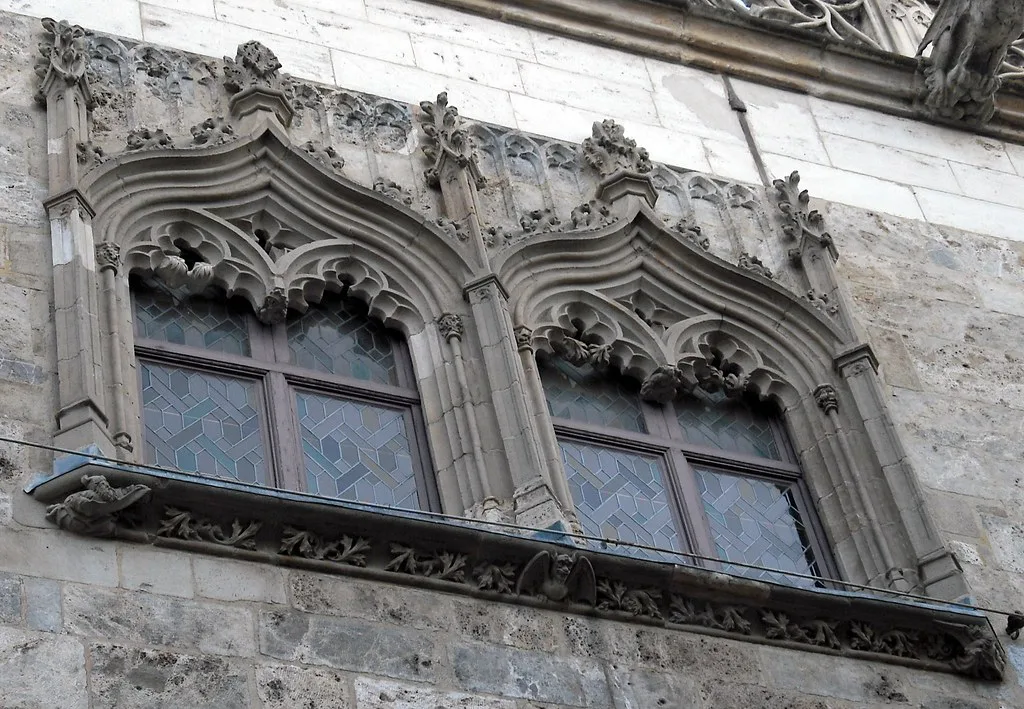
Casa Xanxo is a sixteenth-century merchant's house blending Catalan Gothic and early Renaissance styles, and the intricate carved frieze on its exterior is reason enough to stop. Inside, you can step into the courtyard and a few historically styled rooms, then continue into a small museum covering Perpignan's merchant class and its back-and-forth between Catalan and French rule. Entry is free, and it closes on Mondays.
Like the Mairie, this is a compact pleasure: a courtyard, a carved façade and a handful of rooms. Pair it with the cathedral and Campo Santo, which are close by, rather than making a separate trip. The frieze is on the outside, so even a Monday visit gives you something to see.
Chapel of the Third Order of Dominicans
The chapel itself is plain, but its dome carries vivid paintings that split into religious imagery above and Revolutionary themes below, with the Roman goddess Minerva as the focal point of the lower sections. It is a curious, memorable contrast and takes only a few minutes to see. The chapel is free to enter and sits in the old-town cluster with the other sights on this list.
Palais des Rois de Majorque: Gardens and Ramparts
The Palace of the Kings of Majorca sits on a hill above the city, a thirteenth-century Gothic palace with a central courtyard, arcaded walkways and chapels, later wrapped in fortifications strengthened by Vauban. It is not free: entry costs nine euros, and opening hours shift through the year from 9.30am to 6.30pm in summer down to 10am to 5pm in winter. The climb and the surrounding hill are part of the experience, but budget for the ticket if you want to go inside.
Judged purely on cost, it is the least free-feeling stop in town, so weigh it against how much medieval architecture you want. The palace, fortress and landscaped gardens together justify the ticket for anyone with a real interest in the period.
Le Castillet: The Two-Euro Climb
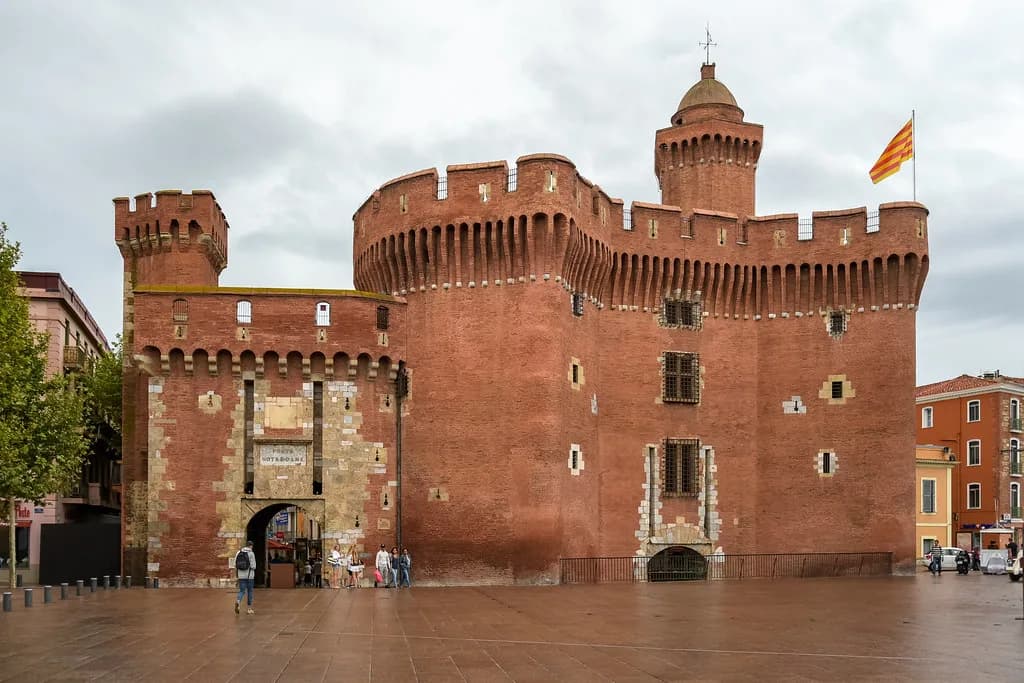
Le Castillet was built in 1360 to guard the city's north gate and is now the only surviving piece of the old ramparts, having served time as a prison before becoming the symbol of Perpignan. For two euros you can climb it, and the panoramic terrace at the top gives sweeping views over the cathedral, the palace and the city below. That makes it the cheapest paid sight in town and a natural companion to the free old-town loop.
If you are choosing between ticketed sights on a tight budget, this is the one to pick: the outlay is minimal and the reward is the best view in the city. Go late in the day for softer light over the rooftops.
Musée d'Art Hyacinthe Rigaud: What Nine Euros Buys
The city's fine art museum mixes medieval retables, Baroque portraits by Perpignan-born Hyacinthe Rigaud, contemporary pieces and a room of photographs of Picasso during his time in the region. It also has a small interior patio, in keeping with the city's fondness for courtyards. Entry costs nine euros, with longer hours from June to September and a Monday closure the rest of the year, so it is an indoor choice for a wet or chilly afternoon rather than a free stop.
One Day or Two: Fitting It Together
One day covers the free sights comfortably, because the centre is compact and every stop on this list sits within a short walk of the next. Start at the cathedral and Campo Santo, cross to the Mairie, then take in Hôtel Pams and Casa Xanxo before finishing at Le Castillet for the view. That sequence keeps the walking short and puts the paid climb at the end, when you have already banked the free pleasures.
With a second day, add the Palais des Rois de Majorque and the Musée Hyacinthe Rigaud, which between them account for most of the paid culture in the city. That leaves the free courtyards and chapels for a relaxed morning and gives you a slower pace overall. If you are still deciding whether the city merits the trip, our honest weekend verdict on whether Perpignan is worth visiting may settle it.
Practical Points: Mondays and Walking
The single most useful thing to know is that Monday takes out both Hôtel Pams, from October to May, and Casa Xanxo, along with the Musée Hyacinthe Rigaud outside the summer months. The cathedral, Campo Santo and the chapel are not affected, so a Monday visit still has free options. Plan your indoor mansion visits for any other day and keep Monday for churches, courtyards and the hill.
Distances are small: the cathedral, Campo Santo, Casa Xanxo and the Mairie sit within a few minutes of one another, and Le Castillet is a short walk further on. Wear comfortable shoes for the cobbles and the climb to the palace. For a wider sense of the city's layout, the Perpignan Attractions: 6 Visitor Guides hub maps out the individual sights.
Where the Free Sights End
The free sights are small by design: courtyards, a cloister, a chapel dome, a wedding hall and a mansion. They reward curiosity rather than filling whole afternoons, so mix them with one or two paid visits to give the day shape. The Castillet at two euros and the palace at nine euros are the best value of the paid options, while the art museum suits a slower, indoor hour.
The wider region offers plenty more, but a short break here works best when you resist the urge to add day trips and simply enjoy the compact centre. If you want to compare what another southern French city offers for nothing, our guide to free things to do in Arles makes an instructive contrast.
Plan Your Free Day in Perpignan
Perpignan's free sights are modest in scale but generous in character, and the compact centre means you can see most of them before lunch. Prioritise Hôtel Pams for its Art Nouveau interiors, the cathedral and Campo Santo for atmosphere, and Le Castillet for the cheapest rooftop view in town. Check opening days before you travel, especially if your visit falls on a Monday outside summer.
Build the day around the old town and let the walking do the work: the city is small enough that a good pair of shoes matters more than a bus pass. That is the honest appeal of Perpignan on a budget: it asks little of your wallet and rewards an unhurried couple of days.
Explore more Perpignan guides
Frequently Asked Questions
What can you do for free in Perpignan?
The cathedral, the Campo Santo cloister cemetery, the Mairie patio and Wedding Hall, Hôtel Pams, Casa Xanxo and the Chapel of the Third Order of Dominicans all cost nothing to enter. All sit close together in the old town, so they can be covered on foot in a morning.
Is Hôtel Pams free to visit?
Yes, entry is free. From October to May it opens 11am to 5.30pm and closes on Mondays; from June to September it opens 10.30am to 6.30pm daily. The Art Nouveau salons and courtyard garden are its highlights.
Is Casa Xanxo free?
Yes, the merchant house is free, and it closes on Mondays. You can see the carved exterior frieze, step into the courtyard and visit a few rooms and a small museum on the city's history.
Are Perpignan's churches free to enter?
The Cathédrale Saint-Jean-Baptiste and the Chapel of the Third Order of Dominicans do not charge for entry. The cathedral's painted chapels and the chapel's dome, with its Revolutionary imagery, are the reasons to go in.
Is the Palais des Rois de Majorque free?
No, entry costs nine euros, with hours that shift from 9.30am to 6.30pm in summer to 10am to 5pm in winter. The ticket covers the palace, its fortifications and the landscaped gardens.
How long do you need in Perpignan?
One day covers the free sights comfortably on foot; a second day allows for the Palais des Rois de Majorque and the Musée d'Art Hyacinthe Rigaud. The city is compact and easily walkable between the old town and the citadel hill.
Is Perpignan worth visiting?
Yes, particularly if you want a Catalan-influenced southern French city without crowds. The cluster of free sights, the coloured streets and the cheap climb up Le Castillet make it an easy short-break choice.
Sources
Notes for French city breaks
Optional updates to our guides.
You might also like
Continue reading
More guides you'll find useful