Perpignan Old Town: What to See on a Historic Walk
Perpignan old town is compact and walkable in a few hours. Here are the squares, streets, cathedral and markets worth your time, plus how to plan the day.
On this page
Perpignan old town is small, walkable and free to wander, and it rewards a half-day to a full day rather than a quick photo stop. The medieval city is compact enough that its main sights sit within easy walking distance of each other, so you can link Le Castillet, the cathedral and the Palace of the Kings of Majorca on foot without transport. It is the lively, colourful core of what the writer Salvador Dalí called the centre of the world.
The wider city sits in Roussillon in the Pyrénées-Orientales, close to the Spanish border, and the culture here reads as Catalan rather than generically French, which is what gives the old town its character. Expedia describes Perpignan as France's last major city before Spain, formerly the capital of the Kingdom of Majorca and Spanish until the 17th century, with Catalan identity still proudly on show. That history is worth knowing because it explains the red-and-yellow flags on the streets and the food on the tables.
This walk works best as the backbone of a short break rather than the whole of it, and it sits naturally beside the city's markets and cafés. If you are still deciding whether the city earns a weekend at all, read our honest weekend verdict before booking.
How the old town is laid out and how long you need
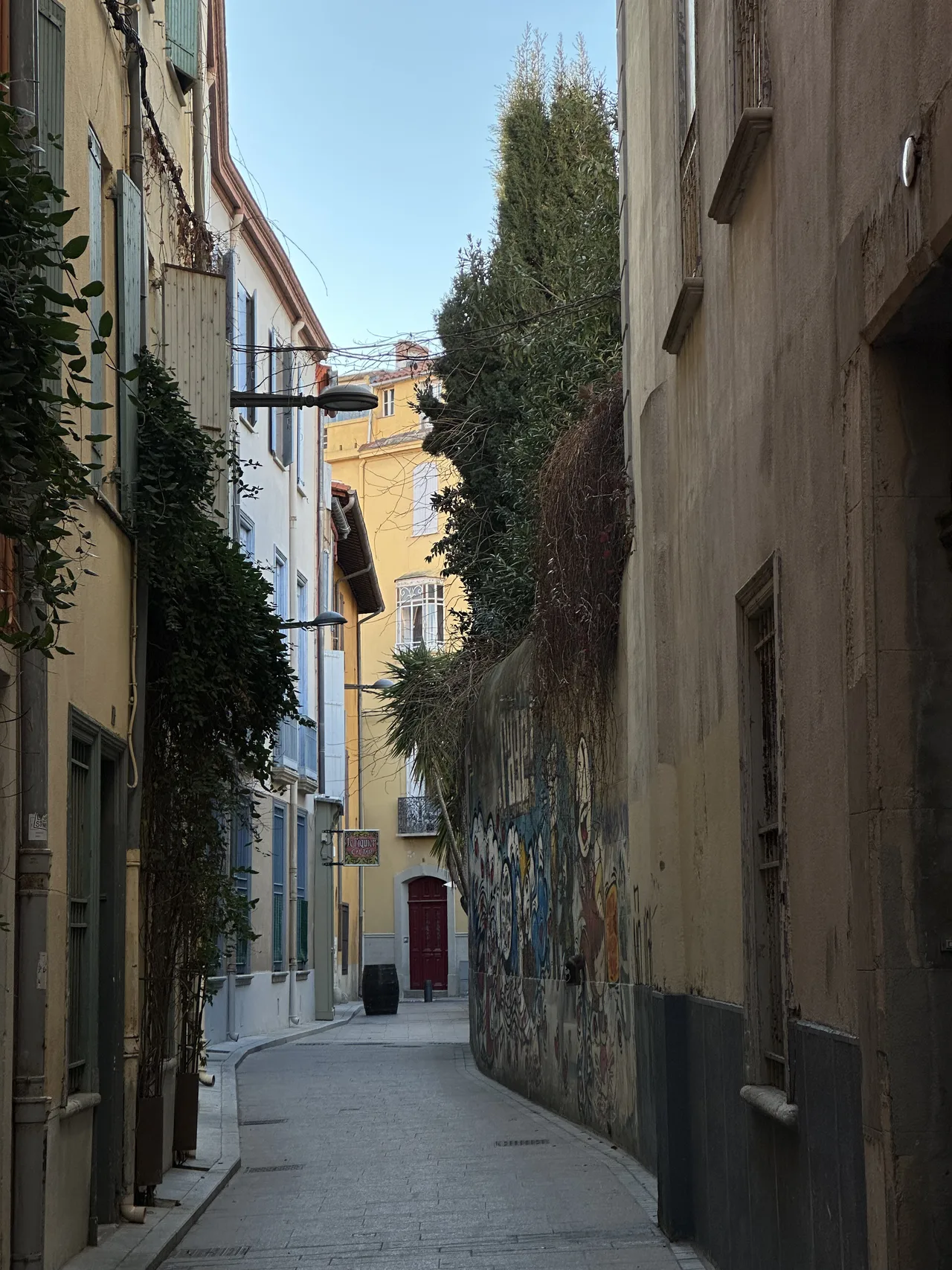
The historic core is a knot of narrow streets around the Cathedral of Saint John the Baptist, with Le Castillet guarding the approach and the Palace of the Kings of Majorca sitting slightly apart to the south. The streets were built close together, which provides real cooling shadows in summer, so the old town is genuinely more comfortable on foot than the open boulevards that ring it. Give the core three to four hours at an easy pace, or most of a day if you add a museum, a market and a long lunch.
Everything in the centre is close enough to reach on foot, so you do not need a ticket, a tram or a plan beyond a rough order. The trade-off is that the core is not laid out on a grid, and getting pleasantly lost is part of the experience; keep the Castillet or the cathedral spire as your bearings. Treat the old town as a loop rather than a single street and you will see more with less backtracking.
If you only have one day in the city, keep the walk inside the core and skip anything that pulls you far out, because the old town alone can absorb the time you have. Our broader guide to the things to do in Perpignan helps you decide what to cut when the clock is short.
A walking route through the old town, start to finish
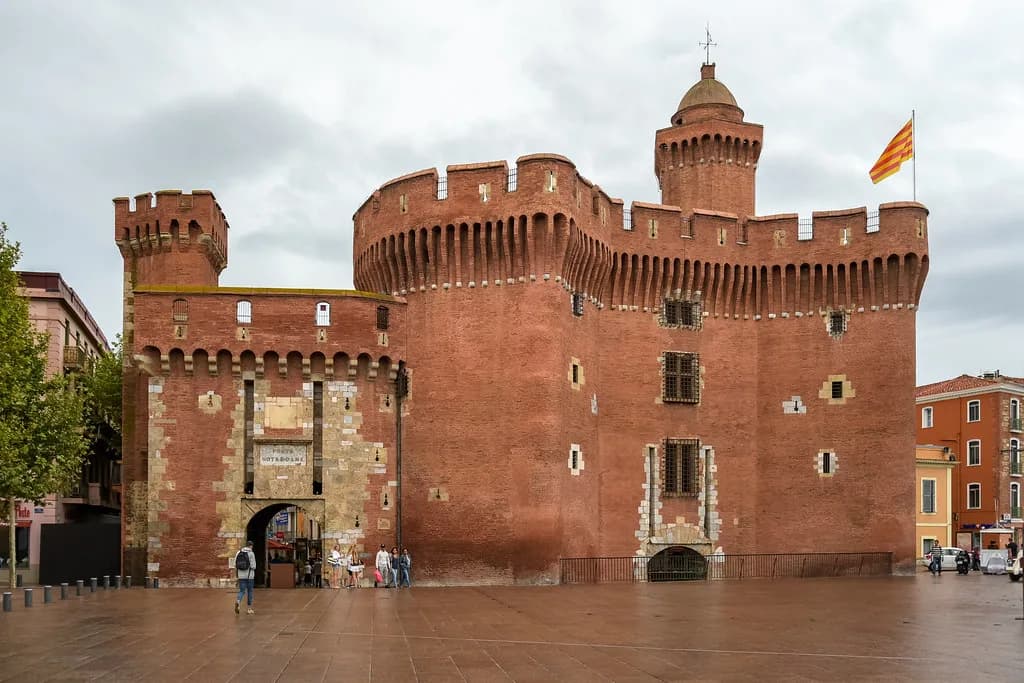
Start at Le Castillet, the medieval gate that serves as the city's emblem, and walk inward through the streets toward the cathedral. From the cathedral, step next door to Campo Santo, the cloistered cemetery, then continue to the Loge de Mer and the Casa Xanxo before heading south to the Palace of the Kings of Majorca. This order keeps you moving roughly in one direction and puts the shaded medieval lanes in the middle of the walk.
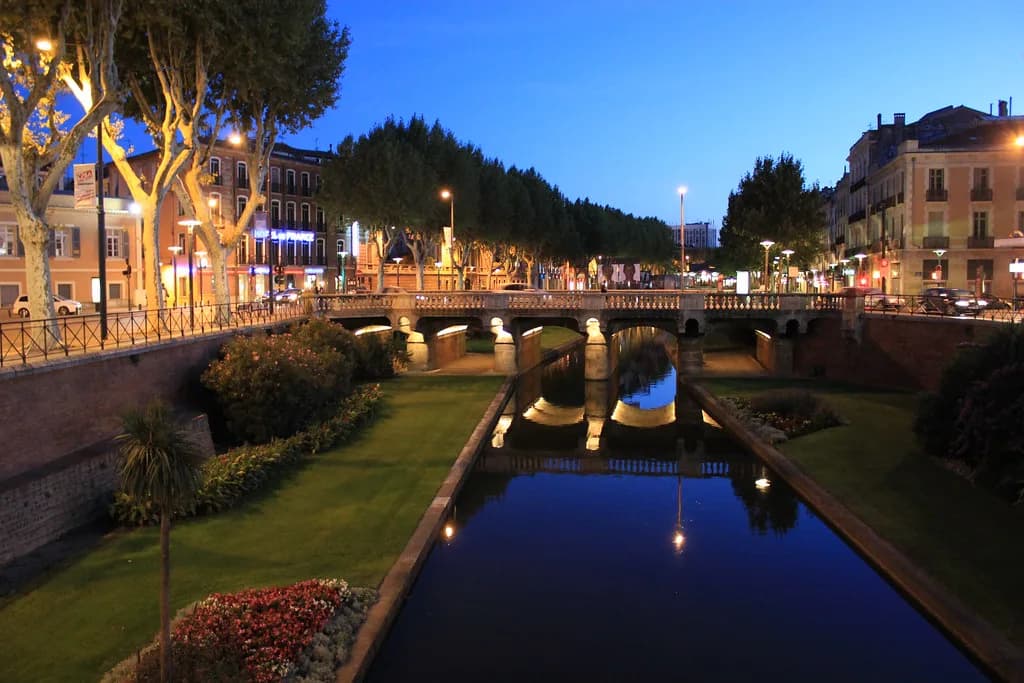
The appeal of this route is that it strings together the sights without repeating ground, and it leaves the market and café stops for the end when you are ready to sit down. The Canal Vauban runs through the centre and is lined with cafés and shops, which makes a natural finishing stretch. Save the eating and browsing for the last hour rather than breaking the walk early.
Aim to walk the core in the morning in summer, when the narrow streets still hold shade, and keep the afternoon for indoor stops such as a museum or the covered market. If you are weighing up whether the city suits a specific month, our guide to Perpignan in October covers what the season feels like on the ground.
Le Castillet and the medieval gate
Le Castillet is the medieval gate that announces the old town, built in rich red brick and instantly recognisable from photographs of the city. It is the right place to begin because it marks the edge of the historic core and gives you a clear sense of entering the old city rather than drifting into it. Pause here for a few minutes before heading inward, and use it as your return point if you get turned around later.
Cathedral of Saint John the Baptist and Campo Santo
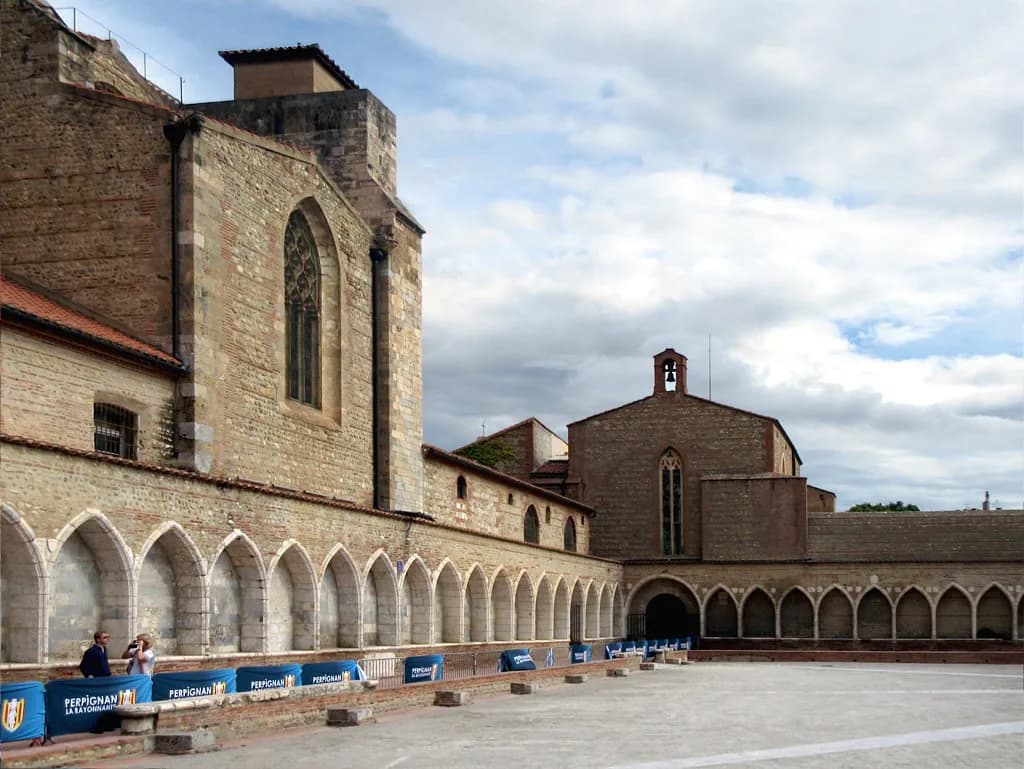
The Cathedral of Saint John the Baptist dates from the 14th century and is built in Gothic style with a single central nave, which makes the interior feel tall and uncluttered rather than subdivided. Expedia lists the cathedral among the must-see sites with free entry, so it is one of the cheapest substantial stops in the old town. Step inside for the scale and the quiet, then walk around the outside to see the stonework from the surrounding lanes.
Next to the cathedral is Campo Santo, the cloistered cemetery, which is one of the more unusual spaces in the old town and easy to miss if you keep your eyes at street level. It is a calm counterpoint to the busy lanes and a good place to slow down before the next stretch of walking. Combine the two while you are here rather than making a separate trip later.
Le Loge de Mer and the Casa Xanxo
The Loge de Mer is one of the old town's civic buildings, and Expedia lists it among the must-see sites with free entry, which makes it an easy addition to the walk. Nearby, the Casa Xanxo is a Gothic town house that gives you a sense of how the city lived in earlier centuries, and it also appears on that free-entry list. These are quick stops rather than long visits, so use them to break up the streets between the cathedral and the palace.
Because both are free, they are the right places to spend time when you want substance without committing to a paid museum. The trade-off is that neither is large, so plan them as fifteen-minute pauses rather than headline attractions. If you want a deeper run of indoor sights, our round-up of museums in Perpignan is the better place to plan.
Palace of the Kings of Majorca
The Palace of the Kings of Majorca began as a fortress in 1274 and was used by King Jaime II to protect Perpignan's growing prosperity, which is why it reads as a defensive site as much as a royal one. It sits slightly south of the main knot of medieval streets, so it is best treated as the far end of the walk rather than a detour in the middle. The Gothic architecture and medieval history make it the most substantial single sight in the old town for anyone interested in the city's past.
Walking out to the palace and back adds distance, so decide before you set off whether you have the legs for it; on a hot day, do it earlier rather than later. Expedia lists the palace among Perpignan's places of interest, and you can check current visiting arrangements when you arrive. Pair it with a pause on the way back rather than rushing straight into the next stop.
Hôtel Pams and the Musée Hyacinthe Rigaud
Hôtel Pams is not a hotel but a mansion built between 1852 and 1872 by Pierre Bardou, who made his fortune manufacturing cigarette papers; it is now owned by the city and open to the public. It is the old town's best example of how the wealthy lived in the 19th century, and the interior is a striking contrast to the medieval streets outside. Treat it as an indoor stop for the middle of the day when you want shade and a slower pace.
The Musée Hyacinthe Rigaud holds wall-sized paintings of Louis XIV and the Sun King's mother, which gives it a clear identity among the city's museums rather than a general mixed collection. Our guide to the Musée d'art Hyacinthe Rigaud covers what to look for inside. If you only have room for one paid museum in the centre, choose between this and the palace depending on whether you prefer paintings or medieval architecture.
Les Halles and the Casanyes market
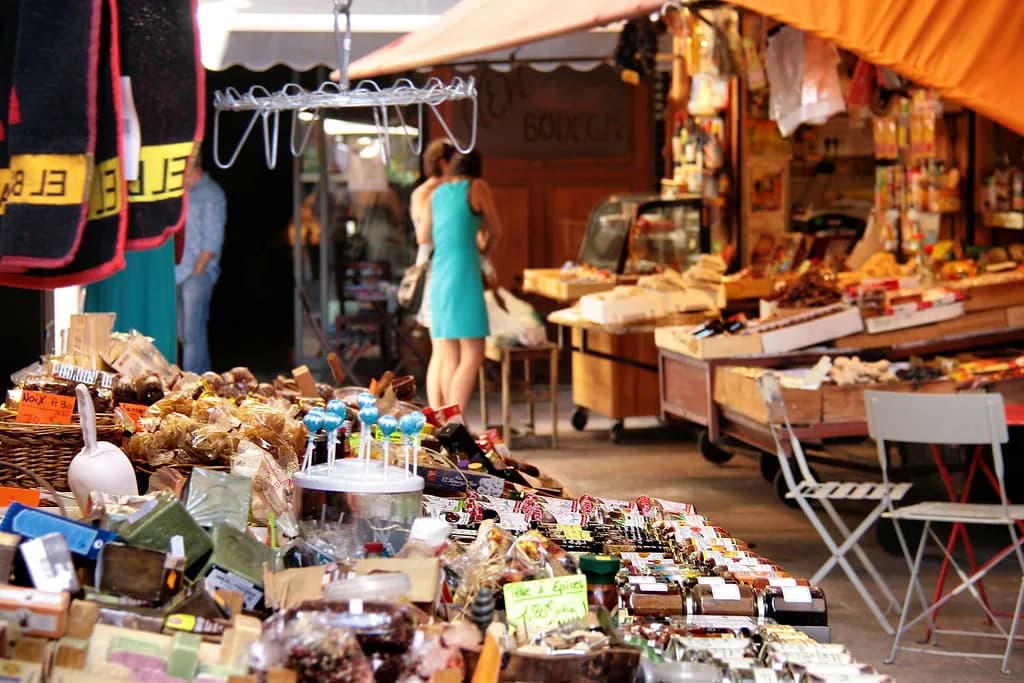
Les Halles is the covered market in the centre, an indoor hall that opened in 2017 and holds around 27 stands selling fruit, meat, seafood, olives, Pyrenean cheese, regional wine and craft beer. It is the easiest market to fold into an old town walk because it sits in the middle of things, and it works as both a shopping stop and a place to eat. Go hungry and treat it as lunch rather than a quick look.
The Casanyes market is a different experience entirely: an open-air market beside the Saint-Jacques quarter, with stalls of fruit, vegetables, paella, olives, dried fruit and cheap clothing, jewellery and household goods. A 2022 traveller account describes it as running from 7am to 1pm daily, so treat that as a description rather than a fixed schedule and confirm locally before you build a morning around it. It is off the main tourist track, which is exactly why it feels like a working market rather than a display.
The two markets are often lumped together as one line in city guides, but they serve different purposes: Les Halles is central, indoor and food-led, while Casanyes is outdoor, peripheral and general. If you only have time for one, choose Les Halles for convenience and Casanyes for atmosphere.
Saint-Jacques quarter and the market edge
The Saint-Jacques quarter borders the Casanyes market and has a distinct character of its own, shaped by a mix of Gypsy and North African communities who have lived side by side here for decades. It was a Jewish enclave for many years until around 1940, when the Gypsy community began moving in along with African families. The neighbourhood has colourful graffiti, music and laundry hanging from windows, and it comes alive in the late afternoon when people gather outside.
This is not a polished tourist quarter, and it is honest to say so: unemployment is very high, and the area has a reputation among locals that keeps some visitors away. It is also a place of strong family ties and visible community life, and walking through it with normal city awareness is a different experience from the cathedral squares. Go if you are curious about how the city actually lives, and skip it if you want only the postcard version.
Rue Paratilla and eating in the centre
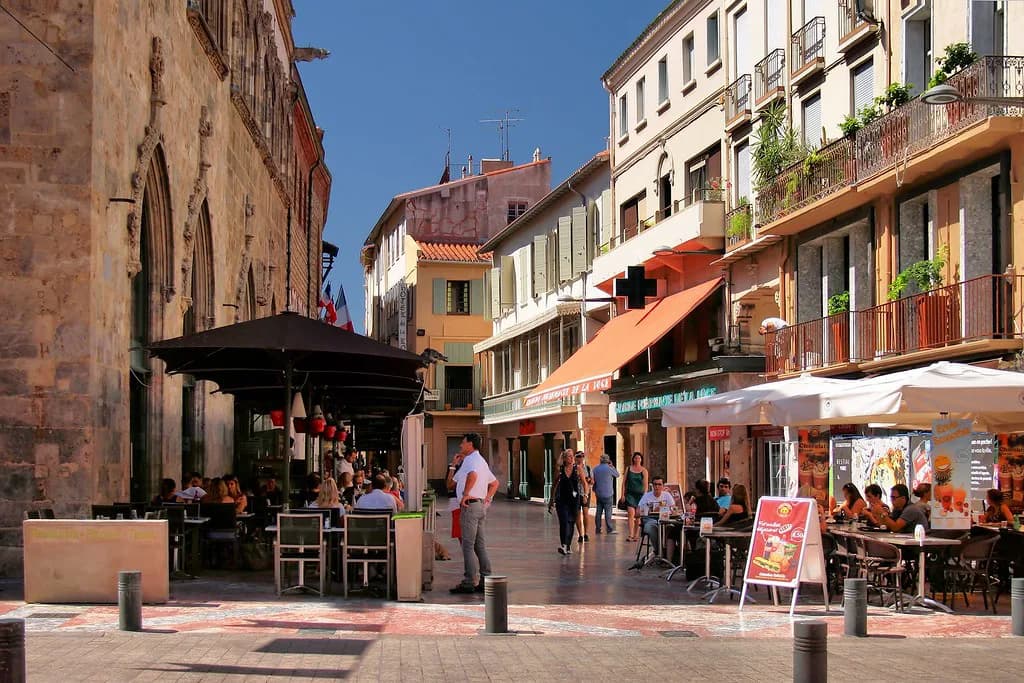
Rue Paratilla is nicknamed the street of spices, and Expedia points to it as a place to pull up a chair in the evening for a cargolade, a platter of grilled snails, or a portion of Collioure anchovies. It is a compact, food-focused stretch rather than a grand boulevard, which makes it an easy end point to the walk. Book the evening around one street rather than chasing restaurants across the city.
The food here blends Catalan and southwestern French cooking, with duck, mussels and other seafood appearing alongside spicy Catalan dishes. For a wider shortlist of where to eat beyond one street, our guide to the best restaurants in Perpignan covers the centre properly. Keep lunch simple at Les Halles and save the sit-down meal for the evening.
If you want to shop for picnic provisions or local produce, the centre has plenty of food shops and the covered market is the obvious starting point. Our guide to shopping in Perpignan covers the practical side of the centre.

Free sights versus paid ones
The old town's free-to-enter sights are substantial: the Cathedral of Saint John the Baptist, the Loge de Mer, the Museum of Natural History, the Fort du Serrat d'En Vaquer and the Casa Xanxo are all listed as free entry by Expedia. That list alone fills a half-day without spending anything, and it is the right basis for a cheap visit. Build the morning around these and keep the paid stops for the afternoon.
The main trade-off is that the free sights are mostly quick visits, while the substantial indoor experiences, such as the palace and the Musée Hyacinthe Rigaud, sit outside that list and come with their own arrangements. Our guide to free things to do in Perpignan goes further if you want to stretch a low-cost day. Decide which one paid sight matters most to you and let the rest of the day stay free.
If you want a break from walking, the modern L'Archipel theatre on the edge of the centre is a striking red garnet-shaped building designed to symbolise the area's garnet industry, and it is worth a look from outside even if you are not seeing a show. It is a reminder that the city is not only medieval.
Practical timing: mornings, Sundays and lunchtime closures
France's museum closing days vary by city, so the practical approach is to check the specific museum's published hours before you build a day around it, and to keep the free outdoor sights as your fallback. Walking the old town has no schedule and works on any day of the week, which makes it the safest anchor when a museum is shut. Plan the paid indoor stop second and the walk first.
Sunshine figures for the city are reported differently depending on where you read them, so treat any single number with caution and plan for warm, bright weather in summer rather than relying on a precise count. What matters practically is shade: the old town's narrow lanes were built close together and provide cooling shadows, so walk them in the morning. Carry water in summer and save the open squares for early or late.
For the market, the practical advice is the same: confirm the day and the hours locally, then arrive in the morning when produce and atmosphere are at their best. Do not plan a Sunday around a museum you have not checked.
Where the old town fits with a Collioure day out
The Mediterranean coast is about 20 minutes away, and Collioure is the obvious day out from Perpignan, a colourful Catalan fishing town with a 14th-century Château Royal overlooking one of its beaches. A 2022 traveller account described a one-euro bus dropping passengers near the château, but treat that fare as historical rather than current and check the local bus operator for today's price and timetable. The tourism office lists Collioure as the place to be around Perpignan.
If you add Collioure, give the old town its own half-day and keep the coast trip separate rather than trying to do both in one push. The old town is best walked fresh, and the coast is best reached without rushing back for a museum slot. Two slower days beat one crowded one.
If you are comparing Perpignan's historic centre with other southern French old towns, our guide to the Ajaccio old town shows how a very different Mediterranean city handles its Genoese quarter. Both reward walkers who accept narrow streets and uneven ground.
Making the Old Town the Centre of Your Weekend
Perpignan old town works because it is small enough to walk without a plan and substantial enough to fill a day, with a free-entry spine of cathedral, Loge de Mer and Casa Xanxo and paid stops for when you want more depth. Start at Le Castillet, follow the streets inward, and keep the market and a long lunch for the end. The result is a weekend that feels unhurried rather than packed.
The old town is the reason to come, but the city's identity, Catalan cooking, its markets and its Spanish history, is what makes the walk memorable rather than merely pretty. Check the specific museum and market hours before you go, then let the streets do the rest.
Explore more Perpignan guides
Frequently Asked Questions
Is Perpignan old town worth visiting?
Yes, if you want a compact, walkable historic centre with a medieval gate, a Gothic cathedral, a cloistered cemetery and a pair of very different markets. It is not a city of grand national monuments, but the Catalan character and the density of the medieval streets make it rewarding for a half-day or a full day.
How long does it take to walk Perpignan old town?
Allow three to four hours at an easy pace for the core, or most of a day if you add a museum, a market and a proper lunch. The sights sit within walking distance of each other, so you do not need transport once you are in the centre.
Which sights in Perpignan old town are free?
Expedia lists the Cathedral of Saint John the Baptist, the Loge de Mer, the Museum of Natural History, the Fort du Serrat d'En Vaquer and the Casa Xanxo as free-entry sites. The palace and the Musée Hyacinthe Rigaud sit outside that list and come with their own arrangements, so check those separately.
Is Perpignan old town walkable?
Yes. The medieval core is compact and its sights are close together, and the narrow streets were built to create shade, which makes walking comfortable in summer. Wear shoes you can handle on uneven cobbles and treat the walk as a loop rather than a single street.
What is the Casanyes market and when is it on?
It is an open-air market beside the Saint-Jacques quarter, with produce, paella, olives, dried fruit and inexpensive clothing and household goods. A 2022 traveller account describes it as running from 7am to 1pm daily, so confirm the current schedule locally before planning a morning around it.
Where do you eat in Perpignan old town?
Rue Paratilla, nicknamed the street of spices, is the obvious evening choice for grilled snails or Collioure anchovies, and Les Halles in the centre works well for a lunch of cheese, seafood and regional dishes. For a wider shortlist, plan around the centre rather than the outskirts.
Is Perpignan warm in winter?
The city has a sunny Mediterranean-influenced climate and is described as one of France's sunniest cities, though reported annual sunshine figures differ between sources. Expect mild, bright winter days rather than guaranteed heat, and check a current forecast before packing.
Can you see Perpignan old town in one day?
Yes, the core fits comfortably into a day if you keep to the centre and do not add a coast trip. Start at Le Castillet in the morning, work inward to the cathedral and the palace, and finish with the market and a long lunch.
Sources
Notes for French city breaks
Optional updates to our guides.
You might also like
Continue reading
More guides you'll find useful