Museums in Lille: Which Ones to Visit and How Long They Take
Lille's museums range from the Palais des Beaux-Arts to the Art Deco La Piscine in Roubaix. Here's what each one holds and how to fit them into a weekend.
On this page
Lille's best museum for most visitors is the Palais des Beaux-Arts, which holds France's richest art collection after the Louvre and sits within walking distance of the city centre. After that, the choice depends on how far you are willing to travel: La Piscine in Roubaix, the Villa Cavrois in Croix and LaM in Villeneuve d'Ascq all sit outside the centre but reward the trip. Two of the city's museums are closed for renovation, so a little planning stops you turning up at a shut door.
What Lille's Museums Cover in a Weekend
Lille's museums fall into three rough groups: fine art, local history and architecture. The Palais des Beaux-Arts covers the first with a collection running from Rubens and Van Dyck to Goya, Delacroix and Courbet, while the Hospice Comtesse and the Maison natale Charles de Gaulle handle the second. The third is the strongest reason to leave the centre, with Robert Mallet-Stevens' Villa Cavrois in Croix and the Art Deco La Piscine in Roubaix.
The museums are spread across the Lille metropolis rather than clustered in one quarter. The Palais des Beaux-Arts, the Hospice Comtesse, the cathedral and the Maison natale Charles de Gaulle are all in central Lille and can be walked between. Roubaix, Tourcoing, Villeneuve d'Ascq and Croix need metro or tram time added to your day, so treat them as half-day outings rather than quick stops. If you are still weighing up the trip, our guide to whether Lille is worth visiting sets out what the city offers beyond its museums.
Palais des Beaux-Arts: France's Richest Collection After the Louvre
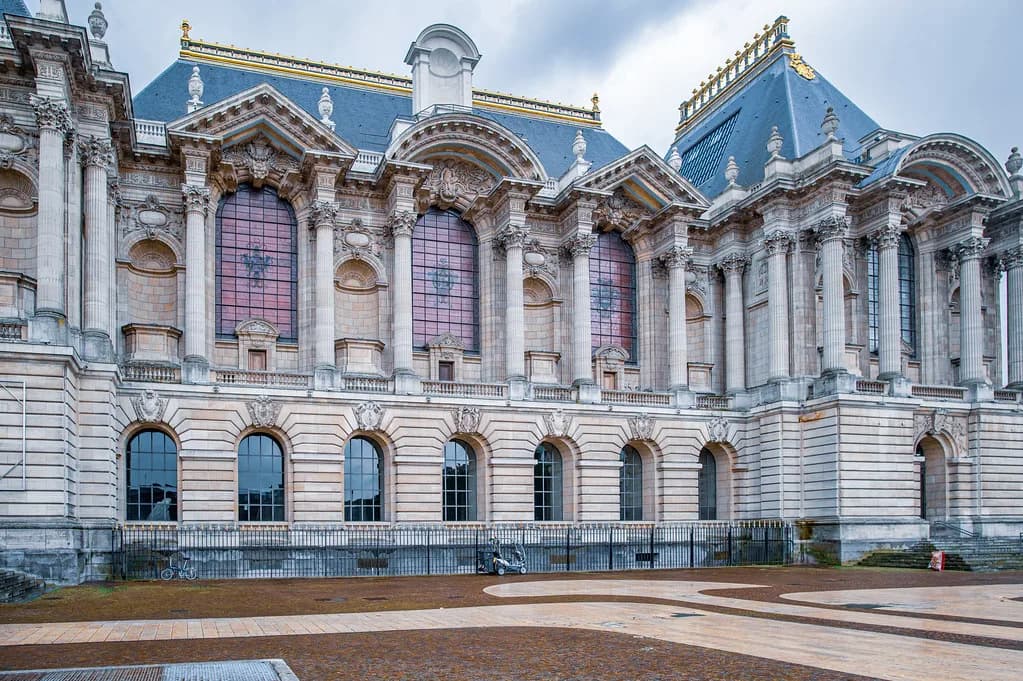
The Palais des Beaux-Arts occupies a 19th-century building adorned with gilding and sculpture on Place de la République, and its galleries hold works by Rodin, Van Dyck, Rubens, Delacroix, Goya and Courbet. Lille Tourism describes it as France's richest collection of art after the Louvre, which is the reason it tops most itineraries. Temporary exhibitions run alongside the permanent galleries and are open to all visitors. If you enjoy comparing regional collections, the museums in Aix-en-Provence offer a similar mix of fine art and temporary shows.
Allow about 90 minutes for the main collection, which is manageable rather than exhausting, and add time if a temporary exhibition is running. The museum is compact enough to fit into a morning without derailing the rest of your day, which makes it a sensible anchor for a first visit. Check the current programme and ticket prices on the museum's own site before you go, since temporary shows are priced separately.
La Piscine in Roubaix: an Art Deco Pool Turned Museum
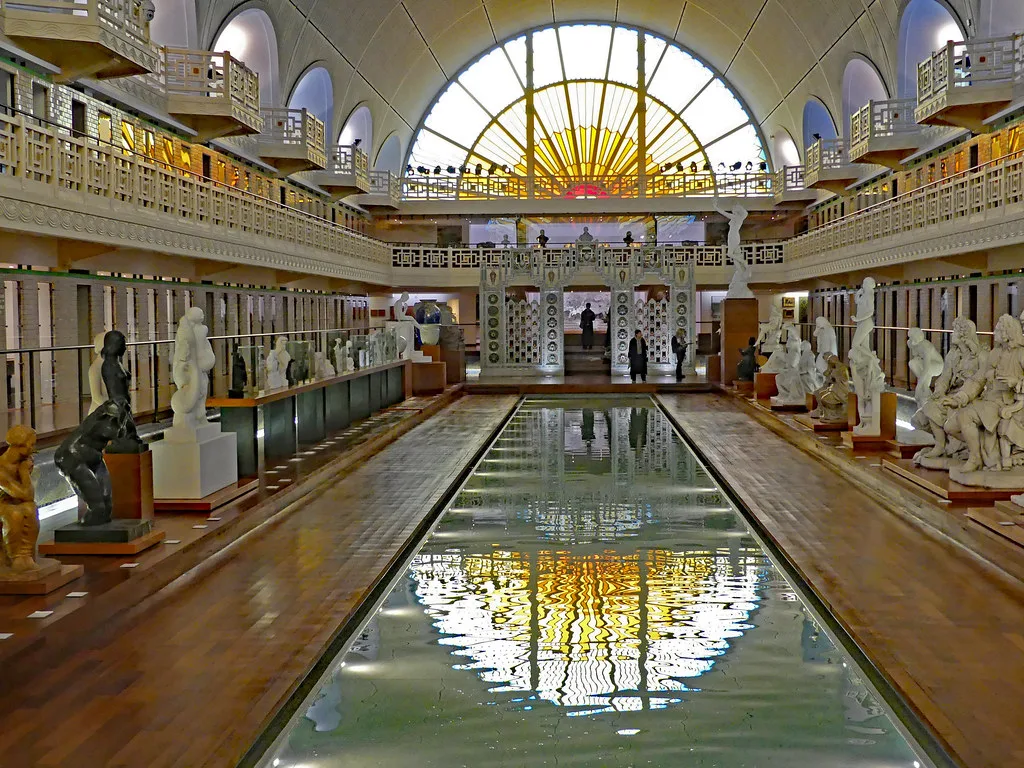
La Piscine, the Museum of Art and Industry, occupies a former Art Deco swimming pool in the heart of Roubaix. The basin remains, lined with blue and gold mosaic and framed by two immense glass windows that light the room, while the old changing rooms have become galleries. The collections cover applied arts such as drawing, textiles and ceramics alongside 19th- and 20th-century painting and sculpture, including a recreated studio of the sculptor Henri Bouchard.
The metro from central Lille to Roubaix takes about 30 minutes, so build the journey into your plan rather than treating the museum as a city-centre stop. Most visitors find the building itself as memorable as the collection, and the combination justifies the trip. Pair it with a wander around Roubaix rather than rushing back into Lille on the same metro.
Hospice Comtesse: Medieval Lille in a Former Hospital
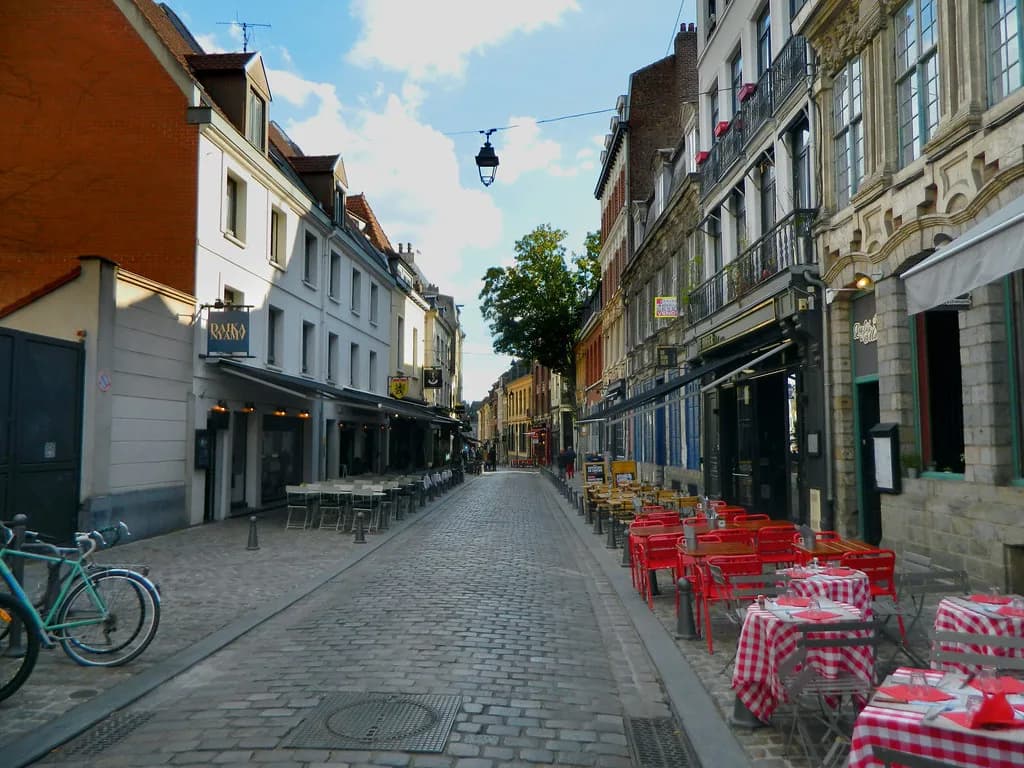
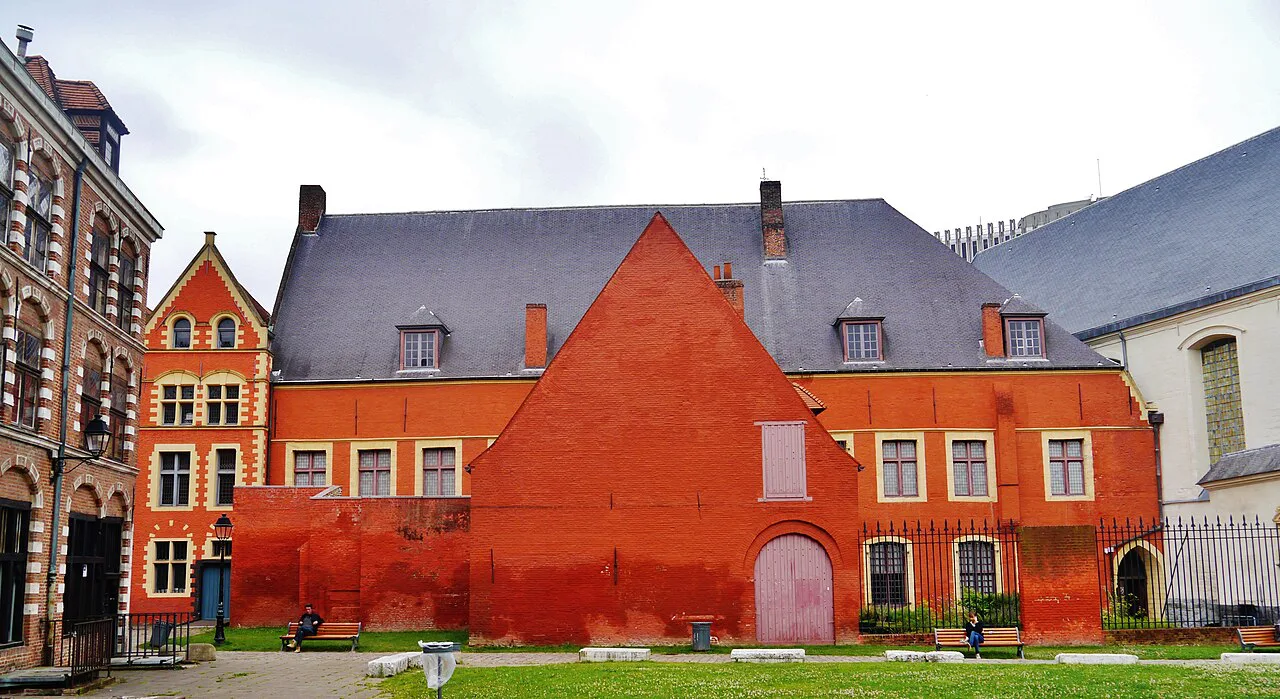
The Hospice Comtesse began as a hospital founded in 1237 inside the palace walls of Countess Jeanne de Flandre, and it now tells the story of Lille in the Flemish era. It sits just off Rue de la Monnaie in Vieux-Lille, which makes it easy to combine with a walk through the old town's cobbled lanes and arcades. The building retains its chapel, cloisters and vaulted ceilings, and rooms host rotating exhibitions that sit alongside the historic fabric.
It is a small museum, so an hour covers the essentials and leaves your afternoon free for the old town. That modest scale suits a weekend better than a second blockbuster museum does, and the medieval setting gives useful context for the streets around it. Our guide to Lille old town picks out the streets worth walking afterwards.
Maison natale Charles de Gaulle on Rue Princesse
Charles de Gaulle was born on 22 November 1890 at 9 rue Princesse, in his maternal grandparents' house, which is now a small museum. The rooms are preserved in period detail, with letters, photographs and personal items that sketch the world he grew up in, plus a small garden. It sits a short walk from Vieux-Lille, so it slots neatly into an afternoon that already includes the Hospice Comtesse.
This is a niche stop rather than a headline museum, and it earns its place if you have an interest in modern French history. Skip it if your weekend is already full of art, because the collection is domestic in scale and the visit is quick. If you do go, the old town's cafés and restaurants are close enough for lunch afterwards, and our guide to the best restaurants in Lille covers the neighbourhood.
Musée de l'Institut Pasteur de Lille
The Institut Pasteur de Lille gave its museum a new lease of life in 2017, turning it into a showcase for the institute's history and for current scientific research. It is one of the smaller museums in the city, and it suits travellers who prefer science and medicine to painting. Because it is a working research institution's museum, opening arrangements can differ from the big municipal museums, so confirm times before travelling across town. The city's official museums listing is the place to start.
MUba Eugène Leroy in Tourcoing
MUba Eugène Leroy in Tourcoing draws visitors in through the interplay between contemporary works and pieces made before the 19th century. It also serves as the reference collection for the artist Eugène Leroy, which gives the museum a clear identity within the Lille metropolis. Tourcoing sits on the same metro corridor as Roubaix, so the two museums can be paired in a single day if you start early. Allow extra time for the walk from the metro to the museum.
LaM in Villeneuve d'Ascq: Modern, Contemporary and Outsider Art
LaM in Villeneuve d'Ascq grew from a major donation of modern art made by Geneviève and Jean Masurel in 1979, enriched in 1999 by the Aracine collection of outsider art. Its route links three collections, modern art, contemporary art and art brut, which is what makes it unusual among French museums. The building stands in a green setting of 23,000 square metres punctuated by monumental works.
LaM in Villeneuve d'Ascq is closed for renovation, with a reopening given as early 2026 rather than a confirmed date, so check before planning a visit around it. Villeneuve d'Ascq sits about 20 minutes from Lille, which makes it a half-day commitment once the museum reopens. If the timing works, the combination of art and garden justifies the journey more than a single-collection museum would.
Villa Cavrois in Croix: Mallet-Stevens' Modernist Manifesto
The Villa Cavrois in Croix is Robert Mallet-Stevens' 1932 modernist manifesto, built for the textile industrialist Paul Cavrois and just 20 minutes from Lille. The house incorporates the advanced domestic techniques of its time and has been restored to its 1932 state after a thirteen-year renovation following decades of abandonment and vandalism. It is a contemporary château in the literal sense, with a scale and ambition that surprise first-time visitors.
If you care about architecture, this is the museum to prioritise outside the centre, ahead of a second art gallery. The visit is about the building, so a passing interest in painting is not required, but a taste for modernism helps. Croix is close enough to Lille that the journey does not eat your day, and it pairs well with a Roubaix museum stop.
Institut du Monde Arabe in Tourcoing
The Institut du Monde Arabe in Tourcoing occupies the city's former swimming school and promotes the cultures of the Arab world through exhibitions and events. It is a different proposition from the art museums, and it works well as a change of register during a museum-heavy weekend. Because it is a smaller institution with a varied programme, its exhibitions change, so check what is on before making the trip from Lille.
Centre of Sacred Art in the Cathedral Crypt
The Centre of Sacred Art sits in the neo-Gothic crypt beneath Notre-Dame de la Treille cathedral, showing the Delaine collection of paintings, sculpture, photographs, drawings and stained glass on the theme of the Passion of Christ. It brings 20th- and 21st-century artists into a space most visitors would not expect, and the cathedral's modern facade and translucent marble make the building itself worth the detour. The collection is presented as unique in France.
The cathedral sits in central Lille, so the crypt is easy to combine with the Palais des Beaux-Arts or a walk through the old town. The visit is short, and it works best as part of a wider stop rather than a destination in itself. Add it to a morning that already has you in this part of the city.
Museum of Natural History: Closed for Renovation
The Museum of Natural History opened in 1894 in a former science faculty and holds the city's geology and zoology collections. It is currently closed for renovation, with no reopening date given, though its programme continues beyond the building through events and travelling exhibitions across the metropolitan area. Do not build a day around it until the reopening is confirmed on the museum's own pages.
For families, the travelling exhibitions are the practical alternative while the building is shut. If the natural history museum was your main reason for visiting Lille, look at what is currently touring before you finalise dates. Otherwise, treat it as one to bookmark for a future trip.
Planning Around Closures and the City Pass
The Lille City Pass gives free entry to 20 tourist and cultural attractions in Lille and its metropolitan area, with public transport included if you want it. Prices start at 25 euros for 24 hours, 35 euros for 48 hours and 45 euros for 72 hours. Whether it pays depends on how many of the included sites you will actually visit, and on whether you need the transport.
Museums in France often close on a Monday or Tuesday, and some run free-entry days, so check each museum's own site for the days you plan to visit rather than assuming a city-wide pattern. Two of Lille's museums are closed for renovation, so check the LaM Lille Métropole Musée and Natural History Museum listings before travelling to Villeneuve d'Ascq. Beyond that, the main planning decision is how far you are willing to travel for a single museum.
How Many Museums Fit Into a Weekend
A realistic weekend takes in one big central museum, the Palais des Beaux-Arts, plus one or two smaller central stops such as the Hospice Comtesse, the cathedral crypt or the Maison natale Charles de Gaulle. Save one half-day for a trip outside the centre, whether that is La Piscine in Roubaix, the Villa Cavrois in Croix or LaM once it reopens. Trying to do Roubaix, Tourcoing and Villeneuve d'Ascq in the same weekend leaves little time for the city itself.
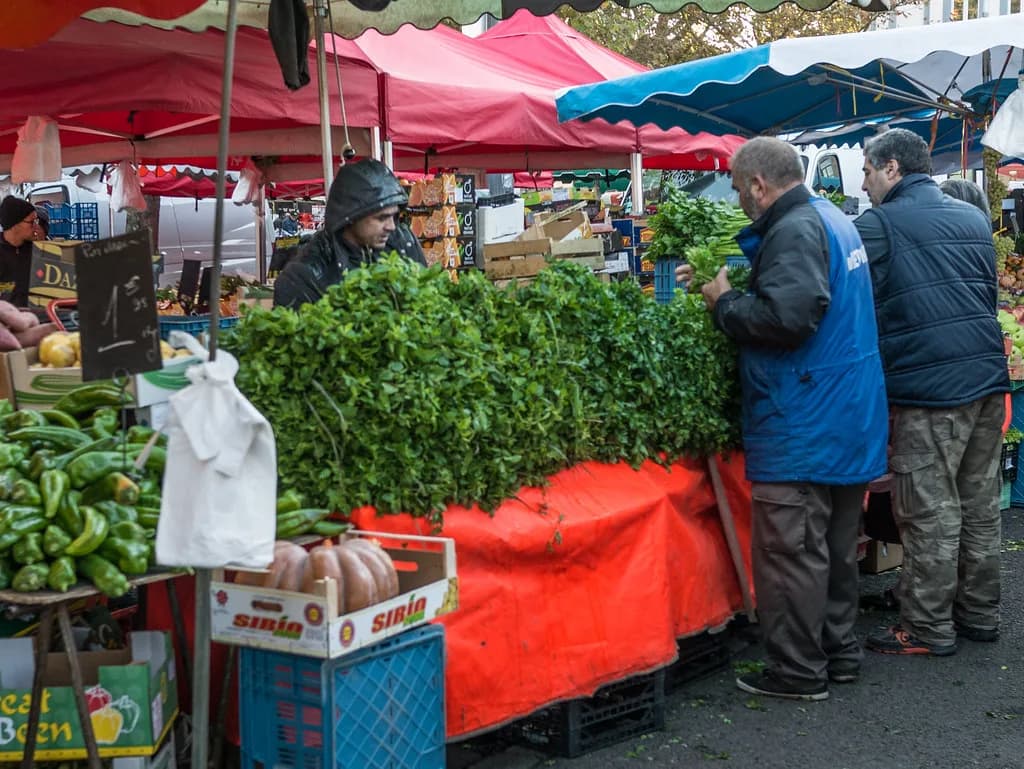
If you have only one day, see the Palais des Beaux-Arts in the morning and the Hospice Comtesse and cathedral in the afternoon, keeping everything within walking distance. With two days, add La Piscine or the Villa Cavrois. Three days lets you cover both and still have time for the old town and a market, and our guide to markets in Lille covers the options.
Plan Your Visit
Lille's museum scene rewards a weekend if you pick by taste rather than by name recognition. The Palais des Beaux-Arts is the essential central stop, the Hospice Comtesse and cathedral crypt fill an afternoon, and one excursion to Roubaix, Croix or Villeneuve d'Ascq gives the trip its contrast. The City Pass figures, at 25 to 45 euros depending on duration, give you a clear basis for deciding whether it pays for your plans.
Two museums are currently closed for renovation, so check the Palais des Beaux-Arts and La Piscine listings before you book and again before you travel. Building the weekend around one central museum and one excursion keeps the pace comfortable and leaves room for the old town, the squares and the food that make Lille worth the journey.
Explore more Lille guides
Frequently Asked Questions
Which museums in Lille are worth visiting?
The Palais des Beaux-Arts is the essential central museum, with a collection Lille Tourism rates as France's richest after the Louvre. In the centre, the Hospice Comtesse and the crypt of Notre-Dame de la Treille cathedral add medieval and modern art in compact doses. Outside the city, La Piscine in Roubaix and the Villa Cavrois in Croix justify the metro or tram trip.
How long does the Palais des Beaux-Arts take?
Plan on around 90 minutes for the main collection, which is a manageable size rather than an all-day commitment. Add extra time if a temporary exhibition is running, since those are visited on top of the permanent galleries. A morning visit leaves the afternoon free for the old town.
Is La Piscine in Roubaix worth the trip from Lille?
Yes, if you want one museum outside the centre. The former Art Deco swimming pool keeps its basin, mosaic and glass windows, and the galleries hold applied arts, painting and sculpture in the old changing rooms. The metro from central Lille takes about 30 minutes, so treat it as a half-day.
Are any Lille museums free?
Entry prices for individual museums are set by each institution, so check the museum's own page before you go. The Lille City Pass bundles entry to 20 tourist and cultural attractions in the metropolis, with public transport included if you choose it, and it can work out cheaper than paying separately if you plan to visit several sites.
Do Lille museums close on Mondays?
French museums often close on a Monday or Tuesday, but the pattern varies by institution, so confirm the days for each museum you plan to visit. LaM in Villeneuve d'Ascq is closed for renovation and the Museum of Natural History is closed for renovation, so neither can be visited at present regardless of the day.
What is the Lille City Pass and is it worth it?
The City Pass covers entry to 20 tourist and cultural attractions across Lille and its metropolitan area, with the option of public transport included. It comes in 24-hour, 48-hour and 72-hour versions, and the official Lille Tourism listing sets out the price of each. It pays if you will visit enough included sites and use the transport; a museum-light weekend probably will not justify it.
Sources
Notes for French city breaks
Optional updates to our guides.
You might also like
Continue reading
More guides you'll find useful