Best Restaurants in Lille: Where to Eat on a City Break
Where to eat in Lille, from estaminets on Rue de Gand to frites, carbonade flamande and Méert pastries, with the dishes, food halls and budget tips that matter.
On this page
Lille eats like a Flemish city that happens to sit in France. Expect carbonade flamande, moules-frites, Le Welsh and potjevleesch, with frites as the default accompaniment and about a dozen estaminets concentrated on Rue de Gand in the old town. Plan one hearty sit-down meal, one casual frites or bakery lunch, and at least one pastry stop.
What Lille Food Actually Is
The local repertoire is built on beer, cheese and potatoes. Carbonade flamande is a rich beef stew cooked with beer and served with chips, moules-frites need little explanation, and Le Welsh is a molten assembly of cheese, beer, ham and bread.
Maroilles is the local cheese to know about, and it is pungent enough that ordering it is a decision rather than a default. Potjevleesch, a set meat terrine in jelly, and the fricadelle sausage round out the traditional list, so a single meal rarely covers everything.
Frites are everywhere, and they are the cheapest way to eat well in the city. Friterie Meunier runs several locations, including one on Grand'Place and one near Lille-Flandres, and portions are large enough that a single order stretches a light lunch.
What an Estaminet Is, and Why Rue de Gand Matters
An estaminet is Lille's traditional eating house, the kind of place that serves hearty regional dishes in generous portions. They are a category rather than a single address, so choosing one is really a question of where you want to sit and how much atmosphere you want around the plate.
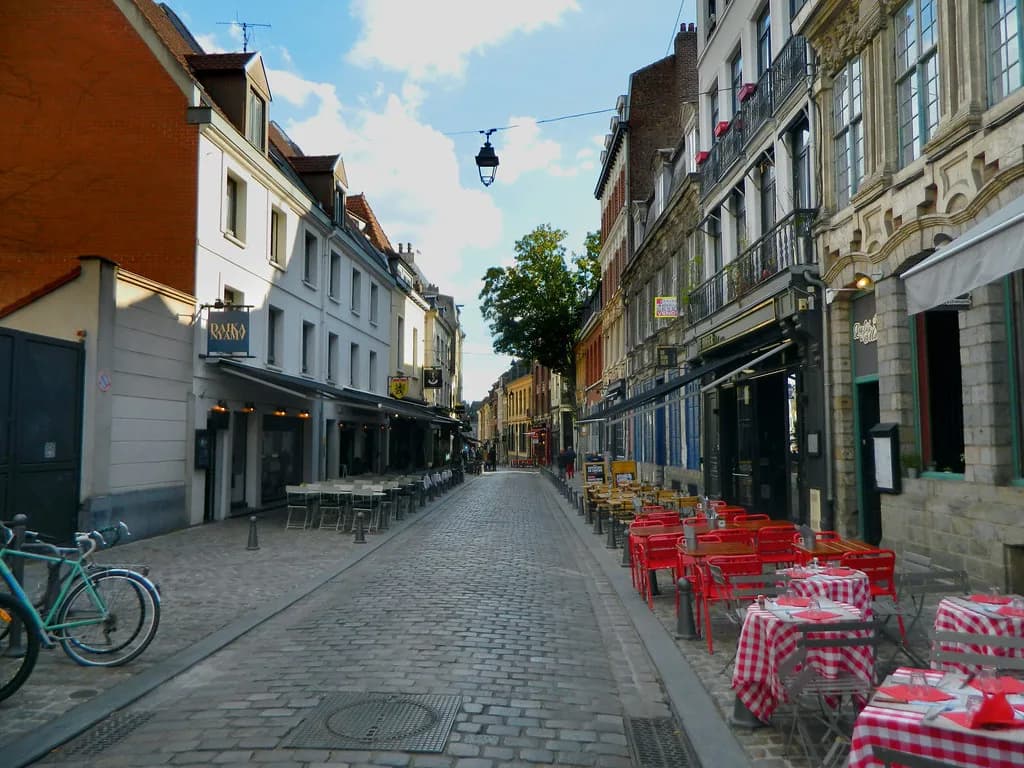
Rue de Gand is the concentrated answer: roughly a dozen estaminets line a road that runs entirely to restaurants, ending at the Porte de Gand where the old city walls still stand. Names to look for along the street include Chez Ronny, Estaminet Les Ptiots, Le Bistrot Lillois and Estaminet La Connivence.
The trade-off is straightforward. This is the busiest traditional dining street in the city, so an evening here means crowds rather than quiet, and walking the length of it before committing gives you a sense of which room suits you. Pair the walk with the rest of the old town.
Where to Eat in Vieux Lille
Vieux Lille holds the densest cluster of eating options, from estaminets on Rue de Gand to patisseries and tearooms on Rue Basse and Rue Esquermoise. Rue des Molfonds carries several Italian restaurants in a row, and Rue de la Monnaie is where the queues form for meringues.
La Bellezza on Rue Esquermoise is an Italian restaurant that draws consistently big queues, so treat it as a place to arrive early rather than a spontaneous drop-in. Elizabeth's Tea Rooms on Rue Basse is small, which makes it a different kind of gamble at peak times.
Brasserie André on Rue de Béthune, near Place de la République, is an atmospheric longstanding brasserie. It suits a proper sit-down meal without the estaminet theme, and its central position makes it an easy anchor between sights.
The Sweet Stops: Méert and Les Merveilleux de Fred
Méert in the old town is the city's landmark patisserie, known for pastries, chocolate and cakes in an ornate setting. It works as both a quick cake stop and a longer tearoom pause, which makes it useful at almost any hour of a weekend.
Les Merveilleux de Fred on Rue de la Monnaie sells meringue-based confections coated in chocolate shavings, and people queue for them. There is a second branch at Lille-Flandres, which is the practical option if you are catching a train rather than wandering the old town.
Waffles covered in whipped cream are part of the local sweet repertoire too. If you are planning the day around food and sights, the old town puts both within a short walk of each other.
Food Halls for Mixed Groups
When a group cannot agree on a cuisine, two food halls in the centre solve the problem: Kitchen Market on rue des Tanneurs and Grand Scène on rue de Béthune. Everyone orders separately and sits together, which is worth more than the sum of the individual stalls.
Both are practical for a wet or cold weekend lunch, since you are indoors and not committed to a single kitchen's timing. Treat the food halls as a fallback rather than a headline meal, and save your sit-down budget for an estaminet or brasserie.
Cheap Eats: Friteries, Bakery Sandwiches and Bouillon Alcide
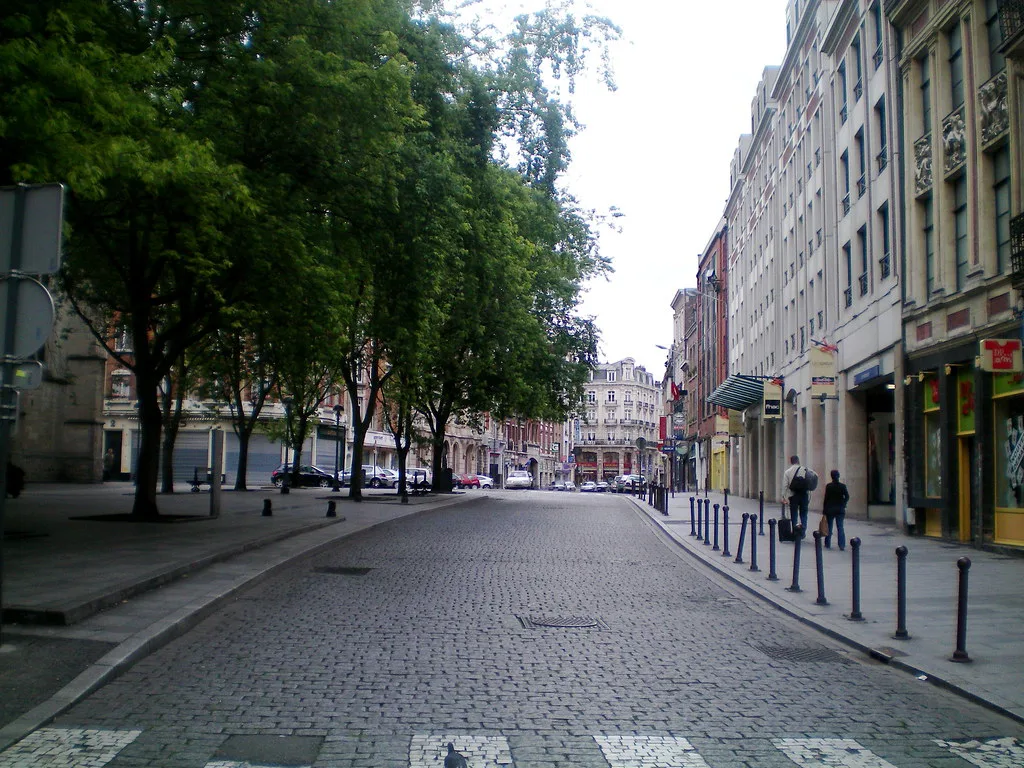
Most patisseries and boulangeries make large sandwiches, and the rough price sits around four to five euros. That is the cheapest proper lunch in the city, and it lets you eat in a square rather than losing an hour to a table. The Erik Kayser bakery inside Gare Lille-Flandres is a convenient version if you arrive hungry.
Bouillon Alcide has been serving classic French food to workers for almost 150 years, in the same spirit as Paris's Bouillon Chartier. It is the value pick for a sit-down meal with atmosphere rather than ceremony. If you are weighing up other short breaks, the best restaurants in Amboise offer a similarly honest, unfussy sit-down meal.
L'Adresse on Rue des Bouchers does proper burgers, and L'été Indien in Wazemmes is a well-regarded Indian restaurant in a district known for its diverse food. Paul, the bakery chain founded in Lille, is acceptable but not the local high point.
Breakfast and Brunch in Lille
Breakfast is not a grand Lille institution. Beyond the standard croissant and coffee, the main brunch option the city's food writing points to is Paddo Café, an Australian-style café by the cathedral on rue du Cirque, which is busy and takes no reservations.
Soho Urban Food on rue Léon Trulin is a buffet-style option for a bigger morning meal. Plan brunch as a deliberate stop rather than an assumption, and use a bakery for the days when you want to be out walking by nine.
How to Order: Planches, Portions and About 15€
Many bars serve planches, the meat and cheese platters that arrive with bread and are often enormous. A planche costs about 15€ and comfortably feeds two people, which makes it one of the best-value orders in the city for a light evening.
Ordering a planche each is a common mistake. One between two, plus a shared dessert, is usually enough, and it leaves room for the frites that arrive at every other table.
Practical Notes: Queues, Timing and Rue de Gand
Queues are part of eating in Lille at the popular addresses. La Bellezza and Les Merveilleux de Fred both draw lines, so decide whether the wait is part of the outing or something to avoid by going at an off hour.
Rue de Gand is at its most crowded in the evening, when the estaminets fill with groups. A weekday lunch there is a calmer way to eat the same dishes, and it leaves the evening free for a brasserie or a food hall. Check a venue's current hours before you build a day around it.
Eating out here is not expensive by French city standards, largely because the cheap tier of friteries, bakeries and planches is so strong. Budget your splurge for one long dinner and let the rest of the weekend run on frites and sandwiches.
A One-Day Eating Plan for a Lille Weekend
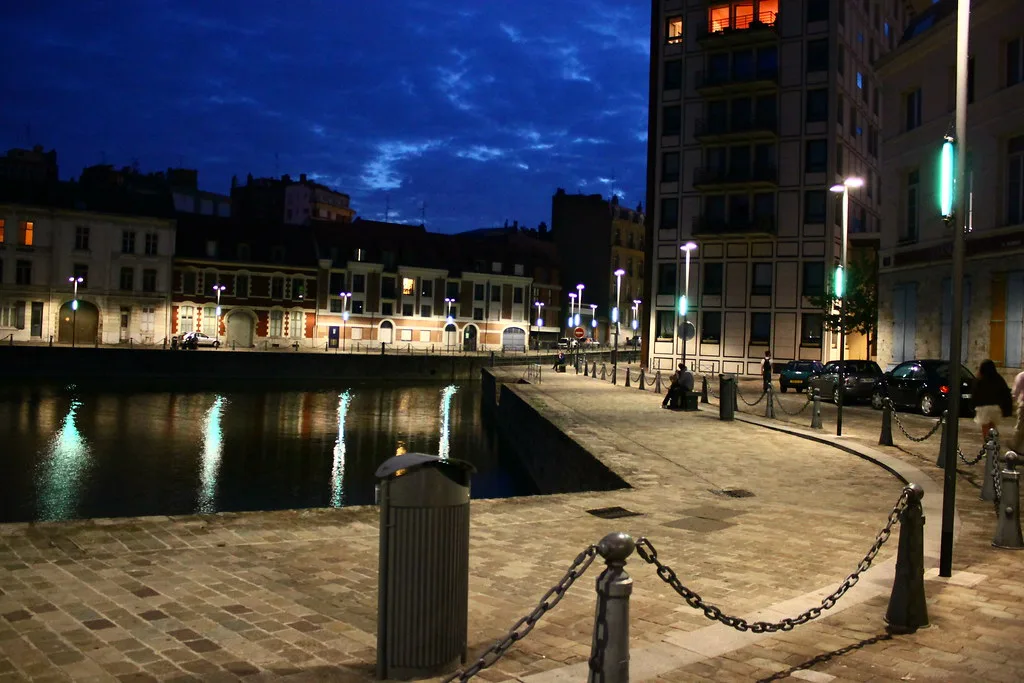
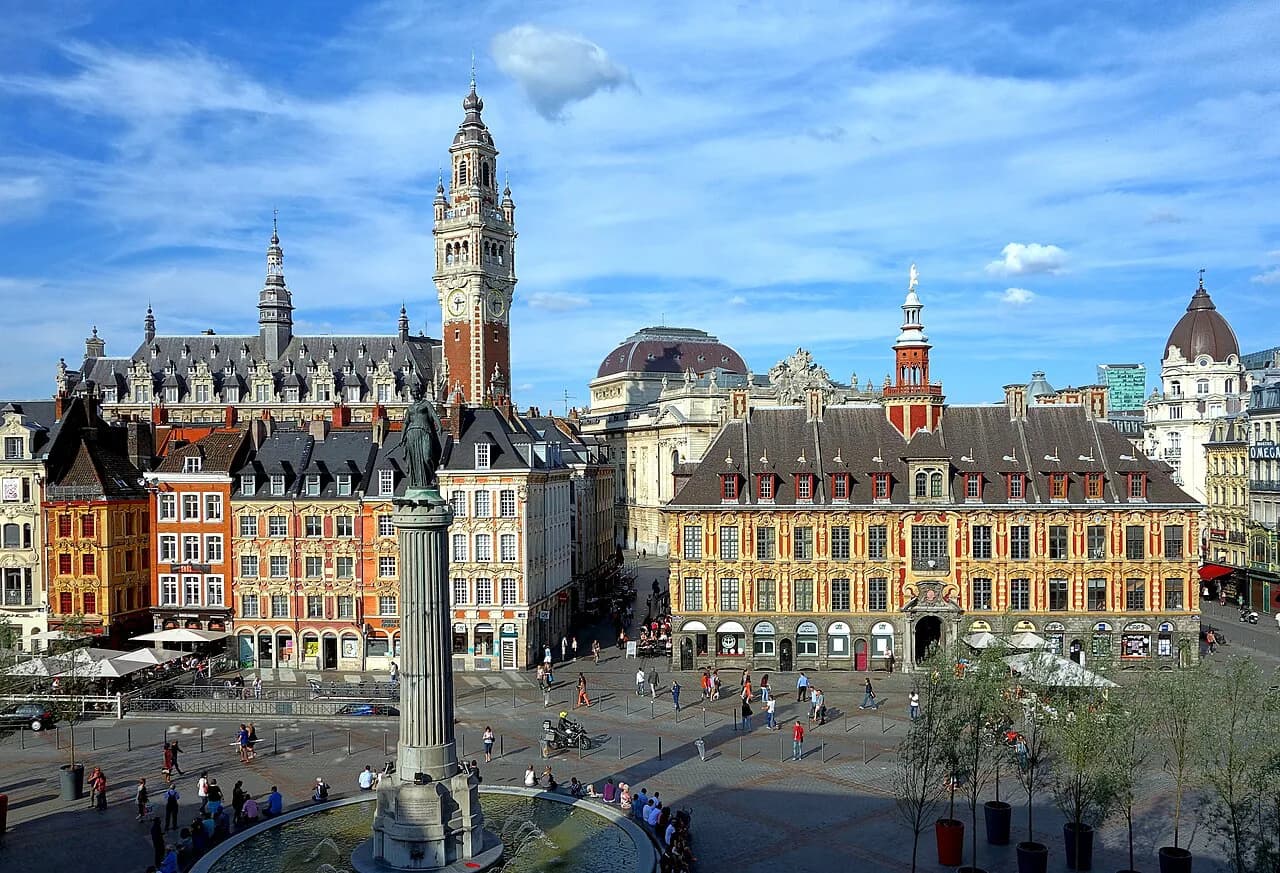
Start with coffee and a pastry, then walk the old town via Place du Général de Gaulle and the Vieille Bourse before the lunch rush. A bakery sandwich or a portion of frites keeps the middle of the day cheap and quick.
Book the evening for an estaminet on Rue de Gand, ordering carbonade flamande or moules-frites, with a planche to start if you are two. Finish with a Merveilleux or a Méert cake rather than a full dessert.
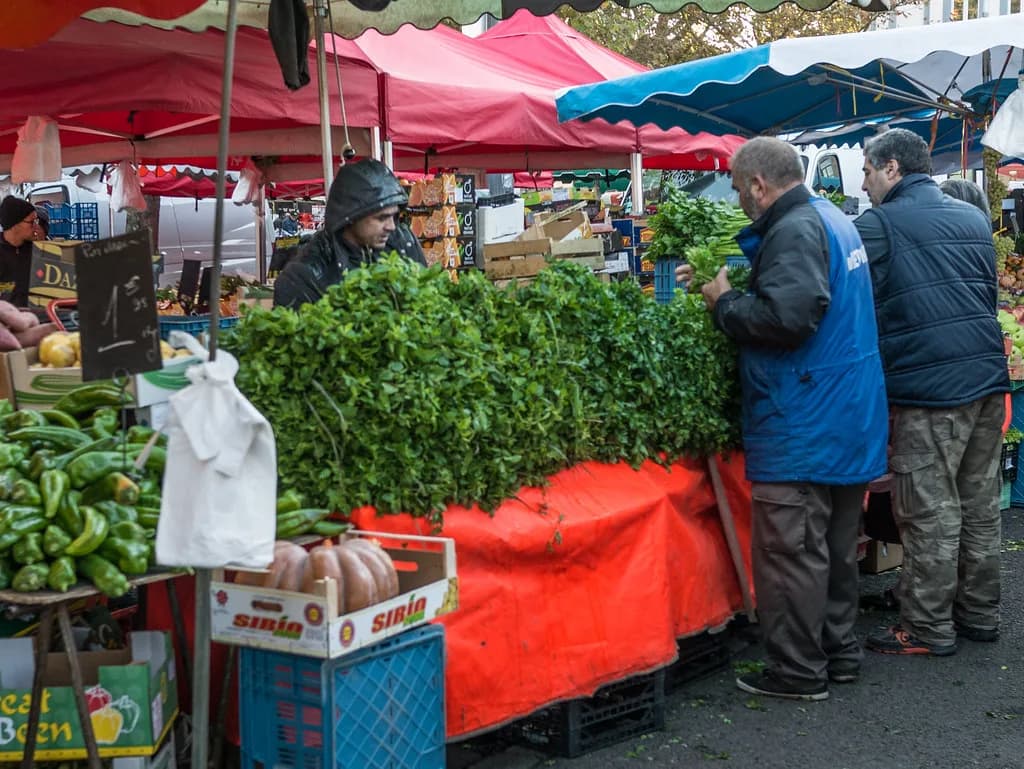
Markets in Lille can fill a morning and supply picnic components, so check which days they run before you plan around one. It pairs naturally with a Wazemmes lunch if you want something other than Flemish cooking.
Wazemmes, Snacks and the Rest of the City
Wazemmes is the district to head for if you want something beyond Flemish food. It has a concentration of couscous restaurants and more diverse options, and it is a useful counterweight to the old town's estaminet monoculture.
The usual fast-food chains and kebab shops are present in force, as in any French city. They are the late-night fallback rather than a reason to visit, and the local friteries do the same job better.
Should Food Decide Your Lille Trip?
Lille's appeal is broader than its restaurants. The museums, the old town architecture and the Flemish squares fill a weekend without a single destination meal, and food works best as the rhythm between them rather than the whole plan.
If eating is the main event, give the city two nights rather than one and use the extra evening for a second sit-down meal. If you are weighing up the city against another short break, read Is Lille Worth Visiting? An Honest Answer Before You Book and decide whether the food alone justifies the trip.
Plan Your Eating Around Lille
Build the weekend around three meals: one estaminet dinner on Rue de Gand, one casual frites or bakery lunch, and one sweet stop at Méert or Les Merveilleux de Fred. Fill the gaps with a planche, a food hall visit and whatever the market throws up that morning.
Check hours for any specific venue before you go, since restaurant timetables shift with the season. The rest is straightforward: walk the old town, follow the queues when they are short, and keep one meal cheap so you can afford the other one.
Explore more Lille guides
Frequently Asked Questions
What food is Lille famous for?
Carbonade flamande, a beef stew cooked with beer and served with chips, is the signature dish, alongside moules-frites, Le Welsh and potjevleesch. Maroilles is the local cheese and frites come with almost everything. Order a planche of meat and cheese if you want to sample several things at once.
What is an estaminet in Lille?
An estaminet is the city's traditional eating house, serving hearty Flemish dishes in generous portions and often in a characterful old room. Rue de Gand packs about a dozen of them along one street running to the Porte de Gand, so it is the simplest place to compare a few before choosing.
Where can I find cheap food in Lille?
Bakeries and patisseries sell large sandwiches for a few euros, and friteries such as the Friterie Meunier branches serve big portions of chips for very little. Many bars also serve planches of meat and cheese with bread that comfortably feed two. Bouillon Alcide is the value sit-down option with atmosphere.
Is Lille expensive to eat out?
Lille is moderate by French city standards, and its cheap tier is genuinely good: bakery sandwiches, frites and shared planches cover lunch and a light evening. The cost creeps up with a long estaminet dinner and wine, so balance one big meal against two casual ones. Menus are displayed outside most places, which makes comparing easy.
Do I need to book restaurants in Lille?
Popular addresses such as La Bellezza and Les Merveilleux de Fred draw long queues rather than taking bookings, so timing matters more than reserving. For an estaminet on Rue de Gand on a weekend evening, reserve ahead if the venue allows it. Paddo Café runs without reservations and fills quickly at brunch.
How do I handle a group with different tastes in Lille?
Use one of the two central food halls, Kitchen Market on rue des Tanneurs or Grand Scène on rue de Béthune, where everyone orders separately and sits together. Alternatively, order planches to share in a bar, which suits mixed appetites and keeps the bill predictable.
Sources
Notes for French city breaks
Optional updates to our guides.
You might also like
Continue reading
More guides you'll find useful