
Saint-Laurent, Grenoble: A District Guide
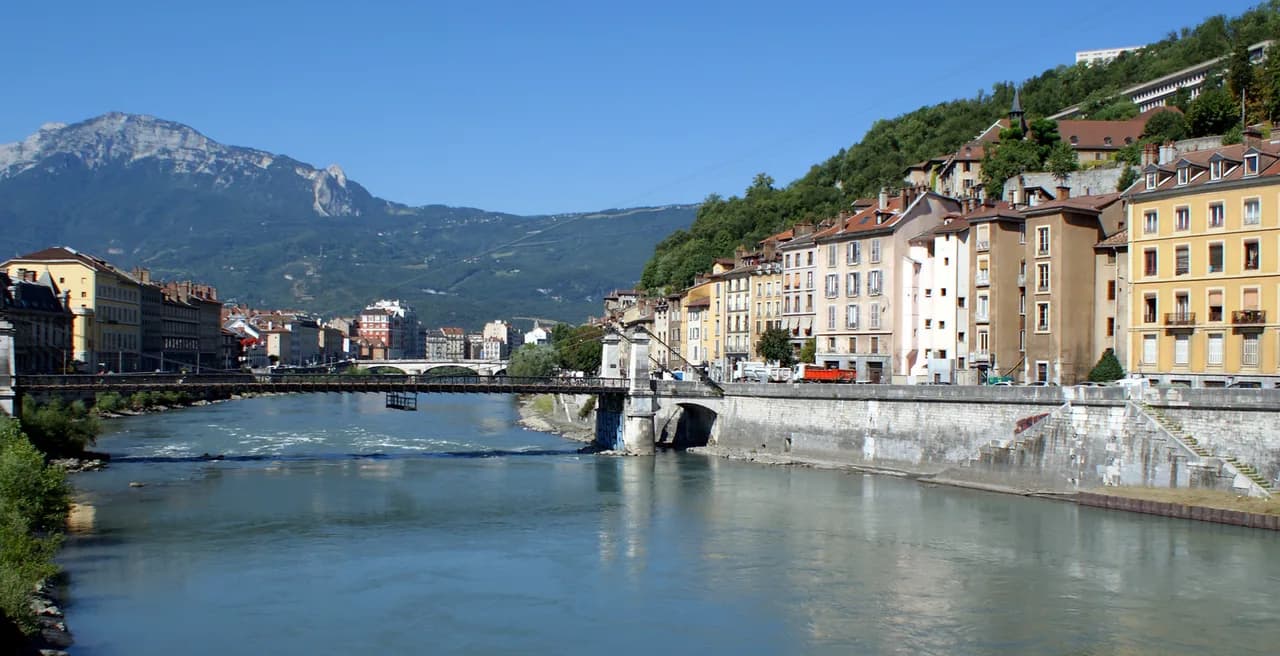
Saint-Laurent is worth visiting if you want the oldest, quietest corner of Grenoble rather than busy shopping streets. It sits on the right bank of the Isère at the foot of the Bastille, and Grenoble Alpes Tourisme calls it one of the city's most picturesque and distinctive districts.
Plan it as a half-day rather than a full one. The district is compact, the main walk runs from the Porte de France up the quays and along Rue Saint-Laurent to the Porte Saint-Laurent, and the Musée archéologique supplies the interpretive depth.
Where Saint-Laurent sits and how it is laid out
The district occupies the right bank of the Isère, directly under the Bastille, and is reached from central Grenoble by crossing the river. Once across, the old quarter is framed by two gates: the Porte de France at one end and the 17th-century Porte Saint-Laurent at the other.
That gate-to-gate frame is the practical way to structure a visit. Walk up the quays and along Rue Saint-Laurent between the two gates, and the district's old core unfolds along a line you can cover in well under an hour without stopping.
Think of Saint-Laurent as a strip squeezed between the river and the mountain rather than a grid of squares. Getting from one end to the other is short, but the ground near the Bastille slopes, so build in time for a slow climb rather than a brisk circuit.
If you are weighing this district against the rest of the city, see our Grenoble Neighborhoods: 4 Area Guides before committing your afternoon.
Character and heritage: an industrial village by the river
Saint-Laurent's appearance owes as much to work as to faith. Limestone extraction, cement production, the old glove factory and Italian immigration all shaped the district, and that mix explains why it looks and feels different from the formal centre across the water.
The tourist office describes this as a rich heritage that is often unknown, which is a fair warning: there is little in the streetscape that announces itself. You get more from the walk if you read up on the district's workers' and immigrant history first.
This is also one of Grenoble's oldest quarters, not a modern addition to the city. Expect narrow lanes, old masonry and river walls rather than wide boulevards.
The Musée archéologique Saint-Laurent
The museum is the district's main single sight, and it occupies the historic Saint-Laurent site at the foot of the Bastille on the right bank of the Isère. It was excavated between 1978 and 1995, and the building presents that archaeological sequence rather than a conventional collection of objects.
Its position inside one of Grenoble's oldest neighbourhoods means the museum and the street walk reinforce each other. Do the museum first if you want context for the lanes, or last if you prefer to end with the layered site beneath the church.
Allow for a proper look rather than a quick pass, because the value is in the excavated layers. For a wider shortlist of sights across Grenoble, our Grenoble Attractions: 6 Visitor Guides covers the other main stops.
The walk: quays, gates and river views
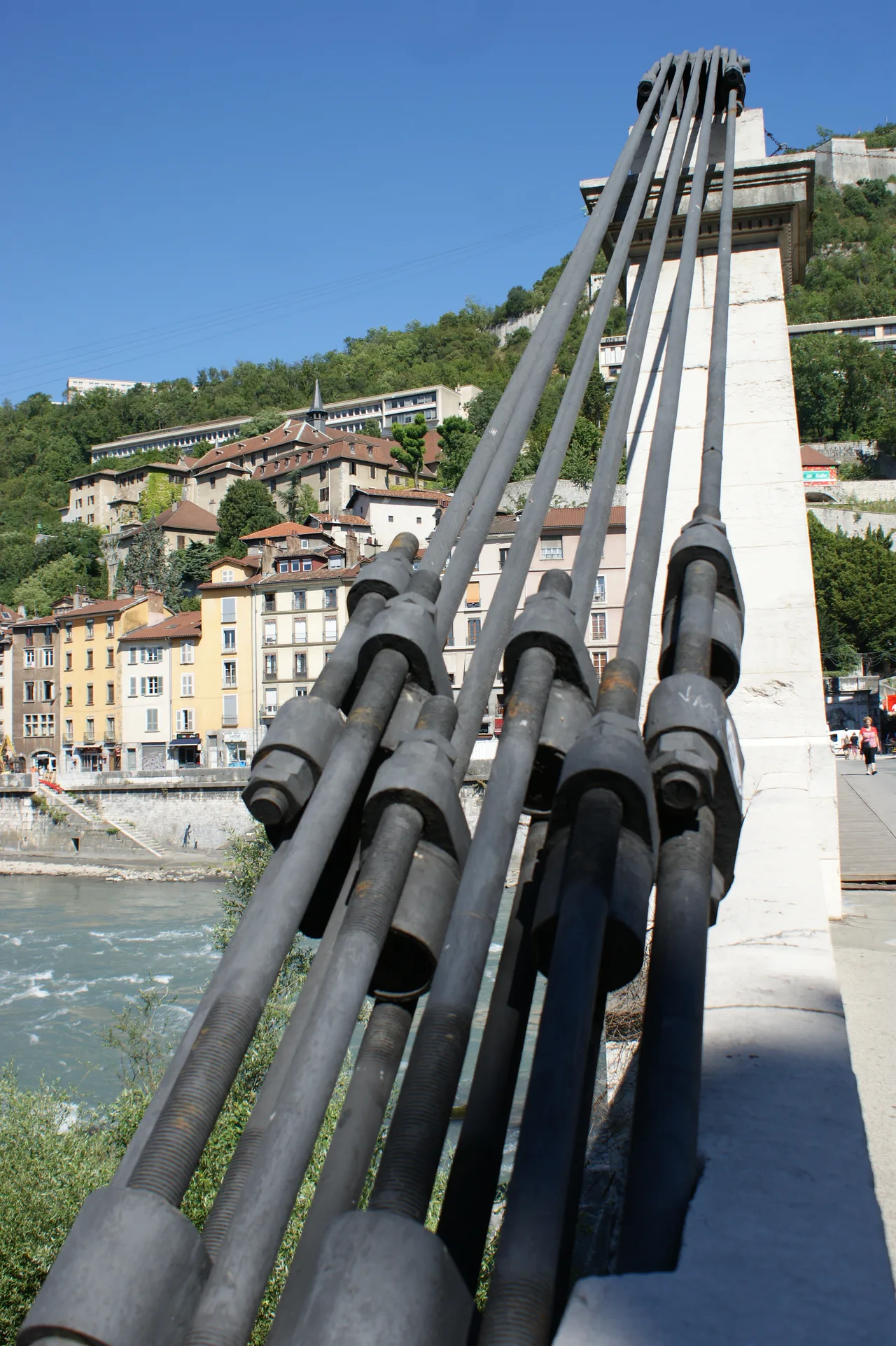
The classic Saint-Laurent walk follows the quays from the Porte de France to the Porte Saint-Laurent, taking in the river and the old street between them. It is short, free and the best introduction to the district's layout.
The Bastille rises directly above, and the route up to it is the natural extension of the riverside stroll. If the fortress is the main draw for you, our things to do in Grenoble guide sets out the options for the climb and the site.
Bear in mind that the riverside path is a working quay as well as a promenade, and that some stretches are cobbled. Comfortable shoes matter more than distance: the walk is short but uneven in places.
Who Saint-Laurent suits, and who it does not
Saint-Laurent suits heritage-minded travellers, slow walkers and anyone who prefers old stone and river views to shop windows. It rewards an interest in archaeology, industry and migration, and it is manageable in a couple of hours.
It is a poor fit if you want cafés, boutiques and flat, easy strolling spread over a whole day. The district is small, so treat it as one stop on a longer Grenoble itinerary rather than a destination in its own right. If you are weighing a bigger old-town day instead, our things to do in Annecy guide covers a lakeside alternative with its own compact historic core.
Travellers staying nearer the city's modern institutions may prefer Championnet, Grenoble, which sits on the other side of the centre and works better as a base.
If your visit is tied to science or business rather than old streets, Europole, Grenoble is the more practical district to look at.
Eating and staying in the district
Saint-Laurent is a residential, riverside quarter with few commercial streets, so do not build a day around eating and shopping here. Come for the walk and the museum, then cross back into the centre for a wider choice of cafés and restaurants.
For the same reason, the district is not a natural place to base a weekend. Look at accommodation in the central quarters and treat Saint-Laurent as a morning or afternoon out.
One nearby alternative worth knowing is Île Verte, a neighbouring riverside area across the water.

Getting there and around
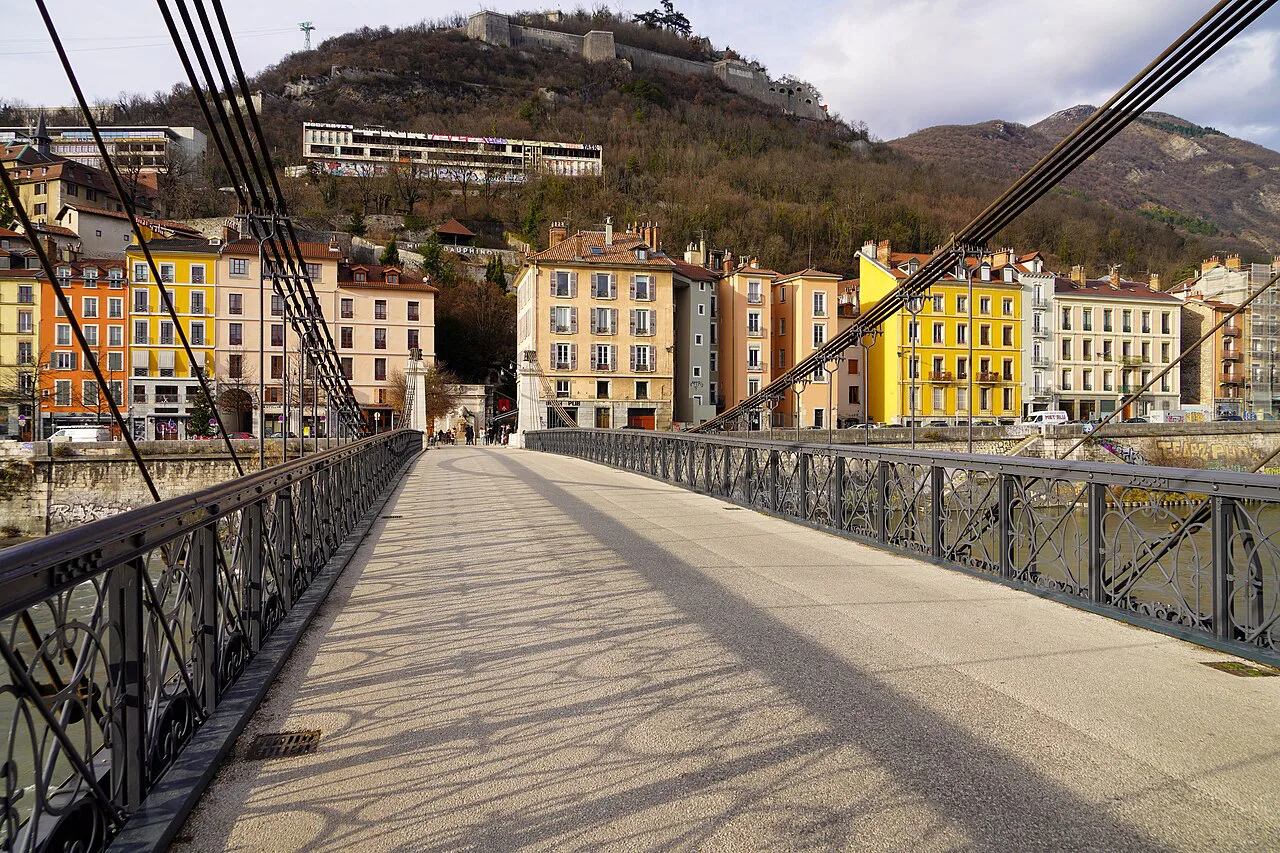
From central Grenoble, the simplest approach is to cross the Isère on foot and enter the old quarter at one of the two gates. Walking the quays gets you there without needing transport, and the district itself is small enough to cover on foot.
The tourist office runs a guided tour of the district aimed at groups, listed at a group adult rate from 140 euros for one person or more. That is a group booking price rather than a standard individual ticket, so enquire with Grenoble Alpes Tourisme directly before planning around it.
The tour is listed as running all year round daily, but confirm the current arrangement when you book. Group prices and scheduling change, and the tourist office is the source that updates them.
Plan Your Visit
Saint-Laurent is the district to choose when you want Grenoble's oldest ground and its working history in one short walk. Do the museum, follow the quays between the two gates, and leave the shopping and cafés for the centre.
Combine it with a look at the wider Grenoble guide if you are mapping out a weekend, and keep the district as a compact heritage stop rather than a full day.
Frequently Asked Questions
Is Saint-Laurent in Grenoble worth visiting?
Yes, if you value heritage over shops. Grenoble Alpes Tourisme describes it as one of the city's most picturesque and distinctive districts, and it holds the Musée archéologique on the historic Saint-Laurent site. Plan around two hours for the walk and the museum.
Where is the Saint-Laurent district in Grenoble?
It sits on the right bank of the Isère at the foot of the Bastille, directly across the river from the city centre. The old quarter is framed by the Porte de France and the 17th-century Porte Saint-Laurent.
What is there to see in Saint-Laurent, Grenoble?
The core sights are the Musée archéologique Saint-Laurent, the two old gates and the riverside quays. Rue Saint-Laurent links the gates through the oldest part of the quarter, and the Bastille rises directly above.
Is the Musée archéologique Saint-Laurent in the district?
Yes. The museum occupies the historic Saint-Laurent site at the foot of the Bastille on the right bank of the Isère, inside one of Grenoble's oldest quarters. The site was excavated between 1978 and 1995.
How do you walk to Saint-Laurent from central Grenoble?
Cross the Isère on foot and enter the old quarter at the Porte de France or the Porte Saint-Laurent, then follow the quays and Rue Saint-Laurent between them. The walk is short, though parts are cobbled and sloping.
Can you join a guided tour of the district?
Grenoble Alpes Tourisme lists a guided tour of Saint-Laurent for groups, and the tour is listed as running all year round daily. The group rate and booking conditions sit on the tourist office's own listing, so check them there before you plan around a tour.