
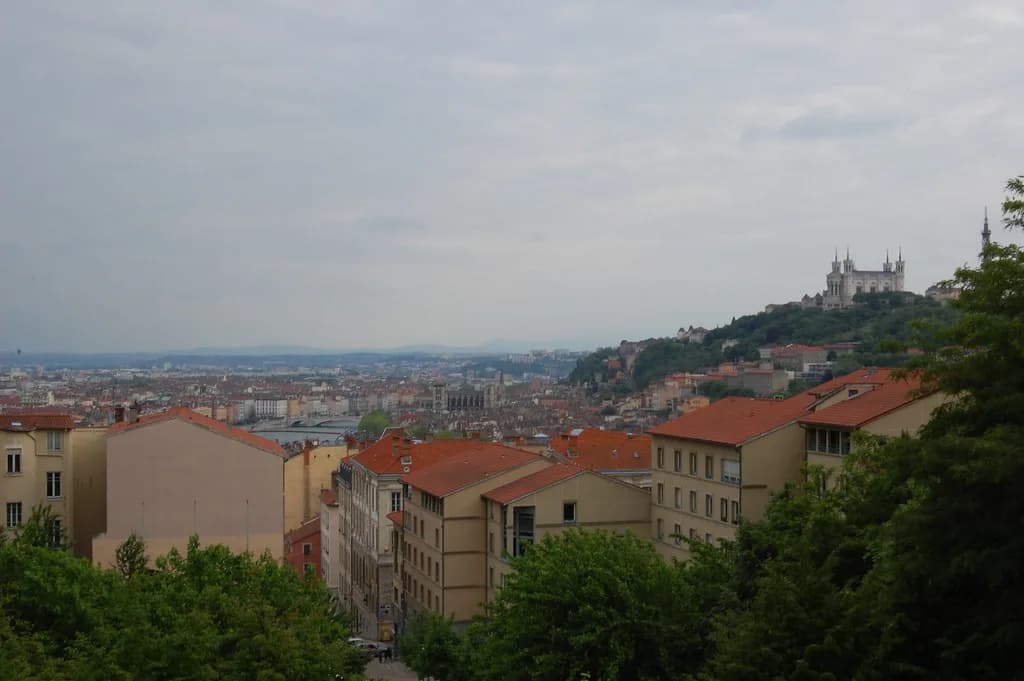
Croix-Rousse, Lyon: The Hill That Worked Silk
Croix-Rousse is worth a half-day to a full day of a short Lyon break, and it works best as two visits in one: the plateau at the top, which keeps a village feel, and the pentes, the slopes running down towards place des Terreaux, which are younger, more creative and home to students and artists. The hill is steep, and the honest way to handle it is to ride up once and spend the rest of your time walking down.
What Croix-Rousse is, and where it sits
Croix-Rousse is the hill in Lyon's 4th arrondissement, and its nickname, the hill that works, comes from the silk workers, the canuts, who moved here at the end of the 18th century to find space for their trade during the industrial revolution. The neighbourhood divides into two distinct halves. The pentes link place des Terreaux to the top of the hill and form part of the territory inscribed on the UNESCO World Heritage list in 1999, while the plateau at the summit feels closer to a village than to the rest of the city.
After the silk industry declined at the end of the 19th century, the quarter kept a character of its own, and today it is a lively area with many bars, restaurants and artists' workshops. The pentes are less residential and a little younger, with coffee shops and designer boutiques opening at a rapid pace. That combination of working history and present-day creative energy is what separates Croix-Rousse from the postcard image of the city.
Who it suits, and who it does not
Croix-Rousse suits travellers who want a neighbourhood with a lived-in feel and are happy to build a day around architecture, silk history and city views rather than a checklist of ticketed sights. It rewards people who like wandering small streets, since the little roads off the plateau all lead down the slopes and open up views over the city as you descend.
It suits you less if steep walking is a problem, or if you want flat, compact sightseeing where every stop is a few minutes apart. The climb is real, and the quarter's pleasures are spread across a hill rather than gathered on one square. Plan the day so the ascent happens once, by métro, and the rest is downhill.
Getting there and around
Métro line C reaches the plateau, and Vélo'v, the city's self-service bikes, gives you a second option for the hill. Those are the practical ways up, and they are worth using rather than starting the day with the climb on foot.
The neighbourhood sits in the 69004 postcode, with the place de la Croix-Rousse at its centre on the plateau. Use that square as your mental anchor when you arrive: the sights of the top of the hill cluster around it, and the pentes fall away from it towards the city centre.
Plateau versus pentes: choose your day
The plateau is the residential, village-like half, and it is where you go for a slower morning: a market animates the top of the hill, and the small streets make for easy strolling before you commit to the descent. The pentes are the busier, more informal half, and they carry most of the quarter's student and artistic life.
The choice shapes your day. Start on the plateau if you want calm, markets and the residential texture; finish in the pentes if you want bars, coffee and browsing to close the afternoon. Doing it the other way round means climbing at the end, which is the one thing worth avoiding.
Silk history you can see in the streets
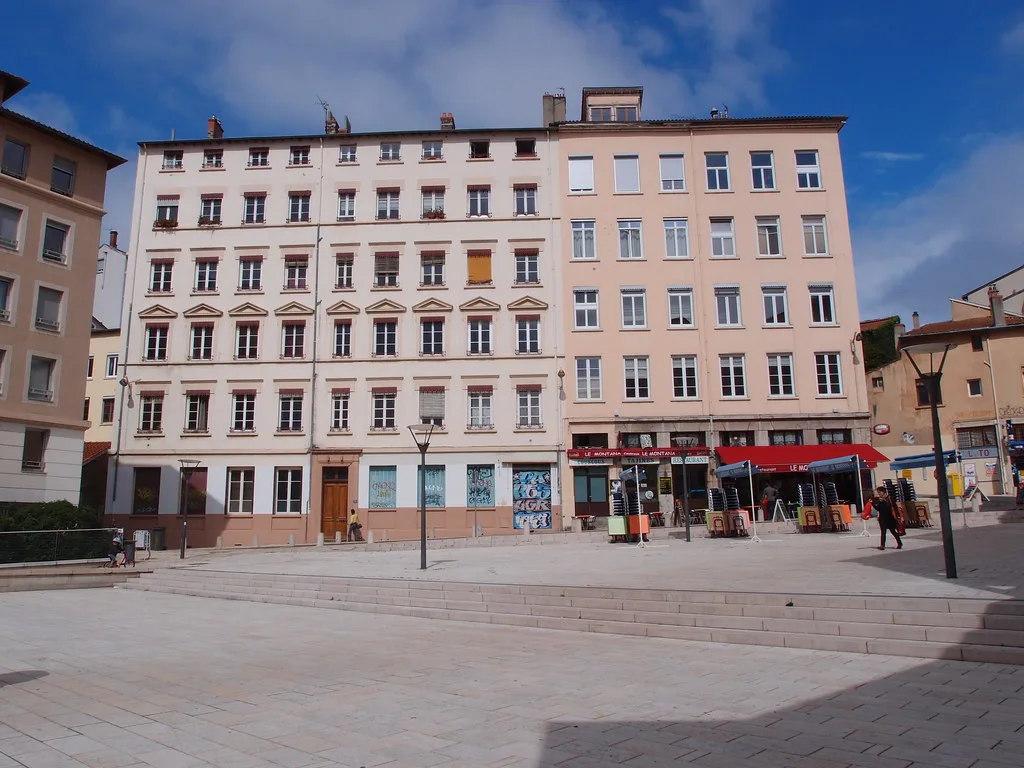
The canuts lived in buildings designed around their work, tall enough to hold the imposing hand looms and the new Jacquard mechanisms. That is why the streets read differently from the rest of Lyon: the height of the buildings is a surviving piece of industrial logic, not a stylistic accident.
The traboules, the covered passages running north to south in the direction of the slope, were created so workers could carry rolls of fabric without getting them wet. Two historic examples stand out in the quarter, the Cour des Voraces and the passage Thiaffait, and both are worth working into your route between boutique stops.
To go deeper into the trade itself, the Maison des Canuts and the Atelier de soierie both sit among the quarter's sights, alongside the Condition des Soies, the old silk-conditioning building. Treat these as the historical spine of the day and let the streets fill the gaps between them.
Named sights to build a route around
Begin at the Gros Caillou on the plateau, then head for the Jardin Rosa-Mir for a green pause before you start dropping down. The Montée des 400 marches gives you a properly stepped descent, and the churches, Saint-Polycarpe in the quarter and Saint-Bruno-les-Chartreux, add two architectural stops on the way.
The Amphithéâtre des Trois-Gaules, a Roman remnant, is the odd one out among the silk-era sights and a reminder that the hill was occupied long before the looms arrived. Keep it as a detour rather than a centrepiece, since it sits apart from the tight cluster of the plateau and the pentes.
The view, and working the walk downhill
The climb earns its keep through the view. Descending from the plateau by any of the small streets gives you the city opening up below you, so save the panorama for the way down rather than paying for it twice on the way up.
Build the route so the traboules, the boutiques and a coffee come after the descent begins, and the day ends on the flat near the Presqu'île rather than on the steps. That way the hill is one climb, one walk down, and a lot of ground covered in between.
Eating, drinking and shopping in the quarter
Bars, restaurants, coffee shops and designer boutiques are part of the fabric of Croix-Rousse, with the pentes carrying the denser concentration of cafés and young shops. Use them as pauses rather than destinations: a coffee on the plateau before the descent, a longer stop once you reach the lower slopes.
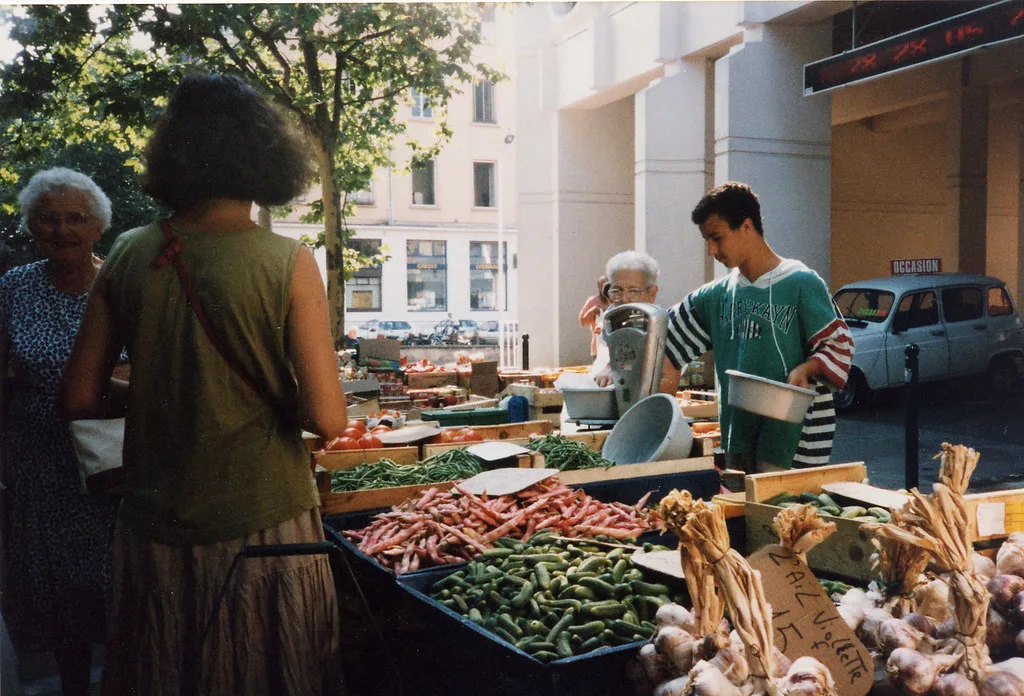
The plateau market anchors a morning on top of the hill and pairs naturally with a slow start before the walking begins. How the market fits your dates is something to confirm locally, since the day of the week matters to the plan.
How long to give it, and how it fits a Lyon weekend
Give Croix-Rousse half a day at minimum, and a full day if you want the Maison des Canuts, the Atelier de soierie, the traboules and a proper descent with stops. It fits neatly as one morning and early afternoon within a two- or three-day break, leaving the rest of the weekend for the city below.
Pair it with the Presqu'île on the same day, since the pentes deliver you towards the centre, and keep Fourvière for a separate outing so you are not climbing two hills in one day. The two hills face each other across the city, and splitting them keeps the weekend balanced. If you are weighing up whether to extend the trip, the same kind of hill-and-old-town decision shapes things to do in Grenoble.
For the wider set of quarters and how they compare, the Lyon neighbourhood guides give you the shape of the city before you commit days to it, and the attractions hub covers the individual sights in more depth.
Plan Your Visit
Treat Croix-Rousse as a downhill day: métro line C or a Vélo'v to the plateau, the Gros Caillou and the market at the top, then the traboules, the silk sights and the pentes on the way down. Check the day's market and museum openings before you set out, then let the hill do the rest of the work for you. For more, see the fourviere Lyon.
Explore more Lyon guides
Frequently Asked Questions
Is Croix-Rousse worth visiting on a short Lyon break?
Yes, if you give it half a day and plan it downhill. The quarter combines silk history, working architecture, traboules and city views in a compact hill that feels unlike the rest of Lyon. Travellers who struggle with steep streets or want flat, closely spaced sights will find it hard work.
What is the difference between the plateau and the pentes de la Croix-Rousse?
The plateau at the top keeps a village-like residential atmosphere, with the place de la Croix-Rousse and a market animating the morning. The pentes run down towards place des Terreaux and are younger and more creative, with students, artists, coffee shops and designer boutiques. They are also the part inscribed in the UNESCO listing.
How do you get up to Croix-Rousse?
Métro line C serves the plateau, and the Vélo'v self-service bikes are the alternative for the hill. Riding or taking the métro up once and walking down through the pentes is the easiest way to handle the gradient.
Why are there traboules in Croix-Rousse?
The covered passages run north to south in the direction of the slope so that silk workers could move rolls of fabric without exposing them to rain. The Cour des Voraces and the passage Thiaffait are the quarter's two historic examples and make natural stops on the descent.
How long do you need in Croix-Rousse?
Allow half a day as a minimum and a full day if you want the silk sights such as the Maison des Canuts and the Atelier de soierie alongside the traboules and a proper walk down. It slots neatly into one morning and early afternoon of a two- or three-day break.