
Presqu'île, Lyon: a guide to the peninsula between the Rhône and Saône
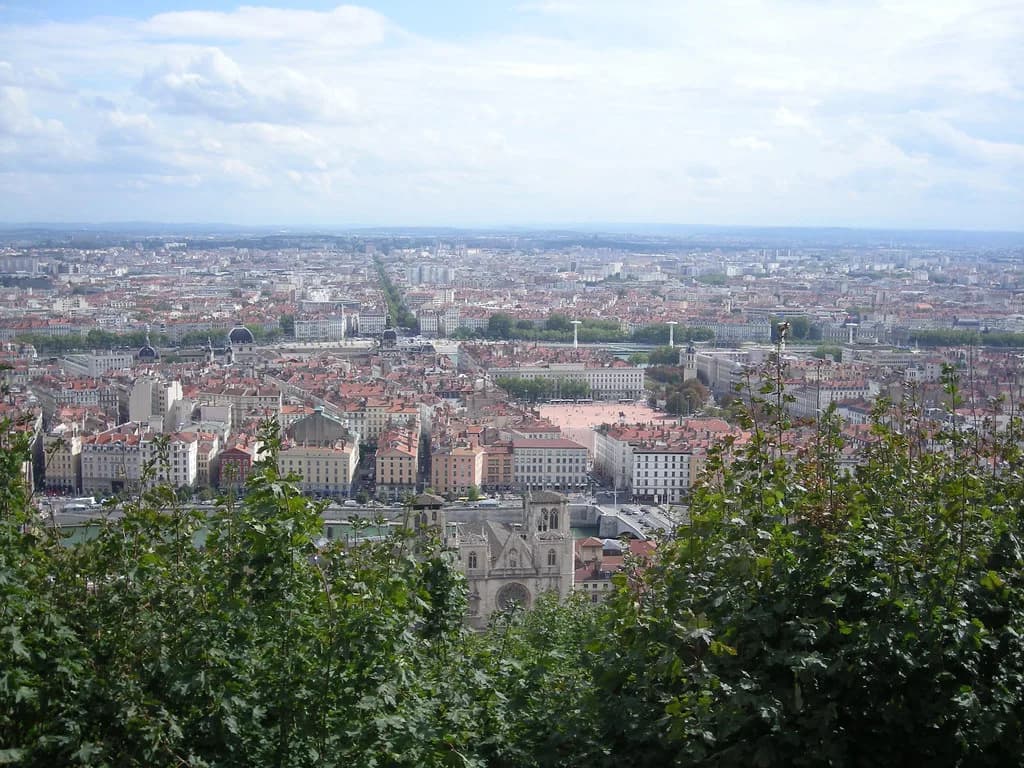
The Presqu'île is the peninsula at the heart of Lyon, a strip of city pinned between the Rhône and the Saône and running from Place des Terreaux in the north to the Confluence in the south. It is where the shops, the big squares and the Musée des Beaux-Arts sit, and it is flat enough to cross on foot in an afternoon.
For a short break it is the most practical part of the city to stay in: four metro stops serve it, the streets are level, and Old Lyon and Fourvière are a short ride or walk away. What it is not is picturesque in the way Vieux-Lyon is, and anyone hunting cobbled lanes and quiet courtyards will find it busier and more commercial.
What the Presqu'île is and where it sits
The district takes its name from the French for peninsula, and the shape is literal: the Saône runs along its western edge, the Rhône along its eastern, and they meet at the southern tip. Place des Terreaux marks the northern end, at the foot of the Croix-Rousse hill, and the land narrows steadily as you head south.
Two districts border it on the west bank of the Saône: Vieux-Lyon, the Renaissance quarter, and Fourvière, the hill above it. Both are close enough to fold into a Presqu'île weekend without changing where you sleep, and Fourvière is the one to pick if you want the view back over the peninsula.
Who the district suits
It suits shoppers, museum-goers and first-time visitors who want a central, walkable base with a metro stop within a few minutes of the door. The peninsula is also the obvious choice for anyone arriving by train at Perrache or Part-Dieu and staying only two or three nights, because the main sights are reachable without long transfers.
It suits less well if you want atmosphere over convenience. The Presqu'île is a working commercial centre, with department stores and chain shops on its main axes, and traffic along the quays and the central roads. Travellers who want quiet streets, village scale or hilltop views should weigh Croix-Rousse or Fourvière instead, and treat the Presqu'île as somewhere to visit rather than stay.
How the district is laid out
Think of the peninsula as a north-to-south spine. At the top, Place des Terreaux and the Hôtel de Ville sit together; below them the shopping streets run down through Place Bellecour, and the land continues south through the Auguste Comte area to the Confluence. Walking the length takes well under an hour, but most visitors cover it in short hops between sights.
Because the two rivers frame everything, you are rarely more than a few minutes from a bridge. Crossing to the west bank puts you at the edge of Vieux-Lyon; crossing east brings you to the quays of the left bank. Use the rivers as your compass and the grid of the centre becomes easy to read.
Place Bellecour
Place Bellecour is one of the largest pedestrianised squares in Europe, a broad open expanse with an equestrian statue of Louis XIV at its centre. Café terraces line the edges, which makes it a useful pause between the shopping streets and the river, though the open space can feel exposed on a cold or windy day.
Rue de la République and Rue Victor-Hugo
Both shopping streets branch off Place Bellecour, and both are lined with grand Haussmann-style 19th-century buildings that give the centre its look. Rue de la République runs north towards Terreaux and the Hôtel de Ville; Rue Victor-Hugo runs south through the antique-shop quarter. Expect department stores and mainstream names rather than independent boutiques, so plan your browsing around that rather than hoping for one-off finds.
Place des Terreaux and the Bartholdi fountain
Place des Terreaux is the northern anchor of the district, with the Hôtel de Ville on one side and a fountain by Frédéric-Auguste Bartholdi at its centre; Bartholdi also sculpted the Statue of Liberty. It is a natural starting point for a north-to-south walk, and the square is a good place to orient yourself before heading down towards Bellecour.
Musée des Beaux-Arts and Place de la Comédie
The Musée des Beaux-Arts holds a substantial collection, with works by Picasso, Matisse and Van Gogh among the highlights, and it sits beside Place des Terreaux. Allow a couple of hours if you want to see more than a wing, and check the museum's own site for opening days before you build a day around it, as French museums commonly close early in the week.
Just south, Place de la Comédie is dominated by the Opéra de Lyon, a building that fuses a neoclassical 19th-century façade with a striking modern glass barrel roof. Even if you are not seeing a performance, it is worth a look on the way between Terreaux and Bellecour.
Churches and theatres along the way
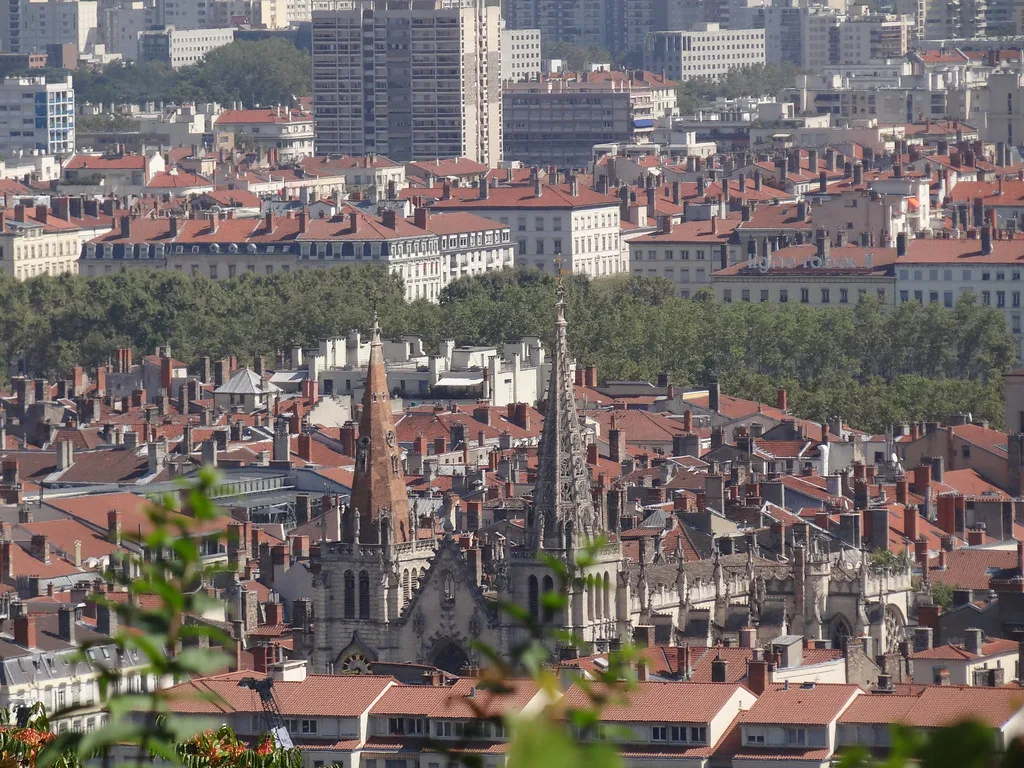
Walking south from the opera you pass the churches of Saint-Nizier and Saint-Bonaventure, both easily folded into a route through the centre. Further along, the Théâtre des Célestins is a neoclassical venue designed by Gaspard André and opened in 1881, named after the monastery that once stood on the site. In December its façade is lit up during the Festival of Lights, a timing point worth knowing if you visit in winter.
The south end and the Confluence
The peninsula's southern tip has been regenerated, and the docklands area now holds the Musée des Confluences, with a collection of around two million objects, and the riverside La Sucrière cultural centre, which runs exhibitions. Both sit where the two rivers finally meet, so the walk south is a destination rather than a dead end.
The Confluence area is spread out and newer than the rest of the district, with wide pavements and modern buildings rather than historic streets. If museums are the priority, note that a tram or metro hop back north saves a long walk at the end of the day; the museum's own pages carry current opening times and ticket prices.
The Auguste Comte antique shops
South of Place Bellecour, the Auguste Comte area is known for its antique shops, a cluster that most short city guides skip. If browsing old prints, furniture and objects appeals, this is the stretch to wander between Bellecour and the Confluence. Allow an hour and go in the afternoon, when dealers are most likely to be open.
Getting there and around
The peninsula is served by four metro stops: Cordeliers, Bellecour, Ampère and Perrache, which put the main sights within a short walk of each other. Cordeliers puts you near Terreaux, the museum and the northern shopping streets; Bellecour drops you on the main square; Ampère and Perrache serve the southern end and the train station at Perrache.
Within the district, walking is the sensible mode: the ground is flat and the distances between Bellecour, Terreaux and the opera are short. Vieux-Lyon and Fourvière are a bridge or a funicular away, so the peninsula works as a base for both; the Croix-Rousse hill rises just beyond Terreaux to the north.
Where to eat in the district
The Presqu'île is where Lyon's shopping crowd eats, and its centre has plenty of cafés and restaurants clustered around Bellecour, Terreaux and the shopping streets. The café terraces bordering Place Bellecour are the obvious stop for a mid-afternoon break. Bouchons, Lyon's traditional inns, are more associated with Vieux-Lyon, a short walk across the Saône.
Practical things to know before you go
Museums, markets and shops keep their own schedules, and in Lyon many museums and some shops keep reduced hours on Sundays and at lunchtime. Check the specific venue's own site for the days you plan to visit rather than assuming a city-wide pattern.
The Festival of Lights takes place in December, and it draws crowds to the city centre, so hotel rates and central streets are busier then. If your weekend is purely about museums and shopping, spring and early autumn are the calmer choices. Beyond the peninsula, Old Lyon and Fourvière are the two obvious additions to a short break.
Plan Your Visit
Treat the Presqu'île as your base and your orientation: start at Terreaux, walk down through Bellecour, and end at the Confluence. Stay here if you want flat, central and convenient; stay on the hill or in Old Lyon if you want quiet and character, and visit the peninsula for its museums and shops. If you're weighing up another Alpine city for the same kind of short break, it's worth comparing things to do in Grenoble before you book.
Explore more Lyon guides
Frequently Asked Questions
What is the Presqu'île in Lyon?
It is the central peninsula of Lyon, running between the Rhône and the Saône from Place des Terreaux in the north to the Confluence in the south.
What does Presqu'île mean?
The French word means peninsula, which describes the shape of the district where the two rivers meet.
What is there to see on the Presqu'île?
Place Bellecour, the Musée des Beaux-Arts, Place des Terreaux with its Bartholdi fountain, the Opéra de Lyon on Place de la Comédie, the churches of Saint-Nizier and Saint-Bonaventure, the Théâtre des Célestins, and at the southern end the Musée des Confluences and La Sucrière.
How do I get to the Presqu'île in Lyon?
The peninsula is served by the Cordeliers, Bellecour, Ampère and Perrache metro stops, which put the main sights within a short walk.
Is the Presqu'île a good area to stay in Lyon?
It suits travellers who want a central, flat, walkable base near shops, museums and a metro stop. It is busier and more commercial than Old Lyon or Croix-Rousse, so it is a weaker fit if you want quiet streets.
Where can I shop on the Presqu'île?
Rue de la République and Rue Victor-Hugo are the main shopping streets, both branching off Place Bellecour and lined with 19th-century buildings.
How long do you need to see the Presqu'île?
A day covers the core between Terreaux and Bellecour, including the Musée des Beaux-Arts. Add another half-day to walk south to the Confluence for the Musée des Confluences and La Sucrière.