
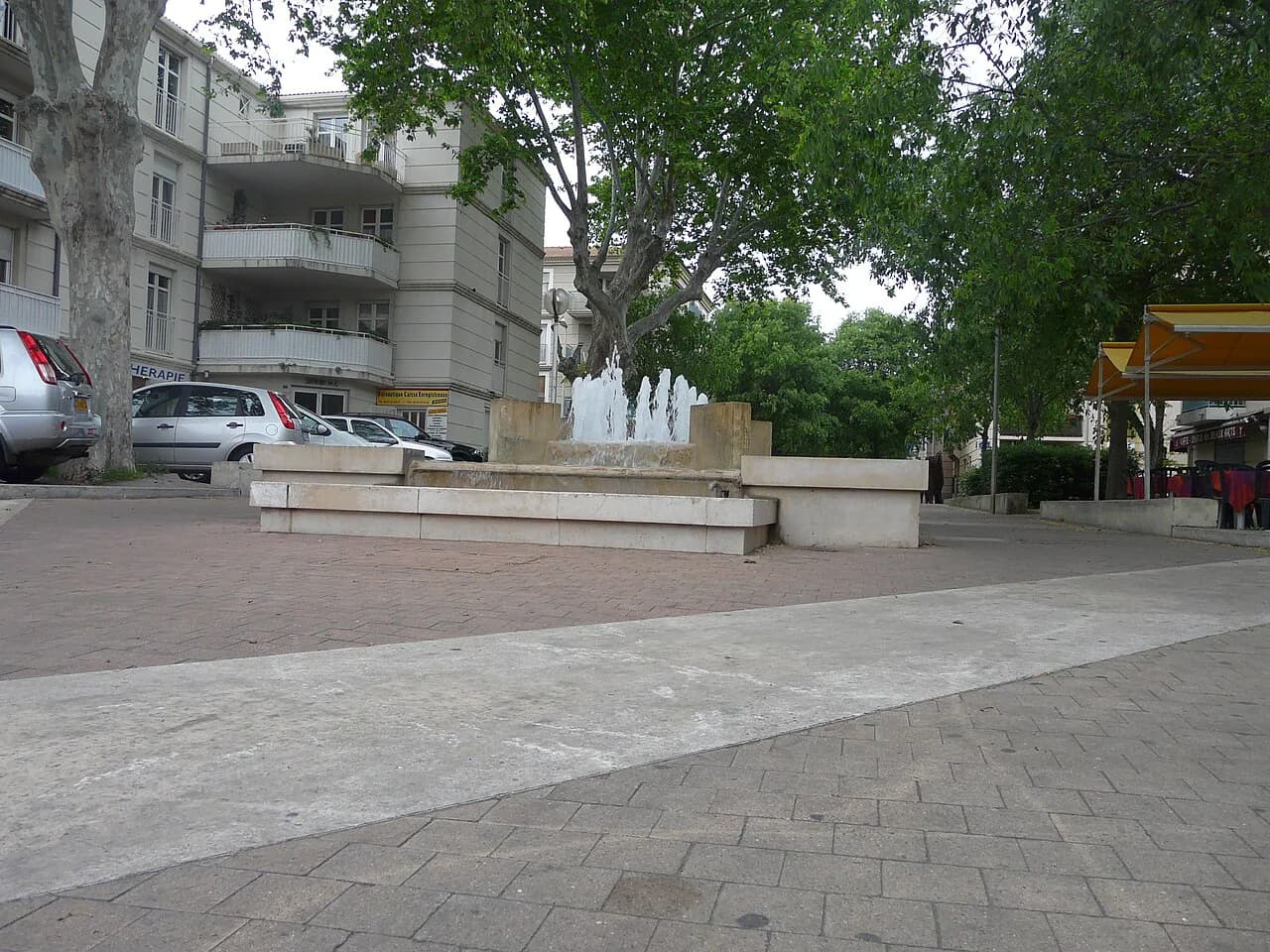
Beaux-Arts, Montpellier: the Quarter Around the Comédie

Beaux-Arts is the central address in Montpellier: a quarter of late nineteenth-century stone wrapped around the place de la Comédie, with the Opéra Comédie on one side, the esplanade Charles-de-Gaulle running north and the musée Fabre a few steps away. It sits between the medieval lanes of the Écusson and the Saint-Roch station on its southern edge, so a weekend based here needs no transport planning at all.
The trade-off is the one that comes with every central square: cafés, trams and full terraces by day, and performance nights and summer weekends heard through open windows. A bedroom set back from the square or a high floor corrects most of it, and the quieter streets climbing towards the Écusson settle the rest.
What Beaux-Arts is and where it sits
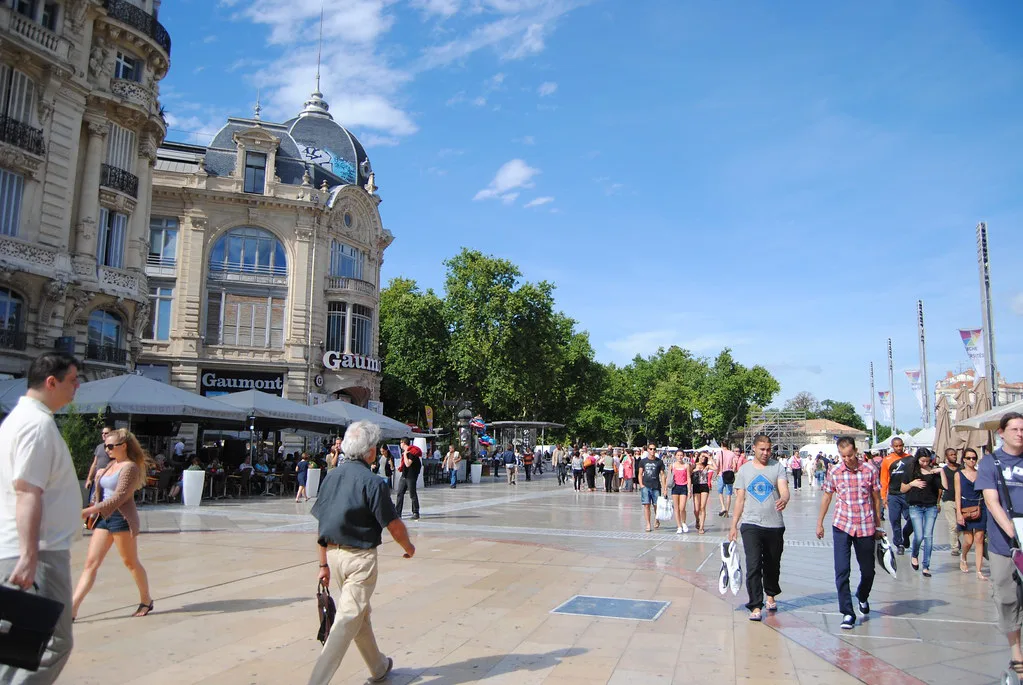
The quarter's backbone is the place de la Comédie, the drawing-room square with the Three Graces fountain at its centre, cafés along one side, the Opéra Comédie on the other and the tram running straight through it. From the square, the pedestrian rue de la Loge climbs into the Écusson, the old town, so the boundary between the two is walked in a couple of minutes rather than drawn on a map.
To the north, the esplanade Charles-de-Gaulle links the Comédie to the Corum under a canopy of plane trees, with terraces and steps along its length. To the south, the Saint-Roch station sits a few minutes on foot, which makes this the obvious base for a city break arrived by train. Every street between the two is part of the quarter, and all of it is walkable.
Think of Beaux-Arts as one district within a larger set — the old centre, the river-side new town and the student quarters each answer a different kind of trip. If you want the whole picture before you pick, the Montpellier Neighborhoods: 4 Area Guides compares them side by side.
Place de la Comédie and the Opéra Comédie
The place de la Comédie is the compass point of the quarter. The Three Graces fountain marks the centre, café terraces face it on the café side and the Opéra Comédie faces it from the other, and the tram crosses the square in the open. This is where you meet people, where you start a walk and where you end an evening.
The square's apartments are among the most central in the city, and a pied-à-terre here has terraces full and performance nights on its doorstep. Visitors get the same energy in a shorter dose: an aperitif on the square, an opera or a concert across the paving, then the walk back to a room set back from the noise. A bedroom away from the square and a high floor are what make the difference.
The terraces of the Comédie are liveliest on performance evenings and summer weekends, and the streets immediately behind the square are markedly quieter. If you are choosing between two addresses, walk both after dark with the windows-open question in mind.
Esplanade Charles-de-Gaulle
The esplanade Charles-de-Gaulle is the quarter's garden: a broad, plane-tree-lined walk that connects the Comédie to the Corum, with terraces, steps and enough shade to make a summer crossing comfortable. Strollers, students and families share it through the day, and it functions as the natural pause between the square and the museum.
Its façades are among the most sought-after in Montpellier, light-coloured stone with balconies overlooking the trees, and the lower floors hear the performance evenings when the windows are open. For a visitor, the esplanade is simply the best route north: use it to reach the Corum and the streets beyond rather than following the traffic.
Musée Fabre
The musée Fabre is Montpellier's great painting museum, standing steps from the Comédie and keeping the terraces and galleries around it busy all year. It is the single strongest reason to give Beaux-Arts a morning rather than an hour, and it anchors the cultural life of the quarter alongside the opera.
Ticket prices and closing days are published on the museum's own site, and they change: check the musée Fabre's site before you fix the day. Build the visit into a morning slot so the afternoon stays free for the square and the esplanade, which do not depend on opening hours.
The museum sits inside the protected perimeter of the old centre, where façades, windows and shopfronts are altered only with permissions and often with the opinion of the Architecte des Bâtiments de France. That rule is what keeps the streets around it so consistent, street by street, and it is worth noticing as you walk.
Carré Sainte-Anne and the Hôtel de Cabrières-Sabatier d'Espeyran
Two smaller exhibition spaces extend the quarter's art offering. The Carré Sainte-Anne, a converted church with a tall nave, reopened in 2025 with a JR exhibition and has since shown large-scale contemporary work designed for its verticality and light. The Hôtel de Cabrières-Sabatier d'Espeyran, a private mansion next to the musée Fabre, hosts Guimet+ Montpellier, a partnership with the Musée Guimet in Paris drawing on Chinese, Indian, Japanese and Himalayan collections.
The mansion opens on Wednesday, Saturday and Sunday from 11am to 6pm, which makes it a natural fit for a weekend and a poor fit for a Monday. Check the programme and any ticketing for both spaces on the city's site before you go, since exhibitions rotate.
Architecture on foot
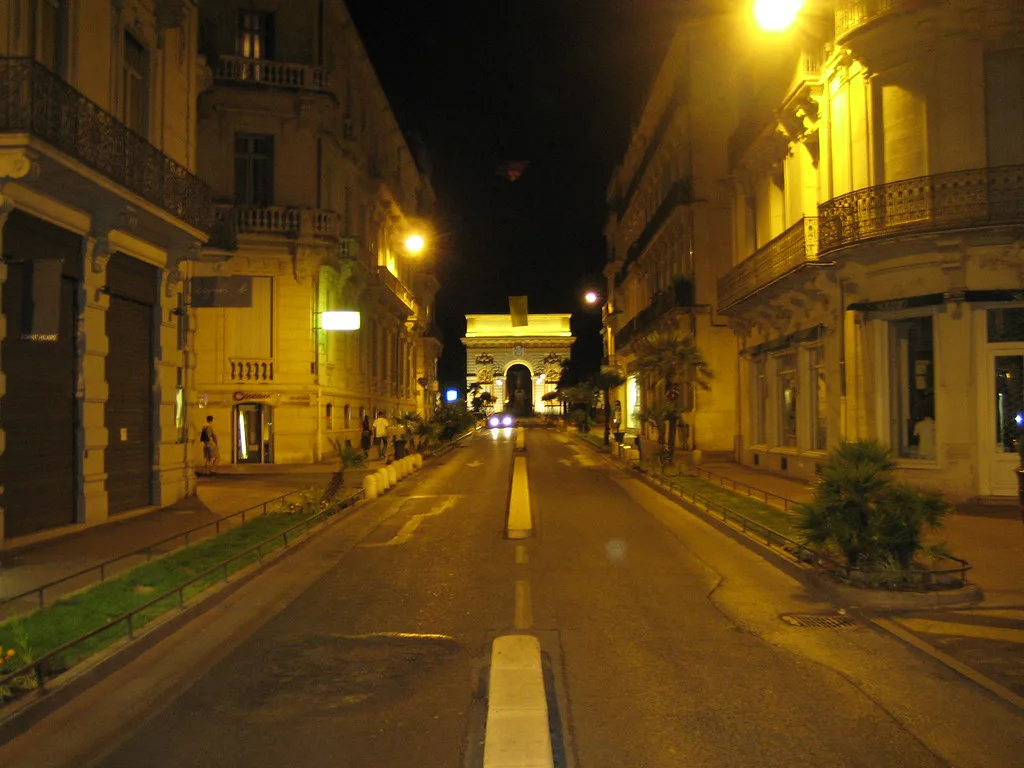
Beaux-Arts is largely a late nineteenth-century creation: Haussmannian and Belle Époque buildings in aligned stone, wrought-iron balconies under tall windows, high ceilings and old floorboards inside. Ground floors are shops and terraces, and the upper floors are apartments, some dual-aspect, a few opening over the roofs of the centre.
Towards the Écusson the stone changes character: the apartment building gives way to hôtels particuliers, and the transition plays out street by street rather than at a single line. Walk rue de la Loge uphill from the square and you cross that seam within a few minutes, which is the most efficient architecture lesson in the city.
Many of these buildings went up without a lift, and not all can be given one, since a shaft, structure and a vote at the general meeting are needed. If you are staying in a tall old building, a high floor is a practical question about stairs, not a detail.
Street art in the quarter
Montpellier wears street art on a daily basis: bicycles that seem to escape from the walls, whimsical mosaics, graffiti on rooftops and countless collages. The city tourism office runs a guided street-art tour, in French, for visitors who want the pieces pointed out rather than hunted.
Outside a guided walk, the pleasure is in looking up as you cross the quarter — rooftops and upper walls carry work that street-level strolling misses. Treat it as a background to the walk between the square, the esplanade and the museum rather than a separate excursion.
Who the quarter suits and who it does not
Beaux-Arts suits anyone who wants to arrive, drop the bag and walk: station, museum, square, esplanade and the Écusson are all within minutes on foot, and the tram on the Comédie takes you further. It also suits a short break built around culture, with the opera season and the museum's exhibitions filling the calendar from February to June and again in September and October.
It suits families on the condition that the dense city is accepted: schools and shops on foot, the tram on the square, the esplanade for running about and the museum for a wet Wednesday. The esplanade and the car-free centre make it a practical base for children, while evenings on the square stay lively.
It does not suit travellers who want quiet, a garden or easy parking. Parking is scarce and worth budgeting for, the square is audible in the evening, and the streets around it stay urban day and night. If you want space and calm, the newer quarters along the river are a better fit — Antigone, Montpellier and Port Marianne both sit within a short tram ride of the centre.
Getting there and around
Saint-Roch station sits on the southern edge of the quarter, a few minutes on foot from the Comédie, which is the defining advantage of staying here. The tram crosses the square and connects the centre to the rest of the city, from Boutonnet to Port Marianne.
Within the quarter, walking is the whole method: the place de la Comédie to the musée Fabre takes a few minutes, the same to the esplanade, and rue de la Loge puts you in the Écusson almost immediately. Leave the car where you parked it; the centre is assembled for feet.
Eating and staying in the quarter
The eating is concentrated around the square and along the esplanade, where cafés and terraces face the fountain and the plane trees and fill on performance nights and summer weekends. For a calmer table, the streets set back towards the Écusson are quieter and still within a couple of minutes of the Comédie.
For a bed, the choice is between the central addresses around the square and the quieter streets behind it. An internal courtyard, a high floor and windows that close matter more here than star ratings; the same flat that is charming at noon is the one you sleep in after the terraces empty.
The quarter stays urban in the evening: expect performance-night crowds and summer weekend noise, and plan the room accordingly. If you want a shopping or market morning, treat it as a short walk into the Écusson rather than a feature of the square itself.
A two-day shape for a Beaux-Arts base
Day one: museum in the morning, when you are fresh and the galleries are the point, then the esplanade for the walk north to the Corum and back through the quieter streets. Finish on the place de la Comédie for the fountain, the terraces and, if the programme allows, the opera across the paving.
Day two: a street-art look on the walls and rooftops as you cross the quarter, the Hôtel de Cabrières-Sabatier d'Espeyran if it is Wednesday, Saturday or Sunday between 11am and 6pm, and the Carré Sainte-Anne for whatever is hanging in the nave. Leave the rest of the day for the Écusson, which starts at the top of rue de la Loge.
This is a base-and-walk plan, not a checklist. If you want the wider set of sights and how the other quarters fit around this one, the Montpellier guide maps it out for a weekend. If you are weighing other southern French cities for a similar short break, compare things to do in Carcassonne before you settle on a base.
Plan Your Beaux-Arts Weekend
Beaux-Arts earns its place as a base because it removes the logistics: the station on its edge, the museum at its centre, the square in the middle and the old town at the top of the street. Choose it for a short cultural break and accept the noise, the stairs and the parking problem as the price of being in the middle of everything.
If you want the calmer, newer side of Montpellier, read the Antigone, Montpellier and Port Marianne guides for comparison. Either way, check the musée Fabre and hôtel particulier opening days for your dates before you build the itinerary around them.
Explore more Montpellier guides
Frequently Asked Questions
What is the Beaux-Arts district of Montpellier known for?
It is the city's central quarter, built largely in the late nineteenth century around the place de la Comédie and the Opéra Comédie, with the esplanade Charles-de-Gaulle running north and the musée Fabre a few steps away. Its stone façades, iron balconies and café terraces make it the most recognisable address in Montpellier.
Is Beaux-Arts a good area to stay in Montpellier?
It suits anyone who wants to walk to everything: the Saint-Roch station, the musée Fabre, the square and the old streets of the Écusson are all within minutes. It is less suited to travellers who want quiet or easy parking, since the square stays busy in the evening and parking is scarce.
How do you get to Beaux-Arts from Montpellier Saint-Roch station?
The station sits on the southern edge of the quarter, a few minutes on foot from the place de la Comédie. The tram also crosses the square, connecting the centre to the rest of the city.
What can you see near the place de la Comédie?
The Three Graces fountain and the Opéra Comédie face each other across the square, and the esplanade Charles-de-Gaulle runs north to the Corum. The musée Fabre is steps away, and rue de la Loge climbs from the square into the Écusson.
Is the Musée Fabre in Beaux-Arts?
Yes. The musée Fabre stands steps from the place de la Comédie, inside the quarter and within the protected perimeter of the old centre. Opening days and ticket prices are published by the museum itself.
When can you visit the Hôtel de Cabrières-Sabatier d'Espeyran?
The mansion opens on Wednesday, Saturday and Sunday from 11am to 6pm, which fits a weekend but not a Monday. Check the exhibition programme before you plan the visit, since it changes.
Is there street art in Beaux-Arts?
Montpellier is covered in street art, including bicycles that seem to escape from walls, mosaics, rooftop graffiti and collages. The city tourism office runs a guided street-art tour in French for visitors who want the pieces pointed out.
How long do you need in Beaux-Arts?
Two days covers the museum, the square, the esplanade, the two smaller exhibition spaces and the walk into the Écusson. A single day works if you pick one museum and one walk and leave the rest for the wider city.