
Port Marianne, Montpellier: What to See and Who It Suits
Port Marianne is worth a half-day of your Montpellier weekend if contemporary architecture interests you, and worth skipping if you came for medieval lanes. The city's newest district spreads along the River Lez in the south-east, and it is a deliberate contrast to the old town rather than a substitute for it.
What Port Marianne is
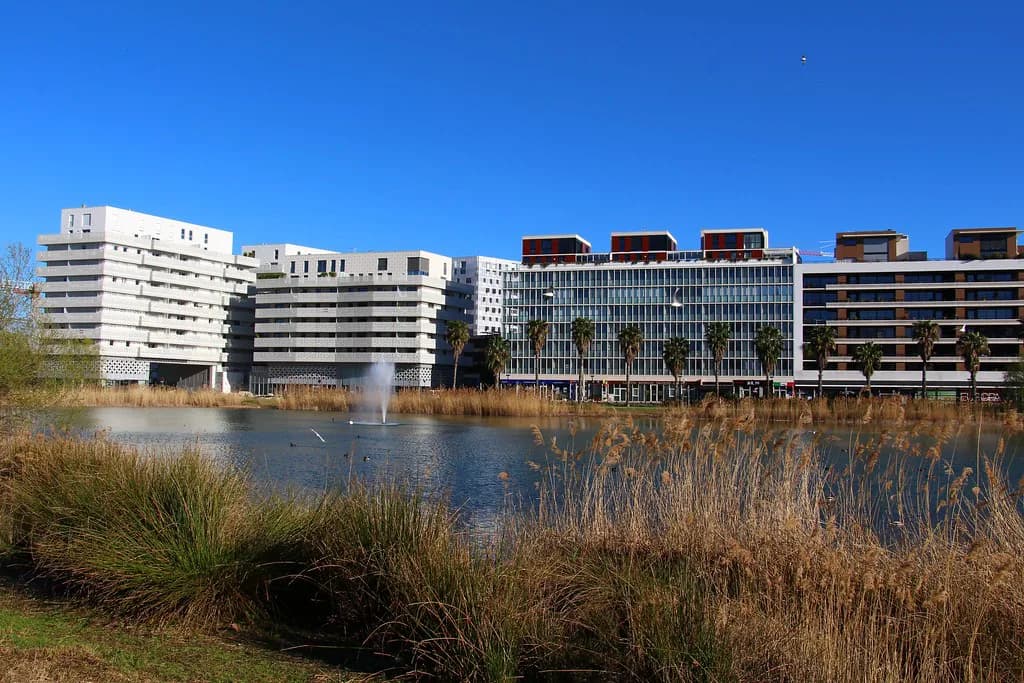
Port Marianne is described as Montpellier's newest district, and its character is set by the Lez rather than by medieval streets. It attracts students and young working people, with a wide range of activities and entertainment venues clustered in the area. That makes it feel lived-in and busy rather than museum-like, which is exactly the point of a district built in recent decades.
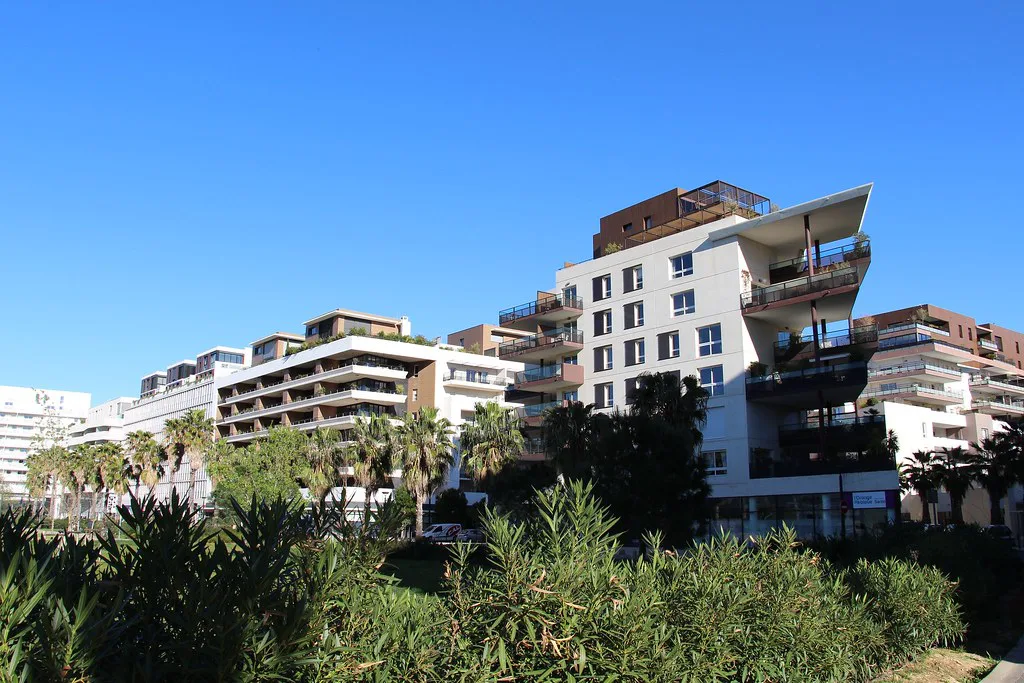
The district has become a destination in its own right, with state-of-the-art buildings and hip venues lining the river bank. Its transformation is described as complete, which means you are looking at a finished piece of city-making rather than a building site. For a weekend visitor, that translates into a compact area where the landmarks sit close enough to walk between.
Who Port Marianne suits, and who it does not
This is a district for design-minded travellers, students and anyone curious about how a French city builds for the twenty-first century. It also suits visitors who have already seen the historic centre and want a second, completely different day in Montpellier. If your image of the city is shaded squares and narrow streets, plan Port Marianne as a contrast rather than your base.
The honest trade-off is atmosphere. You come here for white concrete, glass and big-name architecture, not for stone facades and medieval scale. Anyone wanting the old town on the doorstep should base themselves in the centre and treat Port Marianne as an excursion.
L'Arbre Blanc and Place Christophe Colomb
Head to Place Christophe Colomb to see L'Arbre Blanc, the White Tree, which is Japanese architect Sou Fujimoto's first project in France. The building stands 56 metres tall, with 193 protruding balconies fanning out like the branches of a tree. It dwarfs its neighbour, the Richter local government building, which dates from 1864, and the pairing of old and new is the most photographed corner of the district.
The square is the natural starting point for a walk because everything else in Port Marianne radiates from it. Give yourself time to circle the building rather than photograph it from one angle, since the balconies change shape as you move around.
Architects to look out for
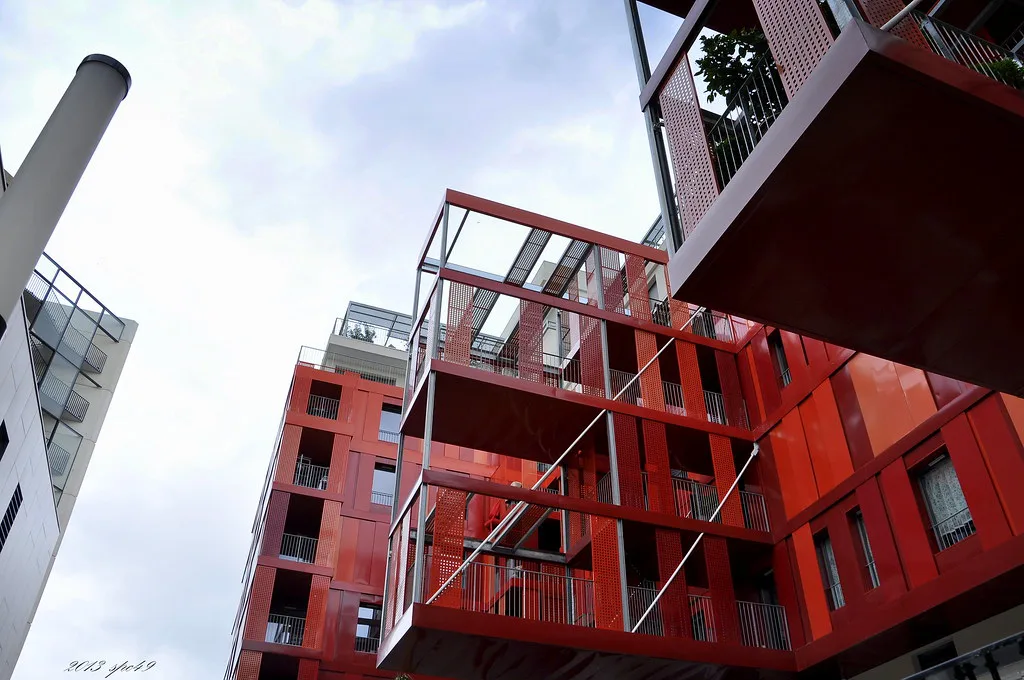
Michel Macary, Rudy Ricciotti, Jean Nouvel and Philippe Starck have all left their stamp on this modern area. The district also carries twenty-first-century versions of Montpellier's famous folies, the city's tradition of statement buildings. Knowing the names helps you read the skyline: you are not looking at anonymous new-build but at a deliberate collection of signature projects.
Look for the RBC Design Centre, whose bold keyword graphics were designed by Jean Nouvel, and Le Nuage, the Cloud, clad in puffy panels. The two sit along the district's main spine and are easy to spot once you know what you are looking for. They are exterior landmarks rather than ticketed sights, which keeps a walk here cheap.
Avenue de la Mer: the district's spine
Follow Avenue de la Mer, described as Montpellier's version of Las Ramblas, with contemporary architecture lining both sides. It links Place Christophe Colomb to the Marché du Lez and makes the district easy to navigate without a map. Walk it and you will have seen most of the headline buildings.
The Marché du Lez
The Marché du Lez is the district's focal point and its main food destination. It is an industrial-chic indoor market building whose exterior is brightened up by local street artists, and it packs vintage shops, artist studios, restaurants, food trucks and speciality grocery stores under and on top of one roof. Treat it as a time commitment rather than a quick stop, because the market rewards browsing.
For lunch, the food trucks and restaurants inside the market do the job without requiring a booking elsewhere in the district. Arrive hungry and leave time to wander the vintage and studio units afterwards, since the two halves of the building feed into each other. Buying a few speciality groceries here is also a sensible way to stock up for the train home.
Where to eat in Port Marianne
The Marché du Lez is where most of the eating happens in this district, with restaurants and food trucks sharing the space with shops and studios. That mix means you can eat casually without planning your day around a single reservation. It also makes the market a sensible lunch stop between L'Arbre Blanc and Avenue de la Mer.
Basing yourself here
Port Marianne's building stock is modern, and several aparthotels and chain hotels sit within it or close by, including the Miranove at 455 Avenue du Professeur Étienne Antonelli and the Courtyard by Marriott at 105, Place Georges Frêche. The Expedia listings place both within reach of Esplanade de l'Europe and the Polygone shopping centre, which is the practical argument for staying in this part of the city.
What you gain is space and modern comfort, with tram access into the centre close at hand. What you lose is the old-town atmosphere and the ability to step out of your door into medieval streets. If you plan to spend most evenings in the historic centre, this is the wrong end of Montpellier for you.
How the district is laid out and how to walk it
Start at Place Christophe Colomb for L'Arbre Blanc and the Richter building, then walk Avenue de la Mer towards the Marché du Lez. The landmarks follow one another along the spine, so you can cover the district on foot in a straightforward line with the Lez on one side. Add a slow pass through the market and the walk fills an afternoon comfortably.
The district sits in the south-east of the city, developed along the river bank, so it is geographically separate from the old-town core. That separation is why Port Marianne works best as a dedicated block of time rather than something you dip into between central sights.
Port Marianne in a weekend
Give Port Marianne half a day: a walk from L'Arbre Blanc down Avenue de la Mer, a long lunch and browse at the Marché du Lez, and time for Le Nuage and the RBC Design Centre. Pair it with a separate day in the historic centre rather than trying to combine the two on foot. If you are comparing districts, Antigone, Montpellier's other modern axis, is worth a look on a different day. If you are weighing up other southern French cities for a short break, our guide to the things to do in Perpignan covers a compact old town that makes an easy contrast.
Anyone planning a Montpellier weekend should balance this modern quarter with the Beaux-Arts, Montpellier's quieter quarter near the city's art school, and with the central squares, which give you the city's older face. Mixing them keeps a short break from turning into two days of the same architectural story.
Practical notes before you go
Opening days and hours for the Marché du Lez and individual venues change, so check with each place before you build your day around it. The architecture along Avenue de la Mer is visible from the street at any time, which means the walk itself never depends on a timetable.
Plan Your Visit
Treat Port Marianne as the modern half of a Montpellier weekend: half a day for L'Arbre Blanc, Avenue de la Mer and a long stop at the Marché du Lez. It will not give you the medieval streets, and it is not trying to, but it shows you a side of the city that the old town cannot.
If you have time for one more neighbourhood, Figuerolles gives you a very different, more everyday Montpellier to set against the new architecture here. Build the day around the walk and the market, and let the buildings do the rest.
Explore more Montpellier guides
Frequently Asked Questions
Is Port Marianne worth visiting in Montpellier?
Yes, if contemporary architecture interests you. It holds L'Arbre Blanc, the RBC Design Centre, Le Nuage and the Marché du Lez within walking distance of each other, and gives you a clean contrast to the historic centre in half a day.
What is there to see in Port Marianne?
The main sights are L'Arbre Blanc on Place Christophe Colomb, the 1864 Richter building beside it, and the modern buildings along Avenue de la Mer. The Marché du Lez anchors the far end with shops, studios and food.
Who is Port Marianne best for?
Design-minded visitors, students and anyone who has already covered the old town. It is less suited to travellers who want medieval streets on the doorstep, who should base themselves in the centre instead.
How long do you need in Port Marianne?
Half a day is enough for the architecture walk and a slow stop at the Marché du Lez. Add more time if you plan to browse the vintage shops and studios inside the market.
What is the Marché du Lez?
It is an indoor market building with vintage shops, artist studios, restaurants, food trucks and speciality grocery stores under one roof. Its exterior is decorated by local street artists and it is the district's main eating stop.