
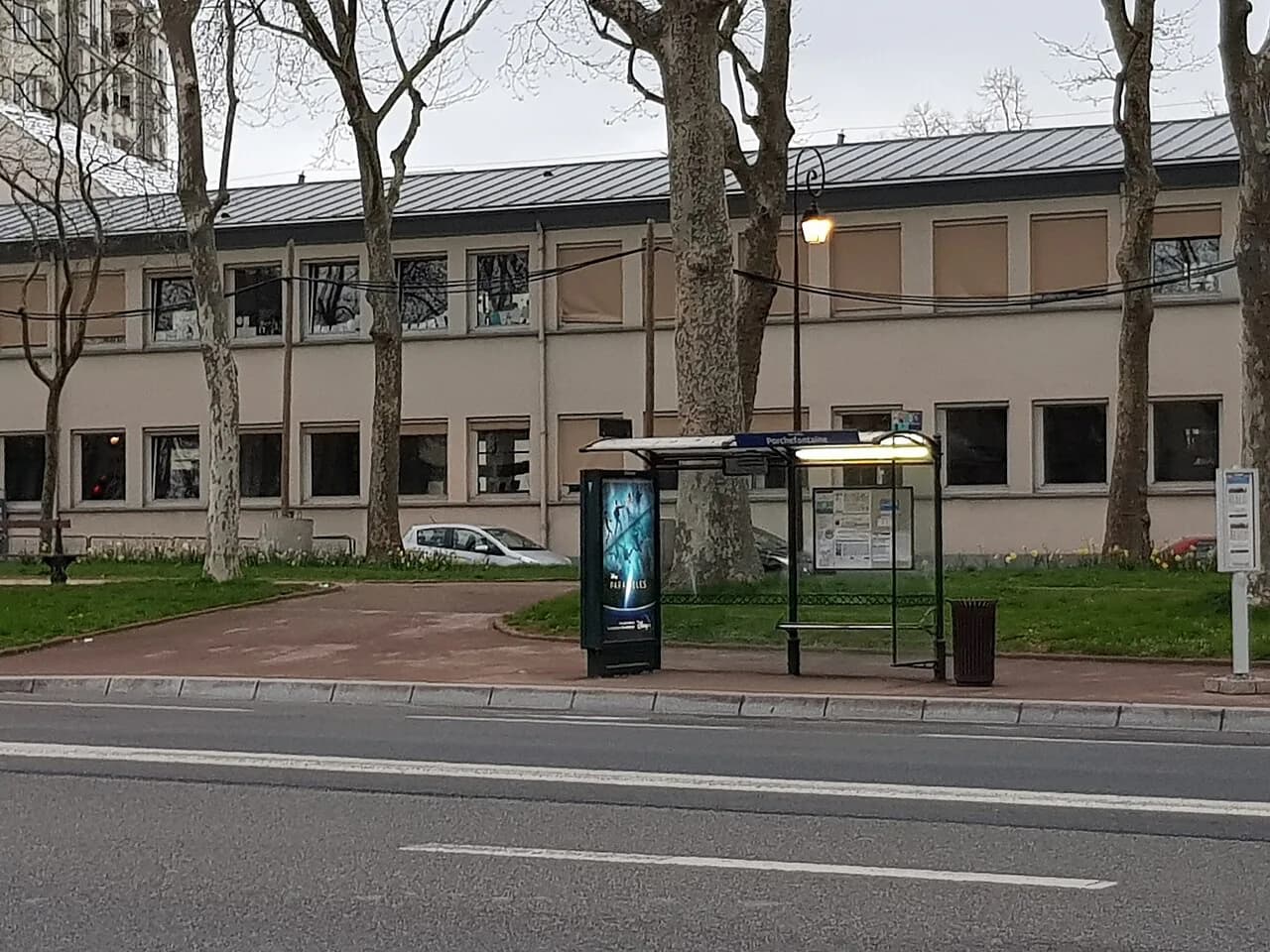
Porchefontaine: Versailles' Village-Style Quarter

Porchefontaine is a quiet, self-contained quarter in the south of Versailles, built up from small workers' houses with gardens and still run on a village rhythm. It rewards a half-day of wandering rather than a tick-list, and it suits travellers who have already seen the château and want to understand how the town actually lives.
Come with the right expectations. There is no château, no grand avenue and no queue for a photograph here, which is why many visitors skip it and why others find it the most likeable part of the city. Plan it as a short add-on to a Versailles weekend, not a rival to the palace.
What Porchefontaine is
This is a former workers' quarter of small houses with gardens, laid out in the 19th century for people employed around the town. Locals describe it as a village within the city, with its own shops, schools, sports clubs and associations doing the social work that cafés and squares do elsewhere. It is residential first and foremost: you come to look at façades, walk the streets and eat, not to file through exhibitions.
The architecture carries the day. Look for the meulières, the rough-cut stone houses typical of the Paris region, along the quieter residential streets; in spring the façades compete over wisteria, an informal local rivalry rather than an organised event.
Where it sits
The quarter is hemmed in by the railway, the A86, the woods of Versailles and the boundary with Viroflay, and it has effectively three road entrances: from avenue de Paris near the old octrois, from rue du Pont Colbert, and from the avenue de Versailles direction towards Viroflay. That enclosure is the reason it keeps a distinct identity instead of dissolving into the wider town.
For a visitor, the geography is useful rather than a barrier: you can walk in from the centre of Versailles or arrive by train, and the woods are a few minutes away on foot. It also explains why the area feels calm: through traffic has little reason to enter.
Getting there
Porchefontaine has its own RER C station on avenue de Porchefontaine, with the hall open every day from 04:30 to 01:00. That makes the quarter one of the easiest suburban pockets of Versailles to reach without a car, and it puts you straight into the residential streets rather than on a main road.
If you are coming from Versailles Chantiers, the RER C link is short but usually involves a change at Viroflay Rive Gauche, which the published timetable shows adding a few minutes to the trip. Check the departure board on the day rather than relying on a remembered schedule.
Buses 6202 and 6208 also serve the quarter, tying it to central Versailles and the wider network. If you are staying near the château, the simplest plan is to walk or take a bus in and ride the RER back out, so you see the streets at eye level rather than from a train window.
Street names as a short history
Read the street signs and the quarter tells its own story. The name comes from Étienne Porcher and a 14th-century seigneurie; the streets of the Étang, des Nouettes and de la Fontaine recall the marshy ground the district was built on.
Rue des Moines and rue des Célestins keep the memory of a Cistercian abbey that once stood here, while rue des Chantiers points to the 19th-century workers who built the little houses and came home from the yards each evening. Walking these streets takes under an hour and gives you more local history than any interpretation panel.
What to see on a wander
Start at the station, head into the residential grid and look at the garden fronts, the stone houses and the small commercial strip. The market sets up twice a week and is the best moment to see the quarter in use, with four bakeries and a clutch of food shops around it supplying the everyday trade.
Green edges are part of the appeal. The woods of Versailles sit within a few minutes' walk, and the camping Huttopia at the edge of the quarter makes an unusual base for families who want trees rather than traffic. If you would rather stay in the historic core, the Quartier Saint-Louis, Versailles is a better fit for a first trip.
Eating and drinking in the quarter
Five restaurants are named locally as the ones worth planning around: Petite Boussole, Le Gaberem, La Clairière, Chez Brice and Aim Thai, alongside a handful of Asian restaurants, a wine shop and a market trader. The same account calls them popular enough that booking is strongly recommended, so treat them as places to reserve rather than secrets to stumble into.
Menus and prices change, so check the current offering with the restaurant directly rather than assuming a set price from an old review. For a sit-down lunch after a morning at the palace, the short train ride or walk out here is a calmer alternative to the busy streets near the gates.
The Maison de quartier and local life
At 86 rue Yves-Le-Coz, the Maison de quartier de Porchefontaine is the largest of Versailles' eight neighbourhood centres: 392 families registered, 34 activities and 36 hosted associations, with music, circus, theatre, sewing and a family space among them. It is a community building rather than a visitor attraction, but it shows why the quarter holds together.
The Clap 53 association underpins much of what happens, from children's cookery workshops to the long-running vide-grenier, a fixture for over 36 years that has drawn 600 stalls and around 30,000 visitors. The AIDAS drama academy also sits in the quarter and stages public performances during the year, some of them part of the town's Molière celebrations.
A small local calendar
Three annual fixtures shape the quarter's year. The Baz'art des Mômes, a children's performing-arts festival, runs each March in and around the Maison de quartier, with many events free; the Bal Lamôme street party marks the September rentrée with 700 meals served and 40 volunteers; and the vide-grenier, running over 36 years, fills the streets as one of the biggest in France by footfall. These are annual traditions, not fixed dates: confirm the current year's programme with the Maison de quartier or the Clap 53 before planning a trip around one.
Outside those weekends, the quarter is simply residential, and that is the honest reason to come or to skip it.
Practical timing
Give Porchefontaine half a day at most: an hour for the streets and the history in the names, time for the market if it falls on your visit, and lunch or dinner at one of the local restaurants. That fits neatly after a morning at the palace, or as a slow Sunday when the centre is crowded.
The market runs twice a week, but the published days are not given here, so check with the Maison de quartier or at the station before you build a morning around it. Weekday visits are quietest; the local festivals are when the quarter is at its most animated.
Honest trade-offs
Porchefontaine has no headline sights, no museum of its own on the scale of the palace and no tourist infrastructure worth the name. If your Versailles weekend is short and monument-led, stay in the centre and skip it without guilt; the Quartier des Chantiers is handier for the station and the château side of town.
What you get instead is a genuine slice of the town: stone façades, a market, woods within walking distance and restaurants local people rate. Come for that and you will not be disappointed; come for spectacle and you will be.
Plan Your Visit
Treat Porchefontaine as a half-day detour into everyday Versailles rather than a sightseeing stop. Arrive by RER C at the quarter's own station, walk the streets that carry the district's history in their names, and book a table if you want to eat where locals do. If you enjoy this slower, residential pace, the things to do in Fontainebleau offer a similarly unhurried alternative for another day.
Check the station opening times and the day's trains before you set out, and confirm the market days and any festival programme locally, since these are the details most likely to reshape a short visit.
Explore more Versailles guides
Frequently Asked Questions
Where is Porchefontaine in Versailles?
It lies in the south of Versailles, enclosed by the railway, the A86, the woods and the boundary with Viroflay. It has three road entrances: from avenue de Paris near the old octrois, from rue du Pont Colbert and from the avenue de Versailles direction towards Viroflay.
Does Porchefontaine have its own train station?
Yes. Gare de Porchefontaine sits on avenue de Porchefontaine and is served by the RER C, with the station hall open daily from 04:30 to 01:00. Buses 6202 and 6208 also connect the quarter with the rest of Versailles.
Is Porchefontaine worth visiting on a Versailles trip?
It is worth a half-day if you have already seen the palace and want a quieter, residential side of the town. There are no headline sights, so travellers with limited time should stay in the centre instead.
How do you get to Porchefontaine from central Versailles?
Take the RER C to Porchefontaine station, or use buses 6202 and 6208. From Versailles Chantiers the RER C route usually involves a change at Viroflay Rive Gauche, so allow extra time and check departures on the day.
What is there to do in Porchefontaine?
Walk the residential streets to see the stone houses and the history embedded in street names, visit the market, and eat at one of the local restaurants. The Maison de quartier on rue Yves-Le-Coz is a community hub rather than a visitor attraction.
When is the market in Porchefontaine?
The market runs twice a week, but the published days are not stated here. Confirm the current days locally with the Maison de quartier before building a morning around it.