Versailles Old Town: What to See Beyond the Palace
Versailles old town means the Notre-Dame and Saint-Louis quarters flanking the palace. Here is what to see in each and how to walk between them.
On this page
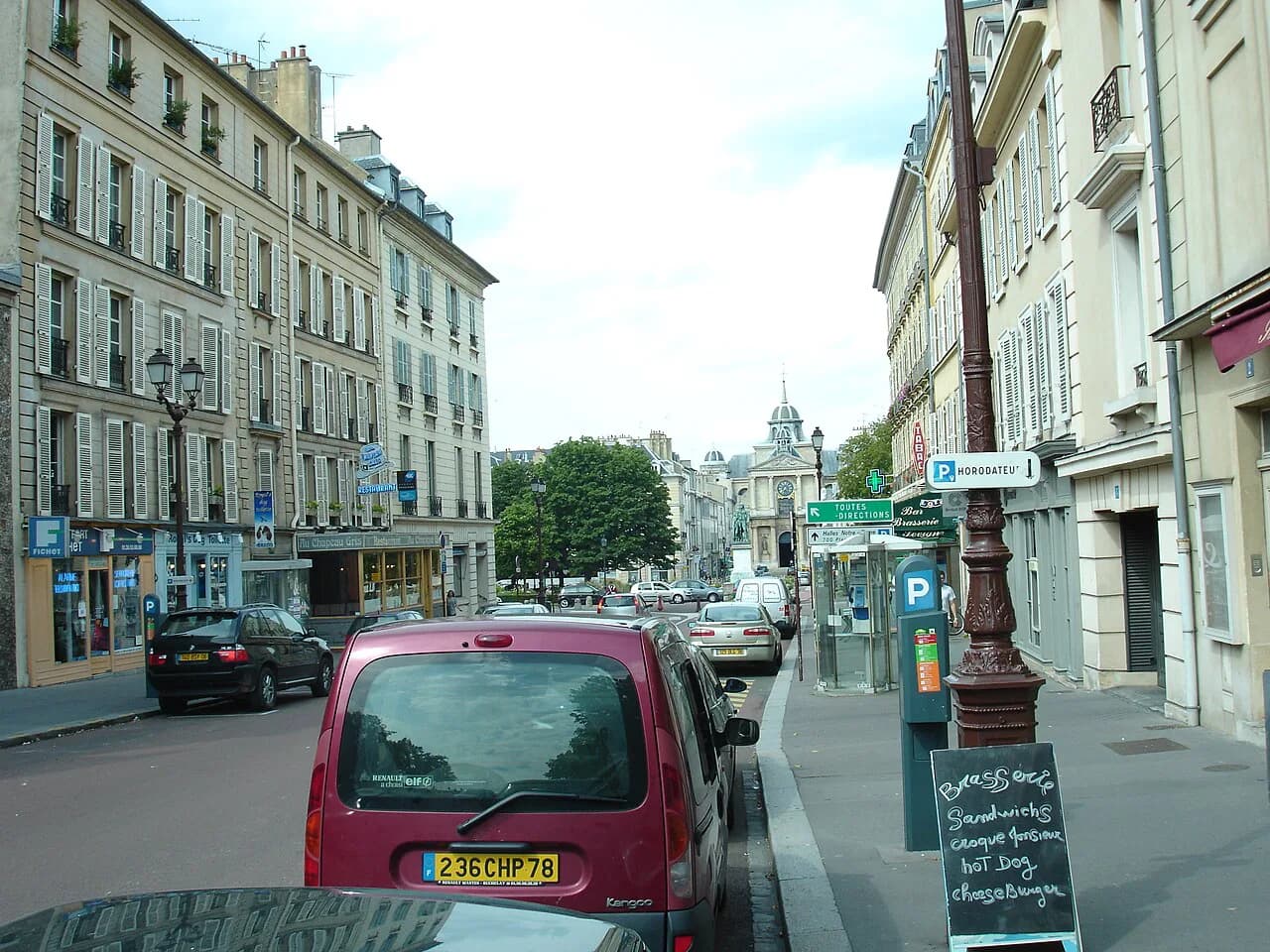
Versailles old town is the two historic quarters that grew up around the palace: Notre-Dame on the north-east side and Saint-Louis on the south. Both were laid out in the seventeenth and eighteenth centuries, and both still hold the squares, churches and market buildings of that plan. A half-day on foot covers the core of each, and it slots neatly beside a palace slot rather than competing with it. If you are still weighing up the whole trip, our guide to things to do in Versailles puts the palace and the town side by side.
The two quarters are small enough to walk between in under half an hour, so the honest question is not whether to bother with the town but which quarter to give your best hours to. Notre-Dame has the bigger market and the antiques passage; Saint-Louis has the cathedral, the surviving market cottages and the most concentrated run of places to eat.
How Versailles Old Town Is Laid Out
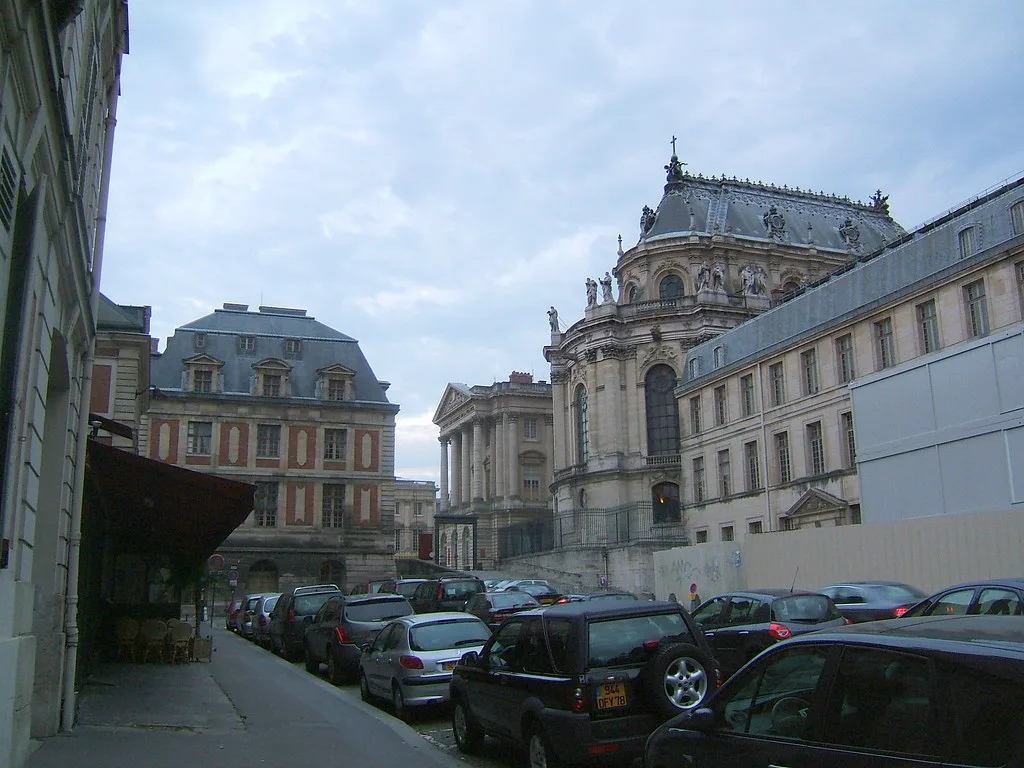
Versailles grew by royal order, spreading outwards from the palace along three major avenues that converge on it, and the Notre-Dame and Saint-Louis districts were laid out to keep that symmetry. Notre-Dame, north-east of the palace, was the first to take shape after a royal order of 1671; Saint-Louis was designed from 1685 on the site of the old village and Louis XIII's hunting reserve, then built up mainly in the eighteenth century after Louis XV and the court returned. That history explains the grid you walk through today.
Place Hoche is the landmark to navigate by in Notre-Dame, and it is worth knowing it was the first octagonal square in France. Its sightline straight to the church of Notre-Dame shows off the perspective the royal planners built into the town, so standing in the middle of the square gives you a free orientation lesson before you start walking.
Trains from Paris land you on different sides of town: RER C runs to Versailles Château Rive Gauche, which puts you closest to the palace and the Saint-Louis side. From there the tourist office sits across the street from the Rive Gauche station, which makes it a sensible first stop if you want a map or a guided walk of the town itself.
Quartier Notre-Dame: Place Hoche, the Church and the Market
Start at Place Hoche and walk the short axis to the church of Notre-Dame, built for the royal parish from 1686 to designs by Jules Hardouin-Mansart. The neighbourhood around it is the oldest in Versailles, a grid of seventeenth- and eighteenth-century townhouses with gardens and small squares tucked between them. Give this stretch twenty minutes and you will have seen the tone of the whole quarter.
The Notre-Dame market is the reason to plan your morning carefully: it has stood on the same spot since the seventeenth century and is the second largest market in the Île-de-France region. Four covered halls and a large outdoor area make it a proper food market rather than a souvenir row, so arrive hungry and leave the palace for the afternoon.
On the far side of the market, the Passage de la Geôle is a pedestrian passage preserved since 1671 and now the heart of the Quartier des Antiquaires, a run of antiques dealers in the middle of town. It suits browsers more than buyers: the pieces range from serious furniture to bric-a-brac, and the lanes are cobbled enough to make comfortable shoes worthwhile.
Espace Richaud is the other Notre-Dame stop worth building in, a former royal hospital whose eighteenth-century chapel now hosts the city's exhibitions. It reopened as a cultural centre after a full renovation, so treat it as the flexible item in your day: exhibitions change, and a quick look at the chapel costs you less time than a full museum visit.
Quartier Saint-Louis: The Cathedral and the Carré Cottages
Saint-Louis Cathedral is the quarter's centrepiece, designed by Jacques Hardouin-Mansart de Sagonne and built between 1742 and 1754, with Louis XV laying the cornerstone in 1743. Its dome anchors the south side of town the way Notre-Dame anchors the north; if you enjoy walking a historic quarter this way, our guide to the Aix-en-Provence old town shows the same approach applied to a very different city. Step inside if the doors are open, then walk south-east towards the streets that hold the old market cottages.
The Carrés Saint-Louis are the detail most day visitors miss. Louis XV ordered 416 shops built as a craftspeople's district, and 90 of the mansard-roofed cottages survive at the intersection of Rue d'Anjou and Rue Royale, now listed historic monuments. Many have gone back to their original use as shops selling artisans' wares, which makes this the most rewarding ten-minute detour in town.
Rue de Satory is the lively spine of Saint-Louis, lined with restaurants and wine bars, and it is where you should end a walking loop rather than start one. Walking from the cathedral down Rue du Vieux Versailles to Rue de Satory keeps the palaces and the eating in the right order for a late lunch.
For lunch, Le Bistrot du 11 in the Saint-Louis district is the practical choice, while La Table du 11 next door needs booking well ahead, so plan around the wait rather than hoping for a walk-in. If you would rather compare a wider spread of addresses before committing, our pick of the best restaurants in Versailles covers the surrounding streets.
The Salle du Jeu de Paume
The Salle du Jeu de Paume is the old town's single most consequential building, a royal tennis court where the Third Estate took the Tennis Court Oath on 20 June 1789, vowing not to disband until a constitution had been drafted. That act set in motion the National Assembly and helped ignite the Revolution. The building has been restored and sits in the heart of the old town, a short walk from the palace gates.
Inside, the court is filled with marble busts of politicians and court figures, which gives it more substance than its small size suggests. Pair it with the cathedral or the market rather than making it a separate trip: it is a twenty-minute stop that rewards anyone who wants the revolutionary history the palace tends to skim.
Museums in the Old Town
The Musée Lambinet occupies the Hôtel Lambinet, an eighteenth-century private mansion on Boulevard de la Reine that has housed the town's art and history museum since 1932. Its thirty-odd rooms mix antiques, fine art and objects relating to the royal city and eighteenth-century life. Because the collection is eccentric rather than blockbuster, it works best as an hour-long pause rather than a half-day.
Both Lambinet and Espace Richaud are town museums, so they open on their own schedules and ticket prices are set locally. Check the town's own tourist office listings for the day you plan to visit before you build the day around either one.
Le Potager du Roi
Le Potager du Roi on Rue du Maréchal-Joffre is the royal kitchen garden created by Jean de La Quintinie at Louis XIV's request to supply the court with fruit and vegetables. The restored garden is a working plot laid out in a theatrical arrangement of beds and espaliers, and in season you can buy produce, jams and honey from the royal bees on site.
It sits on the Saint-Louis side, so slot it between the cathedral and the Potager's neighbour streets rather than crossing town twice. For a longer green walk afterwards, the wider Versailles Parks and Gardens are a short hop from the old town and can fill an afternoon on their own.
A Half-Day Walking Route Through Both Quarters
Start at the Notre-Dame market end of town, take in Place Hoche and the church, then cut through the Passage de la Geôle before heading south past the palace gates to the Salle du Jeu de Paume. From there, walk to Saint-Louis Cathedral, then down to the Carrés Saint-Louis and finish on Rue de Satory for lunch. That route covers both quarters in roughly three to four hours without rushing.
The route fits neatly around a palace visit because the palace sits between the two quarters. Do the town in the morning and the palace after lunch, or reverse it if you have an early palace slot; either way you avoid doubling back and you use the palace entrance as your hinge.
If you only have one afternoon, choose Saint-Louis: it packs the cathedral, the Jeu de Paume and Rue de Satory into a tighter loop, whereas Notre-Dame rewards a full morning once you add the market and the antiques passage. A full day is enough for both quarters and the palace garden, but not for the palace interior as well.
Market Mornings and Timing
The Notre-Dame market is in full swing on Tuesday, Friday and Sunday mornings, and those mornings change the shape of your day: the halls and stalls are at their busiest, and the surrounding cafés fill up too. Plan those three mornings around the market rather than around the palace queue.
Outside those mornings the square is quieter and the antiques passage becomes the main draw. Because the market days shape a whole plan, they are the first thing to pin down before you slot in museum visits around them.
What to Skip
Skip the old town entirely if you have only a single day and have never seen the palace interior; the château and gardens will eat the day. Give up the antique passage first if time runs short, as it is a browsing stop rather than a sight, and keep the Jeu de Paume even if you have only an hour for the town.
The trade-off most visitors get wrong is trying to do Notre-Dame, Saint-Louis and the palace in one unbroken push. Each quarter has a centre worth a slow look, and the walk between them is where the town's character shows: grand avenues in one direction, pastel townhouses and chestnut trees in the other.
Plan Your Visit
Versailles old town is best treated as a morning or afternoon in its own right, not as a queue filler around the palace. Start with the market quarter if the day lines up, finish in Saint-Louis, and keep the Jeu de Paume for the stop that ties the two halves together.
Two details can throw a plan: museum opening days vary by venue, and market timing depends on which morning you are in town. Check the town tourist office listings before you travel so the walking route matches the day you actually have.
Explore more Versailles guides
Frequently Asked Questions
Is the town of Versailles worth visiting?
Yes, if you give it half a day. Notre-Dame and Saint-Louis are the two historic quarters flanking the palace, and each holds a market square, a church and streets that most palace visitors never see. If your trip only allows one day, the palace interior and gardens will take all of it.
What is there to do in Versailles old town?
The core route is the Notre-Dame market, Place Hoche and the church of Notre-Dame on the north side, then the Salle du Jeu de Paume, Saint-Louis Cathedral, the Carrés Saint-Louis cottages and Rue de Satory in the south. The Musée Lambinet, Espace Richaud and Le Potager du Roi are the optional extras.
Which quarter is best, Notre-Dame or Saint-Louis?
Notre-Dame for markets and antiques, Saint-Louis for architecture and eating. If you only have an afternoon, Saint-Louis is the tighter loop: cathedral, Jeu de Paume and Rue de Satory sit close together. Notre-Dame needs a market morning plus an hour.
What day is the market in Versailles?
The Notre-Dame market runs on Tuesday, Friday and Sunday mornings, and it is one of the largest in the Île-de-France region. Those mornings change how the surrounding streets behave, so plan the palace around the market rather than the other way round.
How long do you need in Versailles old town?
Roughly three to four hours on foot covers both quarters without rushing, including a coffee stop. Add an hour if you want the Musée Lambinet or Le Potager du Roi. A full day lets you do the old town in the morning and the palace and gardens after lunch.
Can you walk around Versailles for free?
The streets, squares and the exterior of the cathedral and market halls are free to walk, and the Passage de la Geôle antiques district costs nothing to browse. Museums charge entry, and Le Potager du Roi is ticketed. Check the tourist office for current rates before you go.
How do you get to Versailles old town from Paris?
RER C runs to Versailles Château Rive Gauche, which is closest to the palace and the Saint-Louis side. The tourist office sits across the street from that station, handy for maps before you start walking the quarters.
Sources
Notes for French city breaks
Optional updates to our guides.
You might also like
Continue reading
More guides you'll find useful