
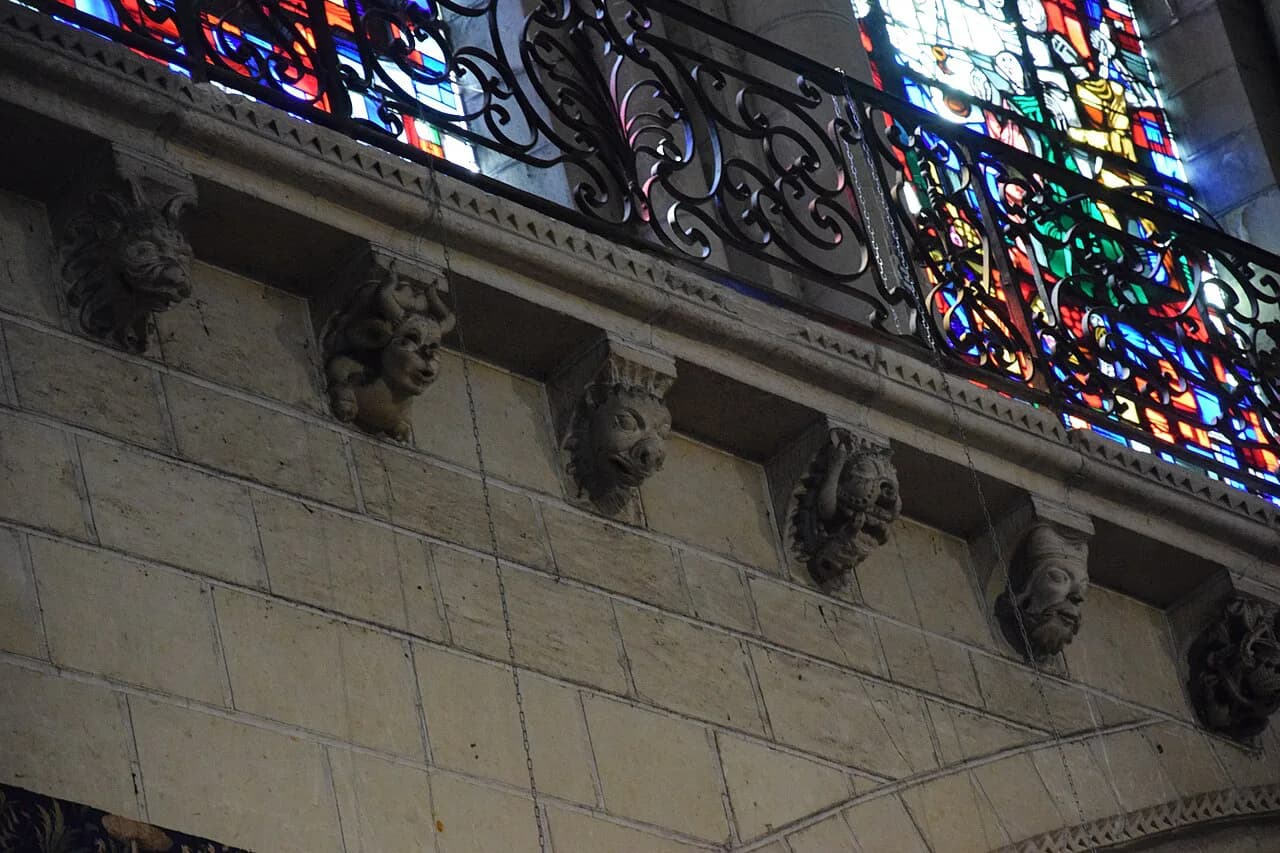
Angers Cathedral (Cathédrale Saint-Maurice): A Visitor's Guide

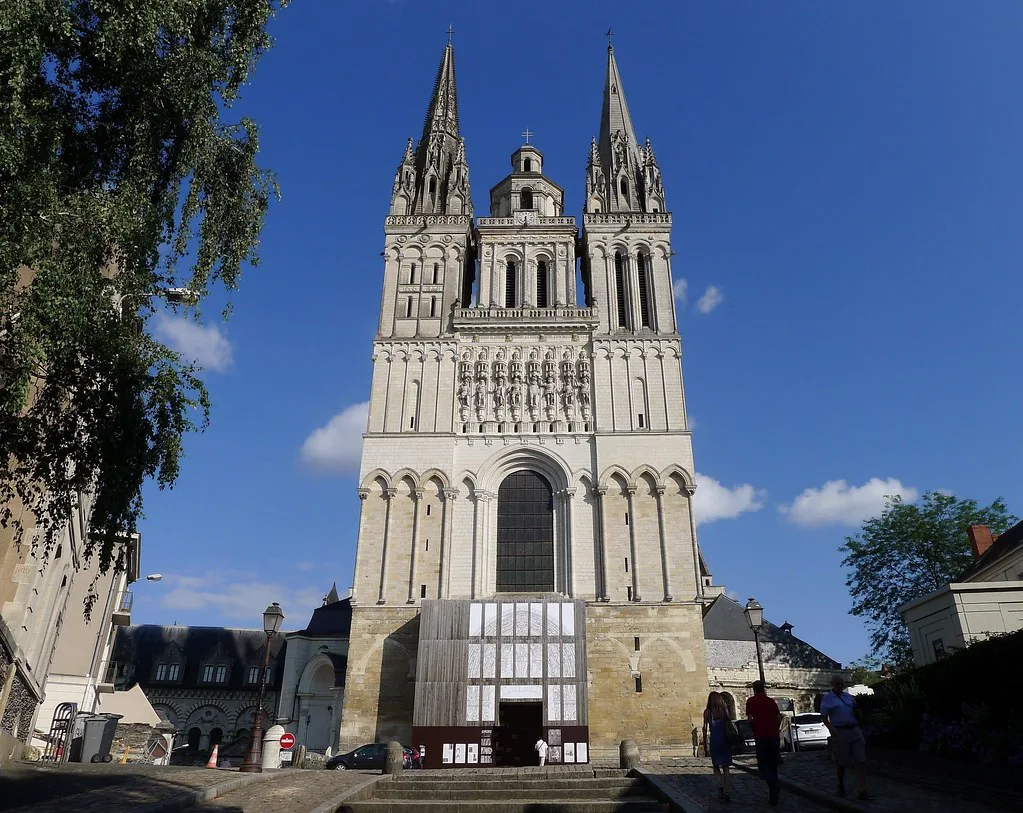
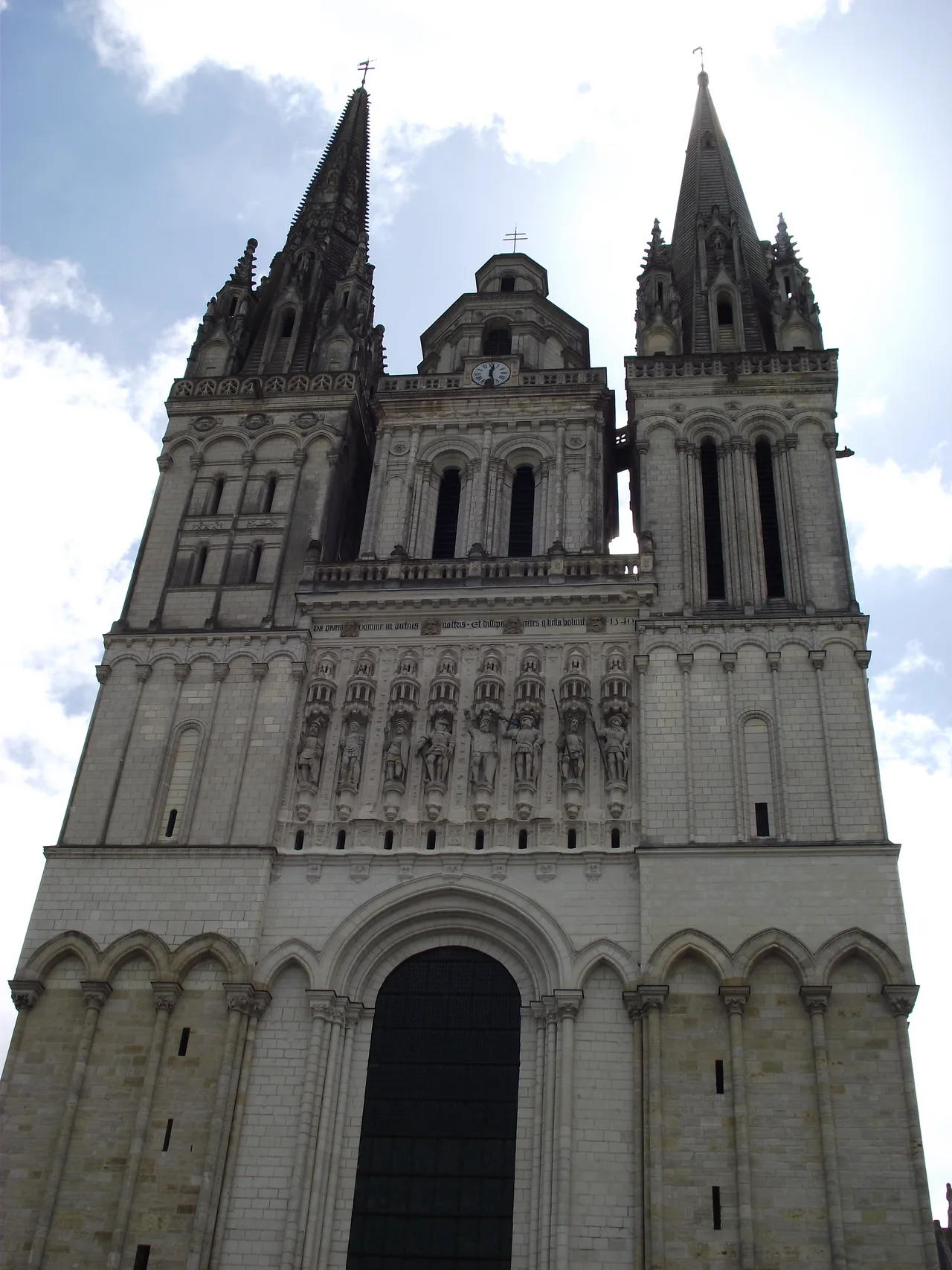
Angers Cathedral, dedicated to Saint Maurice, is the city's main church and the reason to slow down for half an hour in the old town. Built across the 11th to 16th centuries, it mixes Romanesque and Gothic work in one continuous interior, and its standing among the sights of Angers rests on that fabric rather than on size alone.
The focus for most visitors is the western portal, where painted medieval and later sculpture was uncovered, and the contemporary gallery built to protect it. Seeing both the medieval stone and the 2020 addition together is what makes the cathedral different from a straightforward church visit.
What Angers Cathedral is and why it is worth a stop
The cathedral stands in the heart of Angers, within the old city and a short walk from the castle. It is a working place of worship and a listed monument: it was added to the French list of historic monuments in 1862, which is a useful marker of how completely the building has survived.
Its interest is cumulative rather than dramatic. You get a long Romanesque nave, Gothic additions and furnishings from several centuries, all in one visit, and the architecture reads clearly without a guidebook. If you have an hour to spare in Angers, this is a better use of it than a rushed circuit of the city's churches.
The building has also been the subject of modern intervention, which gives the visit a second layer. Rather than treating the cathedral as a frozen monument, the city has added a protective structure at its most fragile point. Knowing that before you arrive changes what you look at first.
Where it is in Angers and how to reach it
The cathedral sits in the old town of Angers, in the Maine-et-Loire department of the Pays de la Loire, close enough to the castle that the two can be combined on foot. The centre of Angers is compact, so most visitors reach the cathedral by walking from wherever they are staying rather than by taking transport.
Angers is served by its main railway station, with connections from Paris and other French cities, and the historic centre is a walk or a short tram ride from there. Check the current tram and bus arrangements on the local network's own site before you set out, since routes in the centre have changed in recent years.
On foot, the approach through the old streets is part of the experience: you come on the cathedral from narrow lanes rather than from a grand open square. Allow ten to fifteen minutes from the station area at an easy pace, and rather more if you stop at the shopfronts on the way.
The western portal and its polychromatic sculptures
The western portal dates from the 12th century and is the cathedral's most important single feature for a visitor. Its sculpture is polychromatic, meaning it retains traces of colour on the stone, which is unusual enough among medieval portals to justify the attention it gets.
Painted sculpture survives poorly outdoors, and exposure to weather and light is what puts it at risk. The architect's account of the project records polychromatic sculpture from both the medieval period and the 17th century at this portal, so you are looking at more than one campaign of decoration layered on the same entrance.
Look closely at the carved figures rather than only at the overall composition. Colour traces sit in recesses and sheltered surfaces, so the best reading comes from standing still for a few minutes and letting your eyes adjust to the interior light.
La Galilée de Saint-Maurice: the contemporary concrete gallery
The gallery protecting the portal, called La Galilée de Saint-Maurice, was designed by Kengo Kuma and Associates, whose project page dates it to 2020 and lists it as an ongoing 147 square metre gallery. It is a modern building set directly against medieval fabric, which is the point of the design rather than an accident of planning.
The architects describe a light concrete structure made from precast elements using sand and aggregates from the Loire basin, with proportions set out using compasses in reference to medieval builders. The effect is a pale, monolithic shell that shelters the portal without imitating the cathedral's masonry. Whether you find that harmonious or jarring is a fair debate, and the contrast is the reason to look at it properly.
Practically, the gallery changes how you see the portal: you view the sculpture in covered, controlled conditions rather than in open air. Treat it as part of the cathedral visit, not a separate attraction, and go there first if the portal is your main reason for coming.
Inside: Romanesque and Gothic fabric, the Baroque altar and sculpture
Inside, the nave and choir show the building's long construction history in the change from Romanesque to Gothic forms. The cathedral is known for this mixture and for an ornate Baroque altar and sculpture, so the interior spans further than the medieval fabric alone.
Walk the length of the nave before turning to the furnishings. Reading the architecture first, then the altar and sculpture, makes the later additions legible as additions rather than as the whole story, and it is the sequence that rewards a second look.
Because it is an active church, parts of the interior may be in use for services when you arrive. Keep your visit quiet and mobile phones silent, and if a service is under way, wait or come back rather than walking through the congregation.
How much time to allow and how to pace the visit
Allow around 45 minutes to an hour for the cathedral and its gallery. That is enough to see the western portal properly, walk the nave and look at the altar without hurrying, and it leaves the rest of the day for the castle and the old town.
If you have only twenty minutes, go straight to the portal and the gallery, then take one slow pass down the nave. Skipping the side chapels and the furnishings is a reasonable trade-off when time is short; trying to see everything quickly leaves you with an impression of nothing in particular.
Photography inside places of worship is often restricted during services, so plan your pictures around quiet periods. If light levels in the gallery are low, give your eyes time rather than using a flash.
Nearby: Angers Castle and the old town around the cathedral
Angers Castle, the Château d'Angers, is the obvious next stop and a short walk from the cathedral. Its walls and gardens are the reason many people come to the city, and the two sights together fill a comfortable half day.
The castle is also where you find the Apocalypse Tapestry, a monumental medieval hanging that is one of the strongest reasons to give Angers a full day rather than an afternoon. If you have already spent time at the cathedral portal, the tapestry makes a natural sequel: both are medieval works that have needed careful modern protection.
Beyond the castle, the old streets around the cathedral reward a slow wander, and the Jardin des Plantes offers a quieter pause if you want to break up the churches and museums. The Abbaye Saint-Serge and the Collégiale Saint-Martin are other historic buildings in the city worth knowing about if your interests run to religious architecture.
Practical points to confirm before you go
Opening hours, entry arrangements and any charge for the cathedral or the gallery are not set out in the sources used here, so check the cathedral's own published information or the local tourist office before travelling. Many French churches keep shorter hours than museums and close over the middle of the day, so confirm rather than assume.
The gallery project is listed by its architects as ongoing, which means access to the portal may be affected by works. Ask at the cathedral or check the city's visitor information for the current state of the building before making it the centrepiece of a short break.
Plan Your Visit
Angers Cathedral earns its place on a short break because of one thing above all: the painted western portal and the concrete gallery built to keep it. Give it an hour, look at the portal before the nave, and treat the castle and tapestry as the rest of the day rather than an afterthought.
The city is walkable and the cathedral sits naturally between the station, the old streets and the castle, so no special transport planning is needed once you are in the centre. Build the day around opening times you have confirmed, and leave room for the unplanned stop.
Explore more Angers guides
Frequently Asked Questions
Why is Angers Cathedral notable?
It is a Romanesque and Gothic building constructed over several centuries, known for its mixed architecture and an ornate Baroque altar. Its western portal carries polychromatic sculpture from the medieval period and the 17th century, and a modern gallery now protects it.
What are the painted sculptures on the west portal?
The portal dates from the 12th century and its stone sculpture retains colour, which is what makes it unusual. The architect's project description records polychromatic work from both medieval and 17th-century campaigns at this entrance.
What is the new concrete gallery at Angers Cathedral?
La Galilée de Saint-Maurice is a gallery designed by Kengo Kuma and Associates to shelter the western portal. The practice dates the project to 2020 and describes a 147 square metre concrete structure using sand and aggregates from the Loire basin.
How long does a visit to Angers Cathedral take?
Plan on 45 minutes to an hour to see the portal, the gallery, the nave and the altar at an unhurried pace. With only twenty minutes, go straight to the portal and the gallery and take one pass down the nave.
What else is near Angers Cathedral?
Angers Castle is a short walk away, and the Apocalypse Tapestry is housed there. The old streets around the cathedral, the Jardin des Plantes and other historic churches such as the Abbaye Saint-Serge and the Collégiale Saint-Martin are also close by.
Do I need to book tickets for Angers Cathedral?
Ticketing and entry arrangements are not published in the information available here, so check the cathedral's own information or the local tourist office before you travel. Church hours can be shorter than museum hours, so confirm on the day.