
LUMA Arles: A Visitor's Guide to the Parc des Ateliers
LUMA Arles is a contemporary art campus on the Parc des Ateliers, an 11-hectare former railway works south of the historic centre of Arles. It combines Frank Gehry's 56-metre tower, 19th-century industrial halls restored by Annabelle Selldorf and a landscape park by Bas Smets, and it opened to the public in 2021. A visit works best as a half-day of its own rather than an add-on squeezed between the Roman sights.
What LUMA Arles is and why it exists
The LUMA Foundation was created in Zürich in 2004 by the collector and patron Maja Hoffmann, and the Arles campus is its largest project. From 2013 the foundation redeveloped the Parc des Ateliers, a site that had stood abandoned after its railway life ended, into a multidisciplinary centre for artists, designers and photographers. It sits in the Provence region at 13200 Arles.
Treat the site as three separate design jobs rather than one building. Gehry Partners designed the tower, Selldorf Architects handled the restoration of the industrial buildings, and Bureau Bas Smets laid out the park, with construction running from 2009 to 2021. Knowing which part you are looking at makes the whole campus easier to read.
The Parc des Ateliers before LUMA
Before it was an art campus, the Parc des Ateliers built and repaired steam locomotives for the Paris-Lyon-Méditerranée company, the forerunner of the SNCF. That industrial past explains the scale of the halls and the wide, flat footprint of the site. Look at the roof spans and the shed-like proportions of the restored buildings and the railway origin is obvious.
Frank Gehry's tower
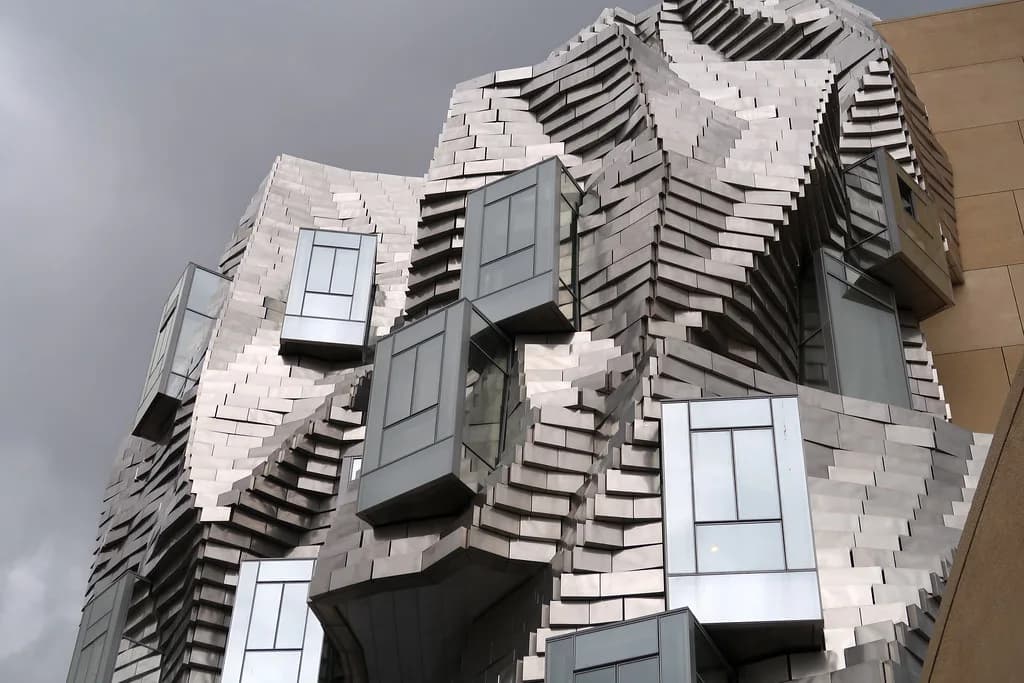
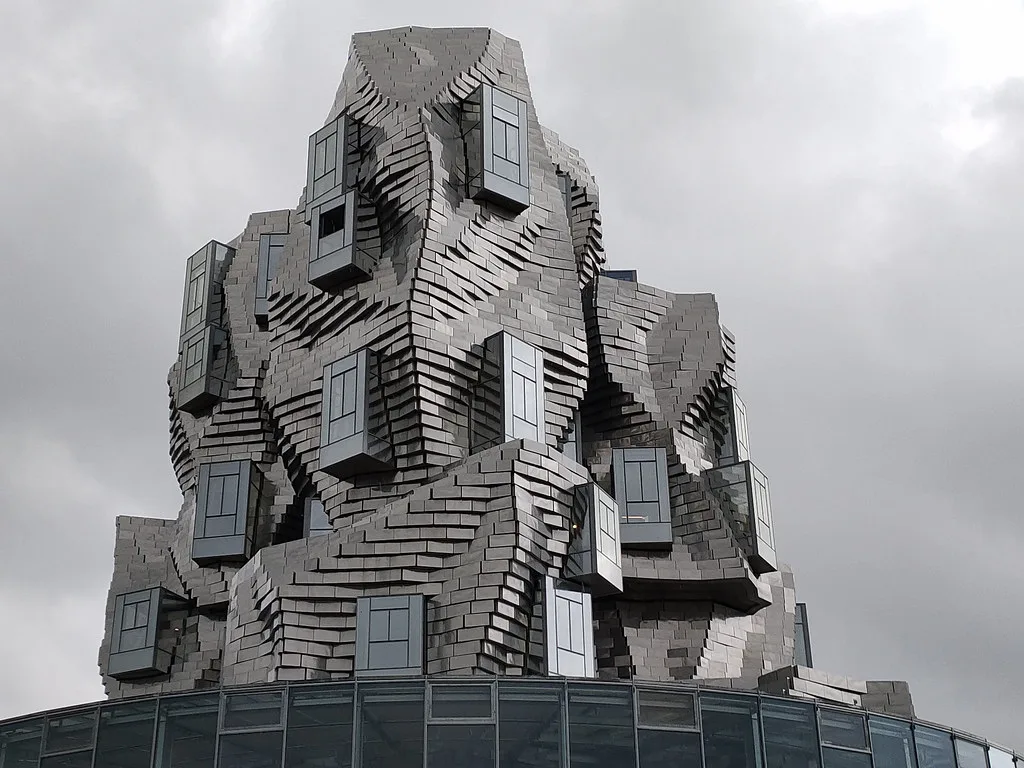
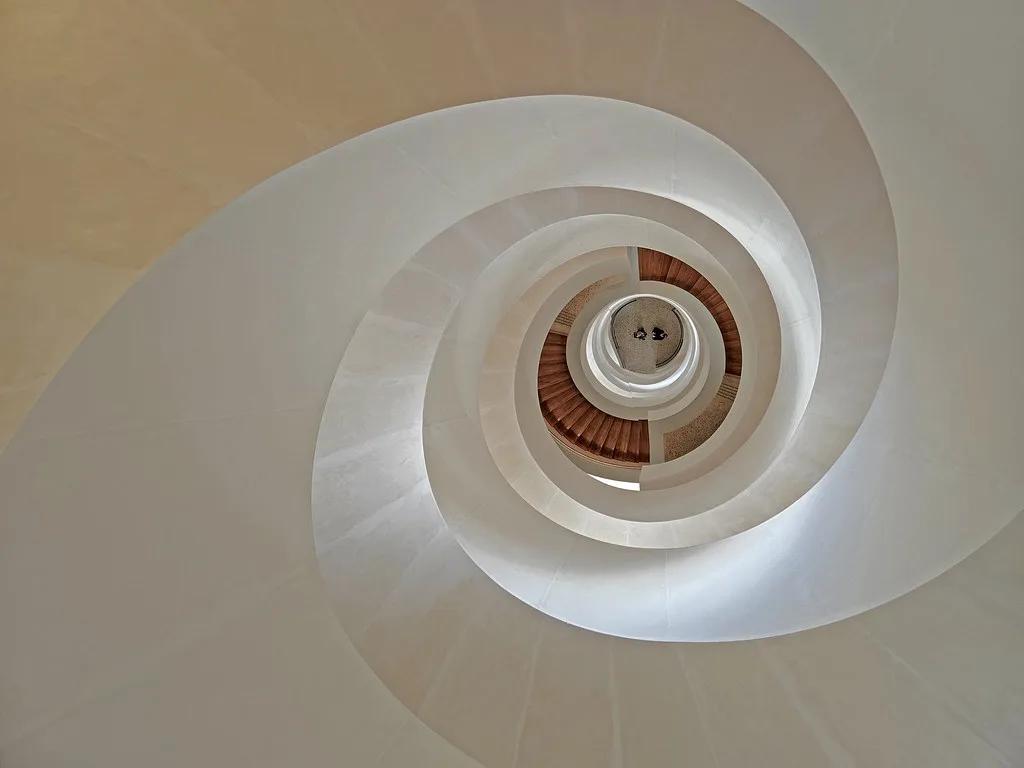
The tower rises 56 metres and dominates both the park and the skyline around it. Its twisting facade is made up of 11,000 stainless steel bricks, so the surface changes as the light moves across it, and the design deliberately echoes the shifting light Van Gogh painted in Arles. From the top floor the flat landscape of the surrounding country opens up in a single sweep.
At the foot of the tower sits a rotunda, conceived as a modern counterpart to the Roman arena in the old town. It links the Roman foundation of Arles to the contemporary layer the LUMA project added, and it is the clearest single place to see that argument made in built form. Look at the two together and the reference reads immediately.
The tower is contested, and it is worth knowing that before you arrive. Its height sits awkwardly against a city that guards a Roman and Romanesque heritage, and the bold cladding has drawn criticism since the design was unveiled. Whether the contrast enlivens Arles or overwhelms it is a genuine argument, and seeing the tower in the townscape is the only way to form a view.
Annabelle Selldorf's restored halls
The 19th-century industrial buildings were restored by Annabelle Selldorf's studio, which kept the original structures and reworked the industrial language for new uses. The halls now hold art displays, refreshment and hospitality spaces, and the balance between inside and outside was preserved rather than sealed off. Walk through them for the sense of a working shed converted rather than erased.
Bas Smets and the landscape park
Bas Smets found a barren concrete slab where almost nothing had grown, held back by a lack of water, hard summer sun and the mistral. His response, which he calls an archaeology of the future, was to study wind and sun and then work out how the site would change over 20, 100 and 200 years on its own, before accelerating those processes by design. The result is a park that will keep developing rather than a finished garden.
The mounds in the park were built from soil excavated for the tower's foundations, so the earthworks and the building are physically linked. A small lake, fed through an agreement on the Craponne canal with water from the distant Durance, now supplies irrigation, cools the air in summer and gives visitors a place to sit. Deep excavation was limited by archaeological constraints on the site.
Planting runs to roughly 650 trees, 500 shrubs and 80,000 small plants, all native to the land around Arles. The species are drawn from three distinct biotopes, the wetlands of the Camargue, the arid steppe of the Crau and the rocky massifs of the Alpilles, packed into one site. Frogs, migratory birds and bees have moved in since the park opened.
What to look for as you walk the park
Walking the paths takes you from dune-like ground reminiscent of the Camargue, through the dry steppe of the Crau, to slopes that recall the Alpilles. Keep an eye on the changing levels and the water, because the planting and the earthworks were designed as a single system. It is a different kind of sightseeing from the Roman city, and slower. If the contemporary-art campus is the reason for your trip, our Avignon city guide shows how a similar day of galleries and old streets fits together nearby.
Artworks are placed out in the landscape rather than only inside the buildings, so they sit against the vegetation, the water and the uneven ground. Views open between the tower, the halls and the planting in ways that only appear as you move through, so resist heading straight for the entrance. This is the part of the campus that rewards wandering rather than a checklist.
How long to allow and how to pace a visit
The site covers 11 hectares, so give it at least half a day if you want the park, the tower and the halls without rushing. Start with the park while you are fresh, move into the halls for the exhibitions, and leave the tower for last so the scale of the site registers before you go up. Allow extra time if a show in the halls is the reason for your visit.
Opening hours, ticket prices and whether parts of the site are free to enter change with the season and the programme. The LUMA organisation publishes these details on its official site, and that is the place to confirm times and booking before you set out. Do not rely on older visitor write-ups for current arrangements.
Getting there and finding your way around
The Parc des Ateliers lies south of the historic centre of Arles, within reach on foot from the old town, and the tower is visible from a long way off, which makes orientation simple. Follow the tower rather than a map if you are walking in from the centre. The LUMA contact address is 13200 Arles if you need it for a taxi or a rideshare.
Once inside, the layout is straightforward: the halls and tower cluster together, with the park spread around them and the lake as a useful landmark. Plan a loop rather than an out-and-back so you pass the water and the mounds on the way in. Sensible shoes matter, since the paths and levels are part of the design.
Nearby in Arles
The Roman arena and the Roman Theatre sit in the old town, a short walk or a brief ride from the Parc des Ateliers, and both belong on the same weekend. The arena is the larger and busier of the two, while the theatre gives you the stage and seating that the amphitheatre cannot. See the full set of Arles Attractions: 6 Visitor Guides to plan the order.
Saint-Trophime in Arles is the other unmissable stop in the centre, with its Romanesque portal and cloister, and it pairs naturally with a morning in the old town. Les Alyscamps, the Roman and medieval necropolis lined with sarcophagi, lies on the eastern edge of the centre and makes a quieter counterpoint to the arena. For contemporary work in the old town, the Fondation Vincent van Gogh Arles keeps the Van Gogh thread going after LUMA's tower.
Plan Your Visit
LUMA Arles rewards a visit on its own terms: a former locomotive works reworked by three designers, with a contested steel tower, converted halls and a park built to keep changing. Give it half a day, walk the park before the buildings, and see the tower last. Consult the official site for the day's hours, ticket details and what is showing in the halls.
Explore more Arles guides
Frequently Asked Questions
What is LUMA Arles?
It is an 11-hectare creative campus on the Parc des Ateliers in Arles, founded by Maja Hoffmann's LUMA Foundation and opened to the public in 2021. It brings together Frank Gehry's 56-metre tower, 19th-century industrial halls restored by Annabelle Selldorf and a landscape park by Bas Smets.
Who designed the LUMA Arles tower?
Frank Gehry's firm Gehry Partners designed the tower. It stands 56 metres high and is clad in 11,000 stainless steel bricks, giving the facade a twisting, changing appearance as the light moves across it.
What was the Parc des Ateliers before LUMA?
It was a works for building and repairing steam locomotives for the Paris-Lyon-Méditerranée company, later the SNCF. The site was abandoned before the LUMA project began redeveloping it from 2013.
How much time should you allow at LUMA Arles?
Allow at least half a day. The site covers 11 hectares, and the park, the halls and the tower are best taken in sequence rather than all at once, so an unhurried visit beats a quick circuit.
Is the tower open to visitors?
The design allows views over the surrounding landscape from the tower's top floor. Which parts of the site are open on a given day, and whether the tower is among them, should be confirmed with the LUMA organisation before you travel, since access varies with the programme.
What can you see in the park at LUMA Arles?
Mounds built from the tower's foundation soil, a lake fed via the Craponne canal from the Durance, and planting drawn from the Camargue, the Crau and the Alpilles. Artworks are placed in the landscape, and the paths move between the three planted characters.
How do you reach LUMA Arles from the centre of Arles?
The Parc des Ateliers sits south of the historic centre and can be reached on foot, with the tower visible from a distance as a landmark. Its address is given as 13200 Arles if you need a drop-off point.
Does LUMA Arles divide opinion?
Yes. The tower's height and its bold cladding have been criticised as out of scale with a city that guards its Roman and Romanesque heritage, while supporters see it as a deliberate link between Arles's ancient past and its contemporary life.