
Roman Theatre of Arles: A Visitor's Guide to the Théâtre Antique
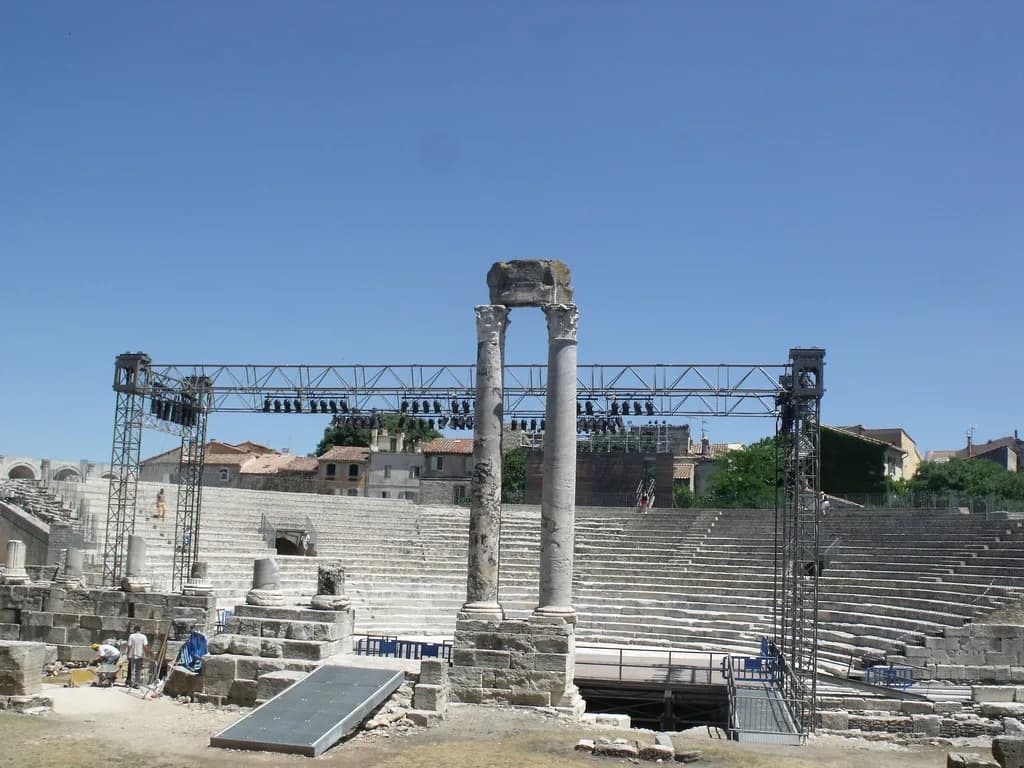
The Roman Theatre of Arles, the Théâtre antique d'Arles, is a first-century BCE monument in the heart of the old town, built during the reign of Augustus and counted among the oldest entertainment structures in Roman Gaul. It survives as a fragment: two columns and parts of the stage wall, with seating tiers behind. Come expecting ruins rather than a complete theatre, and it rewards an hour of your weekend.
The site sits on Rue du Cloître in the historic centre, steps from the amphitheatre and Place de la République, so it slots easily into a walking circuit of the old town. Because it is a working venue as well as a monument, the interior can carry concert equipment and protective screens in summer.
What the Roman Theatre of Arles is
The theatre was constructed at the end of the 1st century BCE during Augustus's reign and originally held around 8,000 spectators on 33 tiers of steps, making it as large as the theatre in Orange. A third-party figure of 12 BC circulates for the build date, but the safe statement is simply the late first century BCE under Augustus. It has been listed as a UNESCO World Heritage Site since 1981.
That scale is hard to picture today, because so little of the structure stands. The theatre is one of six sights covered in our Arles Attractions: 6 Visitor Guides collection, and it makes most sense read alongside the amphitheatre and the Museum of Antiquity rather than on its own.
Where it sits in Arles
The address is Rue du Cloître, 13200 Arles, in the city centre neighbourhood, close to the amphitheatre and Place de la République. Everything here is walkable: from the Place de la République you are a few minutes on foot from the theatre entrance, and the amphitheatre is effectively next door.
Arles is compact enough that you rarely need transport between the Roman sights, which is why a single morning can cover the theatre, the Arènes d'Arles and the old streets around them. If you are building a wider weekend, our things to do in Arles guide sets the theatre alongside the town's other stops.
How to get there and orient yourself
Arles station sits on the edge of the centre, roughly a 15 to 20 minute walk from the Roman monuments, and the route brings you in past the amphitheatre before you reach the theatre. Arrive from that direction and you meet the site from behind its seating, which is the least obvious approach; walk round to the Rue du Cloître side for the entrance.
The phone number published for the theatre is +33 4 90 18 41 20, useful if you want to confirm group arrangements before travelling. Signage in the old town points to the Théâtre antique alongside the amphitheatre, so follow those rather than a map alone.
What survives: columns, stage wall and seating
Only a few remnants of the stage wall remain, including portions of pillars and two nearly intact columns that are the site's signature image. Behind them, the curve of the seating tiers survives in outline, though the cavea is much eroded and partly built over by later structures.
The reliefs and statues dug out of the theatre mostly went elsewhere: the bulk of excavated material is displayed at the Musée Départemental Arles Antique, and the Venus of Arles, found near a fountain in 1651, is held at the Louvre in Paris. Do not expect to see the Venus here; see the museum instead if sculpture is your reason for coming.
Why so little remains
In the early Middle Ages the theatre was quarried: stone was extracted from the structure and reused to build the town walls. That single fact explains the site's fragmentary look better than any description of the ruins, and it is worth knowing before you pay to enter.
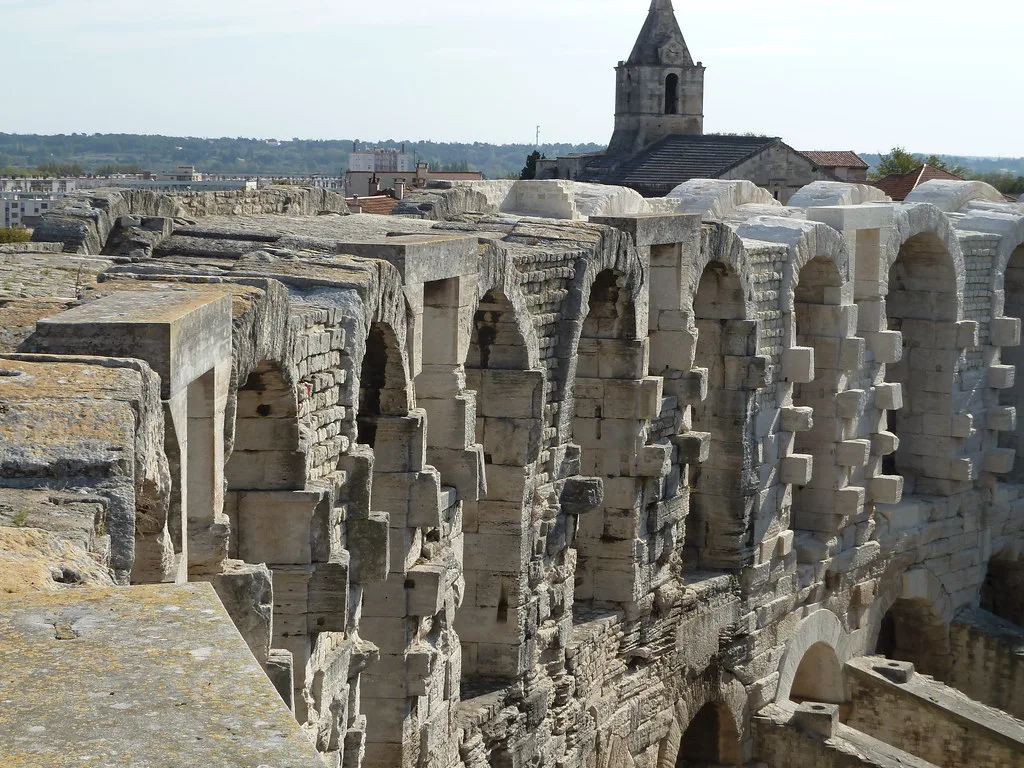
What you are seeing, then, is a monument that was dismantled piece by piece and only later recognised as ancient. That history is typical of Arles, where Roman masonry is embedded in later buildings all over the centre, and it makes the two standing columns read as survivors rather than decoration.
Opening hours by season
Hours follow a seasonal pattern rather than one fixed daily time. From 2 November to 28 February the theatre opens daily from 10:30 to 16:30 with last entry at 16:00; from 1 March to 30 April and through October it opens 09:00 to 18:00; and from 1 May to 30 September it runs 09:00 to 19:00.
The published closures are 1 January, 25 December and 1 May. Treat those hours as the published schedule rather than a live check, and confirm the day you plan to go, particularly around the shoulder-season changeovers, before you build your morning around it.
Tickets and booking
The theatre is a historical monument open to visitors, and entry is ticketed. Current prices are set by the site operator and change, so check the official theatre page before you travel rather than relying on older figures; some passes covering multiple Roman monuments are sold in Arles, but do not assume one ticket covers both the theatre and the amphitheatre, because they are managed separately.
Buying on the day is normal for a site this size, and queues are usually short outside peak summer. If you are visiting in July or August, aim for the opening hour to avoid the worst of the heat on the exposed seating area.
How long to allow and when to go
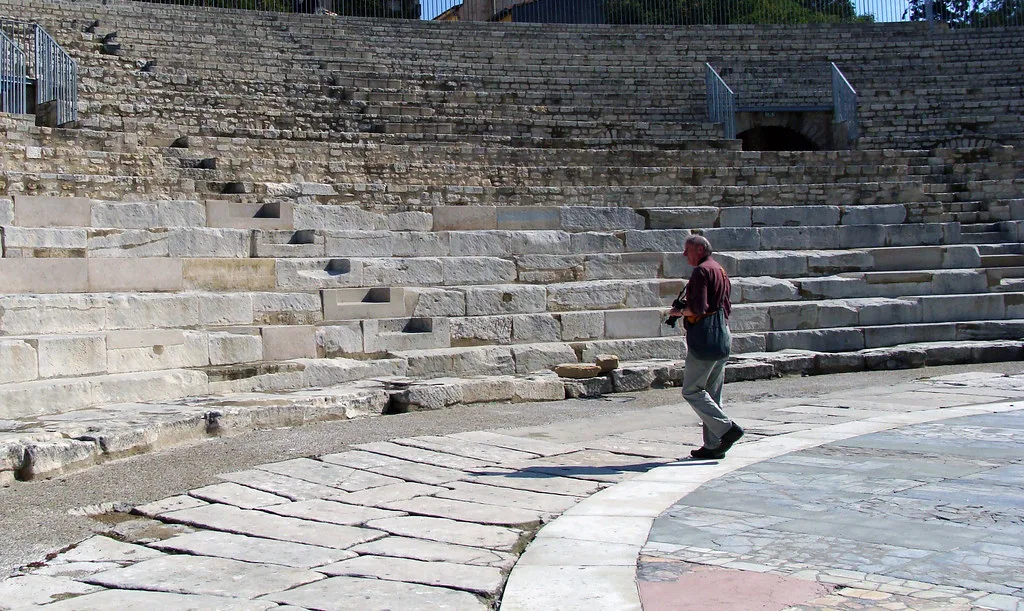
Budget 30 to 45 minutes for the theatre itself: the standing remains are compact, and most visitors read the panels, photograph the columns and walk the seating edge. Add time if you plan to sit and take in the setting, which is the real draw here.
Early morning and late afternoon give the best light on the columns and the coolest conditions in summer; midday in July and August is punishing on stone with little shade. In winter, remember the 16:00 last entry between November and February, which rules out an after-lunch arrival if you are slow to start.
The theatre as a working venue
The theatre is used for performances in summer, protected by external screens, and its interior is altered in places by the technical equipment those events require. It also hosts events during the Rencontres d'Arles photography festival, so the interior can look quite different from a quiet off-season visit.
If atmosphere matters more to you than completeness, a visit outside the performance season gives you the ruins without staging kit. If you are in town for the photography festival, expect the site to be part of the programme rather than a purely archaeological stop.
What to see nearby
The amphitheatre is the obvious pair, a short walk away and far more complete as a structure, so it gives you the sense of scale the theatre lacks. Our Arles Amphitheatre guide covers its hours and what to look for inside the arcades.
For the theatre's own finds, head to the Musée Départemental Arles Antique, where most of the excavated relics are displayed. In the other direction, the Parc des Ateliers holds LUMA Arles, a very different kind of attraction in a converted rail yard, and Saint-Trophime in Arles is a short walk for its Romanesque portal.
Practical trade-offs
Scaffolding, protective screens and concert equipment all detract from the romance of the site, and anyone expecting a complete Roman theatre will be disappointed by two columns and a stub of wall. Set against that, the small scale means you can see everything closely, and the setting in the old town is hard to beat.
If you have time for only one Roman monument in Arles, choose the amphitheatre; if you have an afternoon, do both and then the museum to see what came out of the ground. The theatre works best as a 40-minute complement, not the centrepiece of your day.
Plan Your Visit
The Roman Theatre of Arles suits travellers who want a close look at fragmentary Roman masonry in the middle of a working town. Go early, allow under an hour, and pair it with the amphitheatre and the Museum of Antiquity for the full picture.
Check the official theatre page for current ticket prices and confirm the seasonal hours before you set out, especially in the changeover weeks of late February, April and October. Beyond Arles, the wider region is easily reached by train if you want to extend the trip; if you are continuing east, our guide to things to do in Avignon covers another compact Provençal town with its own Roman and medieval sights.
Explore more Arles guides
Frequently Asked Questions
What is left of the Roman Theatre of Arles?
Two nearly intact columns and portions of the stage wall pillars, plus the eroded outline of the seating tiers. The site is a fragment of a much larger theatre, so expect ruins rather than a complete building.
When was the Roman Theatre of Arles built?
At the end of the 1st century BCE, during the reign of Augustus. Some third-party sources give a more precise date around 12 BC, but the broad Augustan date is the reliable one.
How much does it cost to visit the Roman Theatre of Arles?
Entry is ticketed, and prices change; check the official theatre page for current rates. A single ticket may not cover both the theatre and the neighbouring amphitheatre.
What are the opening hours of the Théâtre antique d'Arles?
Hours are seasonal: roughly 10:30 to 16:30 in winter with last entry at 16:00, 09:00 to 18:00 in spring and October, and 09:00 to 19:00 from May to September. Closures fall on 1 January, 25 December and 1 May, and you should confirm the day of your visit.
How long do you need at the Roman Theatre of Arles?
Allow 30 to 45 minutes. The standing remains are compact, so most visitors read the panels, photograph the columns and walk the seating edge before moving on.
Is the Roman Theatre of Arles worth visiting?
Yes if you are interested in Roman Arles and want to see how a monument was quarried away over centuries. Skip it if you only have time for one Roman site, in which case the amphitheatre gives you far more for the money.
Where is the Venus of Arles now?
It is held at the Louvre in Paris, not in Arles. Most other relics excavated from the theatre are displayed at the Musée Départemental Arles Antique in Arles.
What else is near the Roman Theatre of Arles?
The amphitheatre and Place de la République are a short walk away, and the Musée Départemental Arles Antique holds the finds from the theatre. LUMA Arles at the Parc des Ateliers and Saint-Trophime are also within the centre.