
Notre-Dame de Beaune: A Visitor's Guide to the Collégiale

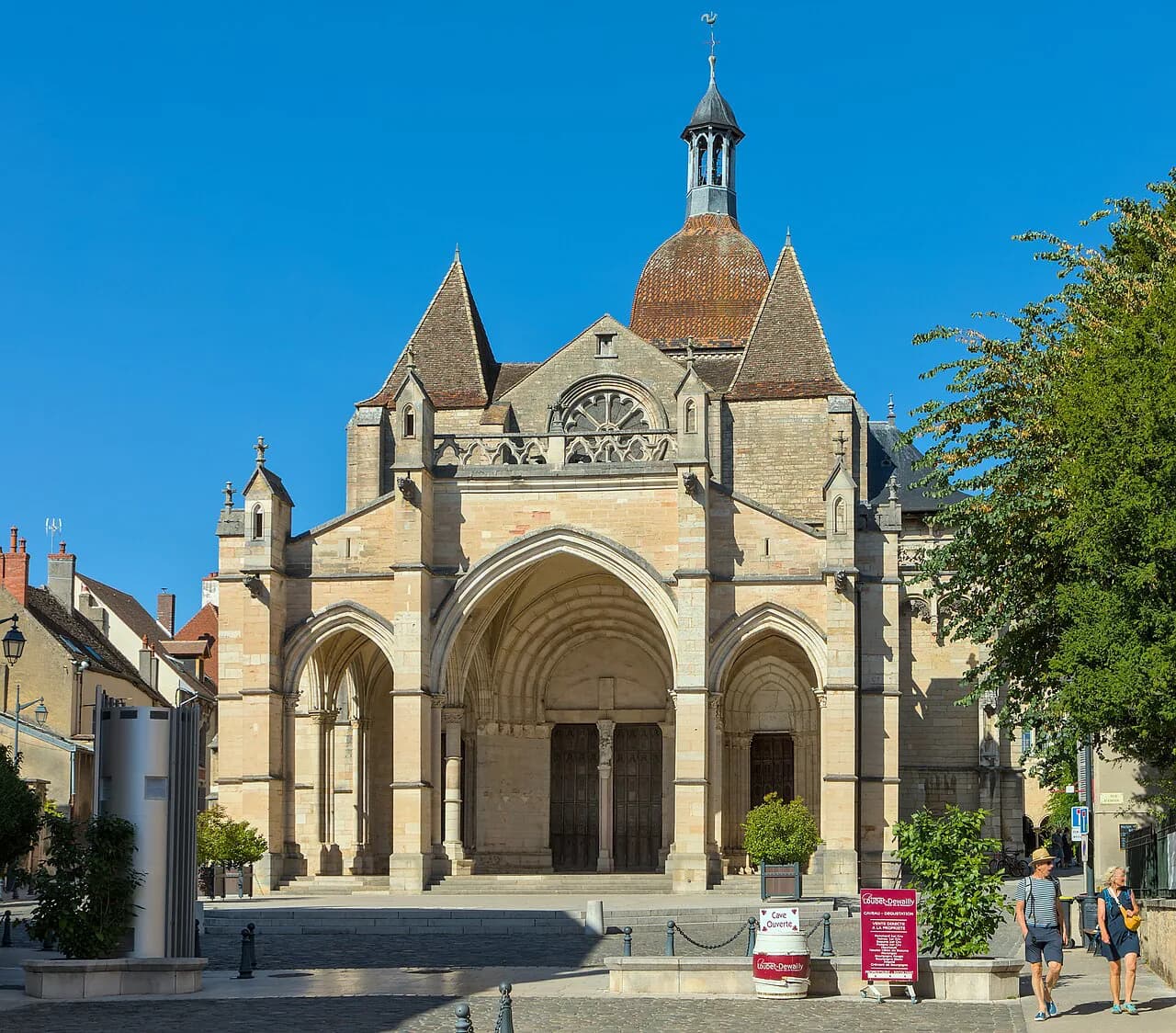
Notre-Dame de Beaune is a Romanesque collégiale, not a cathedral, standing on Place Général-Leclerc in the old town, a few minutes' walk from the Hospices. Its core went up between the mid-12th and early 13th centuries, with a Gothic porch, a Gothic choir and a Renaissance roof added later, as the parish and tourism pages set out. Plan around an hour for the church and its cloister, and come between April and October if the tapestries are the reason for your visit.
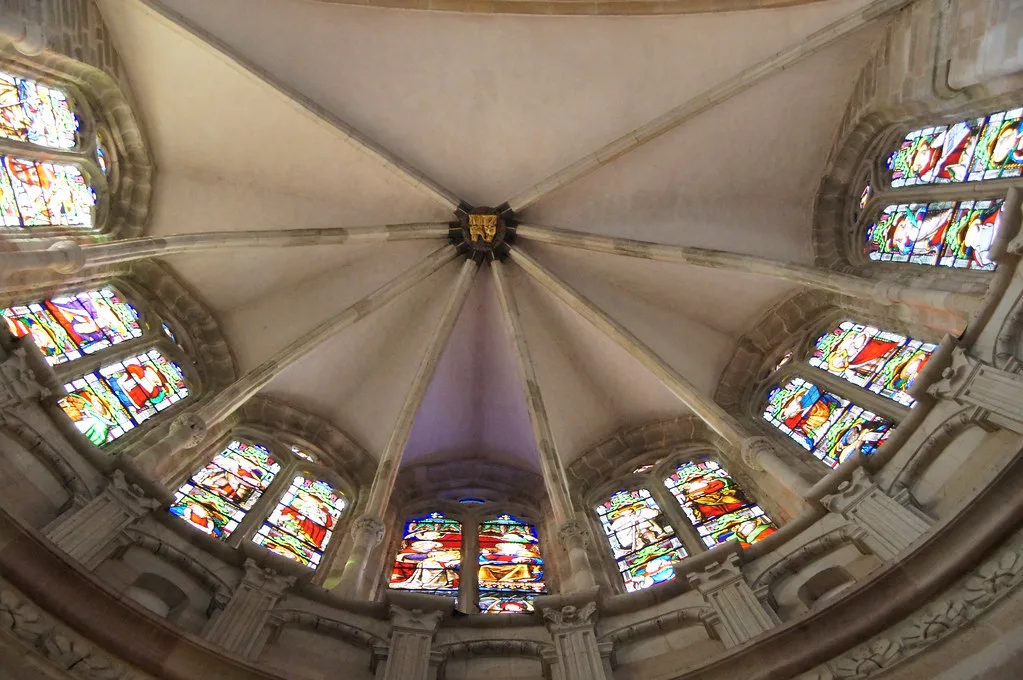
The visitor's payoff is the mix of periods in one building: a dim Cluniac nave opening onto a choir flooded with light by tall Gothic windows installed after a fire in 1272. The five Life of the Virgin tapestries hang in that choir and are at the centre of most visits.
Where Notre-Dame sits in Beaune
The collégiale occupies Place Général-Leclerc in the historic centre, a few minutes from the Hospices, so it slots into a walk between the Hôtel-Dieu and the old-town streets rather than needing its own trip. The four Beaune Neighborhoods area guides map those streets if you want to fix the geography before you arrive.
Beaune is compact: from the station and the ring of boulevards you can walk into the centre in well under half an hour, and the church, the Hospices and the market square sit within a few minutes of each other. Stay inside the old town and you will pass Notre-Dame several times without planning to.
A collégiale, not a cathedral
Notre-Dame was built as a collegiate church served by a chapter of canons, and its size reflects the wealth of Beaune rather than a bishop's seat. It was listed as a Historic Monument on the 1840 list and granted the title of basilica in 1958, which is why you will see both 'collégiale' and 'basilique' in local signage and on parish pages.
The building began around the mid-12th century in the wake of Cluniac influence and was finished by the early 13th, built from east to west. That short campaign explains the unusual unity of the Romanesque work, which later additions disrupt rather than disguise.
The building explained: Romanesque core, Gothic additions
The nave has two aisles and leads into a transept and an apse-shaped choir with an ambulatory and radiating chapels, vaulted in a mix of pointed barrel vaults, groin vaults and pointed arches. The result is a Burgundian Romanesque interior with a pronounced vertical pull rather than a pure round-arched scheme.
A fire in 1272 prompted the replacement of the Romanesque chevet windows with tall Gothic traceried bays, carried on flying buttresses grafted onto the ambulatory buttresses. Look at the choir first, then turn back to the nave to read the change of style in a single view.
An open porch was added to the façade around 1330–1340, a good example of late Burgundian Gothic carving. Between 1580 and 1588 the Gothic spire was replaced by the imperial roof that now marks the Beaune skyline, a Renaissance element on a medieval church.
What to look for outside
Start on Place Général-Leclerc and read the west front: a gable, a rose window and two medieval bell towers that were never finished. The asymmetry is original, not damage, and it gives the façade its slightly abrupt profile.
Then walk round to the chevet to see the Gothic windows and flying buttresses from outside, and step back to the surrounding squares for the best view of the imperial roof closing the silhouette. Ten minutes of circling the building pays off before you go in.
Inside: nave, choir and chapels
Inside, the nave with its two aisles gives the church a broad, processional feel, while the raised chevet draws the eye east. The chapels added between the 13th and 16th centuries carry mural paintings, notably at Saint-Léger, and furniture that marks the devotional route of the old collegiate church.
The great organ, one of the most renowned in Burgundy, has been rebuilt and altered several times and remains part of the building's musical life. It is worth looking up at the case even when nothing is being played.
The Life of the Virgin tapestries
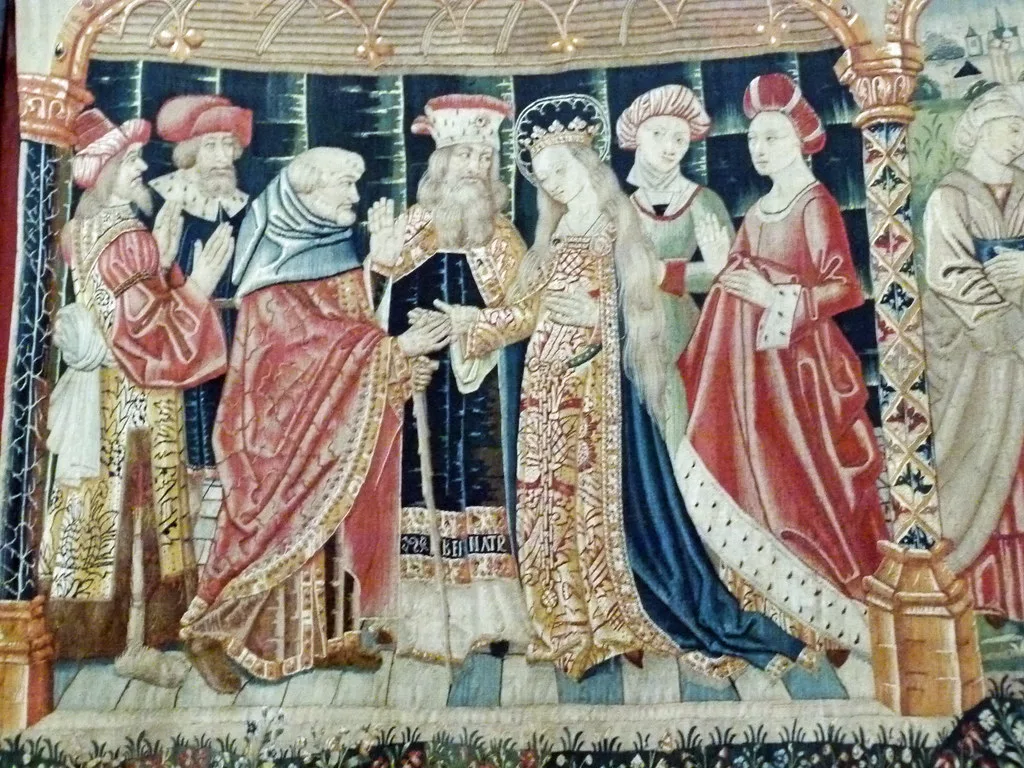
Five 15th-century tapestries illustrating the Life of the Virgin are kept in the choir and are the church's most valuable contents. They were placed there by the sisters of the Hôtel-Dieu de Beaune, which links the church directly to the hospital a few minutes away.
The tapestries are regularly shown to the public from April to October in supervised slots, generally with dedicated afternoon sessions and Saturday mornings, and access can involve a wait when numbers are limited. Outside that season the choir is still open, but the textiles are the reason to time a visit to spring, summer or a long weekend.
The tourist office publishes the specific tapestry times and any changes caused by services and events, so confirm the day's slots before you build your afternoon around them. A guided tour, when available, explains the iconography, the weaving technique and who commissioned the set.
The canonical complex and the Chapel of Saint Michael
The church preserves its canonical buildings: a cloister, a chapter house, a former sacristy and the Chapel of Saint Michael, which served as the private oratory of Nicolas Rolin. A seven-bay cloister gallery runs along the south arm of the transept, a quiet counterpoint to the busy square outside.
Rolin is the same chancellor behind the Hôtel-Dieu, so the oratory is a useful hinge between the two buildings: see the chapel here, then cross to the Hospices to see what the same patronage built at a larger scale. The convent building was added to the Historic Monument list in 1926, separately from the 1840 listing of the church.
How long to allow, and when to come
Allow about an hour for the church, chapels and organ, and add thirty to forty-five minutes if you want the cloister, the tapestries and a slow look at the porch. Photography is easiest in the morning outside service times, with the tapestries best left to the published afternoon slots.
Beaune fills up in spring, summer and on long weekends, and the tapestry capacity is limited, so a weekday morning in April, May or September gives you the building with fewer people in it. Access to the sanctuary varies with services and events, which is the one thing worth checking the day before.
Nearby: the Hospices and the old-town streets
The Hôtel-Dieu – Hospices de Beaune, with its famous glazed-roof courtyard, is a few minutes away and pairs naturally with Notre-Dame for a half day of sightseeing. The Hôtel-Dieu was founded by Nicolas Rolin and Guigone de Salins, whose names recur across the centre.
The Musée des Beaux-Arts de Beaune occupies the old Hôtel des Ducs de Bourgogne and makes a good wet-weather alternative a short walk away. The Hôtel de Ville and the surrounding squares sit between the two, and the Remparts de Beaune give you a green circuit back round the old town.
Beaune Attractions: 6 Visitor Guides sets out every major stop in the centre, so you can see how the church fits beside the Hospices and the museums before you commit an afternoon. It is the simplest way to order the sights by distance from Place Général-Leclerc.
What is near Notre-Dame for the rest of the day
A natural full day puts Notre-Dame first, the Hospices second and the museum of fine arts third, with a walk on the remparts or in the Parc de la Bouzaize to break up the churches and galleries. The Parc de la Bouzaize gives you trees and open grass ten minutes from the porch.
Cafés, wine cellars and artisans fill the streets around the church, so lunch within five minutes of the porch is easy without a reservation. A Côte de Beaune tasting can follow in the afternoon, though it is better treated as an add-on than the main event of the day.
Plan Your Visit
Notre-Dame de Beaune rewards an hour of attention: the Romanesque nave, the Gothic choir, the imperial roof and, from April to October, the Life of the Virgin tapestries. Build it into a day with the Hospices and the old-town streets rather than treating it as a standalone stop.
Check the tourist office's published tapestry slots and service closures before you set out, since those two things decide whether your hour here is a quick look or the highlight of the afternoon.
Frequently Asked Questions
Is Notre-Dame de Beaune a cathedral?
No. It is a collégiale, a collegiate church built for a chapter of canons, and it was granted the title of basilica in 1958. Local signage uses both collégiale and basilique, which can be confusing, but it has never been a bishop's seat.
What are the tapestries at Notre-Dame de Beaune?
Five 15th-century tapestries illustrating the Life of the Virgin, kept in the choir and placed there by the sisters of the Hôtel-Dieu de Beaune. They are among the most precious textile collections in the region and are shown in supervised conditions.
When can you see the tapestries in Beaune?
They are regularly shown to the public from April to October, generally in dedicated afternoon slots plus Saturday mornings, with possible waits when numbers are limited. The tourist office publishes the specific times and any changes for services and events.
How long does a visit to Notre-Dame de Beaune take?
About an hour covers the nave, choir, chapels and organ, with another thirty to forty-five minutes for the cloister and the tapestries. Morning is best for photography outside service times, with the tapestries left to the published afternoon slots.
What is there to see near Notre-Dame de Beaune?
The Hospices de Beaune is a few minutes away, and the Musée des Beaux-Arts, the Hôtel de Ville and the remparts are all within a short walk in the old town. Place Général-Leclerc itself is a good starting point for a half day on foot.
Do you need tickets for Notre-Dame de Beaune?
Access arrangements to the sanctuary vary with services and events, and the tourist office publishes the opening times, including the tapestry slots. Check those details for your dates before travelling rather than relying on a general guide.