
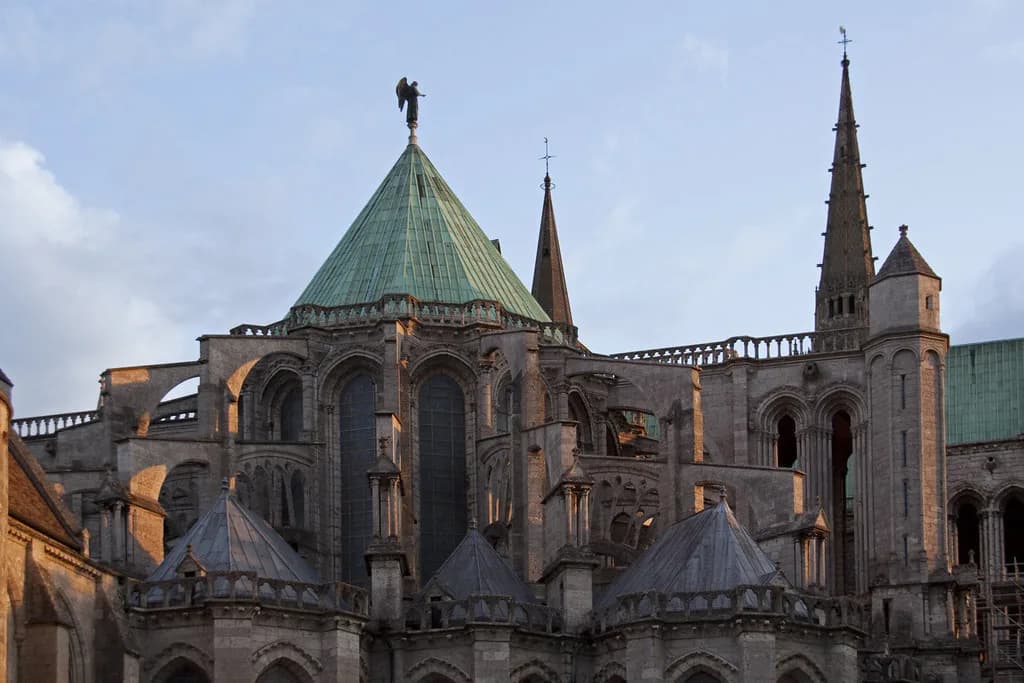
Chartres Cathedral: How to Visit, What to See and How Long to Allow
Chartres Cathedral, properly the Cathédrale Notre-Dame de Chartres, is a UNESCO World Heritage Gothic building standing at the top of the old town, and it is the one sight in the city nobody should skip. Allow two hours for the interior at an unhurried pace, and add roughly an hour more if you climb a tower. The building sits in the pedestrianised upper town, a short walk from the station and directly above the lower town and the river Eure.
Most people treat the cathedral as a stop of an hour and move on, which is a waste of the journey. The interior is unusually dense with things to find: a floor labyrinth, a glass programme covering thousands of figures, and a treasury. Give it a proper slot in your day and build the rest of the city around it.
Where the cathedral is and how to reach it
The cathedral address is 16 Cloître Notre-Dame, in the pedestrian centre of Chartres, roughly 90 km from Paris. Direct trains run from Paris Gare Montparnasse and take between about 55 and 70 minutes, after which the old town is a short walk uphill from the station.
Coming from the station you climb into the upper town, and the cathedral appears above the rooftops before it appears in front of you. If you arrive from the lower town instead, along the Eure, the building grows in a different way, with the towers suddenly dominating the riverside streets. Either approach is worth engineering deliberately.
Inside the old town everything is walkable, so there is no need for transport once you are up the hill. The tourist office publishes practical information on access and on the site itself, which is the sensible place to confirm access arrangements before you travel.
The west façade and the two towers
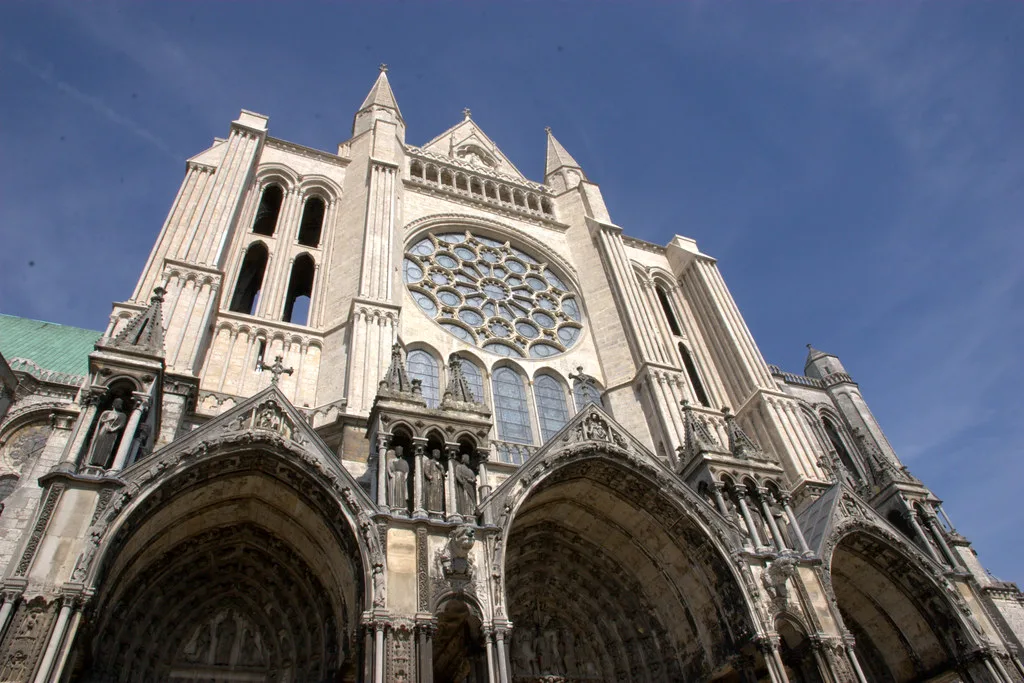
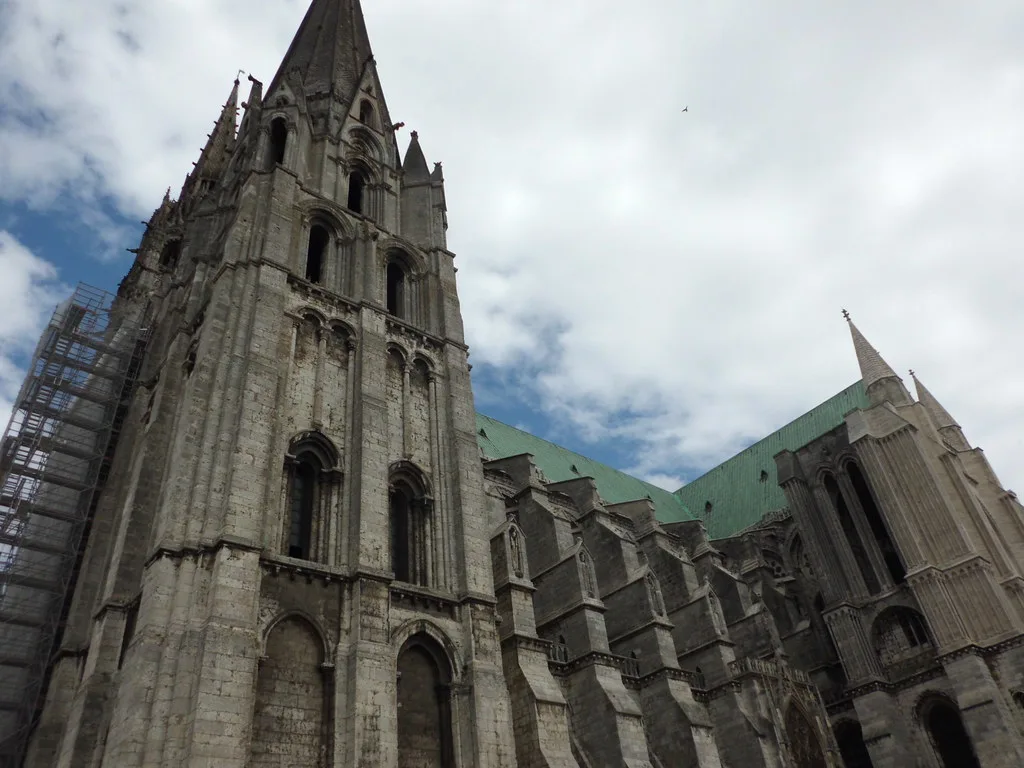
The first view most visitors get is the west front, with its royal portal and the two very different towers flanking it: one Romanesque, one Gothic. Look at them side by side before you go in, because the mismatch is the clearest sign of how long this building took and how many campaigns of work it absorbed.
The royal portal sculpture is one of the reasons the cathedral is treated as a landmark of Gothic art rather than simply a large church. Read the figures across the doorways before stepping through, since the light inside will pull your attention away from them.
Tower access and any restrictions on climbing are separate from simple entry, so treat the climb as its own decision rather than an assumed part of the visit. The cathedral's own practical page sets out how the building is accessed and what the walk from the station involves.
The stained glass: what to look for
The glass is the reason to give the interior time. The cathedral holds some 2,600 square metres of windows showing more than 5,000 individual figures, which makes the building a picture bible as much as a church. The famous Chartres blue is the colour most visitors come to see, and it is best appreciated in the nave and choir windows rather than the first glass you meet at the entrance.
If your time is short, pick a handful of windows and read them properly rather than trying to cover every bay. The lower panels usually carry the narrative, with donors and craft scenes often tucked at the bottom, and these reward a closer look than the broad colour effect above.
Chartres has a long glassmaking tradition, and the Centre International du Vitrail nearby explains how windows of this kind were made and repaired. It is a genuinely useful companion to the cathedral rather than a separate museum stop.
The labyrinth and the floor
A labyrinth is inlaid in the cathedral floor, and pilgrims once walked it on their knees as an act of devotion. It is a single path rather than a puzzle, so the point is the walk, not finding the centre. Look for it early in your visit, before the aisles fill and chairs cover parts of the pattern.
The floor also carries the wear of centuries of foot traffic, and the paving is part of what makes the interior feel old rather than merely large. Walk the full length of the nave once at normal pace before you start looking up at the glass.
The cathedral treasury holds further objects and is a separate element of the visit, worth adding if you have the appetite after the interior.
How much time to allow
A quick circuit of the nave, aisles and main windows takes about an hour, and that is the minimum worth scheduling. A proper visit, with the glass, the labyrinth, the royal portal and a slow pass through the choir, takes closer to two hours. Add the tower climb if you want the view, and the treasury if you want the objects, and half a day is realistic.
The honest trade-off is between depth and breadth. Two focused hours inside the cathedral will teach you more than a rushed hour inside plus three other sights, because the building's interest is in the detail rather than the overall impression. The same rule applies to smaller cathedral visits elsewhere in France, such as the Ajaccio Cathedral, where a slow look beats a quick circuit.
Opening times, tickets and booking
The cathedral publishes its practical visitor information, including access and how to arrange a visit, on its own site. Check the current opening times and any arrangements for tower access there before you travel, since these are the details most likely to change with the season.
The Chartres tourist office lists the cathedral among its tours and visits, and is the place to confirm what is running during your dates. If you want a guided visit or a specific element such as the tower, sort it out in advance rather than on the day.
Groups and guided visits are usually arranged through the tourist office rather than at the door. Confirm the meeting point in the old town when you book, since the cathedral sits in a pedestrian zone with several approaches.
Nearby in the old town
Step out of the cathedral and the old town is immediately around you. Place Billard has a covered glass-and-iron market hall that fills with produce on Wednesday and Saturday mornings, which makes it the obvious stop for picnic supplies if your visit falls on those days.
Rue des Changes and the surrounding streets hold half-timbered houses, including the carved Maison du Saumon and the Maison de la Truie qui file near Place de la Poissonnerie. These are a five-minute walk from the cathedral and make a natural continuation of the visit rather than a separate outing.
The Musée des Beaux-Arts de Chartres occupies the old bishop's palace behind the cathedral, and the gardens beside it give one of the better views back onto the building. If you want an art stop after the glass, this is the closest option.
Église Saint-Pierre, the most important church in Chartres after the cathedral, is a Gothic building with a fine set of windows of its own. It is a short walk away and worth an extra half hour if you are not yet churched out.
The lower town and the walk to Maison Picassiette
Below the cathedral, the town drops to the Eure, where cobbled streets, wash houses and small gardens line the river. Rue des Écuyers is the street to seek out, a run of half-timbered houses carved with animals and figures. This is the part of Chartres that surprises people who came only for the cathedral.
Across the river, Maison Picassiette is the other essential stop: a small house and garden covered in mosaics made from broken crockery and glass, the work of Raymond Isidore. It sits at 22 rue du Repos, and you should allow time to walk there and back rather than squeezing it in.
The house opens seasonally, with different hours across the year and an entry charge that varies by season and rate. Confirm the current timetable and prices direct before setting out, since the walk is long enough to make a wasted trip annoying.
When to go
Chartres is busiest in high summer, and the cathedral aisles absorb crowds less gracefully than a large museum would. A weekday morning gives you the best chance of quiet glass and an unobstructed labyrinth. Spring and autumn are comfortable for walking between the upper and lower town.
In the evening from April to October the town runs Chartres en Lumières, projecting light onto heritage buildings including the cathedral façade. It is free and the full walking tour takes about three hours, which is a good reason to stay overnight rather than catch a late train back.
Day trip or overnight stay
The cathedral alone justifies the train from Paris, and a day trip covering the interior and the old town is entirely coherent. The trade-off is that you will likely skip the lower town walk and Maison Picassiette, which are the parts that make Chartres more than a church. One night lets you do the cathedral properly, walk the river, see the illuminations and still eat dinner at a sensible hour.
If you have only a day, do the cathedral first thing, then Place Billard and the old-town streets, and leave the lower town for a return visit. If you stay, split it: cathedral in the morning, Maison Picassiette in the afternoon, illuminations after dark.
Plan Your Visit
Chartres Cathedral is a two-hour building in a city that rewards a full day, and the error most visitors make is treating it as a photo stop between trains. Give it a morning, walk down to the Eure afterwards, and decide in advance whether the tower and treasury are worth your time.
The five visitor guides to Chartres cover the cathedral's neighbours in more detail, so you can build a route that suits the hours you actually have. Book any guided visit before you travel and confirm the current opening arrangements on the cathedral's own pages.
Explore more Chartres guides
Frequently Asked Questions
How long does it take to visit Chartres Cathedral?
Allow about an hour for a quick circuit of the nave, aisles and main windows, and closer to two hours if you want to read the glass, walk the labyrinth and study the royal portal. Add roughly an hour for a tower climb and extra time for the treasury if you want to see both.
What is special about the stained glass at Chartres Cathedral?
The cathedral holds around 2,600 square metres of windows showing more than 5,000 figures, which makes the glass a narrative as much as a decoration. The deep blue associated with Chartres is the colour most visitors come to see, and it reads best in the nave and choir windows rather than at the entrance.
Is there a labyrinth in Chartres Cathedral?
Yes, a labyrinth is inlaid in the floor, and pilgrims once walked it on their knees as an act of devotion. It is a single winding path rather than a puzzle, so the point is the walk itself. Look for it early in your visit, before the aisles fill.
Can you climb the towers of Chartres Cathedral?
The west front has two towers, one Romanesque and one Gothic, and tower access is arranged separately from simply entering the building. Check the cathedral's own visitor information for current arrangements and any seasonal restrictions before you plan the climb.
How do you get to Chartres Cathedral from Paris?
Direct trains leave from Paris Gare Montparnasse and take between about 55 and 70 minutes, and the cathedral is a short walk uphill from Chartres station into the pedestrian old town. The address is 16 Cloître Notre-Dame.
Do you need to book Chartres Cathedral tickets?
The cathedral publishes its own practical visitor information, and the tourist office handles guided visits and specific arrangements such as tower access. Sort out anything guided or specialised in advance, and confirm current opening times on the cathedral's pages before you travel.
What else is there to see near Chartres Cathedral?
Place Billard holds a covered market on Wednesday and Saturday mornings, and the streets around Place de la Poissonnerie hold carved half-timbered houses including the Maison du Saumon. The Musée des Beaux-Arts sits behind the cathedral, and Église Saint-Pierre is a short walk away.
Is Chartres Cathedral worth a day trip from Paris or should you stay overnight?
The cathedral justifies a day trip on its own, but staying a night lets you add the lower town walk along the Eure, Maison Picassiette and the evening illuminations. If you only have a day, do the cathedral first and leave the lower town for a return visit.