
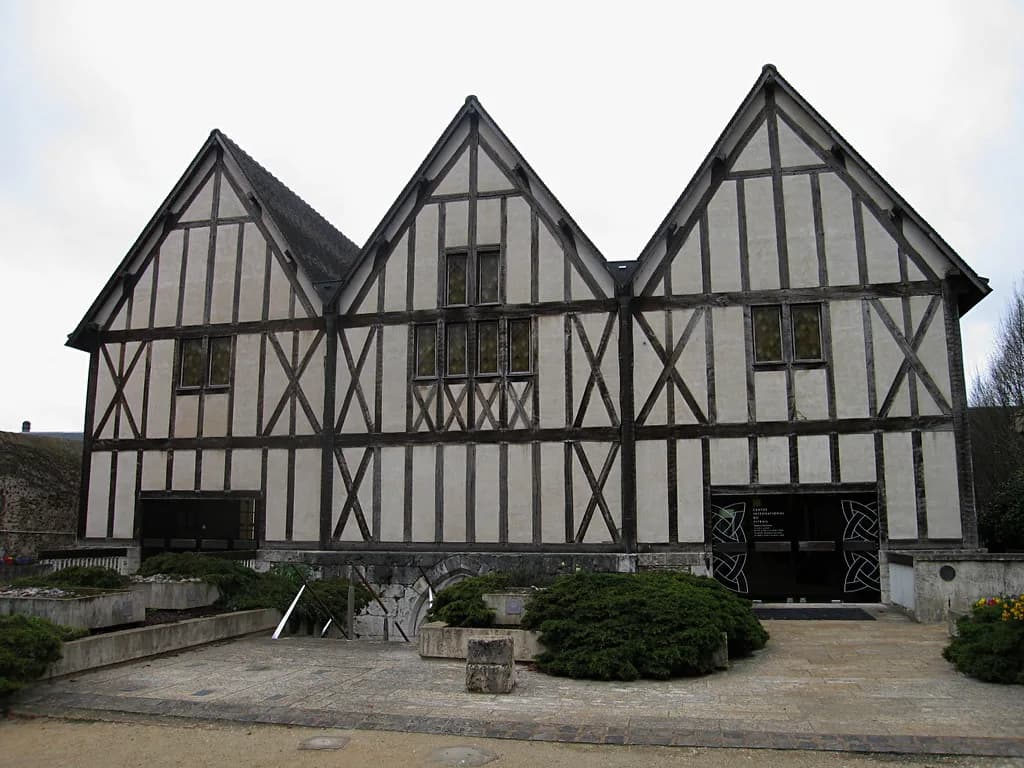
Centre International du Vitrail: A Visitor's Guide to Chartres' Stained-Glass Centre
The Centre International du Vitrail is a small stained-glass museum and resource centre in the old town of Chartres, at 5, rue du Cardinal Pie, 28000 Chartres. Entry is €7.00 at the full tariff and €5.50 reduced, and the visit makes most sense as a complement to the cathedral's windows rather than a substitute for them.
Chartres is treated as the capital of stained glass, and this centre is one of the few French museums given over entirely to the craft. Set aside roughly an hour inside, and slot it into the day according to the weekday and weekend opening split described below.
What the Centre International du Vitrail is
The centre is both a museum and a working study centre for stained glass, housed in a historic building in the lower old town. Its Musée du Vitrail forms the core of a visit, with display space devoted to historic and contemporary panels. The wider institution runs courses, training placements and exhibitions, so the programme on show can change from one season to the next.
Think of it as an explanation of a craft rather than a second cathedral. The windows of the Cathédrale Notre-Dame de Chartres are the spectacle; the centre tells you how such glass was made, which sharpens what you notice when you next look up at the cathedral.
Where it is and how to reach it
The address is 5, rue du Cardinal Pie, in the old town beneath the cathedral hill. From the cathedral you walk downhill into the tangle of medieval streets, and the centre sits among them within a few minutes on foot. Train arrivals at Chartres station reach the old town and the cathedral on foot in around fifteen minutes.
Because it sits low in the old town, it works well as a first stop on the way up to the cathedral or as shelter from the weather mid-walk. Keep the address handy: the surrounding lanes are narrow and the entrance is easy to pass.
The Musée du Vitrail and what it shows
The museum collection traces stained glass from its medieval forms through to modern and contemporary panels. Expect to see finished windows and the materials and tools behind them, presented as an explanation of a living craft rather than a gallery of treasures alone. The centre also publishes material on the history and making of windows, which is why it functions as a study centre as much as a display space.
Exhibitions come and go on top of the permanent displays, so the panels you see depend on the current programme. If a particular exhibition is the reason for your visit, check the Centre International du Vitrail's website for what is on before you travel, since a fixed display is not guaranteed.
Technique explained: glass, lead and fire
The centre sets out how a window is actually assembled, and the essentials have barely changed since the Middle Ages. Pieces of glass are held in place by lead strips, known in French as vergettes de plomb, which replaced earlier wooden frames. The sixteenth century brought refinements, with the diamond replacing the red-hot iron rod for cutting glass and rolled lead taking over from shaved lead.
Firing is the step most visitors know least about, and it has modernised most. Electrically powered kilns, programmed by computer, now do work that once depended on far more temperamental heat sources. Knowing that sequence, cutting, leading and firing, turns a wall of coloured glass into a readable piece of engineering.
This is the reason to visit before or after the cathedral rather than instead of it. The centre gives you the vocabulary, and the cathedral gives you the scale.
Opening hours through the week
The centre opens all year, with a split weekday pattern: Monday to Friday 10:15 to 12:15 and 14:00 to 17:30. On Saturdays, Sundays and public holidays it opens only in the afternoon, from 14:00 to 17:30.
That gap in the middle of weekdays matters for planning. A morning visit has to finish by 12:15, so a late start pushes you into the afternoon session. Weekend visitors should plan the centre for after lunch and keep the morning for the cathedral and the old town streets.
Tickets and what they cover
Entry is €7.00 at the full tariff and €5.50 reduced, which covers the museum and the exhibitions on show. The centre publishes these prices on its practical-information pages, so check the tariff there if you are relying on a concession or visiting as a group.
The bookshop and temporary exhibitions
A bookshop on site sells material on stained glass, including works on the windows of Chartres, and it is the obvious place to buy a serious reference if the craft has caught your interest. The centre's programme of temporary exhibitions changes, so treat the bookshop and any current show as add-ons to the core museum rather than guarantees.
How long to allow
An hour is a sensible allowance for the museum and a browse in the bookshop. This is a compact centre, so it fits easily into a half-day rather than consuming one. Pair it with a slow look at the cathedral windows on the same day so the technical explanations have somewhere to land.
If you are tight on time in Chartres, be honest about priorities: the cathedral first, then this centre if the craft itself interests you.
Nearby: the cathedral and the old town
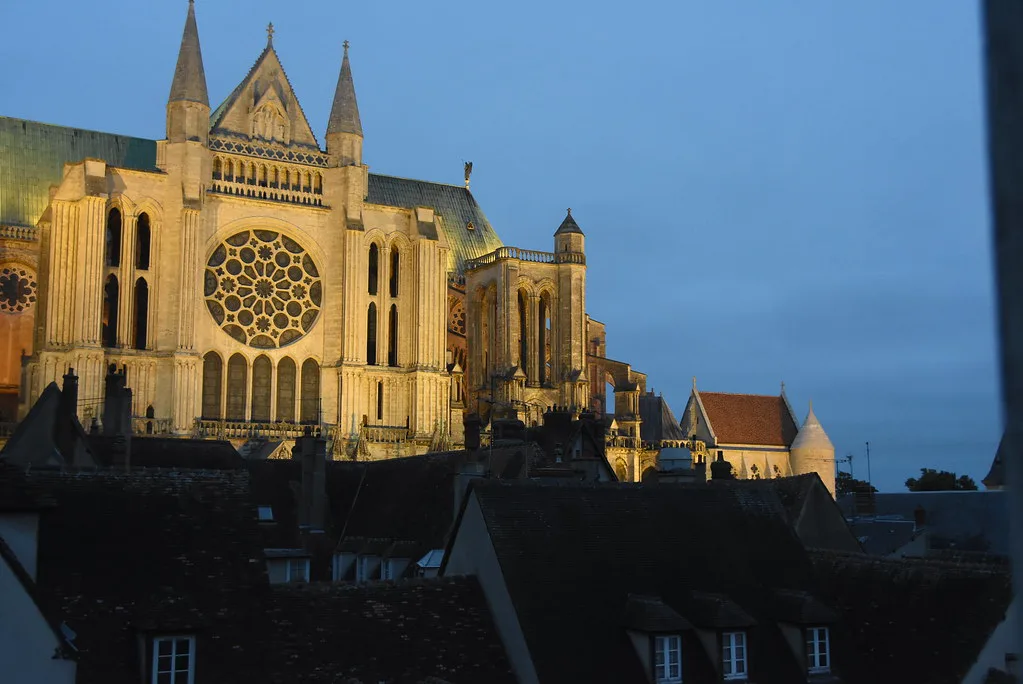
The centre's greatest asset is its position: the cathedral is a short uphill walk away, and the surrounding lanes hold the rest of the old town. The Église Saint-Pierre, Chartres is another stained-glass stop in the lower town, with its own windows worth a look on the same circuit.
If you want a break from glass, the Musée des Beaux-Arts de Chartres and the curious Maison Picassiette, Chartres, a house covered inside and out in broken china, both broaden a two-day visit. Our guide to things to do in Chartres covers how to string them together.
Who should prioritise it and who can skip it
Prioritise the centre if you have already seen the cathedral's windows and want to understand how they were made, or if you are travelling with someone who enjoys craft and process over spectacle. Skip it on a rushed day trip where the cathedral alone is the goal. If you are comparing short trips built around a single great monument, the same trade-off shapes things to do in Orléans and its cathedral town centre.
Plan Your Visit
The Centre International du Vitrail sits at 5, rue du Cardinal Pie, opens weekday mornings and afternoons with a lunchtime closure, and opens weekend afternoons only. Entry is €7.00 full or €5.50 reduced, and an hour is enough to absorb the technique displays before heading back up to the cathedral.
Use it as the technical primer for a Chartres weekend, then spend the time it saves you looking more closely at the real windows.
Frequently Asked Questions
Where is the Centre International du Vitrail in Chartres?
It is at 5, rue du Cardinal Pie, 28000 Chartres, in the old town below the cathedral. From the cathedral you walk downhill into the medieval streets, and the centre is a few minutes away on foot.
What are the opening hours of the Centre International du Vitrail?
Monday to Friday it opens 10:15 to 12:15 and 14:00 to 17:30, with a lunchtime closure. On Saturdays, Sundays and public holidays it opens from 14:00 to 17:30 only. Plan weekday visits around the midday gap and weekend visits for the afternoon.
How much does the Centre International du Vitrail cost?
The centre publishes a full tariff and a reduced tariff on its practical-information pages, and those prices cover the museum and the exhibitions on show. Check the official page for the current figures before you travel.
What can you see at the Centre International du Vitrail?
The Musée du Vitrail covers stained glass from medieval work to contemporary panels, alongside displays explaining the craft. You can follow the process from cutting glass and setting it in lead cames to kiln firing, which now uses electric, computer-programmed ovens.
How long should you spend at the stained-glass centre in Chartres?
Allow about an hour for the museum and the bookshop. It is a compact centre, so it fits into a half-day alongside the cathedral rather than using up a whole day.
Is the Centre International du Vitrail worth visiting on a Chartres weekend?
Yes if you want to understand how the cathedral's windows were made rather than simply admire them. On a very short trip, see the cathedral first and treat the centre as the second stop.