
Église Saint-Pierre, Chartres: what to see and how long to allow
Église Saint-Pierre is the one church in Chartres worth building into your weekend after the cathedral: a former Benedictine abbey church where you can read roughly three hundred years of medieval architecture in a single interior. The oldest part is not the nave but the massive tower-porch at the west end, and the two sides of the nave are deliberately different. Treat it as a 30-45 minute addition to a Chartres itinerary rather than a headline sight, and go in knowing where to look.
What Église Saint-Pierre is
Until the Revolution this was the church of the Benedictine convent of Saint-Père-en-Vallée; it became the parish church in 1803 and has been listed as a monument historique since 1840. It is the most important church in Chartres after the cathedral, which is why it rewards an hour if you have one. The building's interest is cumulative: each phase of construction sits next to the last, so you are walking through a dated sequence rather than a single style.
The abbey was founded by Queen Bathilde and its precinct was walled between 1033 and 1069, before being drawn inside the town's own defences in the twelfth century. Fire and Norman raids account for the patchwork that followed, with the church rebuilt in stages from the late twelfth into the thirteenth century. That history explains the small jumps in floor level, the mismatched bays and the sense of several buildings stitched together.
Where it sits and how it relates to the cathedral
Saint-Pierre stands on the right bank in the old Saint-Père quarter, a short walk from the cathedral close; the parish office is at 16 cloître Notre-Dame. The quickest approach on foot is to follow the signs from the cathedral down towards the market streets, and the walk takes only a few minutes. Because it is off the main cathedral circuit, you will usually share it with far fewer people.
That position explains its reputation: the building has been called a light frigate in the wake of a great ship, forever in the shadow of Notre-Dame. The practical upside is calm, and the trade-off is that the church gets a fraction of the cathedral's visitor traffic. If you are in Chartres primarily for the cathedral, plan Saint-Pierre for the same morning rather than a separate trip.
Opening times and entry
The parish publishes opening hours of 9h00 to 18h00 in winter and until 20h00 in summer, every day of the week. Opening is tied to parish life, so times can shift around services and holidays; check before making it the anchor of your day.
Services take place here, including Sunday mass, so visitors should expect to keep quiet and stay out of the way during worship. The parish does not publish a visitor admission charge, and none is quoted here; ask at the welcome desk or the cloître Notre-Dame office if you need certainty. Arriving mid-morning on a weekday gives the best chance of a quiet, unhurried look round.
Start at the tower-porch and its carved doorway
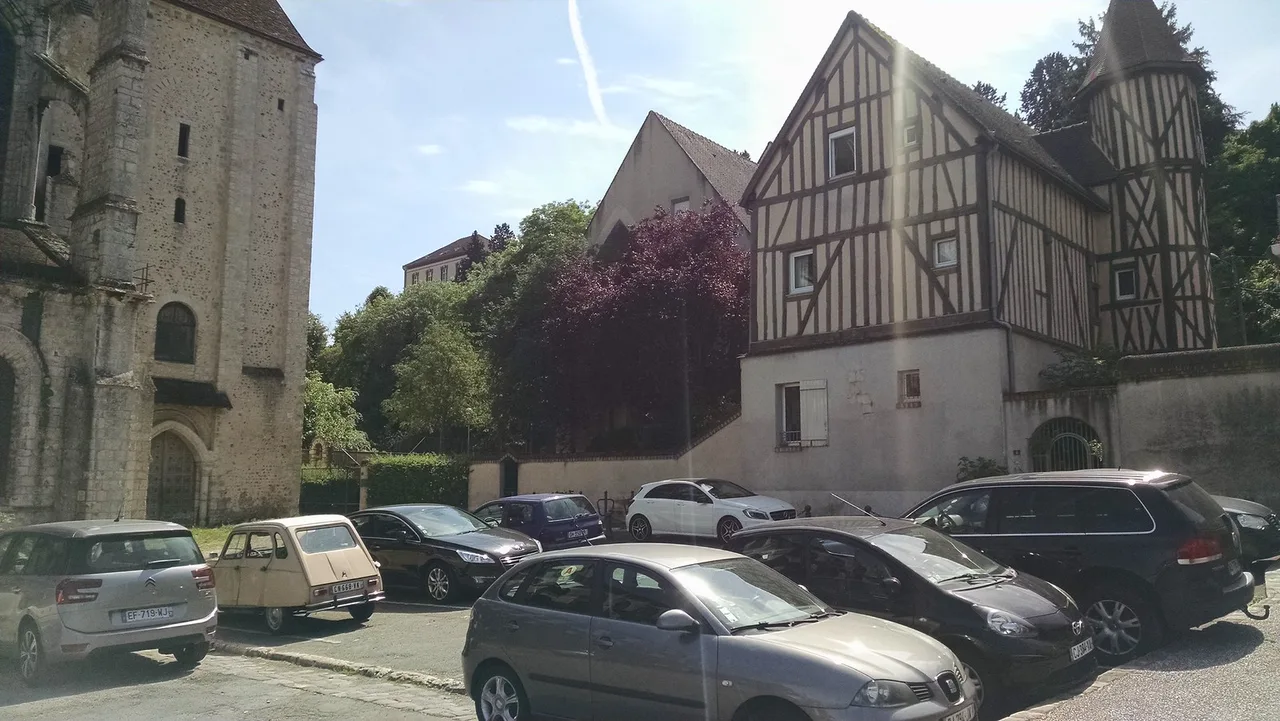
Begin at the west tower-porch, probably built around 980 and roughly contemporary with the tower of Saint-Germain-des-Prés in Paris. Its walls are extraordinarily thick, built of limestone rubble, and blocked windows later gave it an even more fortified look. Allow a few minutes outside before going in: this is the oldest fabric on the site and the easiest thing to walk past.
On the north side, look closely at the door's carved archivolts, where ornamental patterns sit alongside fantastic animals in the direct, slightly naive carving of the tenth century. It is a small detail compared with the cathedral portals, but it is rare and earlier than almost anything else you will see in Chartres. Stand close and follow the curves of the moulding rather than the figures.
The Romanesque choir and its three chapels
The lower choir, the ambulatory and the three radiating chapels were built between 1070 and 1130, in proportions that show an Anglo-Norman model familiar from Durham and Caen. Walk the curve of the ambulatory slowly and look up at the capitals, which change from blocky cubic forms in the choir arcades to scalloped shells at the turn, before foliage appears in the axial chapel. It is one of the clearest short lessons in Romanesque carving you will find.
The nave of around 1200 and the Gothic shift
The nave went up around 1200, with teams working jointly on the cathedral site, and the two sides are deliberately asymmetrical so you can see Gothic architecture developing in real time. On the left, mass and wall still dominate; on the right, the lines of force take over and the structure begins to thin. Compare the two arcades from the centre of the nave before you move east.
The high choir and its flying buttresses
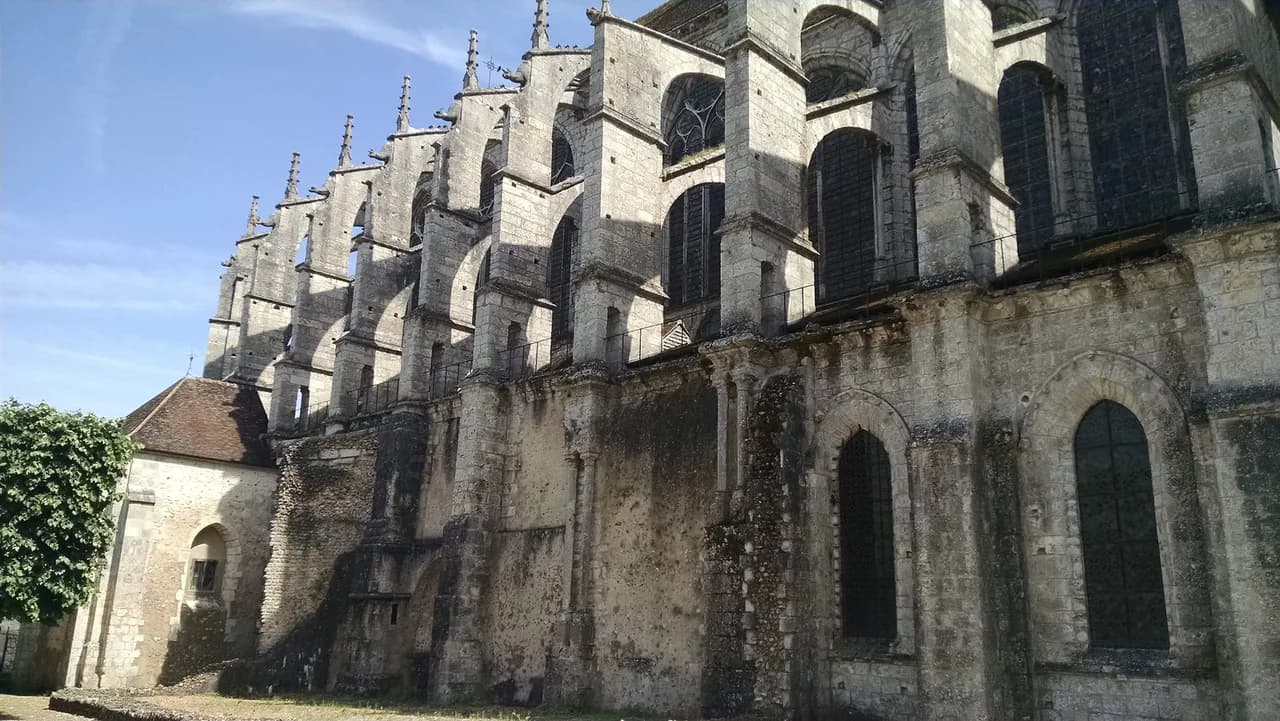
The upper choir was finished towards 1250 and rests on the earlier Romanesque work, with supports pared back so the windows take up most of the wall. Inside, notice how little stone remains between the glazing; outside, walk round to the east end to see how finely cut the flying buttresses are. This is the point where the building stops being heavy and starts to look weightless.
The stained glass: why it is worth the detour
Almost all the glass in the upper windows survives, and the oldest panels, in the choir, date from around 1280 to 1300. The ambulatory round-point shows the apostles, with the central light given to images tied to the abbey's history: Christ on the cross, the Virgin and Child, Saint Louis and Saint Gilduin. Because so much has survived, the interior still gives a fair impression of how a monastic church was lit.
In the nave, look for the narrative windows of about 1320 to 1340, which tell the lives of saints including John the Baptist and Peter in strip-cartoon sequence, with scenes from the infancy and Passion of Christ. These panels introduce painted settings and a new sense of stage space, using silver-yellow stain to change the colour of the glass. If the glass is your reason for coming, the stained glass centre in Chartres adds context on how such windows were made and restored.
Furnishings and later layers
Most of the church's furniture disappeared at the Revolution, but the choir stalls survived, and an eighteenth-century Virgin by Bridan stands in the axial chapel. In a side chapel you will find modern statues of Saints Fulbert and Gilduin, whose relics are kept in a wall shrine, and the tomb of Mgr Harscouët, a bishop of Chartres. These are small stops rather than set pieces, so fold them into your circuit of the chapels.
How much time to allow
Thirty to forty-five minutes covers the tower-porch, the nave, the ambulatory and the glass comfortably; give it an hour if you want to read the windows properly. If you are short of time, skip the side chapels beyond the axial one and concentrate on the tower-porch doorway, the two sides of the nave and the choir glazing. The building rewards attention more than it rewards coverage, so a focused half-hour beats a rushed circuit.
Nearby: the cathedral and the Musée des Beaux-Arts
The obvious pairing is the cathedral, a few minutes away and the reason most visitors come to Chartres. The Musée des Beaux-Arts, in the former bishop's palace, makes a sensible second stop and keeps you in the same compact area of the old town. Both are easy to combine with Saint-Pierre before lunch. If your trip widens beyond this city, the same morning-and-afternoon rhythm shapes a weekend in Orléans, a short train ride down the Loire.
Practical points before you go
A restoration programme for the church is under way, coordinated by the city with its partners, so parts of the building or its surroundings may be screened off. The city has not set out which areas are affected at any given time, so look before you plan a long interior visit.
Visit outside service times for the quietest experience, dress and behave as you would in any working church, and keep voices low near anyone praying. If you are building a wider weekend, Chartres Attractions: 5 Visitor Guides sets Saint-Pierre alongside the other sights worth your time. The Maison Picassiette, on the other side of town, is a good second-day filler if you have already covered the old town.
Plan Your Visit
Église Saint-Pierre suits travellers who want one uncrowded, richly layered building without a second entry on the itinerary. Go in the morning, start at the west tower-porch, compare the two sides of the nave, then finish in the choir with the glass. Check the parish page for opening times on the day and build the rest of your Chartres weekend around things to do in Chartres that keep you in the old town.
Frequently Asked Questions
Is Église Saint-Pierre in Chartres free to visit?
The parish does not publish a visitor admission charge for the church, and the sources cited here give no ticket price. Ask at the parish welcome desk or the office at 16 cloître Notre-Dame if you want confirmation before you go.
What are the opening hours of Église Saint-Pierre in Chartres?
The parish lists opening from 9h00 to 18h00 in winter and until 20h00 in summer, every day. Times can change around services, so check the parish page on the day you plan to visit.
How old is Église Saint-Pierre in Chartres?
The tower-porch is thought to date from around 980, the lower choir and chapels from 1070 to 1130, the nave from around 1200 and the upper choir from towards 1250. The building therefore spans roughly three centuries of construction.
How long should I spend at Église Saint-Pierre?
Allow 30 to 45 minutes for the tower-porch, nave, ambulatory and glass, or an hour if you want to read the windows. It works best as an addition to a cathedral visit rather than a standalone trip.
What is there to see inside Église Saint-Pierre?
Look for the carved north doorway of the tower-porch, the changing Romanesque capitals around the ambulatory, the mismatched sides of the nave, the surviving medieval glass and the Bridan Virgin in the axial chapel. The choir stalls also survived the Revolution.
When was Église Saint-Pierre built and by whom?
It began as the church of the Benedictine abbey of Saint-Père-en-Vallée, founded by Queen Bathilde, and was rebuilt in stages after fires and Norman raids. It became the parish church in 1803 and has been a listed monument historique since 1840.