
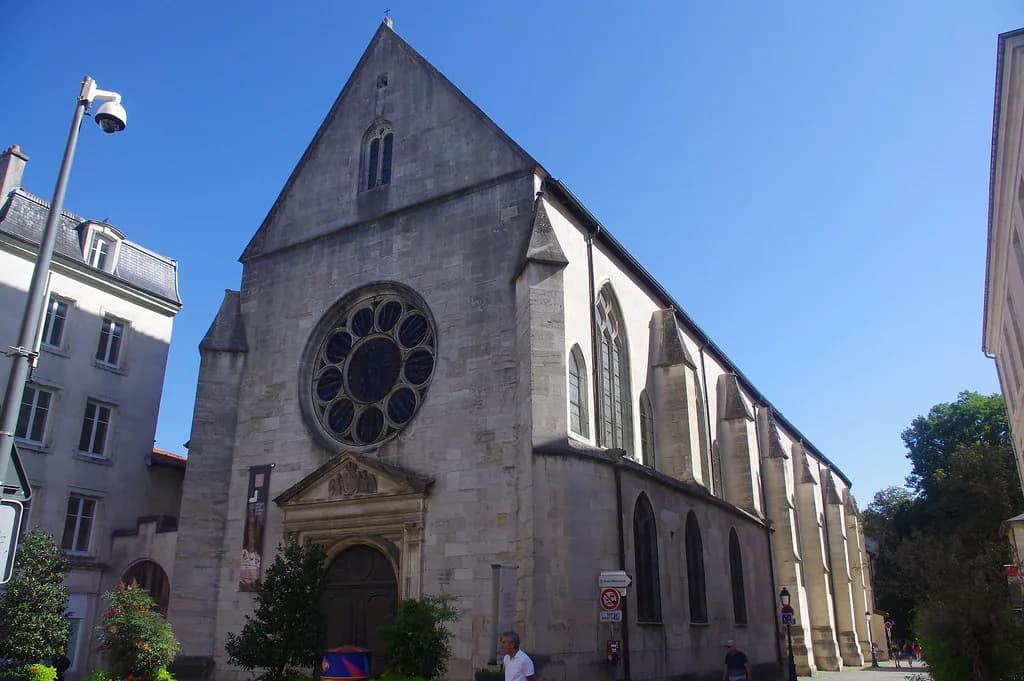
Église des Cordeliers, Nancy: A Visitor's Guide to the Ducal Church
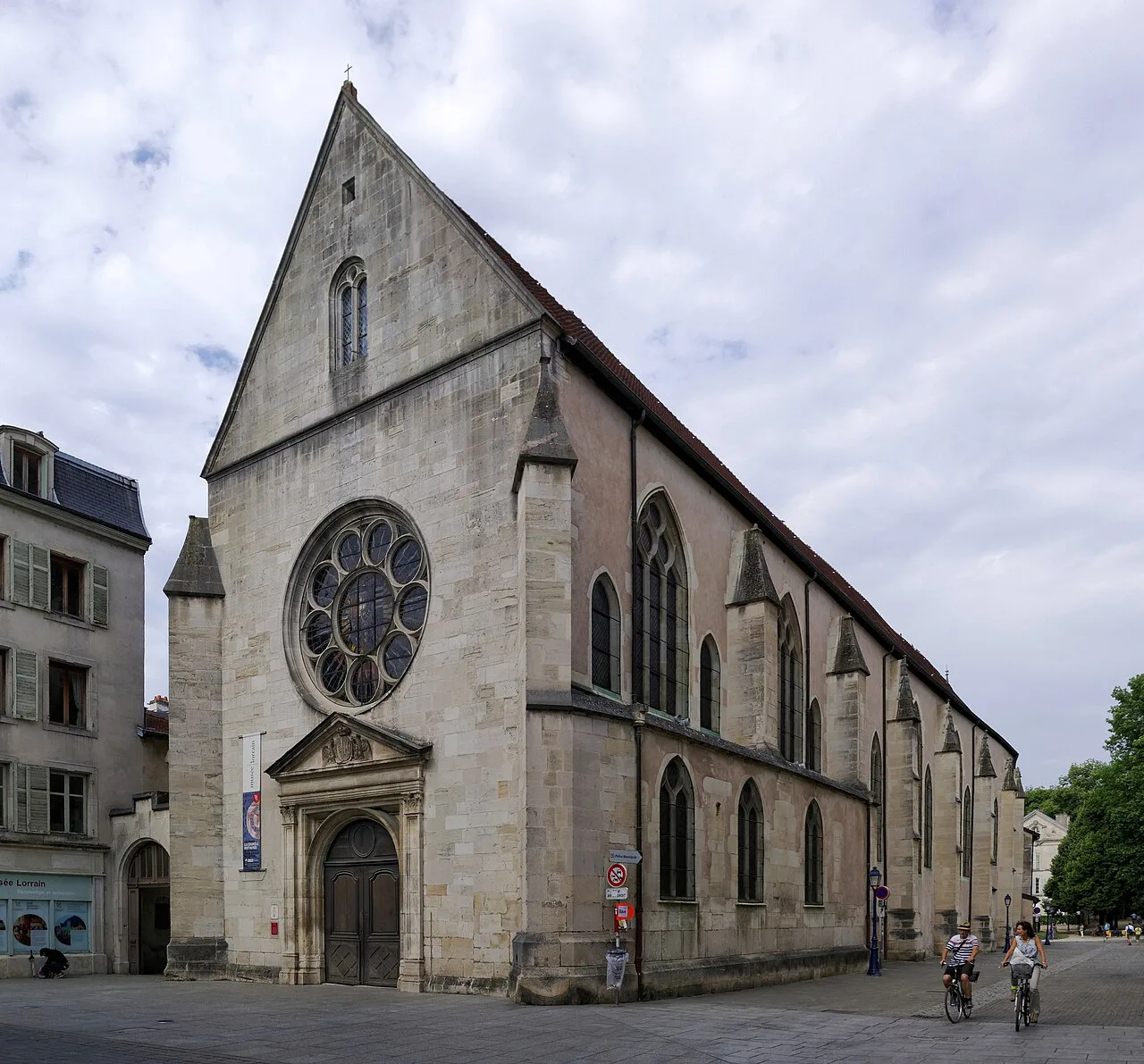
The Église des Cordeliers is the former Franciscan church attached to Nancy's Palais Ducal, built for Duke René II as a thank-offering for his victory over Charles the Bold at the Battle of Nancy in 1477. It is not a parish church in the ordinary sense: it served the dukes of Lorraine as a burial place, and that is what gives the interior its weight. Allow around 30 to 45 minutes to see the nave, tombs, choir and chapel at an unhurried pace.
What the Église des Cordeliers is
René II founded the church after the Battle of Nancy, and construction ran from 1482 to 1487, with consecration in the same year. Its name comes from the Franciscans, the cord-wearing order that served it, and the building stands directly next to the Palais Ducal. Look for it as a church-museum rather than a working parish: the nave is lined with ducal tombs rather than pews alone.
Historically a covered gallery linked the church to the palace, a connection that has since disappeared. The nave was originally intended as a grand dynastic sanctuary, and the chapel was added in the early 17th century to match the ambition. It is worth knowing that the church does not hold regular services today, so you are visiting architecture and tombs rather than a functioning congregation.
Where it sits in Nancy and how to get there
The church sits in the old town of Nancy, in the Meurthe-et-Moselle department, immediately beside the Palais Ducal. Use the palace as your landmark: once you find it, the church is the adjoining building on the same block. The old town is compact and walkable, and the church is easily combined with the rest of central Nancy on foot.
If you are basing yourself around the city's main squares, expect a short walk from Place Stanislas into the old town to reach the Palais Ducal. No public transport is required for the final stretch, and the streets around the palace are the best place to start.
The building: a long nave and a painted vault
Inside, the nave runs 73 metres from end to end, longer than the modest exterior suggests. The vault is decorated with brightly coloured frescoes, and the sense of scale becomes clear once you are standing under them. Look up early: the painted ceiling is the feature most visitors walk straight past.
Along the walls are Renaissance polychrome tombs, the reason the space reads more like a dynastic mausoleum than a parish church. The modern stained glass above the portal carries the coat of arms of the House of Lorraine, tying the 20th-century restoration work back to the family that built the place.
The tombs to look for
René II's tomb is set into the southern wall of the nave, and it was partially destroyed during the Revolution. It survives as a fragment of the original monument, which makes it a good place to pause and read the inscription.
The tomb of Philippe de Gueldre, René II's wife, is the emotional high point. Her recumbent figure in stained limestone is the work of sculptor Ligier Richier, and it escaped the revolutionary destruction that damaged so much else in the church. Walk the length of the nave rather than stopping at the entrance.
The choir: stalls, putti and a 1522 altarpiece
At the far end, the choir stalls date from 1691, decorated with putti playing musical instruments. They were removed from the Abbey of Salival after the Revolution and reassembled in the church in 1818. The 1522 polychrome altarpiece behind them shows the Holy Trinity, with shell-niches holding evangelists, saints and the Annunciation.
The circular chapel and the Habsburg-Lorraine connection
To the left of the altar, a short hallway leads to the chapel, a circular space built between 1609 and 1612 and modelled on the Medici chapel in Florence. Its octagonal dome was decorated with small lanterns in 1632. The passage once housed a Romanesque sculpted group of a crusader and his wife in an embrace, a reminder of how much the interior has been rebuilt.
The church matters deeply to the Habsburg-Lorraine line because many of their ancestors lie here. Marie-Antoinette stopped at the chapel in 1770 on her way to marry Louis XVI, paying her respects at the family graves. In 1951, Archduke Otto von Habsburg married Princess Regina of Saxe-Meiningen inside the church, and the couple returned for their golden wedding anniversary in 2001.
The adjoining monastery and the Museum of Popular Arts and Tradition
Next door to the church, the former Monastery of the Cordeliers now houses the Museum of Popular Arts and Tradition, part of the Lorraine Historic Museum. Its displays cover rural life in Lorraine through housing, furniture, tools and craftwork, along with reconstructions of Lorraine house interiors. Treat it as a separate visit with its own entry arrangements, not something included with the church.
If you want to see the museum as well, budget extra time beyond the church visit, and check separate opening days and tickets for it. The adjoining Musee Lorrain is the natural pairing for the church because of the shared site and the shared history of the Dukes of Lorraine.

How long to allow and what to see nearby
Give the church itself around 30 to 45 minutes if you want to read the tombs and see the chapel, or 20 minutes for a quick look at the nave and choir. Photography is the reason many people linger under the painted vault, so allow a little extra if that is your priority.
Beyond the Palais Ducal, Place Stanislas is the obvious next stop, and the UNESCO-listed square is a short walk from the old town lanes. The Musée des Beaux-Arts de Nancy is another good pairing if you want an indoor stop between sights. If you're weighing nearby cities for another weekend, our Strasbourg city guide covers the same kind of old-town-and-square wandering.
If Art Nouveau is more your interest than the ducal period, the Villa Majorelle is a short bus or taxi ride from the centre. Otherwise, stay in the old town and let the Place Stanislas and Palais Ducal area fill an afternoon at walking pace.
Practical points before you go
The church's own opening hours, ticket prices and booking arrangements are published by the Lorraine Historic Museum and the Nancy tourist board, and they can change by season. Check the official museum site before travelling rather than relying on older guides.
The PDF published by the city of Nancy covers the church's architecture and is useful for understanding what you are seeing in the nave and chapel. Read it before you go if you want more than a surface look.
Plan Your Visit
The Église des Cordeliers rewards a focused hour: the nave, the tombs of René II and Philippe de Gueldre, the choir and the octagonal chapel cover the essentials. Pair it with the Museum of Popular Arts and Tradition next door if you want the fuller story of Lorraine.
If this is your first time in the city, use the Nancy Attractions: 6 Visitor Guides to plan the rest of the day around the old town.
Explore more Nancy guides
Frequently Asked Questions
What is the Église des Cordeliers in Nancy known for?
It is the former Franciscan church attached to the Palais Ducal, built for Duke René II after his victory at the Battle of Nancy in 1477. It is known for its 73-metre nave, painted vault, Renaissance tombs and domed chapel.
Who is buried in the Église des Cordeliers?
The church served as a burial place for the Dukes of Lorraine, including René II, whose tomb was partly destroyed during the Revolution, and his wife Philippe de Gueldre, whose recumbent figure by Ligier Richier survives.
How old is the Église des Cordeliers in Nancy?
Construction ran from 1482 to 1487, and the church was consecrated in 1487. The circular chapel was added between 1609 and 1612, with its dome lanterns decorated in 1632.
Is the Église des Cordeliers still an active church?
It does not hold regular services today and functions more as a historic monument and dynastic burial site. The adjoining monastery houses the Museum of Popular Arts and Tradition.
What can you see inside the Église des Cordeliers?
The long painted nave, the polychrome tombs along the walls, René II's damaged tomb, Ligier Richier's recumbent figure of Philippe de Gueldre, the 1691 choir stalls with musical putti, the 1522 altarpiece and the octagonal chapel.
How long do you need at the Église des Cordeliers?
Allow 30 to 45 minutes to see the nave, tombs, choir and chapel without rushing. A quick visit focused on the nave and choir takes around 20 minutes.
Where do I check opening times and tickets for the Église des Cordeliers?
The Lorraine Historic Museum and the Nancy tourist board publish current hours and entry arrangements. Check the official museum site before travelling, because they can change by season.