
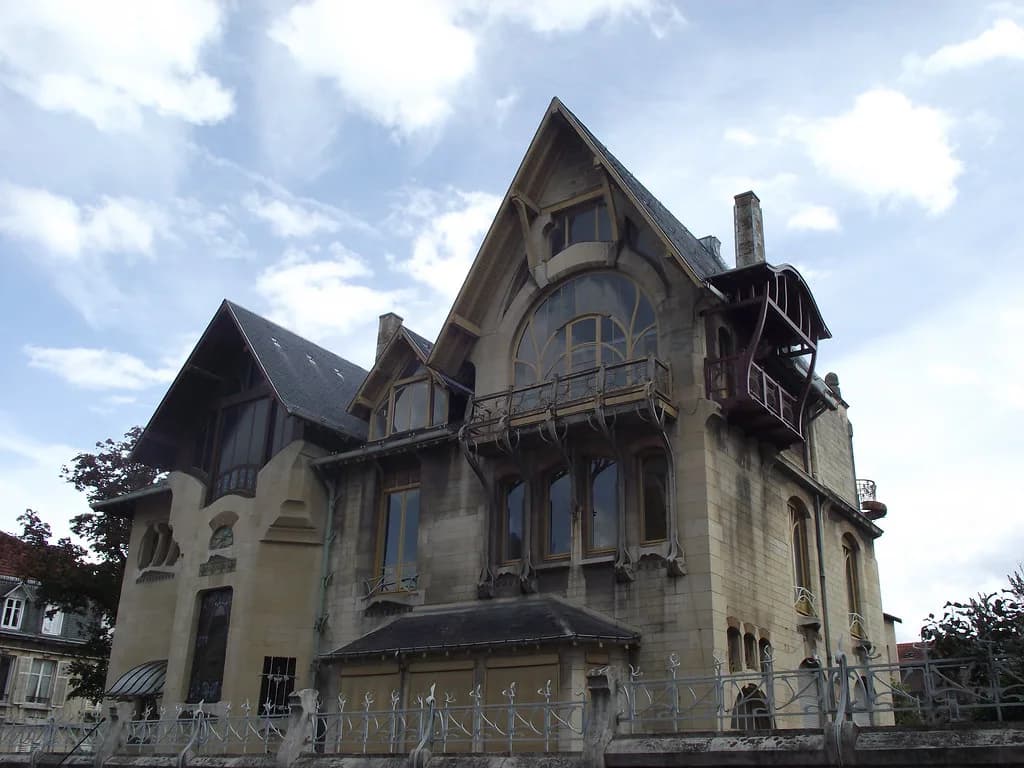
Villa Majorelle, Nancy: A Visitor's Guide to the Art Nouveau House
The Villa Majorelle is the house Louis Majorelle built for himself at the turn of the twentieth century, and it is regarded as the first entirely Art Nouveau house in Nancy. It is a small, intensely detailed home rather than a gallery, so an hour or so inside is enough, but the visit has to be booked and it sets the shape of your day. Treat it as one fixed appointment and plan the rest of Nancy around it.
Two facts change how you plan: visits run on a reservation system with a cap of about 60 people at a time, and the house opens in the afternoons rather than from morning. Arriving in Nancy hoping to walk in is the wrong approach; a booked slot turns a scattered day into a tidy one, with the museums and squares filling the morning and the villa anchoring the afternoon.
What the Villa Majorelle is and why it matters
Majorelle was a furniture maker and woodworker, one of the leading names of the École de Nancy, and he wanted a house that doubled as a showcase. He called it Villa Jika, a play on the French pronunciation of his wife Jane Kretz's initials. The building is a family home rather than a purpose-built museum, which is exactly why the interiors feel lived-in and why capacity is tight.
Nancy's Art Nouveau arrived with a specific history: after the Franco-Prussian War, the city became eastern France's largest and attracted artists and industrialists who chose to remain French, and by 1901 its designers had organised as the École de Nancy. The villa is the movement's most personal statement, designed with the architect Henri Sauvage and the sculptor Alexandre Charpentier.
Where it is: 1 Rue Louis Majorelle, near Avenue Foch
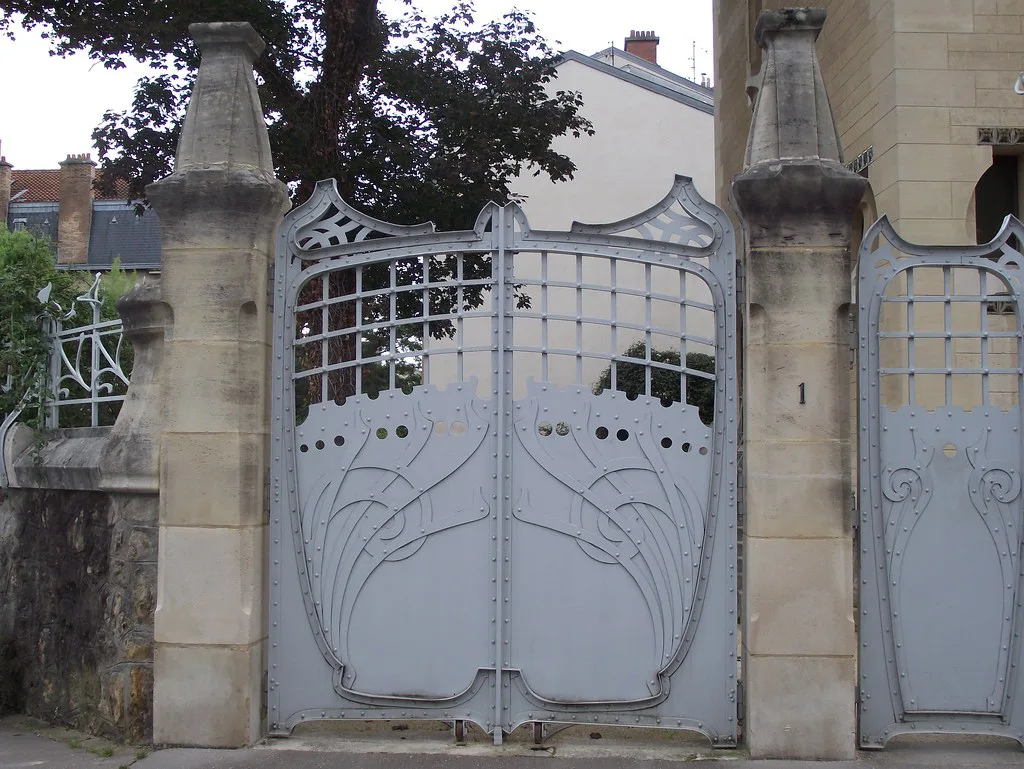
The villa stands at 1 Rue Louis Majorelle in central Nancy, close to Avenue Foch, well within the compact city centre that holds most of the sights. It is a walk rather than a trip out of town, and you can reach it on foot from the historic core without a bus.
Because it sits near the centre, it pairs easily with the classical city: Place Stanislas, with its gilded gates and the Musée des Beaux-Arts, is a short walk away and fills a morning before an afternoon slot at the house.
How to get there and how long to allow
Nancy is reached by TGV from Paris Gare de l'Est in roughly an hour and a half, with around ten daily connections, and there are also direct trains from Lille in a little over two hours. Note that the Lorraine TGV station sits outside the city and a shuttle brings you into the centre, so budget time for that transfer.
Inside Nancy, distances are short and public transport works well, with a tram and bus network linking the centre to the outer quarters. For the villa itself, allow around an hour for the visit plus buffer time for arriving on your slot; a rushed entry is wasted because the detail is the point.
Who built it: Majorelle, Sauvage and Charpentier
Majorelle commissioned the house from the architect Henri Sauvage, with the sculptor Alexandre Charpentier contributing to its ornament, and he invited the best designers of the day to work on it. The result was controversial when new, in the early 1900s, because of its waves and swirls. That collaboration is why the villa reads as a group project rather than one man's taste.
What to look for inside: the studio window and the interiors
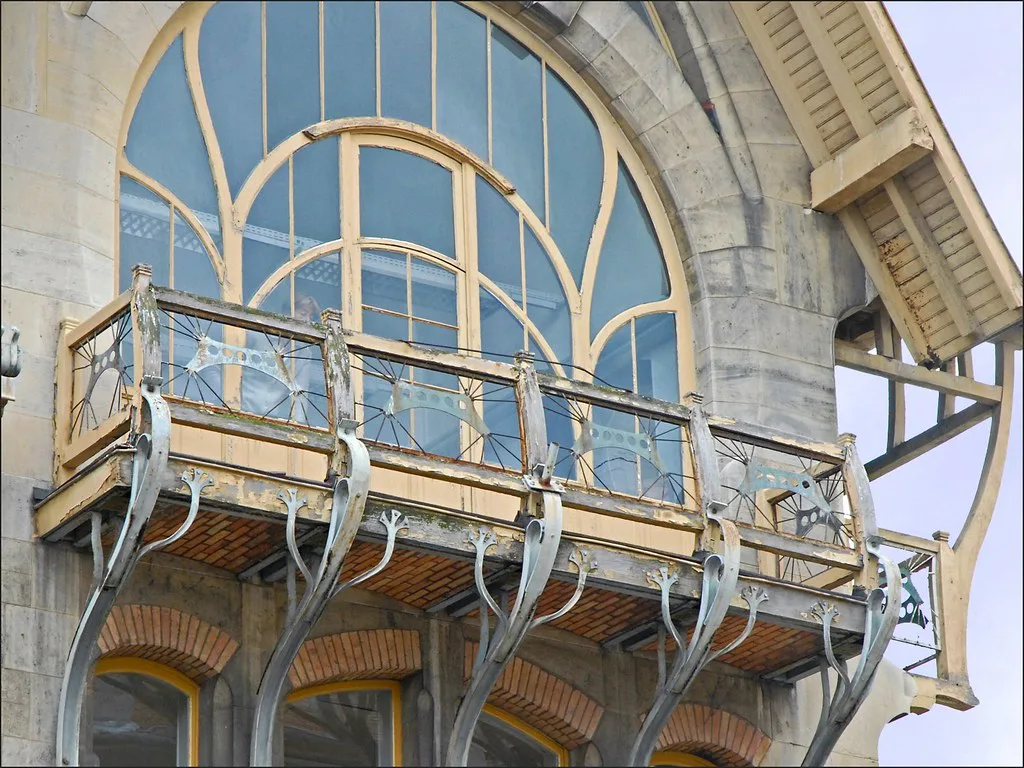
Majorelle kept his studio on the top floor, facing a large half-moon window that poured light into the workspace. Look up as well as around: the house is full of carved woodwork, metalwork and glass designed as a set. The building has three floors of living space, modest by the standards of the era, which keeps the visit focused rather than exhausting.
Furniture and decorative pieces by the same circle appear across Nancy, so the house makes a good primer: the stained glass of Jacques Grüber turns up at the Musée de l'École de Nancy and in city brasseries, and the glassware of the Daum family fills a basement collection at the Musée des Beaux-Arts de Nancy. Seeing the villa first gives those museum pieces a context.
Booking rules: timed visits and the 60-person cap
Only around 60 visitors can be inside at once, so reservations are essential rather than optional, and the tourist office promotes the house as visits by reservation at its address on Rue Louis Majorelle. Book a specific slot before you fix your train times, because a sold-out afternoon removes the main reason many people come to Nancy.
Travellers report that a guided visit must be reserved ahead, which matches the pattern of a small house run on timed entry rather than open-door browsing. Check the villa's own site or the Nancy tourist office for current hours, ticket prices and tour times before booking travel; the details change seasonally and are not fixed here.
Opening pattern: afternoons only, so build the day around it
The villa opens in the afternoons, so it cannot be your first stop of the day. That single constraint decides the itinerary: put a museum or a market in the morning, lunch, then the house, then a walk. Visitors who try to squeeze it in before an early train home tend to find it clashes.
A workable one-day shape is the Daum glass collection in the basement of the Musée des Beaux-Arts in the morning, a quick lunch, then the villa, then a stroll through the Art Nouveau streets. Two days let you add the Musée de l'École de Nancy and a guided walk without hurrying. If you are weighing this against a larger city, our guide to things to do in Metz shows how a neighbouring weekend compares.
Pairing it with the Musée de l'École de Nancy
The Musée de l'École de Nancy occupies Eugène Corbin's former home at 38 Rue Sergent Blandan, a few minutes' walk from the villa, and it is the other essential Art Nouveau stop. It holds furniture, stained glass, ceramics and glassware, including Gallé's bed known as Dawn and Dusk. These are two separate sites with separate tickets, so do not expect one entry to cover both.
Some visitors buy a combined pass for the villa and the École de Nancy museum, which suits anyone seeing both in the same trip. Ask at the ticket desk which combination is on offer, and check current prices and villa time slots before you set out.
Nearby: Rue Félix Faure and the Parc de Saurupt
Rue Félix Faure, close to the École de Nancy museum, is lined with energetic houses by the architect César Pain, with a few by Émile André nearby. It is a street to walk slowly, free of charge and open to anyone.
Further out, the Parc de Saurupt was laid out as a private development of Art Nouveau houses, and you reach it by tram, getting off at Exelmans or Jean Jaurès. The finished district includes later Art Deco buildings, since construction ran into the 1930s, and Majorelle designed the old gate on the Jules-Dorget square. These are private homes viewed from the street, not sights you enter.
Back in the centre, the old town adds a different layer: the Craffe Gate, the Ducal Palace housing the Musée Lorrain, and the Basilica of Saint-Epvre sit within a short walk of the Grande Rue. If you have a spare hour after the villa, the Église des Cordeliers next to the Ducal Palace is worth a look.
Practical trade-offs: worth it for a short weekend?
Yes, if you care about design and are willing to book ahead. No, if you want flexibility: the afternoon-only opening and the reservation requirement mean the villa dictates your schedule, and a spontaneous weekend in Nancy is better served by the free architecture walks and the museums.
The house is small and the interiors are dense, so anyone expecting a grand château will be surprised by its scale. Its value lies in completeness: furniture, glass, woodwork and architecture designed together for one family, which few houses in France show so intact.
If your weekend includes the classical city, split it cleanly: one half-day for Place Stanislas and the Musée des Beaux-Arts, one half-day for the villa and Saurupt. That leaves evenings free for the squares.
Where to check current hours, prices and tour times
Hours, ticket prices and tour times are set by the villa and change with the season, so confirm them on the villa's official site or with the Nancy tourist office when you book the slot. Do this before fixing train times.
Plan Your Visit
Book the Villa Majorelle slot first, aim for an afternoon, and build the morning around the Musée des Beaux-Arts or the old town. Then walk to the Musée de l'École de Nancy and finish with the Saurupt streets if the light holds. That order respects the one fixed constraint and gets you the best of Nancy's Art Nouveau in a weekend.
Confirm opening days and prices at the point of booking, and keep a flexible hour in the plan for the walk between the villa and the museum quarter. Both sit in a compact centre where walking beats waiting for transport.
Explore more Nancy guides
Frequently Asked Questions
Do you need to book the Villa Majorelle in advance?
Yes. The house runs on timed visits with a limited capacity of around 60 people at once, so reserve a slot before you fix your travel. Booking through the villa's official site or the Nancy tourist office is the reliable route.
When is the Villa Majorelle open?
The house opens in the afternoons rather than from morning, so plan it as an afternoon appointment. Exact days and times vary, so confirm them when you book your slot rather than relying on a fixed timetable.
How long does a visit to the Villa Majorelle take?
Allow around an hour inside, plus time to arrive for your slot. The house has three floors of dense interiors, so a little longer suits anyone interested in the furniture and glass.
Is the Villa Majorelle near the Musée de l'École de Nancy?
Yes. The museum at 38 Rue Sergent Blandan is a few minutes' walk from the villa on Rue Louis Majorelle, which makes them easy to pair in one afternoon. They are separate sites with separate tickets.
Who designed the Villa Majorelle?
Louis Majorelle commissioned it for himself and his wife, and the architect Henri Sauvage designed it with contributions from the sculptor Alexandre Charpentier. Majorelle called the house Villa Jika, after his wife's initials.
What should I see nearby after the villa?
Walk Rue Félix Faure for houses by César Pain and Émile André, or take the tram to the Parc de Saurupt for a district of Art Nouveau and later Art Deco homes viewed from the street. Back in the centre, the old town and Place Stanislas fill an evening.
Sources
- 5 Unmissable Highlights Of The Ecole De Nancy Art Nouveau
- Nancy Old Town: the capital of the Dukes of Lorraine - French Moments
- Nancy - Things to do and travel guide
- Guide to the 10 Best Things to do in Nancy, France – Baguettes and Bicyclettes
- Poussez la porte de la Villa Majorelle Visites sur ...
- VILLA MAJORELLE (Nancy): Ce qu'il faut savoir pour votre ...
- La Villa Majorelle, chef d'oeuvre de l'Art nouveau