
Palais Rohan, Strasbourg: A Visitor's Guide to the Palace Museums
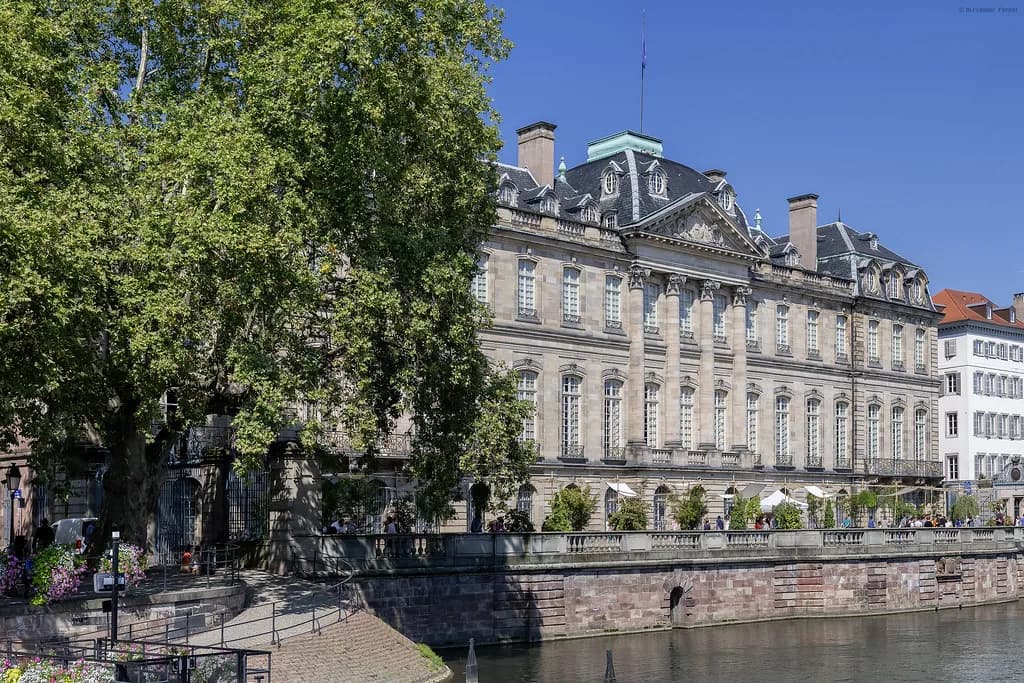
The Palais Rohan is the former residence of the prince-bishops of the House of Rohan, built between 1732 and 1742 to plans by Robert de Cotte, principal architect to the king, for Cardinal Armand-Gaston de Rohan. It stands on the Grande Île beside Strasbourg Cathedral, and today the palace houses three separate museums: the Archaeological Museum, the Decorative Arts Museum and the Fine Arts Museum.
Treat it as three museums under one roof rather than a single sight. That distinction decides your visit: one collection fits comfortably into a cathedral morning, while all three can take the better part of a day away from the rest of the city.
Where the Palais Rohan sits and how to reach it
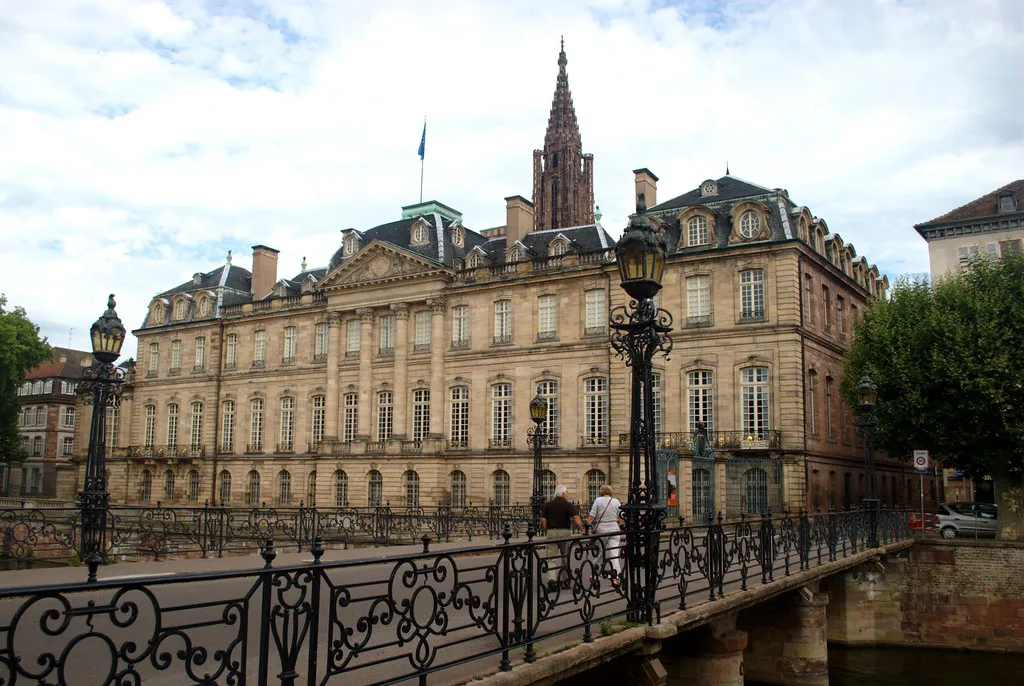
The palace occupies the southern side of the cathedral square on the Grande Île, Strasbourg's historic island centre, so you reach it on foot from almost anywhere in the old town. If you arrive by train, walk from the station into the centre and follow signs for the cathedral; the palace forecourt opens off the square beside it, and you will see the classical facade set back from the cathedral's Gothic west front.
Coming from the Petite France quarter, the walk across the island takes you through the old streets toward the cathedral and the palace beyond. Set the cathedral as your landmark rather than an address, since the palace is directly adjacent and easier to find that way. If you are still planning your days, our guide to things to do in Strasbourg maps out how this area fits with the rest of the old town.
Allow a few minutes to look at the courtyard before you go in. The building is one of the finest eighteenth-century French architectural works in the city, and its setting beside the medieval cathedral is part of why the visit works.
The building: Robert de Cotte's design
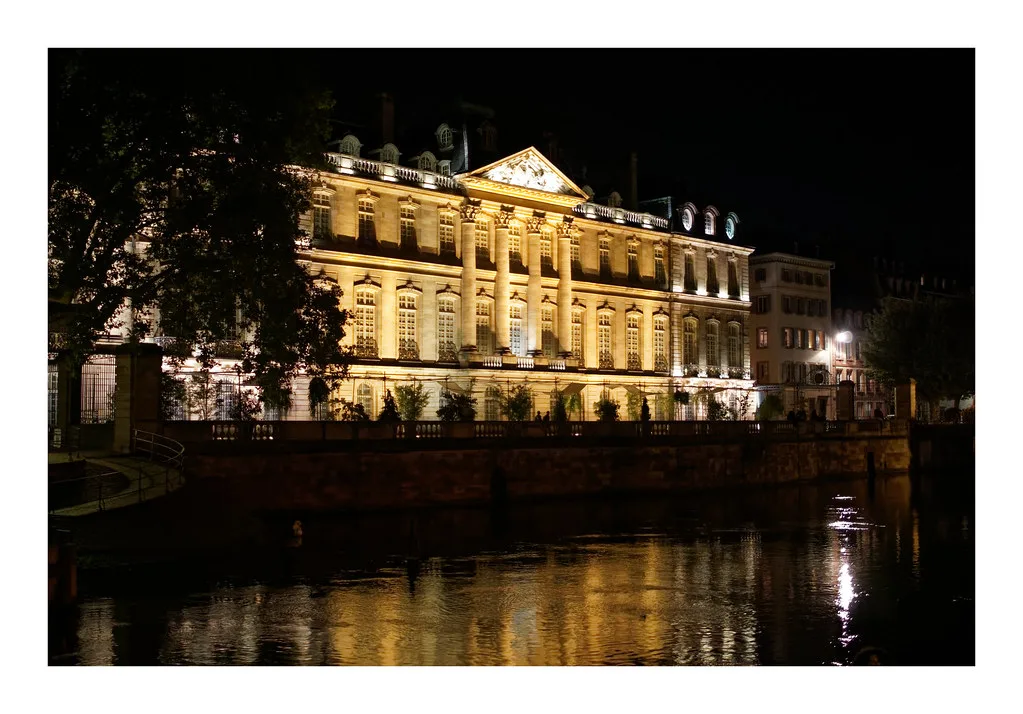
Robert de Cotte, principal architect to the king, drew up the plans for Cardinal Armand-Gaston de Rohan, and the palace was built between 1732 and 1742 as the residence of the prince-bishops of the House of Rohan. The result is a grand classical composition that stands in deliberate contrast to the cathedral's Gothic mass beside it.
The interior decoration matters as much as any single collection. The palace's state rooms were designed to impress, and the Decorative Arts Museum occupies part of the building in a way that lets you read the rooms and their furnishings together rather than as a separate exhibit.
A 2012 catalogue on the palace, published by the Strasbourg museums, documents the building and its interiors through photography by Marc Walther and commentary by Étienne Martin, curator of the Decorative Arts Museum. It is a reference work rather than a guidebook, and a useful background read if the architecture is your main reason for coming.
The three museums inside the palace
The Archaeological Museum, the Decorative Arts Museum and the Fine Arts Museum all sit within the Palais Rohan, each with its own collection and its own reason to visit. They are separate museums sharing a building, not one combined attraction, so you choose how many to take in.
For a first visit, the Decorative Arts Museum gives you the palace rooms and the collection at once, which is the combination most visitors are looking for in a historic house. The Fine Arts Museum suits anyone who wants paintings and can accept a visit that is about the collection rather than the architecture. The Archaeological Museum rewards an interest in the region's deep past and is the easiest of the three to skip if time is tight.
If you plan to see all three, start with the Decorative Arts so you see the palace interiors before museum fatigue sets in, then move to whichever of the other two matches your interests. Doing the archaeology first can leave you with less appetite for the furnished rooms, which are the part most people remember.
Decorative Arts: the palace rooms and their furnishings
The Decorative Arts Museum is the collection that makes most sense of the palace itself. It occupies rooms within the building, so you see furniture, objets and interiors in the setting they were made for rather than in neutral gallery space.
Étienne Martin, curator of the museum, is the author behind the 2012 palace catalogue, which traces the building and its decorations room by room. If you want to understand what you are looking at before you arrive, that is the most direct route into the subject.
Give this museum the most time if the architecture is what drew you to the Palais Rohan in the first place. The rooms repay slow looking, and the collection is tied to the building in a way the other two museums are not.
Fine Arts: what the painting collection offers
The Fine Arts Museum is the palace's painting collection, and it appeals to visitors who would rather spend an hour with pictures than with furnishings. It is a conventional museum experience in the best sense: galleries, wall labels and a collection to work through at your own pace.
Choose this one if you are travelling with someone who finds historic interiors repetitive. It is also the natural pick on a second visit, when you have already seen the state rooms and want something different from the same building.
Archaeology: the regional collection
The Archaeological Museum covers the region's past and is the most specialised of the three. First-time visitors often find it the least essential, since the palace's appeal lies in its eighteenth-century architecture and interiors rather than in archaeology.
It is a good choice if you have already seen the cathedral and the old town and want a collection with depth rather than another set of grand rooms. On a two-day break, though, it is the museum to drop first when you are deciding what to cut.
How long to allow
Plan on roughly an hour for one museum and two to three hours if you visit all three, allowing for the time it takes to move between them within the building. These are working estimates for pacing a short break rather than official figures, so treat them as a way to block out your day.
The palace pairs naturally with the cathedral next door, which makes a sensible half-day: cathedral first, then one museum in the palace, then the old streets around the Grande Île. Trying to fit all three museums plus the cathedral into one morning leaves no room for the city itself.
Tickets and opening: what to confirm before you go
Ticket prices, opening hours, closure days and any free-entry rules for the three museums are set by the Musées de Strasbourg, and they change from time to time. Check the official museum site before you travel rather than relying on older listings, so you know whether the museum you want is open on the day you plan to visit.
The same applies to buying tickets: confirm on the official site whether you book ahead, buy at the door or use a combined ticket covering more than one museum. The palace entry page on the city's visitor site gives the building's location and identity, but the museums themselves are the authority on access.
Nearby: what else is within a short walk
Strasbourg Cathedral is immediately beside the palace, and its west front and tower are the reason most visitors come to this corner of the island. Pair the two rather than choosing between them, since the walk between them is a matter of steps, as the cathedral entry on our Strasbourg Attractions guide sets out.
The streets of the Grande Île around the cathedral square lead on toward Place Kléber and, in the other direction, toward the canals of the old tanners' quarter. Both are short walks from the palace forecourt and fit naturally after a museum visit.
The Ponts Couverts and the Petite France quarter sit a little further west along the river, reachable on foot from the cathedral area. They make a natural second half of the day if you have already given the palace a morning.
Is the Palais Rohan worth it on a short Strasbourg break?
Yes, if you want one museum that combines a significant eighteenth-century building with a collection that belongs in it. The Decorative Arts Museum does that best, and a single museum visit fits neatly around the cathedral without eating the day.
Skip the full three-museum circuit if you have only a weekend and want to see the rest of Strasbourg. Two museums in the palace is a reasonable maximum for most short breaks, and the archaeology is the easiest to leave for another time.
Plan Your Visit
Decide first how many museums you want, because that choice shapes the day. One collection fits around the cathedral; all three turn the Palais Rohan into a half-day in its own right.
Before you travel, confirm prices, opening hours and closure days on the Musées de Strasbourg site, since those details determine whether the palace fits your dates. Build the rest of your Strasbourg break around the city's streets rather than trying to see every museum in one building.
Explore more Strasbourg guides
Frequently Asked Questions
Is the Palais Rohan worth visiting in Strasbourg?
Yes, for the combination of an eighteenth-century palace and the collections inside it. The Decorative Arts Museum gives you the state rooms and their furnishings together, which is what most visitors want from a historic house. If your weekend is short, one museum here fits neatly around the cathedral; all three consume a half-day.
What is inside the Palais Rohan?
Three separate museums share the building: the Archaeological Museum, the Decorative Arts Museum and the Fine Arts Museum. The palace itself, built between 1732 and 1742 to plans by Robert de Cotte for Cardinal Armand-Gaston de Rohan, is the reason the Decorative Arts collection reads differently from a standard gallery. Each museum has its own collection and its own ticket.
How long does the Palais Rohan take to visit?
Allow about an hour for a single museum and two to three hours if you see all three, including time moving between them. Pairing one museum with the cathedral next door makes a comfortable half-day; adding all three museums to the cathedral in one morning leaves little time for the rest of the Grande Île.
How much are Palais Rohan Strasbourg tickets?
Ticket prices are set by the Musées de Strasbourg and change periodically, so confirm the current rate on the official museum site before you travel. The same page covers any combined ticket or reduced rate that applies to the three museums in the palace.
Is the Palais Rohan free?
Free-entry rules are set by the Musées de Strasbourg and can change, so check the official museum site rather than relying on older listings. The palace holds three separate museums, and access terms may differ between them.
What are the Palais Rohan opening times?
Opening hours and closure days are published by the Musées de Strasbourg and vary through the year, so check the official site for the dates you plan to visit. Confirm before you set out, since the museum you want may keep different hours from the others in the building.
Where is the Palais Rohan in Strasbourg?
The palace stands on the southern side of the cathedral square on the Grande Île, directly beside Strasbourg Cathedral. From the station, walk into the centre and follow signs for the cathedral; the palace forecourt opens off the square. From Petite France, the walk crosses the island toward the cathedral.