
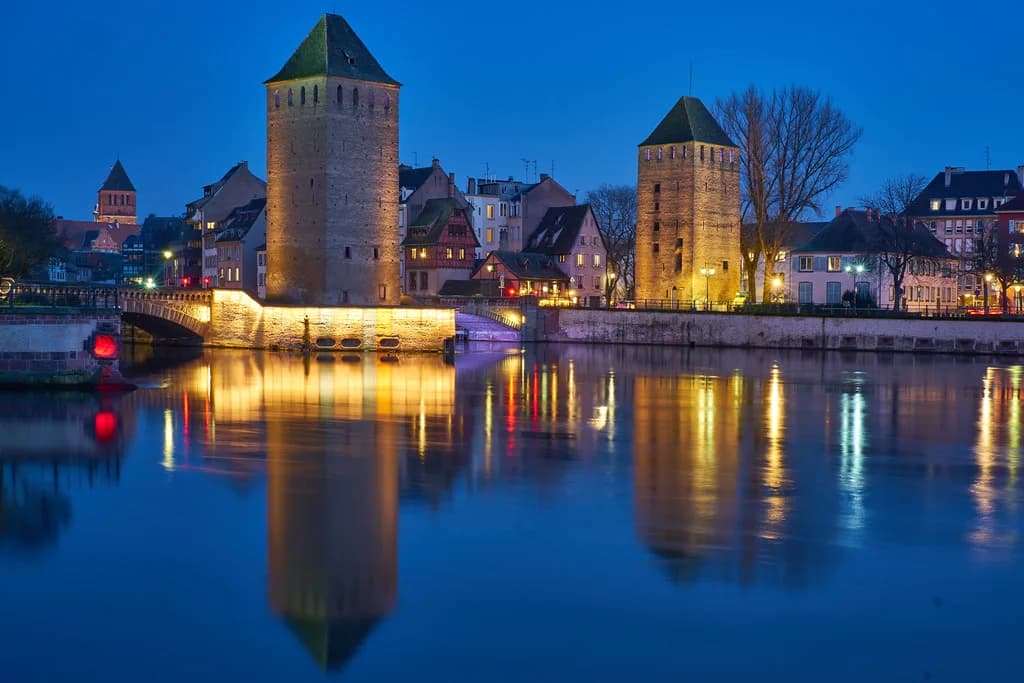
Petite France, Strasbourg: A Visitor's Guide to the Old Tanners' Quarter
La Petite France is the picturesque old quarter of Strasbourg, built where the River Ill splits into canals at the south-west edge of the old town. Its half-timbered houses, narrow lanes and water-level terraces make it the most photographed part of the city, and the whole district is small enough to walk in an afternoon.
The quarter earns its name honestly: from the Middle Ages it was a district of millers and tanners, and the buildings still show it. Once you know what to look for on the rooftops and in the street names, the architecture reads as a working riverside neighbourhood rather than a stage set.
What La Petite France actually is
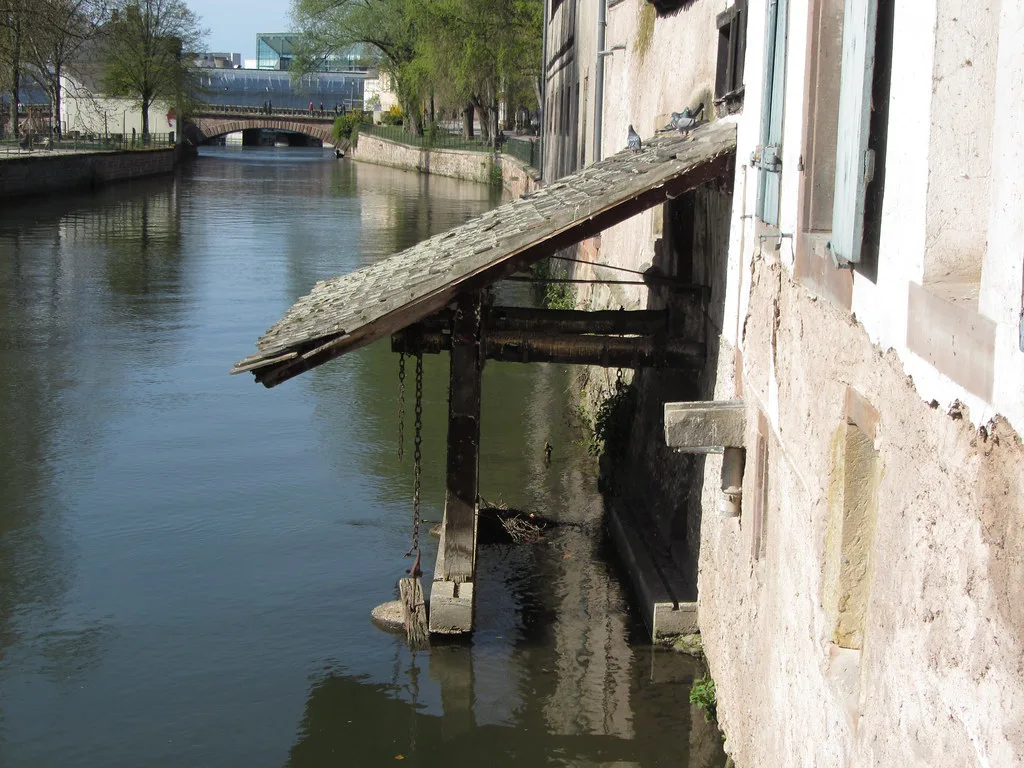
From the Middle Ages, La Petite France was a quarter of millers and tanners, drawn to the Ill for the water power and the river for soaking and working hides. That industrial past explains why the houses crowd the canals rather than facing broad streets. The quarter is the historic core of old Strasbourg, and the water is the reason it exists.
Look up at the roofs of the half-timbered houses: several, including the Maison des Tanneurs, have ventilated lofts that were used to cure leather and dry skins. The open timberwork under the eaves is a working detail, not decoration. Spotting those lofts changes how the postcard view reads.
The trades that used the river gave their names to the lanes you walk through, so the street names double as a map of the old crafts. Read them as you go rather than treating the quarter as one continuous photo opportunity. For the wider set of Strasbourg sights, see the Strasbourg Attractions: 6 Visitor Guides.
Where it sits and how to reach it on foot
La Petite France occupies the south-western edge of Strasbourg's old town, wrapped around the quai de la Petite France and the Ponts Couverts. The quarter is addressed around the Quai Charles Frey in the 67000 postcode. From the cathedral side of the centre, it is a straightforward walk south-west along the Ill, and most visitors arrive on foot without needing transport.
Once you are in, orientation is simple: the water is always nearby, and the quarter's landmarks sit in a line. Work from the quai de la Petite France towards the Ponts Couverts, then climb to the Barrage Vauban terrace for the overview. That sequence gives you the quarter at water level first and from above second, which is the right order.
The Maison des Tanneurs and the half-timbered houses
The Maison des Tanneurs is the quarter's best-known building and has since become a restaurant, so you will see it from the outside as part of the street scene rather than as a museum interior. Around it stand half-timbered houses of the 16th and 17th centuries, their facades close to the water and their upper storeys projecting over the lanes. Treat the group as the architectural heart of the visit.
Give the facades time rather than rushing past: the timber framing, the colour and the rooflines vary from house to house. The ventilated attic openings are easiest to pick out from the far bank, where you can step back and look up.
The narrow lanes
The ruelles, or narrow lanes, are deliberately tight, and they are what makes the quarter feel enclosed after the open quays. Walk them slowly and look at doorways, signs and the way the timber frames meet at the corners. Because the district is small, you can loop through several lanes without a fixed route and still come out near the water.
The lanes connect the quarter's set pieces, so use them as links between the quai, the bridges and the museum rather than as a separate attraction. A short loop of 20 to 30 minutes covers the main ones comfortably.
The Ponts Couverts and their four towers
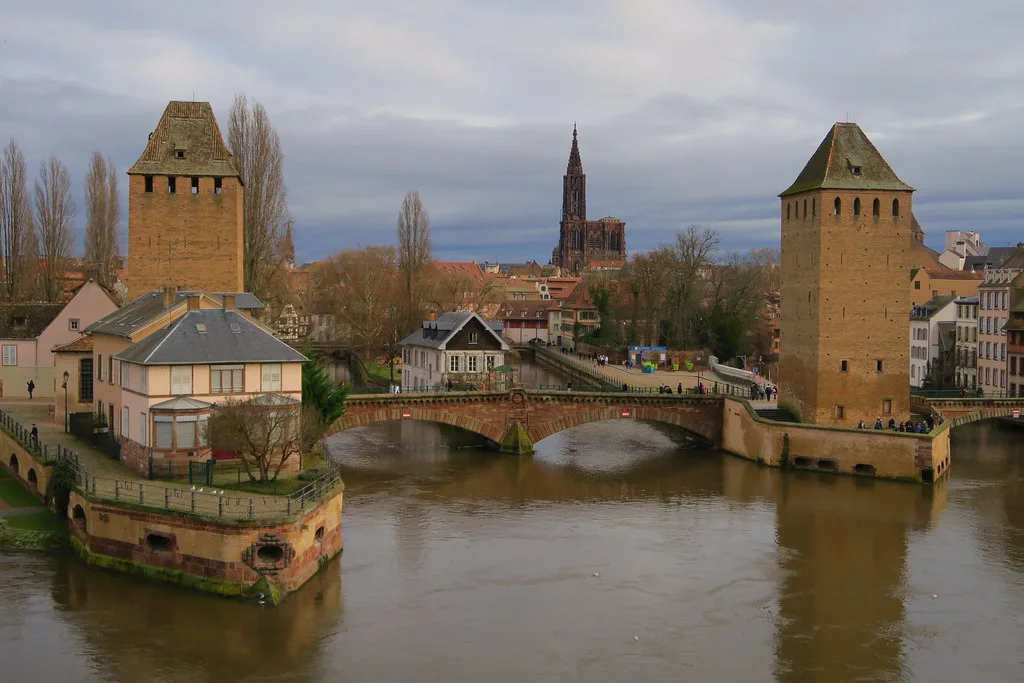
The Ponts Couverts are the covered bridges spanning the canals, dominated by four towers from the 14th century that survive from the old town walls. They are the quarter's strongest piece of military history and the best place to understand how the Ill was defended. Look for the small house among the bridges, whose arbour carries wisteria in spring.
The quai de la Petite France runs directly along the water to the bridges, making the walk there part of the sight rather than just the approach. Position yourself on the quai for the classic view back across the bridges and towers. The Ponts Couverts, Strasbourg guide covers the bridges in more detail if you want to linger.
The Barrage Vauban terrace
The terrace of the Barrage Vauban gives a panoramic view over the cathedral, the line of the city and its canals. It is the one place in the quarter where you see the whole layout at once, which makes it worth saving for after you have walked the lanes. The climb is short and the payoff is the best overview in the district.
Use the terrace to pick out where you have just been and where you are going next: the cathedral spire, the canal arms and the rooftops read clearly from here. The Barrage Vauban page has more on the structure itself.
Locks and the Pont du Faisan turning bridge
The lock is what gives La Petite France its postcard moment when a tour boat passes through, and the Pont du Faisan is a turning bridge that opens to let boats and pedestrians through in turn. Time part of your wander around these two and you get the quarter doing something rather than just standing still. The two sit close together, so a short wait covers both.
Boat operators do not publish a fixed parade of passages through the lock, so treat a boat appearing as luck rather than a scheduled event. If the bridge and lock are the reason you came, position yourself on the quai and let the rest of the quarter fill the wait.
The Musée d'Art Moderne et Contemporain at the edge
The Musée d'Art Moderne et Contemporain, MAMCS for short, sits at the edge of the quarter and is one of the few French museums to present a representative survey of western European art from 1870 to the present. You can fold it into the same visit without leaving the district. For a collection of that span, allow a proper block of time rather than a quick look in passing.
Current opening days, ticket prices and any temporary closures are published by the museum itself, and they vary with the exhibition programme. Check the museum's own site before you build the day around it, and keep the quarter's outdoor sights as the fixed part of your plan.
How long to allow, and when the light is best
The quarter is compact, and two to three hours covers the lanes, the quai, the Ponts Couverts, the Barrage Vauban terrace and a pause at the lock. Add two hours or more if you are going into the MAMCS. Do not over-schedule it: there is not enough here to fill a whole day on its own.
Morning light falls softly on the canal facades, while late afternoon gives warmer tones on the timber and the bridges. Neither is a rule, but if you want the classic reflections on still water, go early before the tour boats start working the lock.
Nearby: the cathedral, the Neustadt and the Ill quays
La Petite France sits within walking distance of the Cathédrale Notre-Dame de Strasbourg, so the two fit naturally into one day out. The Neustadt, the imperial-era extension, and the Ill quays are the other obvious additions to a Strasbourg weekend. If you are weighing up which areas to cover, the Strasbourg Neighborhoods: 4 Area Guides sets out the options.
The Palais Rohan, home to several of the city's museums, is another straightforward addition on the old-town side. Build the day around two anchors rather than five, and leave room for the walk between them along the water.
Plan Your Visit
La Petite France rewards a slow half-day: start on the quai de la Petite France, work through the lanes to the Ponts Couverts, climb to the Barrage Vauban terrace and finish at the lock and the Pont du Faisan. Add the MAMCS only if modern art is on your list, and keep the cathedral and Palais Rohan for the rest of the day.
Check the MAMCS website for current opening days and tickets before you go. Boat times can change on the day, so ask at the quay or the ticket desk when you arrive. Everything else in the quarter is outdoors and open to anyone walking through.
Explore more Strasbourg guides
Frequently Asked Questions
Why is the quarter called La Petite France in Strasbourg?
The name comes from its working past: from the Middle Ages the district was home to millers and tanners who used the River Ill. The half-timbered houses, including the Maison des Tanneurs with its ventilated lofts, still show how that trade shaped the buildings.
What should I see in La Petite France?
The main set pieces are the quai de la Petite France, the narrow lanes and 16th- and 17th-century half-timbered houses, the Ponts Couverts with their four 14th-century towers, the Barrage Vauban terrace, the lock and the Pont du Faisan turning bridge. The MAMCS modern art museum sits at the edge of the quarter.
How long does it take to visit La Petite France?
Allow two to three hours for the lanes, quays, bridges and terrace, plus time at the lock if a boat is passing. Add roughly two hours if you are visiting the MAMCS. The quarter is compact, so it works best as a half-day rather than a full one.
Where is La Petite France in relation to Strasbourg cathedral?
The quarter sits at the south-western edge of the old town, around the quai de la Petite France and the Ponts Couverts, within walking distance of the Cathédrale Notre-Dame de Strasbourg. Most visitors walk between the two along the Ill.
When is the best time of day to photograph the canals?
Morning light is soft on the canal facades, and late afternoon brings warmer tones to the timber and bridges. Early morning also tends to be quieter on the water before tour boats begin working the lock.
Do I need tickets for the Ponts Couverts or the Barrage Vauban terrace?
Both are outdoor sights you reach on foot as part of a walk through the quarter. The MAMCS and other museums set their own admission and opening arrangements, which are published by each venue, so check before planning a museum stop.