
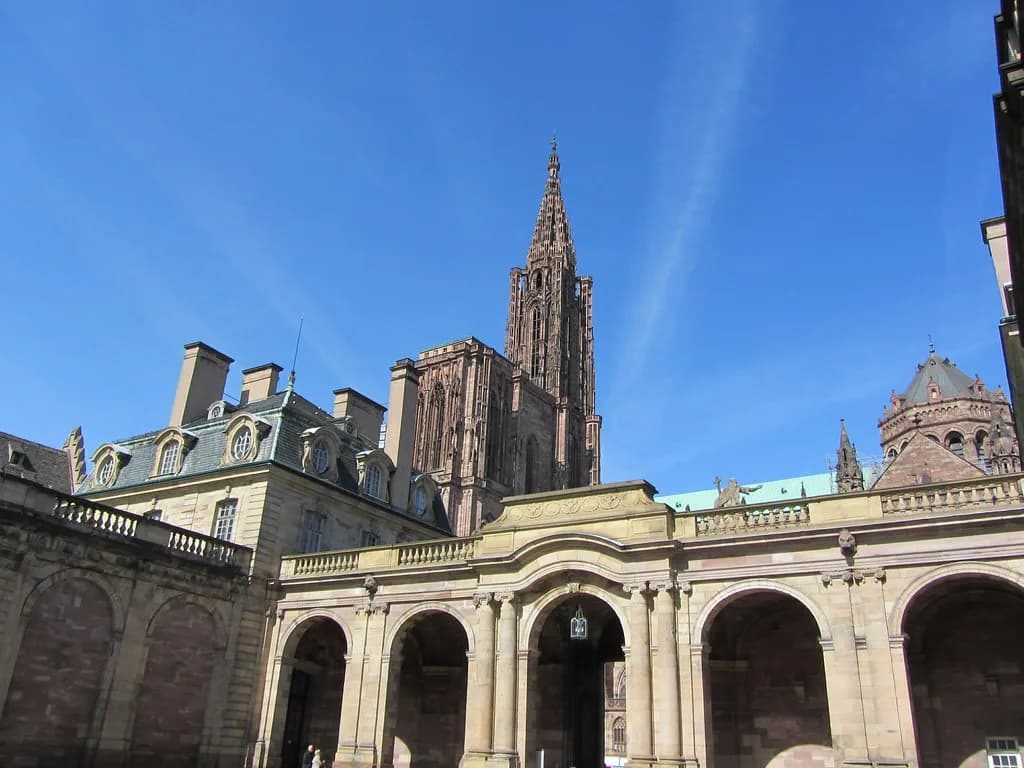
Strasbourg Cathedral: The Cathédrale Notre-Dame Guide
The Cathédrale Notre-Dame de Strasbourg is the sandstone cathedral at the centre of the Grande Île, the island that forms Strasbourg's historic heart. It is a working Catholic church and the seat of the Archbishop of Strasbourg, built between the 13th and 15th centuries and dedicated to the Virgin Mary. Entry to the building is free, while climbing the tower and seeing the astronomical clock carry a charge, so decide before you arrive which of the three you want.
Where the cathedral stands
The cathedral sits on the Grande Île in the Bas-Rhin department of the Grand Est region, surrounded by the pedestrian lanes of the old centre. You do not need a tram to reach it once you are on the island: the streets close in around it and the west front appears at the end of the rue Mercière approach. Treat the cathedral as the fixed point you navigate back to, because the lanes around it bend and signs are sparse.
A quick history
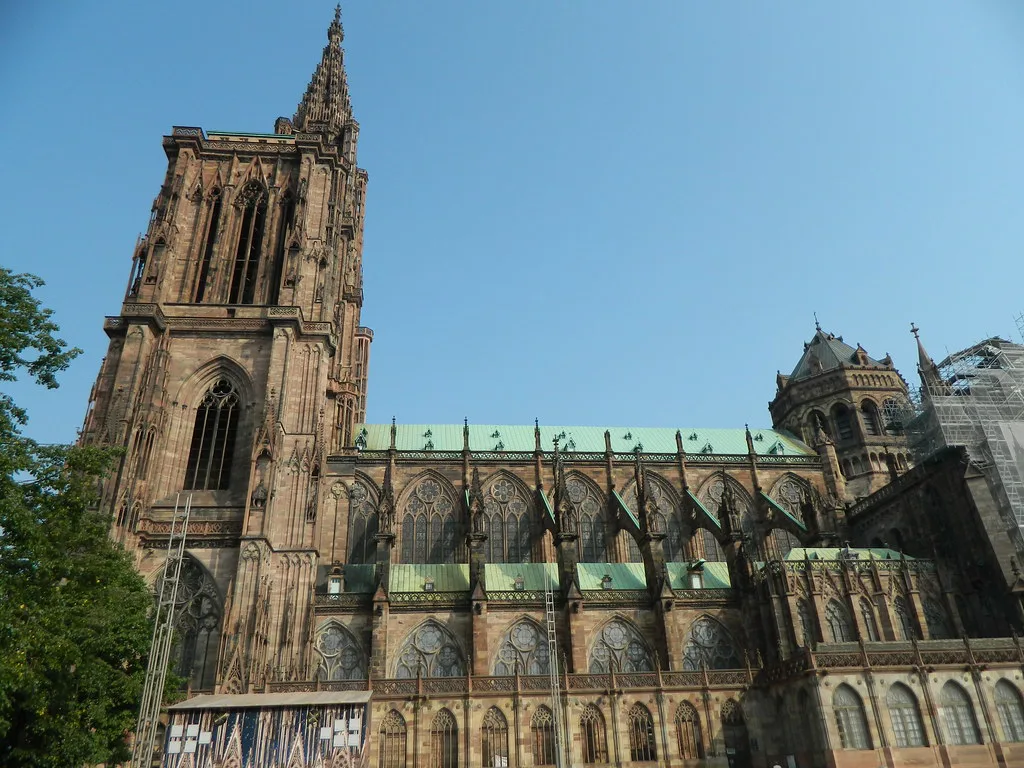
The cathedral's own site dates construction to the 13th to 15th centuries, while a visitor description records the building as founded in 1015 in the Gothic style and practically completed in 1365 in the heart of the Grande Île. The two framings describe the same long project from different ends: an 11th-century foundation and a Gothic rebuild that took centuries to finish. That span explains why the west front reads as a single soaring design while earlier stonework survives elsewhere in the building.
The cathedral was closed during the Nazi period from 1940 to 1944, a chapter the official site documents separately from the building's construction history. In 2019 the cathedral recorded 2,500,000 visitors, making it the most visited cathedral in France that year. Read that figure as a 2019 record rather than a current count, and expect the nave to be busiest in the middle of the day.
What to see on the west front
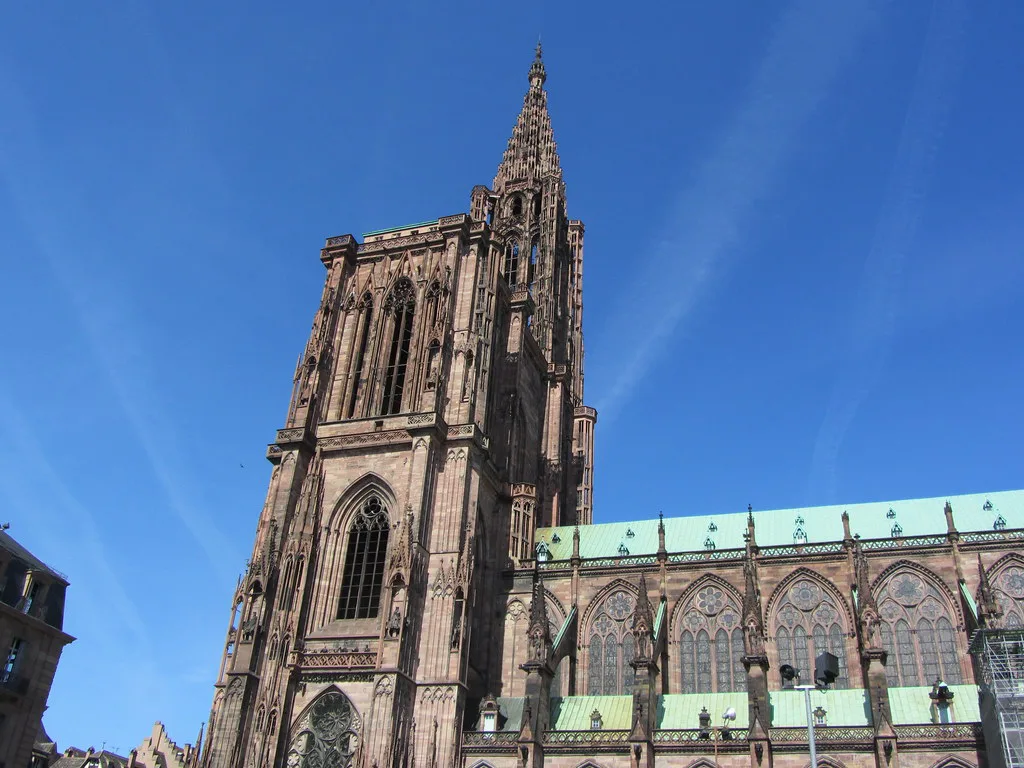
Stand back on the parvis before you go in. The west front is the cathedral's signature: pinkish sandstone carved into layered portals, a rose window above the main door, and a single tower rather than the matched pair you might expect. Walk the full width of the square first so you see the facade straight on, then move closer to read the sculpture around the doorways.
Inside the nave
The interior is a single long axis of stone and glass, and the first thing to do is walk the length of the nave to the choir and turn around. Look up at the vaulting, then at the stained glass, which does most of the colour work in an otherwise warm sandstone interior. The cathedral is an active place of worship, so keep voices low and step aside when services are forming; the official site publishes its Mass schedule and a suggested visit plan if you want to time your entry around them.
The astronomical clock
The astronomical clock is the reason many visitors queue inside the cathedral, and it carries an admission fee separately from the free entry to the building. Its movement draws a crowd at set viewing times, so ask at the cathedral what the day's schedule is before you commit to waiting. If you have only a short stop, the clock is the element to cut rather than the nave.
Climbing the tower
The climb takes you up the cathedral's single tower to a viewing platform, and it is ticketed rather than free. The payoff is a rooftop view over the Grande Île and the surrounding plain, which gives you a map of the old town in your head for the rest of the trip. The stairwell is narrow and unheated, so treat it as a physical excursion rather than a lift ride.
Tickets and access
Entry to the cathedral itself is free, while the tower and the astronomical clock each require a ticket. The cathedral's own site publishes opening hours, the visit plan, the dress requirements and details of climbing the platform, which is where the exact prices and times sit. Buy or check those before you travel rather than relying on a queue-side decision.
How long to allow
A quick look at the west front and a walk down the nave fits comfortably into under an hour, which suits a first afternoon in the city. Add the astronomical clock and you need to work around its viewing times, so budget more. Add the tower and you have a half-day: the climb, the platform and the recovery afterwards. Pick one paid extra rather than both if your weekend is tight.
Practical notes before you set off
The cathedral publishes a dress code on its site, so read it before you arrive rather than discovering it at the door. Group visitors and school groups have their own arrangements listed separately, which matters if you are travelling as a large party. The official site also covers the Échoppe Saint-Michel, the cathedral's shop, if you want to leave with something other than photographs.
What is nearby on the Grande Île
Petite France, Strasbourg's canal-side quarter of half-timbered houses and covered bridges, is a short walk west of the cathedral across the island. The Palais Rohan, which holds Strasbourg's museums, sits a few minutes the other way towards the river. Both make natural next stops without leaving the Grande Île, and both repay an unhurried hour rather than a photo stop.
Plan Your Visit
Build your cathedral visit around one decision: the free nave, the astronomical clock or the tower. The nave costs nothing and takes under an hour; the two paid extras each set the shape of your morning or afternoon. It is the same choice you will weigh at other French cathedrals, so comparing what each charges for its tower and treasures helps you decide where to spend the ticket, as a look at the ticket options at Ajaccio Cathedral shows. Check the cathedral's own site for the current opening hours and ticket details the day before you go.
Explore more Strasbourg guides
Frequently Asked Questions
Is Strasbourg Cathedral free to visit?
Entry to the cathedral building is free. Climbing the tower and visiting the astronomical clock each require a ticket, so check the cathedral's own site for current details before you travel.
How long does it take to visit Strasbourg Cathedral?
A walk down the nave and a look at the west front takes under an hour. Adding the astronomical clock means working around its viewing times, and adding the tower turns the visit into roughly a half-day.
Can you climb the tower at Strasbourg Cathedral?
Yes. The climb goes up the single tower to a viewing platform with a rooftop view over the Grande Île, and it is ticketed rather than free. The cathedral's site covers the platform and its access details.
What is the astronomical clock at Strasbourg Cathedral?
It is the clock inside the cathedral that draws a crowd at set viewing times, and it carries an admission fee separately from the free entry to the building. Ask at the cathedral for the day's schedule.
Where is Strasbourg Cathedral in the city?
It stands at the centre of the Grande Île, the island that forms Strasbourg's historic heart, in the Bas-Rhin department of the Grand Est region. The old-town lanes lead to it on foot from the surrounding streets.
How do you get to Strasbourg Cathedral?
Once you are on the Grande Île, the cathedral is reached on foot through the surrounding pedestrian lanes. Approach from the rue Mercière side and the west front appears at the end of the street.