
Barrage Vauban: Strasbourg's Free Panoramic Terrace Over Petite France
The Barrage Vauban is the stone barrier that closes the River Ill at the south-west corner of Strasbourg's historic island, and its rooftop terrace is the city's most convenient free viewpoint. You climb a short flight of steps, look out over the Ponts Couverts and the towers behind them, and you are done in well under an hour. Treat it as a 20-minute punctuation mark between the cathedral quarter and Petite France, not as a destination in its own right.
What the Barrage Vauban actually is
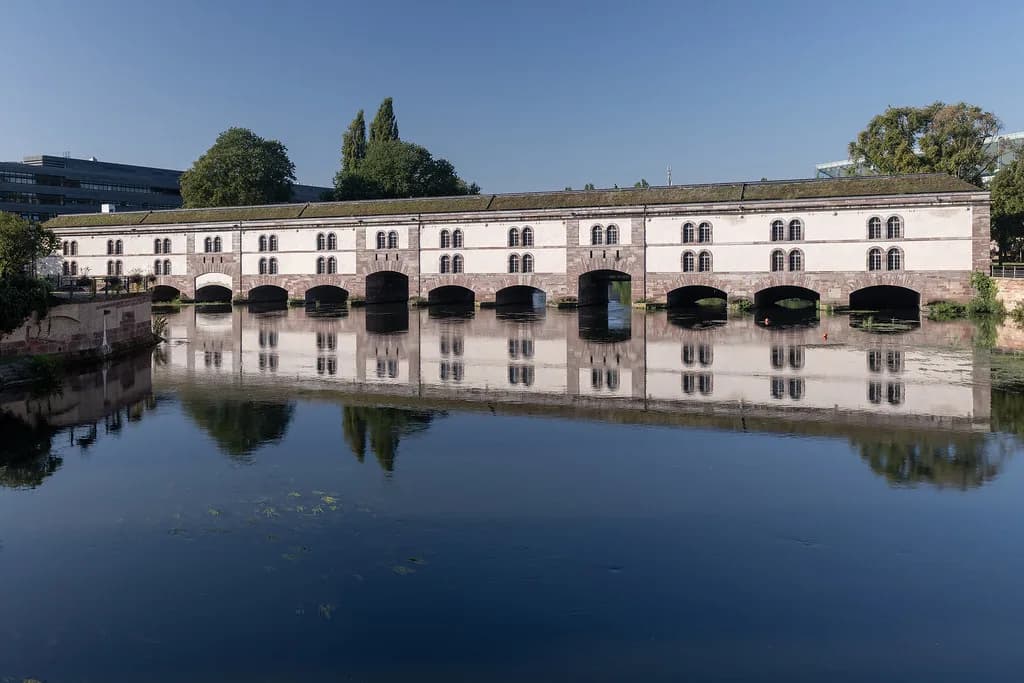
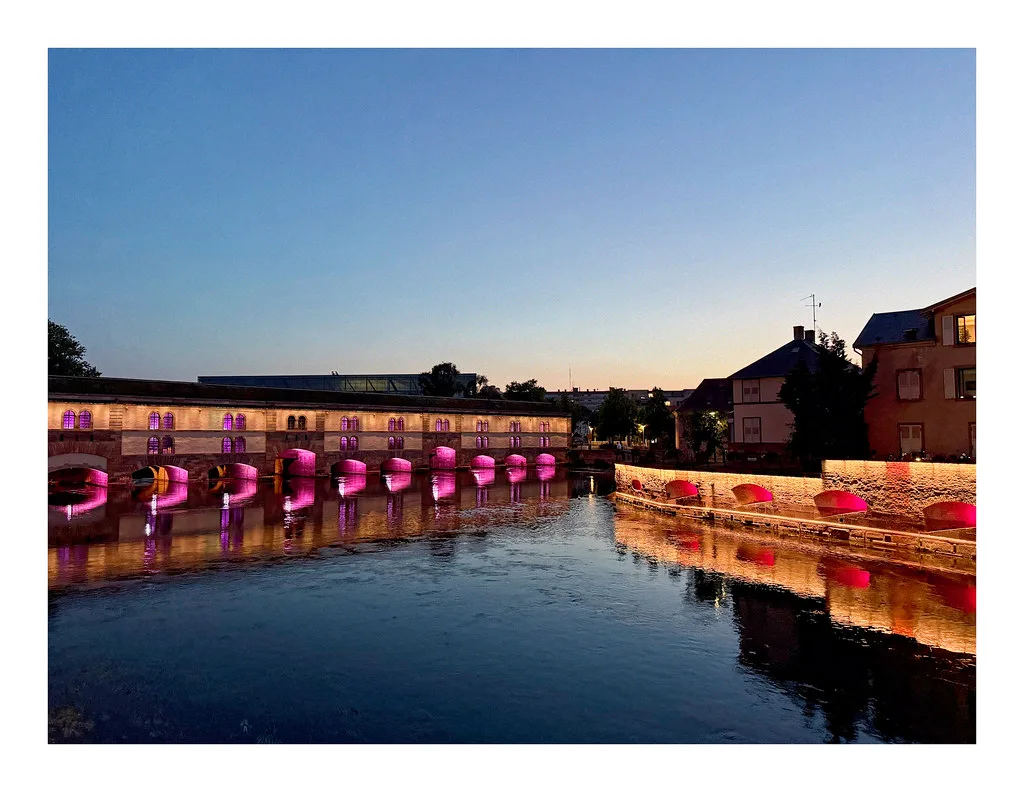
This is not a bridge you cross and forget. The structure combines three jobs: a bridge, a weir that controls the level of the Ill, and a defensive work built to protect the city from upstream attack. That explains the long row of arches you see from the water and the covered gallery running along the top, which was designed as part of the fortifications rather than as a viewing platform.
The design is credited to the military engineer Vauban and was built by Tarade around 1690, when Strasbourg had recently passed to France under Louis XIV. Its 13 arches span roughly 120 metres across the river, and walking across the top of the dam gives you the view that makes the detour worthwhile. Read it as a piece of military engineering first; the panorama is the bonus.
Where it is and how to walk there
The barrage sits at the south-western edge of the Grand-Île, the UNESCO-listed island at the heart of old Strasbourg, with Petite France immediately downstream and the Ponts Couverts a few steps beyond. The old town is compact: you can cross it on foot in about 20 minutes end to end, roughly 1.5 kilometres, so almost everything in the centre is walkable from the barrage.
From the cathedral, head west through the lanes towards the river and follow the Ill downstream; from the Petite France side, the barrage is the large stone structure at the end of the canal. Trams and buses serve the centre, but the last stretch is on foot whichever way you come, and the approach includes steps rather than a lift.
The panoramic terrace and what you see
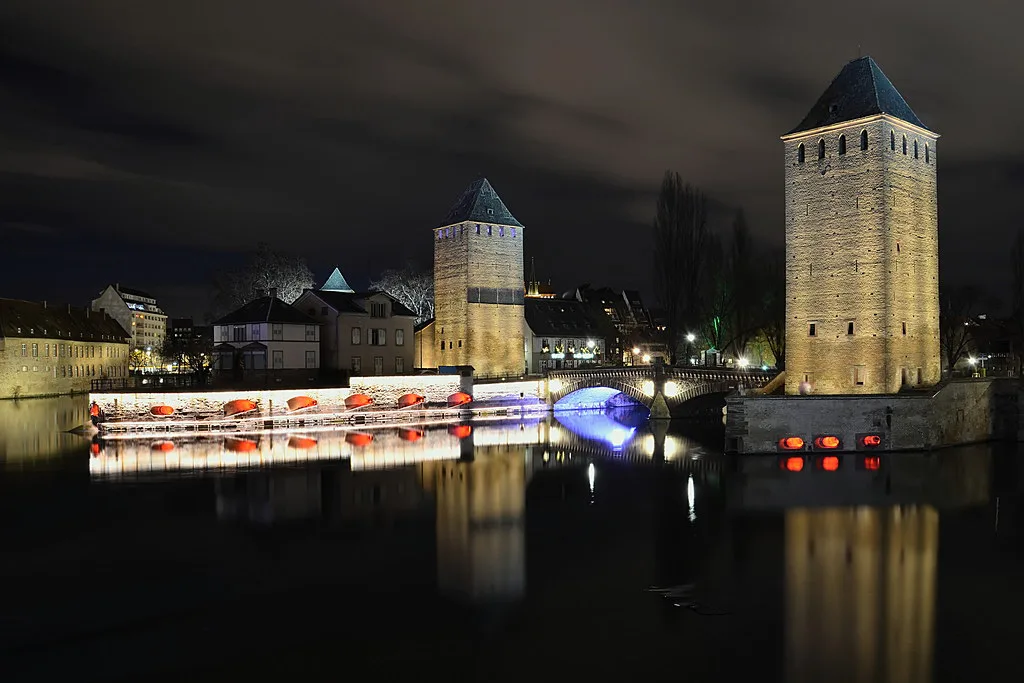
The rooftop terrace is the main event. Looking downstream you get the Ponts Couverts in one frame: three surviving bridges and their 13th-century towers, which lost their roofs long ago despite the name. Beyond them the half-timbered backs of Petite France rise straight out of the water, and on a clear day the cathedral spire closes the view behind you.
Come for the view from both sides. From the terrace you look down on the Ponts Couverts; from the bridges themselves you look back at the barrage and get the classic photograph of the whole defensive sequence, so walk the few minutes between the two rather than choosing one.
Inside the dam: the covered gallery
Under the terrace, a gallery runs through the structure and is open to visitors walking between the two banks. Inside, you pass plaster casts and copies of statues and gargoyles taken from the cathedral and from the Palais Rohan, displayed in the dim space between the arches. It takes a few minutes and costs nothing, and it is the part most day visitors skip.
Check the official Strasbourg tourist office page before you set out for the terrace, since access arrangements for a riverside structure can change with water levels or maintenance.
How long to allow
Give the barrage 20 to 40 minutes. Ten minutes covers the climb, the view and the descent; the rest absorbs the gallery and a slow walk along the water. If you add the Ponts Couverts and a loop through the Petite France lanes, budget a half-day in this corner of the city, which is realistic for a weekend.
The terrace is open air and unsheltered, so wind off the river makes it noticeably colder than the streets behind it, and rain leaves the stone slippery. Wear shoes with grip and keep the visit short in bad weather rather than planning a picnic up there.
Best time of day to come
Morning puts the light on the Petite France facades across the water; late afternoon and early evening light the terrace itself and the cathedral spire behind it. Midday is the least flattering and the busiest, since tour groups work this corner into walking routes between the cathedral and Petite France.
Strasbourg is at its most comfortable in late spring and early autumn, when the terraces and riverside paths are pleasant rather than raw. May and June are the months locals here name as the nicest, and the city is at its most crowded in December.
What to pair with it nearby
The Ponts Couverts are a two-minute walk from the barrage, and the Maison des Tanneurs, the tall half-timbered house that now holds a restaurant, stands in the Petite France lanes just beyond. Both belong to the same view you have just seen from above, which is why this cluster works so well as a single walk.
If you want a museum in the same outing, the Palais Rohan sits beside the cathedral and holds three of the city's municipal collections, each ticketed separately. Several municipal museums in Strasbourg are free on the first Sunday of the month, so check that before paying for a single ticket.
Practical notes before you go
There is no ticket desk at the barrage, and you should not plan around a fixed opening time. The Strasbourg tourist office publishes the current access details for the panoramic terrace, which is the listing to trust if you are making a special trip for the view.
The whole visit is outdoors and on foot, with steps at the terrace and no lift, so it suits anyone who can manage a short staircase and a cobbled riverside path. Plan the barrage as a pause rather than a half-day sight, and use the time you save on the museums and streets around the cathedral.
Plan Your Visit
The Barrage Vauban earns its place in a Strasbourg weekend because it costs nothing, takes under an hour and hands you the best free view of Petite France and the Ponts Couverts at once. Slot it between the cathedral and the lanes of Petite France, walk both sides of the river, and you have seen this corner of the Grand-Île properly.
Explore more Strasbourg guides
Frequently Asked Questions
Is the Barrage Vauban free to visit?
Yes. The terrace and the gallery through the dam are public access rather than a ticketed attraction, which is why the visit is short and easy to fit into a walk between the cathedral quarter and Petite France.
Where exactly is the Barrage Vauban in Strasbourg?
It sits at the south-western edge of the Grand-Île, the historic island at the centre of old Strasbourg. Petite France is immediately downstream and the Ponts Couverts stand a couple of minutes away on foot.
How long does a visit to the Barrage Vauban take?
Allow 20 to 40 minutes. Ten minutes is enough for the rooftop terrace and the view; the rest covers the gallery inside the dam and a slow walk along the river to the Ponts Couverts.
What can you see from the terrace?
The Ponts Couverts with its 13th-century towers, the half-timbered houses of Petite France along the water, and the cathedral spire behind you. Walk over to the bridges afterwards for the reverse view of the barrage.
What is inside the Barrage Vauban?
A covered gallery runs through the structure, displaying plaster casts and copies of statues and gargoyles from the cathedral and the Palais Rohan. It is a short walk-through rather than a museum.
When was the Barrage Vauban built?
It was designed by Vauban and built by Tarade around 1690, after Strasbourg became French under Louis XIV. It served as a defensive work, a weir controlling the Ill and a bridge in one structure.
Do you need to book the Barrage Vauban?
No booking applies to a public terrace. The Strasbourg tourist office lists the current access details for the panoramic terrace, which is where to check if you are travelling specifically for the view.
What is near the Barrage Vauban?
The Ponts Couverts, the Maison des Tanneurs and the streets of Petite France are all within a few minutes on foot, and the cathedral and the Palais Rohan are a walk across the Grand-Île.