
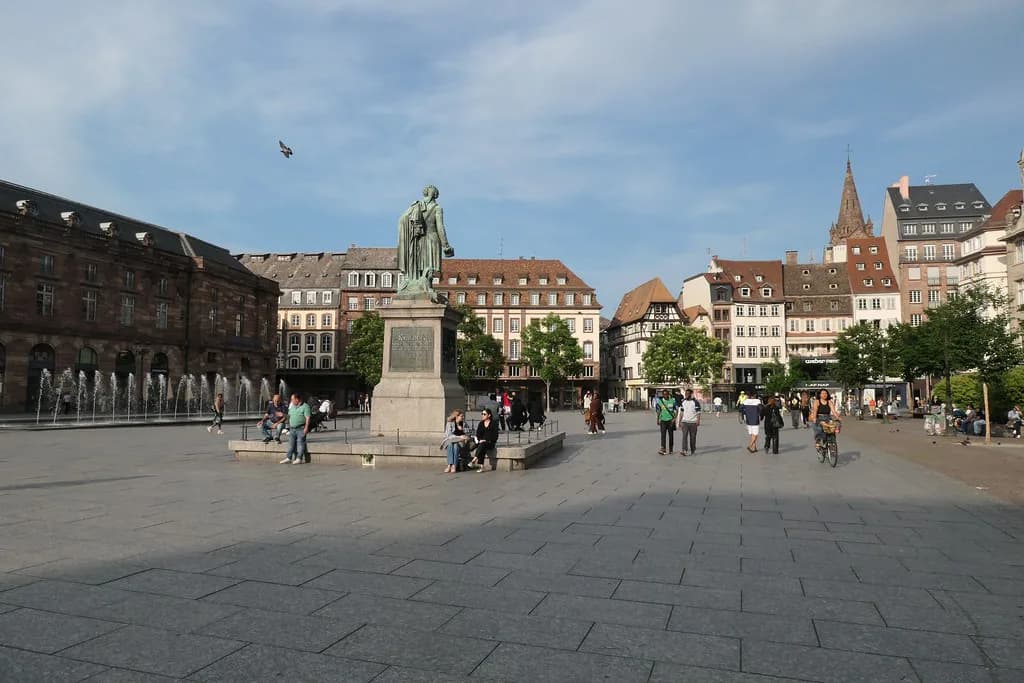
Place Kléber, Strasbourg: A Visitor's Guide to the City's Main Square
Place Kléber is Strasbourg's central square and its default meeting point, a fully pedestrian space on the Grande Île with the city's tram lines running along one edge. It is not a museum piece you queue for: you cross it, sit on it, and use it to get your bearings. Allow 15 to 30 minutes, longer if you stop for a drink under the trees.
The square earns its stop through three things: the 3.10-metre statue of General Jean-Baptiste Kléber at its centre, the long neo-classical Aubette building on one side, and the 2007 redesign that added trees, a water basin, benches and terraces to make people linger rather than pass through. Everything else is shops, cafés and the tram.
Where Place Kléber sits in Strasbourg
Place Kléber lies within the Grande Île, the island that forms Strasbourg's historic centre, and the cathedral is a short walk to the south-east. The square is entirely pedestrian apart from its western side, where tram lines A and D run past. That west edge is a track corridor, not a terrace: cross it at the marked points rather than drifting into it.
The nearest tram stop for most visitors is Place de l'Homme de Fer, on the adjacent square, which puts you at the south-west corner of Place Kléber. Because lines A and D pass directly along the square, you can also simply step off at the edge of the paving. Check the current network map at your stop or on the Strasbourg transport operator's site, since line numbers and stop names are the sort of detail that changes.
How to get there
If you are arriving by tram, aim for the western side of the square and walk in from there; the rest of the perimeter is pedestrian and easy to cross on foot. From the cathedral, the walk along the shopping streets takes only a few minutes, which makes Place Kléber a natural next stop after a cathedral visit.
Coming from Petite France, walk east through the old streets and you will arrive at the square's western edge within roughly ten minutes at a normal pace. The route is flat and signposted, so it works well as a link between the canal quarter and the shopping core rather than as a separate trip.
The Kléber statue at the centre
The statue in the middle of the square shows General Jean-Baptiste Kléber standing, holding the letter from Admiral Keith demanding the surrender of French troops. It was sculpted by the Alsatian artist Philippe Grass and stands 3.10 metres tall on its base. Kléber, born in Strasbourg in 1753, served under Napoleon and was assassinated in Egypt in 1800; his body was brought back to the city.
Look at the general's feet: a small sphinx sits at the base, a reference to the Egyptian campaign that made his name. The reliefs carved into the pedestal show his victories at Altenkirchen and Heliopolis, and the square itself was given his name in 1840. The monument was taken down by the German occupiers in September 1940, moved to Cronenbourg cemetery, and reinstalled in October 1945.
The Aubette: Blondel's sandstone block
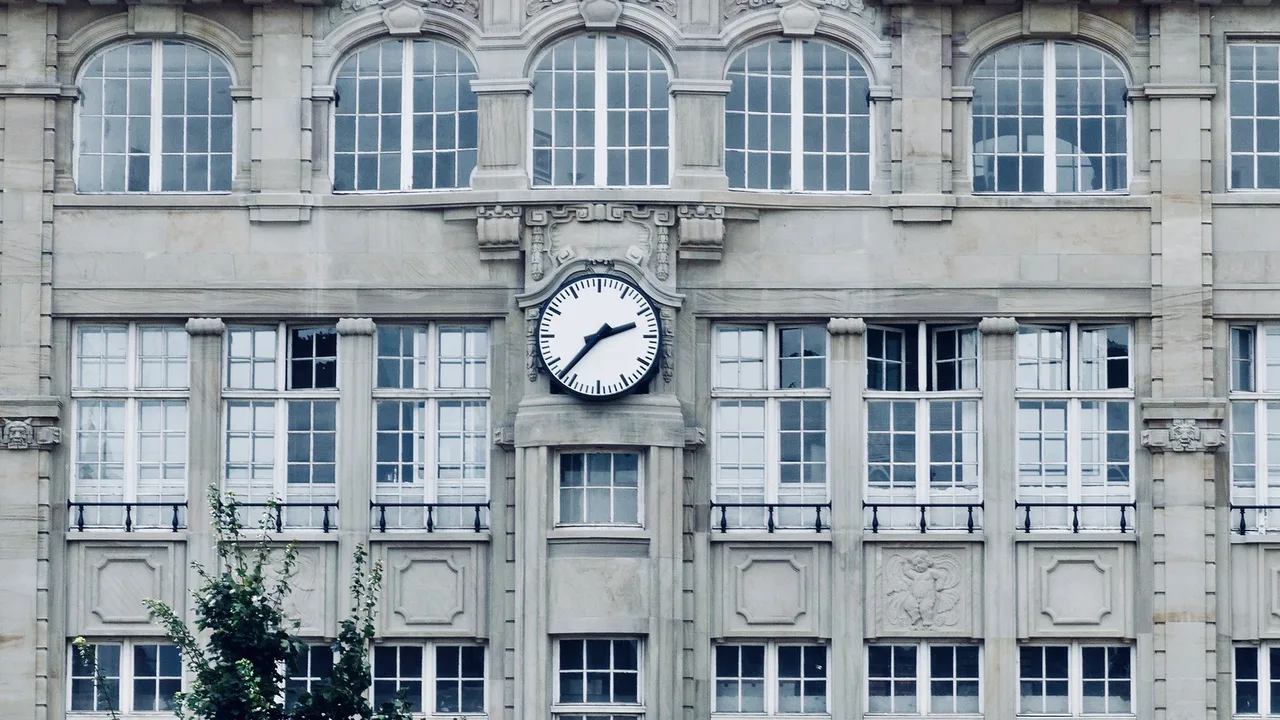
The Aubette is the long neo-classical building in pink Vosges sandstone that closes one side of the square, designed in 1778 by Jacques-François Blondel, architect to the French king, as part of a scheme to modernise and beautify the city. Its military purpose explains the odd name: garrison troops came here at dawn to collect their orders. Since its restoration it has housed shops, which is why the ground floor looks busier than the stone façade suggests.
Treat the Aubette as architecture to look at rather than a sight with a ticket: there is no visitor entrance to plan around, and the interior you see is commercial space. Stand back on the paving to take in the length of the façade and the central projecting section, which is the part worth photographing.
The Maison Rouge and the square's rebuilt edges
The Maison Rouge is the square's least loved corner. A grand late nineteenth-century house of that name once stood here, and it was demolished to make way for the post-modern shopping building now on the site; the two accounts of the square give the demolition as 1960 and 1978, so the century is the reliable part and the exact year is not. The replacement still divides opinion in Strasbourg, which is itself a useful reminder that this square has been rebuilt repeatedly rather than preserved intact.
Around the perimeter you are looking at buildings from the Middle Ages through to the twentieth century, with the Aubette the most monumental of them. That mix is the honest reason to raise your eyes above the shopfronts: the ground floors are chain retail, the upper storeys are not.
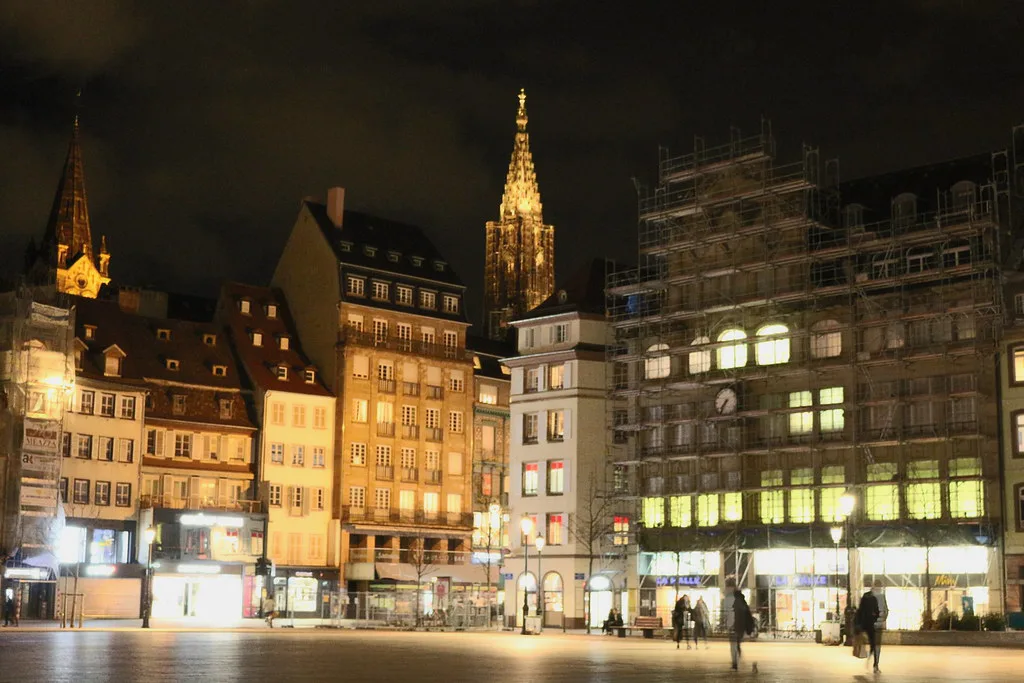
Walking the square after the 2007 redesign
The last redesign of Place Kléber came in 2007, when the square was replanted with trees and given a water basin with jets, benches and café terraces. The aim was to make people stop rather than cut across. Use it that way: pick a bench on the eastern half, away from the tram tracks, and the square becomes a reasonable place for a coffee break rather than a thoroughfare.
Because the square is fully pedestrian on three sides, it is easy with luggage and manageable with children, though the tram edge needs attention. The paved surface is flat, so a loop of the perimeter takes only a few minutes and involves no steps.
How long to allow and how to fit it into a weekend
Budget 15 to 30 minutes for Place Kléber itself: enough to see the statue, read the pedestal reliefs, look along the Aubette and sit for a few minutes. It slots neatly between the cathedral and Petite France, and it is also the obvious crossing point between the shopping streets and the island's western quarter, so you will likely pass through more than once.
If you are building a two-day Strasbourg plan, put the square at the start or end of a Grande Île walk rather than making it a destination in its own right. The cathedral, the Palais Rohan and the canals are the sights that repay timed visits; Place Kléber is the hinge between them.
When the square is busiest
Place Kléber is where Strasbourg gathers: demonstrations, street performers and markets all use the square, and it hosted the crowds celebrating the 1998 and 2018 World Cup wins. On an ordinary weekday it is simply a busy shopping square with a constant flow of trams on the west side. If you want photographs of the statue without a crowd around it, go earlier in the day rather than at lunchtime.
Markets set up on the square several times a week, but the days are not fixed in any published schedule you can rely on months ahead. Rather than plan a morning around one, treat a market as a bonus if you happen to be passing.
Honest trade-offs
Place Kléber is a crossing point, not a sight in itself, and a visitor with only one day in Strasbourg should not spend it here. The west side carries tram traffic, the shopping frontages are ordinary, and the Maison Rouge building is widely considered a poor replacement for what stood before. Come for the statue, the Aubette façade and a bench, then move on.
The compensation is convenience: everything on the square is free to look at, there are no queues, and the arcades give shelter in poor weather. In December it fills with the city's giant Christmas tree, which is a crowd rather than a quiet visit, so plan around it if you want space.
What is nearby within a few minutes
The cathedral is the obvious next stop, a few minutes south-east, and the Palais Rohan with its museums sits just beyond it. Walking the other way takes you into Petite France, where the Ponts Couverts and the Barrage Vauban give you the canal views that most weekenders come for. All of these are within a twenty-minute walk of the square.
For orientation rather than sightseeing, the area around Place de l'Homme de Fer and the streets north of the square form the city's main shopping district. If you want to understand how the island is laid out before committing to a route, start with an overview of the Strasbourg neighborhoods and then walk the square as part of it.
Practical points before you go
Nothing on Place Kléber requires a ticket or a booking: the square is open public space and the Aubette is a building you view from outside. There are no published visiting hours for the square because there are no gates to close.
Confirm tram line numbers, stop names and service times on the Strasbourg transport network's own site before you travel, since routes are the one detail here that shifts. Otherwise, the square needs no preparation: turn up, look up at the Aubette, and read the base of the statue.
Plan Your Visit
Place Kléber works best as a ten-minute pause in a larger walk: see the Kléber statue and its Egyptian sphinx, look along Blondel's Aubette, then head for the cathedral or the canals. It is central, free and pedestrian on three sides, which makes it a reliable meeting point even if it will never be the highlight of a Strasbourg weekend.
Combine it with the cathedral to the south-east and Petite France to the west, and you have a natural half-day route across the Grande Île with no transport needed. Keep the tram edge in mind as you cross, and the square does its job as the hinge of the city.
Frequently Asked Questions
Where is Place Kléber in Strasbourg?
It sits on the Grande Île, Strasbourg's historic island centre, with the cathedral a few minutes' walk to the south-east and the Place de l'Homme de Fer alongside it to the south-west. The square is fully pedestrian apart from its western edge, where tram lines A and D run past.
How do I reach Place Kléber by tram?
Lines A and D run along the western side of the square, and the nearest stop for most visitors is Place de l'Homme de Fer on the adjacent square. Check current line numbers and stop names on the Strasbourg transport network's own site.
Who was Jean-Baptiste Kléber and why is there a statue?
Kléber was a Strasbourg-born general who served under Napoleon and was assassinated in Egypt in 1800. The square took his name in 1840, and the 3.10-metre standing figure by Philippe Grass stands at its centre, with a sphinx at his feet referring to the Egyptian campaign.
What is the Aubette building on Place Kléber?
It is a long neo-classical building in pink Vosges sandstone, designed in 1778 by Jacques-François Blondel, the king's architect. Its name comes from its military use, since garrison troops collected orders there at dawn, and it now houses shops on the ground floor.
How long should I spend at Place Kléber?
Allow 15 to 30 minutes to see the statue, read the pedestal reliefs, look along the Aubette and sit for a while. It fits naturally between the cathedral and Petite France rather than filling a morning on its own.
Is Place Kléber pedestrianised?
Yes, with one exception: the western side carries tram lines A and D. The rest of the square is traffic-free and flat, with trees, a water basin, benches and terraces added in the 2007 redesign.
What is there to see near Place Kléber?
The cathedral and the Palais Rohan are a few minutes south-east, while Petite France, the Ponts Couverts and the Barrage Vauban are within roughly twenty minutes on foot to the west. The shopping streets around Place de l'Homme de Fer adjoin the square.