
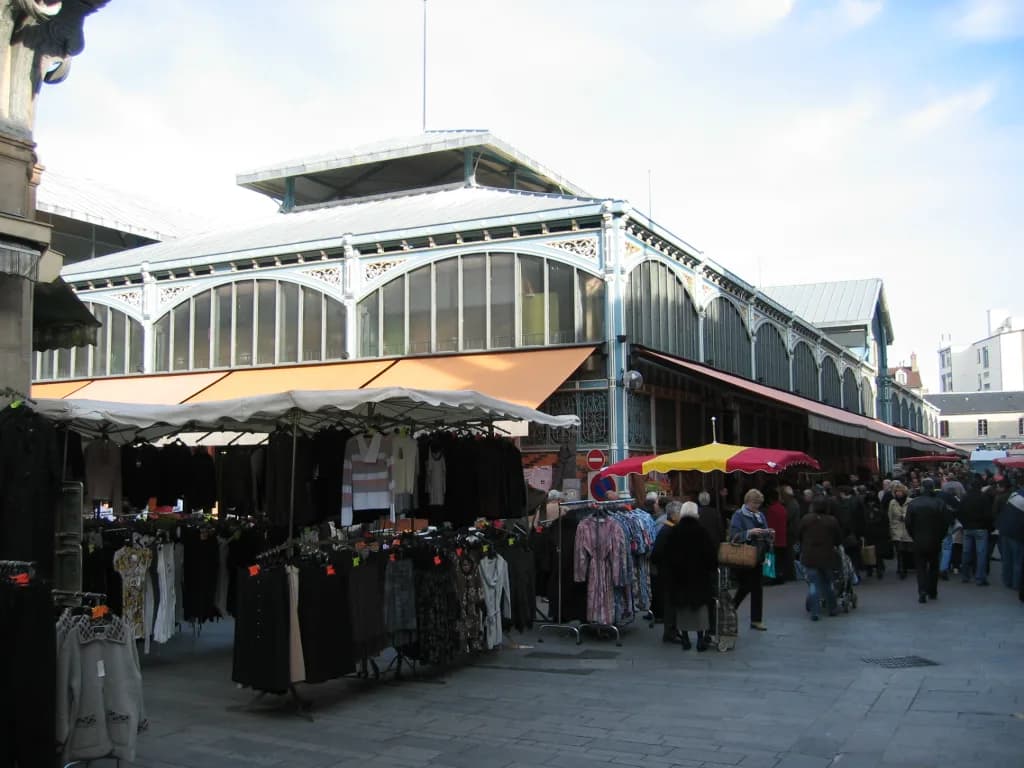
Halles de Dijon: A Visitor's Guide to Dijon's Covered Market

Halles de Dijon is a 19th-century covered market in the heart of the old town, and it earns an hour of any Dijon weekend. The hall fills with traders on Tuesday, Thursday, Friday and Saturday, so build your plan around one of those mornings rather than chancing a Monday.
You come here as much for the building as the shopping: a vaulted iron-and-glass hall with animal heads carved above its main arches, stalls of Burgundy produce below, and cafés and bistros ringing the square outside. It sits within a few minutes' walk of the city's headline sights, which makes it easy to drop into a half-day loop, and it pairs naturally with the rest of the things to do in Dijon.
What Halles de Dijon Is and Why It Is Worth an Hour
This is one of France's largest and best-known markets, a Burgundy institution that has occupied its current hall since 1876. A market had stood in Dijon for centuries before that, so the hall is the latest home for a very old local habit rather than a modern food hall.
An hour is a sensible allowance. That covers a slow circuit of the aisles, a look at the ironwork and carvings, and time for a snack; add another half-hour if you plan to sit down to eat or to browse the shops and outside stalls around the building.
The market is also the simplest introduction to Burgundy's food culture you can get in the city. The produce sold here maps directly onto the region's famous dishes, which makes the hall a useful primer before you sit down to a proper meal.
Where It Is in the Old Town
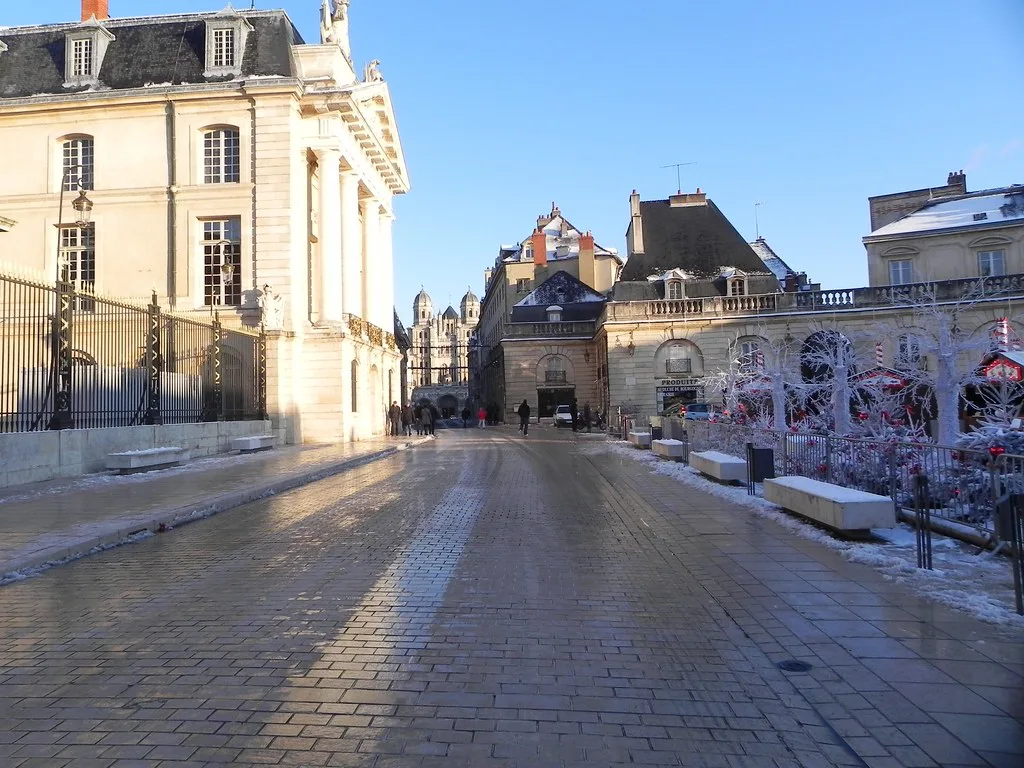
Halles de Dijon stands in the heart of the old town, a short distance from Place Darcy and the top of rue de la Liberté, the pedestrianised shopping street. Notre-Dame de Dijon and the Palais des Ducs are both within a few minutes' walk, so the market sits naturally between the shopping axis and the historic core.
Think of it as the hinge of a walking loop rather than a detour. Arrive from rue de la Liberté, work your way through the hall, then continue to the Palais des Ducs or back up towards Place Darcy without doubling back. For the wider set of sights within that loop, our Dijon Attractions: 6 Visitor Guides covers each one separately.
Getting There and How Long to Allow
The hall is close enough to the old-town core that walking is the obvious approach: from Place Darcy you reach the market in a few minutes on foot along the shopping street, and from the Palais des Ducs it is a similar short hop. There is no separate trip to plan, which is exactly why the market works well as a stop between two other sights.
Allow an hour inside and leave buffer either side. Market halls get busy mid-morning, and the surrounding square has stalls and shops that slow you down, so a tight 30-minute slot tends to turn into something longer.
The Building: Iron, Glass and the Eiffel Link
The present hall was built between 1873 and 1875 on the site of the old convent cloister of the Jacobines; before demolition, the market had been held in the Jacobine church itself. The city decided in 1868 to build a new market, and the result is the vaulted hall you see today.
The design came from plans by Gustave Eiffel, a native of Dijon, and the steel beams inside do recall the Paris tower. The glass ceiling fills the huge hall with natural light even on a grey December day, which is why the interior photographs well and feels airy rather than cramped.
Outside, the building follows a classical-inspired structure with a run of arcades and columns with fluted shafts. Look along the facade as you approach rather than walking straight in, because the arcade rhythm is the part most visitors miss.
Details to Look for Above the Arches
Above the main entrances, the corners of the big arches carry animal motifs and symbolic themes tied to the market. Look for the heads of a goat, a sheep, a cow, a boar and fish, alongside Ceres, goddess of harvests, and Hermes, god of commerce.
There is a lion head too, which is a puzzle in a food market and has been read as a guardian figure. Knowing the list in advance turns a quick walk past the entrance into a two-minute scavenger hunt; children tend to enjoy this part as much as the stalls.
Market Days and Planning a Weekend Around Them
The hall comes to life every Tuesday, Thursday, Friday and Saturday, with a wide spread of meats, fish, cheeses, fruits, vegetables, herbs, bread, pastries and ready-to-eat snacks. Those four days are the ones to anchor your weekend around, because they decide whether the market is the centrepiece of a morning or a building you only admire from outside.
A Saturday arrival suits the market best: Friday and Saturday both trade, so you have two chances if the first morning goes to another sight. If your break starts on a Monday, put the market second in the running order and give the first day to the museums and the cathedral instead.
Since the four trading days come from a single published account of the market rather than a live schedule, confirm the days for your dates before you build a tight itinerary.
What Is Sold Inside
Expect a full food market rather than a souvenir hall: butchers, fishmongers, cheesemongers, greengrocers, herb and spice stalls, bread and pastries, and ready-to-eat snacks. Stalls also spill outside into the square around the great hall, so the shopping does not stop at the doors.
The Burgundy specialities are the thing to seek out. Ingredients for coq au vin, boeuf bourguignon, escargots, jambon persillé, oeufs en meurette and pain d'épices are all here, and in the right season you will find cherries and blackcurrants, the fruit behind crème de cassis.
Wine is part of the offer too, with Burgundy whites and reds sold in the hall. Treat that as shopping to take home rather than a tasting session, and check with individual traders about travelling with bottles.
Eating at the Market
La Buvette du Marché is the stall to know for a sit-down break, serving snacks, small meals and a glass of wine. It turns the visit from a browse into lunch, which is a better use of your hour than rushing the aisles and eating elsewhere.
If you would rather graze, build a meal from the stalls instead: bread, cheese, charcuterie and fruit are all under one roof, and the ready-to-eat snacks are designed for exactly that.
Around the Hall: Square, Shops and Bistros
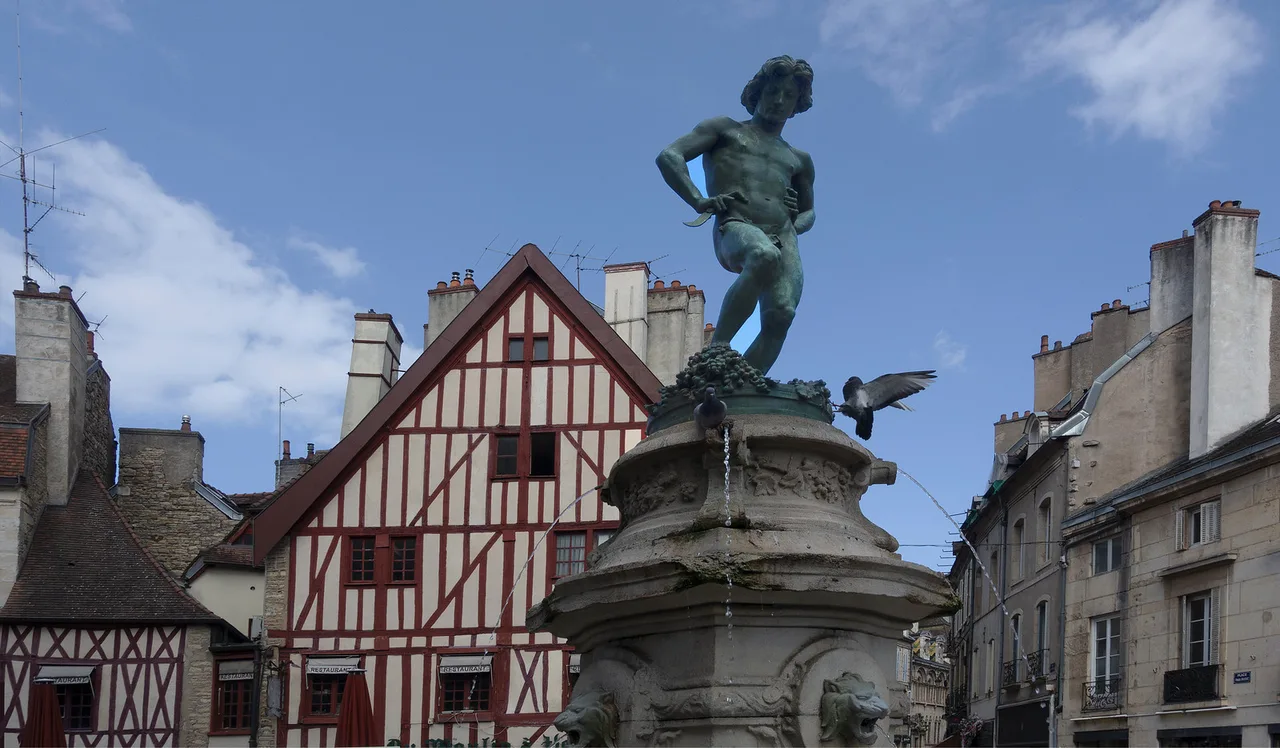
The square around the hall is lined with small shops, cafés and bistros, and the choice is genuinely wide enough to make lunch a decision rather than a default. Walk the perimeter once before picking a table, since the outside seating fills fastest when the market is busiest.
Stalls outside the hall mean you can shop the square even when you are not going deep into the aisles. That makes the market a low-commitment stop if your schedule is tight: ten minutes on the square still gives you the flavour of the place.
Nearby Sights to Combine with a Visit
Notre-Dame de Dijon and the Palais des Ducs are the obvious pairings, both a short walk away, and the Musée des Beaux-Arts de Dijon sits within the palace complex. A workable half-day runs market first, palace and museum next, with the shopping street saved for the walk back.
If you want a view over the old town after the market, the Tour Philippe le Bon is the classic climb, and the Parcours de la Chouette route links several of these sights on foot. The owl-marked Parcours de la Chouette is also the easiest way to cover the things to do in Dijon on a single loop. Pick one add-on rather than all three, or the market morning turns into a sprint.
Practical Points Before You Go
Plan around a Tuesday, Thursday, Friday or Saturday morning, allow an hour, and bring a bag for anything you buy. The Halle de Dijon is best treated as a single attraction with a fixed slot in your day, not something to squeeze between two museum visits.
Confirm opening hours and the day's trading before you travel, since the market's schedule is the one detail most likely to change a weekend plan.
Plan Your Visit
Halles de Dijon rewards a focused hour: the 1873–75 iron-and-glass hall, the Eiffel-designed structure, the carved heads above the arches and a market floor built around Burgundy produce. Time it for a trading morning rather than a closed one and the visit slots neatly into a walk between Place Darcy and the Palais des Ducs.
Build the rest of the day around the market rather than the other way round, and check the trading days and hours before you set out.
Explore more Dijon guides
Frequently Asked Questions
What day is market day at Halles de Dijon?
The hall fills with traders on Tuesday, Thursday, Friday and Saturday, with meats, fish, cheese, produce, bread and ready-to-eat snacks on sale on those mornings. Confirm the days for your dates before you finalise a weekend plan.
Where is Halles de Dijon in the old town?
It sits in the heart of the old town, close to Place Darcy and the top of the pedestrianised rue de la Liberté. Notre-Dame de Dijon and the Palais des Ducs are both a few minutes' walk away, which makes the market easy to combine with those sights.
How long does it take to visit Halles de Dijon?
Allow about an hour for a circuit of the aisles, a look at the ironwork and carvings, and a snack. Add another half-hour if you plan to sit down to eat at La Buvette du Marché or browse the shops and stalls around the square.
What can you buy at Halles de Dijon?
Expect meat, fish, cheese, fruit and vegetables, herbs, bread, pastries and ready-to-eat snacks, plus Burgundy ingredients for dishes such as coq au vin, boeuf bourguignon and jambon persillé. In season you will also find cherries and blackcurrants, and Burgundy wines are sold in the hall.
Can you eat at Halles de Dijon?
Yes. La Buvette du Marché serves snacks, small meals and a glass of wine, and the ready-to-eat stalls make it easy to assemble a picnic-style lunch. The square outside is lined with cafés and bistros if you would rather sit down properly.
Is Halles de Dijon free to visit?
It is a working market you walk into, and entry is not ticketed in the way a museum is; check at the hall or with the tourist office for any current arrangements. Individual stalls set their own prices and display them, so check before you buy.