
Palace of the Dukes of Burgundy, Dijon: What to See and How Long to Allow
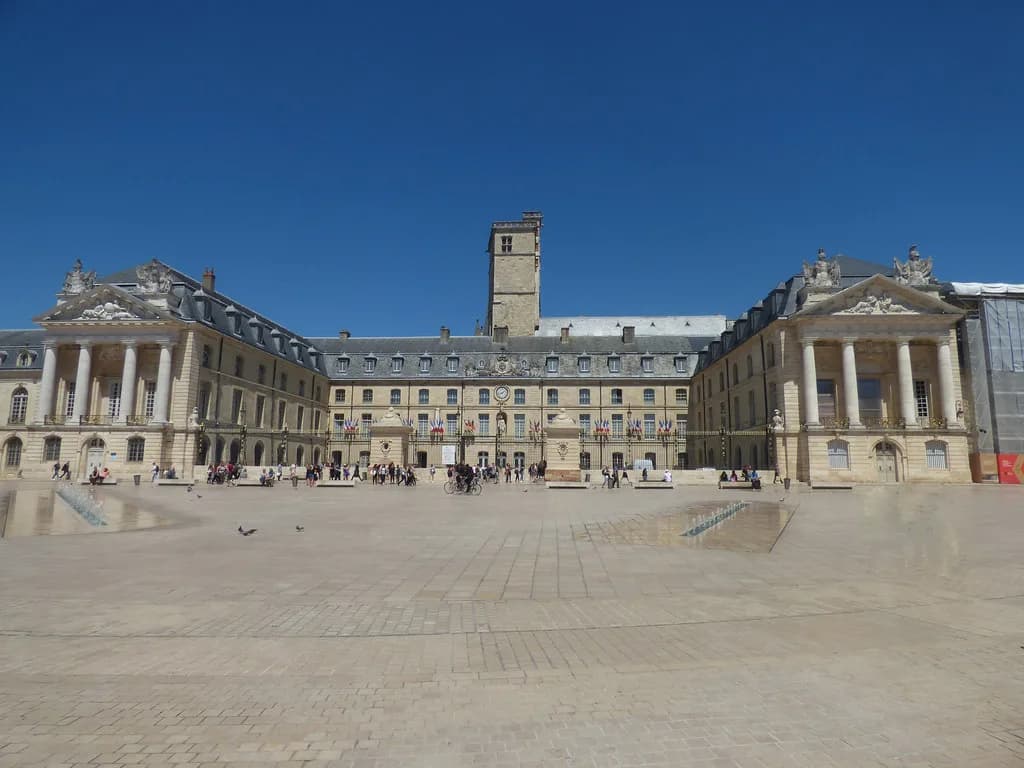
The Palace of the Dukes of Burgundy in Dijon is a single historic complex on Place de la Libération, and the first thing to understand is that it is not one museum. It houses the town hall, the Musée des beaux-arts, the city archives and the tourist office, so visitors need to decide which parts they want before setting out.
The palace took its present shape across centuries: the medieval ducal residence was rebuilt from the 15th century, the Palais des États was added from the 17th century, and Jules Hardouin-Mansart unified the facade around the honour court and the two side courtyards. That layered history is why the building feels like several monuments pressed together.
What the Palace of the Dukes of Burgundy actually is
This is a working civic complex rather than a single ticketed attraction. The town hall, the Musée des beaux-arts, the city archives and the tourist office all occupy the Palace of the Dukes of Burgundy, which means some rooms are administrative and some are open to visitors.
Plan around three separate experiences: the exterior and courtyards that anyone can walk through, the museum collection inside, and the tower climb organised by the tourist office. Treating them as one visit is the most common planning mistake, because they are entered and organised differently. The practical first stop is the tourist office in the complex, which handles the tower and guided access.
Where it is: Place de la Libération in central Dijon
The palace faces Place de la Libération, the former Place Royale designed by Jules Hardouin-Mansart, in the heart of central Dijon. Its address is Place de la Libération, 21000 Dijon, and the palace fronts onto the square, so you arrive at a grand classical facade rather than a museum entrance.
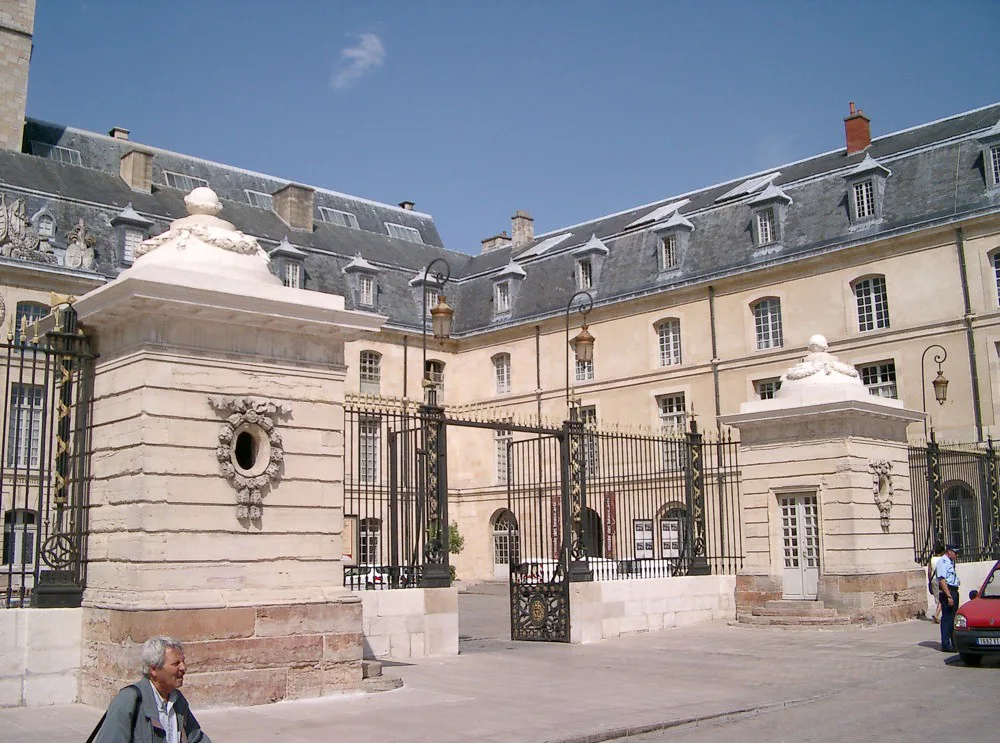
Anchor yourself with the two courtyards: the Cour de Flore to the west and the Cour de Bar to the east, both framed by the palace wings. The surviving Tour Philippe le Bon rises at the centre of the complex and remains the symbol of ducal power over the city.
How to get there on foot from the city centre
The palace sits within easy walking distance of the historic centre, so most visitors reach it on foot rather than by transport. Approach from the surrounding old streets and the facade opens onto Place de la Libération, which makes orientation straightforward once you are in the centre.
If you are combining sights, the cathedral and the market halls are both in the same compact central area, which keeps walking between them short. The Burgundy tourism listing for the palace gives the tourist office telephone number as 03 80 74 52 71, which is the line to ring about guided access before you travel.
The courtyard layout: honour court, Cour de Flore and Cour de Bar
Read the plan before you wander. The palace is arranged around an honour court facing Place de la Libération, flanked by the Cour de Flore to the west and the Cour de Bar to the east. Once you know this, the building stops feeling like a maze and starts making sense as a set of connected courts.
Access to the Palais des États rooms runs through the Cour de Flore, either during the cultural events held there or on guided tours arranged by the tourist office. That is the detail that matters: those rooms are not simply open on a normal drop-in basis, so plan around a tour if you want to see them.
The Tour Philippe le Bon, the surviving medieval tower
The Tour Philippe le Bon is the medieval survivor at the centre of the complex, kept from the ducal residence and named for the duke who rebuilt it. It stands as the palace's strongest link to the medieval period, before the classical facades went up around it.
The climb to the top of the tower is organised by the tourist office, so the ascent is a booked visitor experience rather than an open stairway you can simply walk up. Ask at the office inside the complex for the arrangements, and read our guide to the Tour Philippe le Bon for what the climb involves.
Inside the Musée des beaux-arts: the ducal kitchens and the Salle des Garde
The Musée des beaux-arts de Dijon occupies part of the palace, and the rooms most tied to the building's ducal past sit within it. The ducal kitchens and the Salle des Garde, the former great reception hall of the dukes, can be seen in the museum, which is why the collection and the architecture are worth taking together.
Entry to the museum is the ticketed part of a palace visit, separate from walking the courtyards. Prices and opening days are set by the museum and the tourist office rather than posted on the square, so confirm them there before you travel.
The palace's other residents: town hall, archives and tourist office
Alongside the museum, the palace holds the town hall, the city archives and the tourist office. That mix is what makes the building feel alive rather than preserved: it is still the civic heart of Dijon, not a sealed monument.
Practically, the tourist office is your entry point for everything organised: the tower climb, guided visits and the rooms of the Palais des États. Start there rather than at the museum door if you want to combine several parts of the palace in one day.
The Chapelle des Élus and the Palais des États rooms
The tourist office also runs access to the Chapelle des Élus, the 18th-century chapel within the palace complex. Like the tower, it is a guided element rather than an open room, so build it into your plan instead of expecting to stumble on it.
The Palais des États rooms, reached via the Cour de Flore, include the Gabriel staircase, the Salle des États and the Salle de Flore. These are the grand 17th-century interiors that show the palace's parliamentary side, and they are the part most visitors miss because they never leave the main courtyard.
How long to allow, split between exterior, tower and museum
Give the exterior and courtyards a short block of time on their own: walk the honour court, cross to the Cour de Flore and the Cour de Bar, and look up at the Tour Philippe le Bon. This is the part that fits easily into a broader walk through central Dijon.
Then treat the tower climb and the museum as two separate bookings of time, since one is a guided ascent and the other is a gallery visit. If you want both plus the Palais des États rooms, plan the palace as a half-day rather than a quick stop, and build in the fixed timing of tours.
Tickets, opening times and booking: where to confirm
The palace's own visitor listing gives the address, the telephone number and the parts of the complex open to the public, and it leaves admission prices and daily opening hours to the museum and the tourist office. Ring or call in at the office before you fix your day around a tour, because the tower, the chapel and the Palais des États rooms all depend on staffed slots.
Traveler reviews of the palace describe a historic ducal palace on Place de la Libération dominated by the medieval tower, which is a fair summary of what you see from the square. Use them for orientation, and take the timing of your day from the museum and the tourist office instead.
What's nearby to pair with the visit
The palace stands in the densest part of central Dijon, so pair it with the Cathédrale Saint-Bénigne and a walk along the shopping streets towards the market halls. All three sit within a compact area that suits a single unhurried day on foot.
If you want a structured route, the Parcours de la Chouette waymarked trail through the old town passes the palace and its neighbours. It is the simplest way to stitch the palace, the cathedral and the squares into one coherent walk.
The palace square itself, Place de la Libération, is worth a few minutes on its own as the classical set-piece that frames the building. Sit with a coffee on the square and you get the facade at its best.
Practical tips: the climb, group tours and language of materials
Book the tower climb and any guided visit through the tourist office, since access to the tower, the Chapelle des Élus and the Palais des États rooms is organised rather than self-guided. Ask about group tours if you are travelling with several people, as the office arranges these.
Materials and signage are commonly in French and English, and the tourism listing records the palace as welcoming visitors in both languages. That makes the office a sensible first stop if you want to understand the building before you walk the courtyards.
Plan Your Palace Visit
Build the palace into a day rather than a detour: courtyards and the square first, then the museum, then the tower or the Palais des États rooms if you have booked them. That order keeps the building's history legible and stops you retracing steps.
For the wider city, our guide to Dijon Attractions covers the cathedral, the markets and the old-town sights that sit within walking distance of Place de la Libération. If you are extending your trip into the Côte d'Or, our Beaune city guide covers the wine capital an easy train ride south.
Explore more Dijon guides
Frequently Asked Questions
Where is the Palace of the Dukes of Burgundy in Dijon?
It faces Place de la Libération in the centre of Dijon, at Place de la Libération, 21000 Dijon. The palace fronts onto the square, so you arrive at a classical facade rather than a museum door.
Is the palace the same as the Musée des beaux-arts?
Not quite. The palace is a civic complex that houses the Musée des beaux-arts alongside the town hall, the city archives and the tourist office. The museum is one part of the building, and its ducal rooms include the former kitchens and the Salle des Garde.
What can you see inside the Palace of the Dukes of Burgundy?
Inside the museum you can see the ducal kitchens and the Salle des Garde, the former great reception hall. The Palais des États rooms, reached through the Cour de Flore, include the Gabriel staircase, the Salle des États and the Salle de Flore. The Chapelle des Élus is also within the complex.
Can you climb the Tour Philippe le Bon?
The climb is organised by the tourist office, which handles access to the tower. Ask at the office inside the complex for how the ascent is arranged and when it runs.
How long does a visit to the palace take?
Plan it as a half-day if you want the courtyards, the museum and the Palais des États rooms. Walking the exterior and courtyards alone takes far less, and the tower climb and museum should be treated as separate blocks because each has its own entry arrangements.