
Place de la Libération, Dijon: A Visitor's Guide to the Old Royal Square
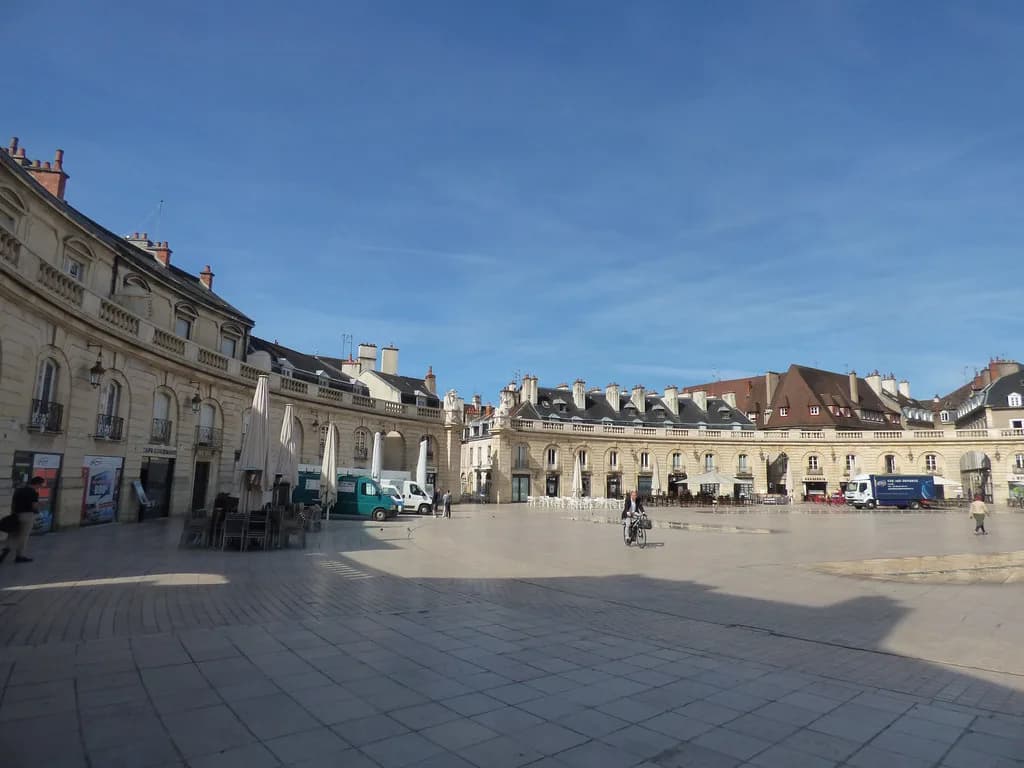
Place de la Libération is the semicircular square that opens out in front of the Palace of the Dukes of Burgundy and Dijon's city hall, in the middle of the old town. It takes a few minutes to look at and puts you within a couple of minutes of the palace, Tour Philippe le Bon and the lanes of the historic centre. Treat it as the threshold of central Dijon rather than a sight that fills an afternoon.
Where the square is and how to find it
The square sits in the heart of old Dijon, opening off Place des Ducs and the surrounding pedestrian lanes. If you are walking the centre, you will meet it without trying: the curved facade and the palace frontage are the giveaway. Coming from further out, aim for the palace complex rather than a street address, because the square is the space in front of it.
Arriving on foot from the main shopping streets, the approach narrows between old buildings before the space opens up, which is part of the effect. The square is an open public space you simply walk into. Set your map to the Palace of the Dukes of Burgundy and you will arrive on the square itself.
The layout: a curved royal square
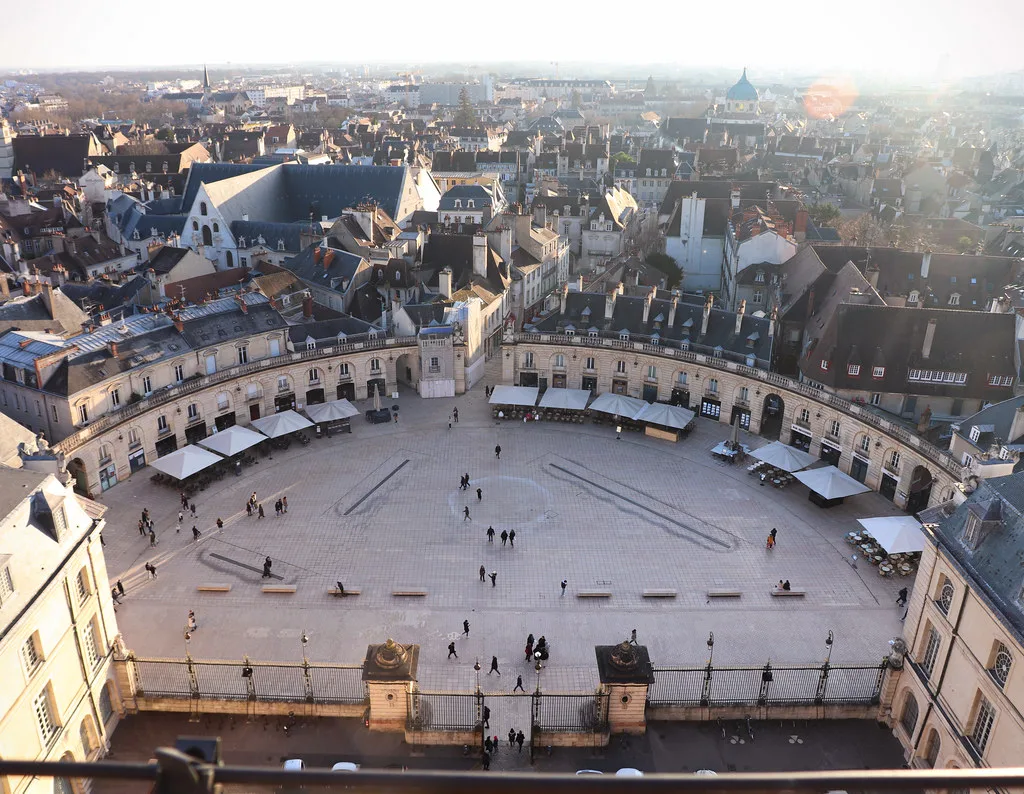
Place de la Libération is semicircular, with the palace and city hall forming the frame on one side and the open paving sweeping round in front. A fountain sits on the square, and the palace facades close the view rather than letting it run off into traffic. It reads as a single composed space rather than a crossroads.
Because the square is enclosed by buildings, the best views are from the open side looking back at the palace frontage and from close to the fountain looking out towards the old-town lanes. Walk the full curve once before you stop; the composition changes with each step, and the paving and rooflines are the detail worth noticing.
A short history of the square
The square was laid out in 1689 by the architect of Louis XIV as a royal square attached to the palace of the Dukes of Burgundy. It kept that royal association until the French Revolution, and it has carried the name Libération since the end of the Second World War. The place had been occupied since the thirteenth century, and it was renovated in 2006.
Knowing that sequence makes the name make sense: this was the city's ceremonial front room under the monarchy, and its modern name marks the post-war period rather than a medieval origin. The 2006 renovation explains why the paving and the open sweep look cleaner and more uniform than the surrounding medieval lanes.
What to look at while you are standing there
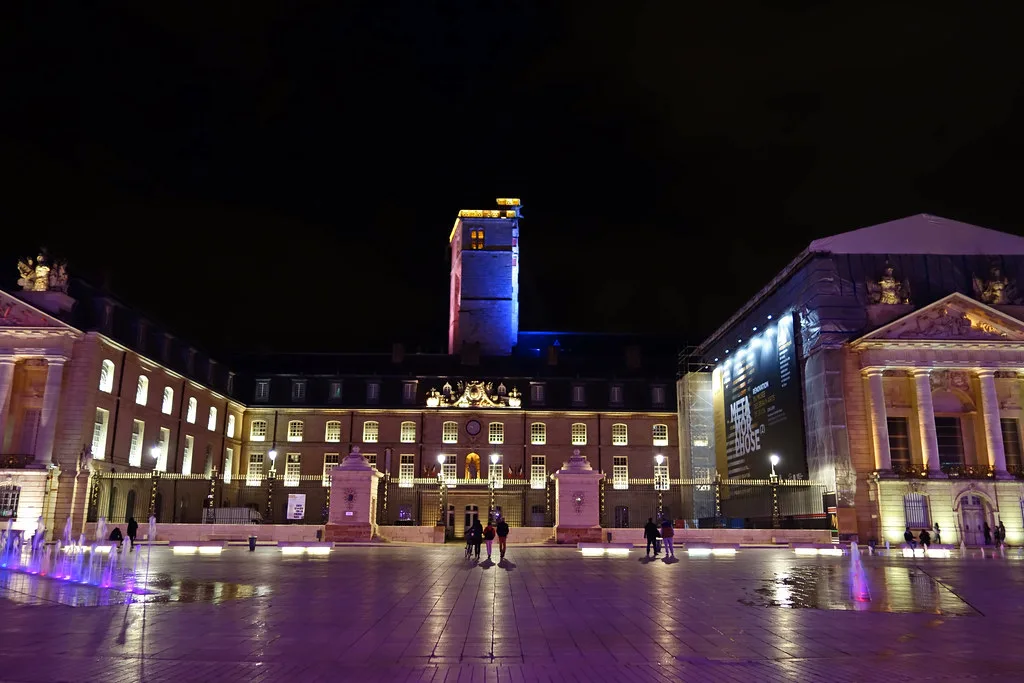
Start with the palace frontage itself, which forms the backdrop to the whole square and gives the space its scale. Then look at the fountain and the paving pattern underfoot, and finally turn round to see how the old-town lanes funnel into the open space. The contrast between the formal curve and the tight streets behind you is the thing visitors remember.
The palace houses the Musée des Beaux-Arts de Dijon, so the building you are photographing is also a museum you can step into. Its collections and any current exhibition details are handled on its own page rather than on the square.
Travellers who have photographed the square tend to single out the palace and the fountain as the elements that define it. That is a visitor's verdict rather than an official ranking, but it matches the setting: a formal ensemble rather than a square you pass through.
Aperitivo, an Italian restaurant, has an address on the square, which is a useful marker if you are meeting someone or orienting yourself by food rather than architecture. Beyond that, the square is mostly a place to stand, look and photograph rather than a cluster of attractions in its own right.
How long to allow
Allow ten to fifteen minutes if you are looking, photographing and reading the facades, which is enough to take in the curve, the fountain and the palace frontage. Budget longer only if you plan to sit down at one of the addresses facing the square and watch the space fill and empty. The visit ends when you decide it does.
The honest trade-off is that the square is small and open, with little shade or shelter of its own, so it suits a stop on the way somewhere rather than a destination in its own right. Slot it in as the first or last ten minutes of a half-day in the centre, when you are already passing through.
What is within a couple of minutes
The Palace of the Dukes of Burgundy is the building on the square, so it is effectively the next thing you see. Tour Philippe le Bon, the tower associated with the ducal palace, stands in the same group of buildings and is the obvious next stop for anyone interested in the view over the rooftops.
Place François-Rude, the old-town square with its half-timbered houses, is a short walk away, and Les Halles, Dijon's covered market, sits close by in the same quarter. Both fit naturally into the same morning or afternoon as the square, and the walk between them takes you through the streets the square opens onto.
The Cathédrale Saint-Bénigne is also within the old town and makes a sensible addition if you are following a route through the centre rather than stopping at one sight. A wider list of what to see in the city helps you decide the order.
Practical points before you go
The palace and the museum inside it are separate visits: their opening days, ticket prices and any closures are set by the institutions themselves, so check those on the day you plan to go in rather than assuming those arrangements match the square outside.
Group the square with the palace and the tower in one block of time, then move on to Place François-Rude and the market quarter. That order keeps you in the oldest part of the centre and avoids doubling back through the shopping streets. If you only have an hour in Dijon, this is the hour to spend here. If you are comparing Burgundy towns, our Beaune city guide covers the same kind of compact old-town circuit around a different set of sights.
Where to go next in central Dijon
From the square, head for the palace interior and the Musée des Beaux-Arts de Dijon, then climb Tour Philippe le Bon if the view appeals, before drifting to Place François-Rude and the market halls. The whole circuit stays within the old town and needs no transport. Plan the rest of your day around what is open when you arrive.
Explore more Dijon guides
Frequently Asked Questions
Where is Place de la Libération in Dijon?
It is in the heart of old Dijon, opening off Place des Ducs and the surrounding pedestrian lanes. The square is the space directly in front of the Palace of the Dukes of Burgundy and the city hall, so navigating to the palace brings you onto it.
Do you need a ticket for Place de la Libération?
No. The square is an open public space you walk into, with no gate or ticket desk. The palace and the museum inside it are separate visits with their own arrangements, which the institutions set themselves.
How long should you spend at Place de la Libération?
Ten to fifteen minutes covers the curve of the square, the fountain and the palace frontage. Allow longer only if you sit at one of the addresses facing the square, since there is no route to follow and no queue.
What is near Place de la Libération?
The Palace of the Dukes of Burgundy is on the square, and Tour Philippe le Bon stands in the same group of buildings. Place François-Rude and Les Halles, Dijon's covered market, are a short walk away in the same quarter.
Why is it called Place de la Libération?
The square was laid out in 1689 as a royal square attached to the ducal palace and kept that role until the French Revolution. It has carried the name Libération since the end of the Second World War, and it was renovated in 2006.