
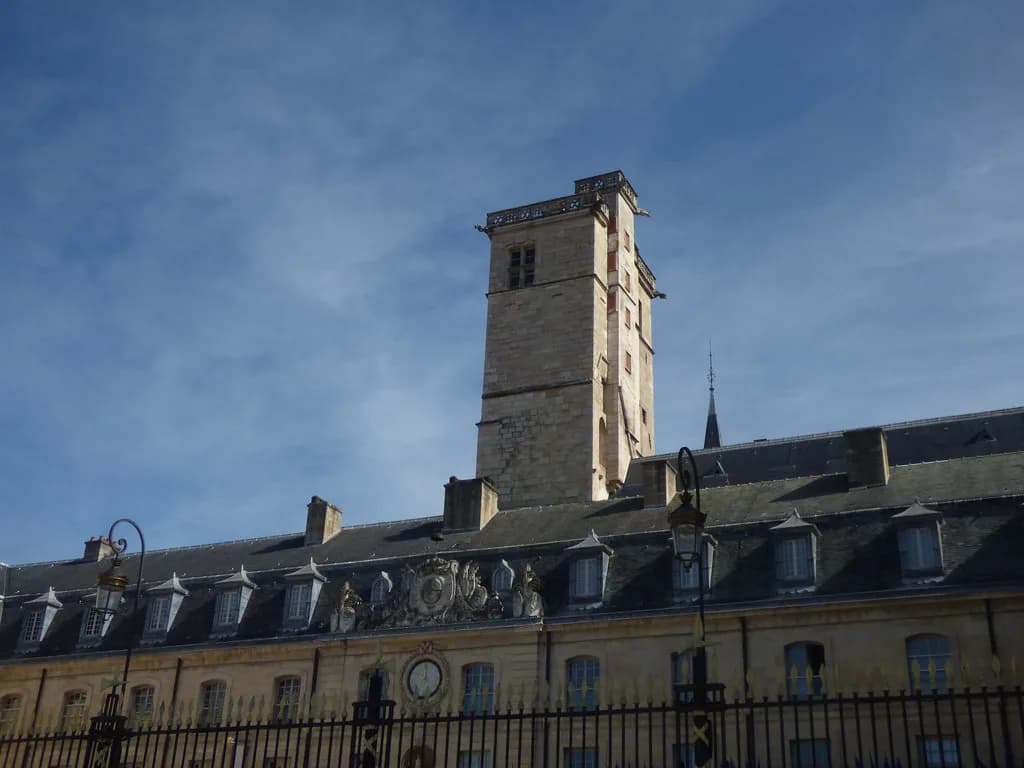
Tour Philippe le Bon: Dijon's 46-Metre Tower
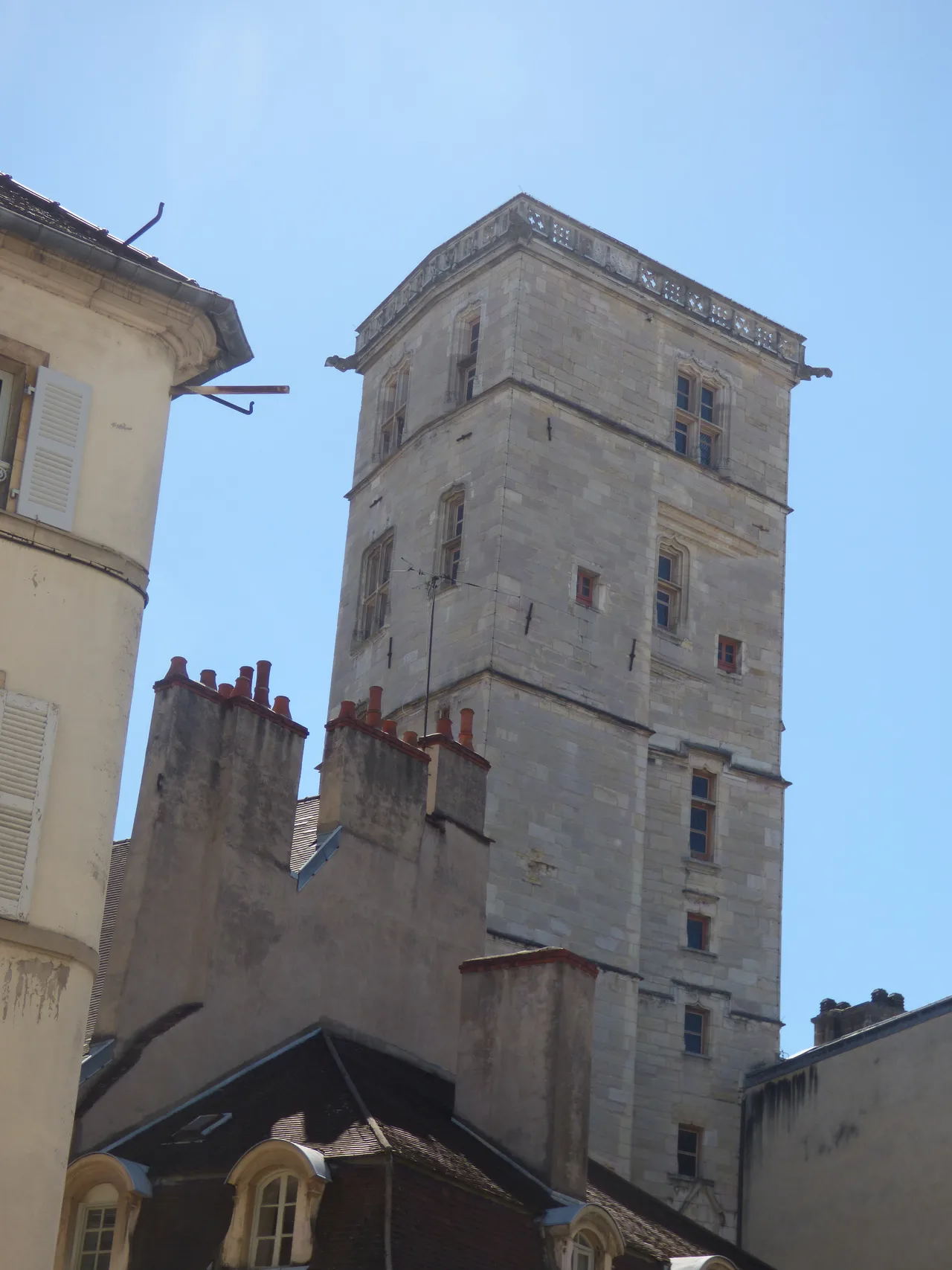
The Tour Philippe le Bon is the 46-metre tower that rises from the Palais des Ducs et des États de Bourgogne in the middle of Dijon, and the reward for climbing it is a panorama over the rooftops of the old capital of Burgundy. It was built between 1450 and 1460 for Philip the Good, at the same time as the ducal residence, and was originally called the Tour de la Terrasse. The climb to the viewing level takes 316 steps.
What the Tour Philippe le Bon Is
This is a medieval tower attached to a working palace, not a standalone monument with a visitor centre of its own. The structure dominates the site of the palace of the Dukes and the States of Burgundy, and its plans were drawn by a Lyonnais architect named Jean Poncelet. Its name honours Philip the Good, under whom Dijon held its most prestigious medieval role as capital of the Valois dukes.
The tower is a short, focused visit rather than a museum in itself: you go up for the view and come down. The palace around it holds the Musée des Beaux-Arts de Dijon, so the tower and the galleries share a single address and a single half-day. Treat the climb as the punctuation mark on a palace visit, not as a separate outing.
The climb itself is short in distance and steep in effort. The stair takes you to an open viewing level at 46 metres, where the panorama sweeps over the town and the surrounding countryside. There is no shortcut and no lift route described for visitors, so anyone in the group who dislikes enclosed staircases should decide before buying tickets.
Where to Find the Tower in Dijon
The address is the Palais des Ducs de Bourgogne, 21000 Dijon, and the tower stands on the palace complex that fronts the Place de la Libération. That semicircular square is the natural orientation point for the whole historic centre: the palace on one side, the shopping streets of the old town behind you, and the covered market a few minutes east.
If you are coming from the rail station, you walk north-west through the centre, passing the Place Darcy and up the rue de la Liberté, which is the main spine linking the station quarter to the palace. Allow a relaxed twenty minutes on foot, and use the walk to note the shopfronts and cafés you might want on the way back.
The tower is one stop on a compact circuit of central Dijon rather than a destination on the edge of town. A single unhurried day covers the palace, the tower, the cathedral and the market streets without any transport at all. Our guide to the city's attractions sets out how the pieces fit together.
The Climb: 316 Steps to the View
You climb 316 steps to reach the top of the tower. That is roughly the height of a twenty-storey building done in one continuous spiral, so pace yourself, keep to the wall side and let faster walkers pass. Wear shoes you can climb in; the stair is the whole experience here, not an afterthought.
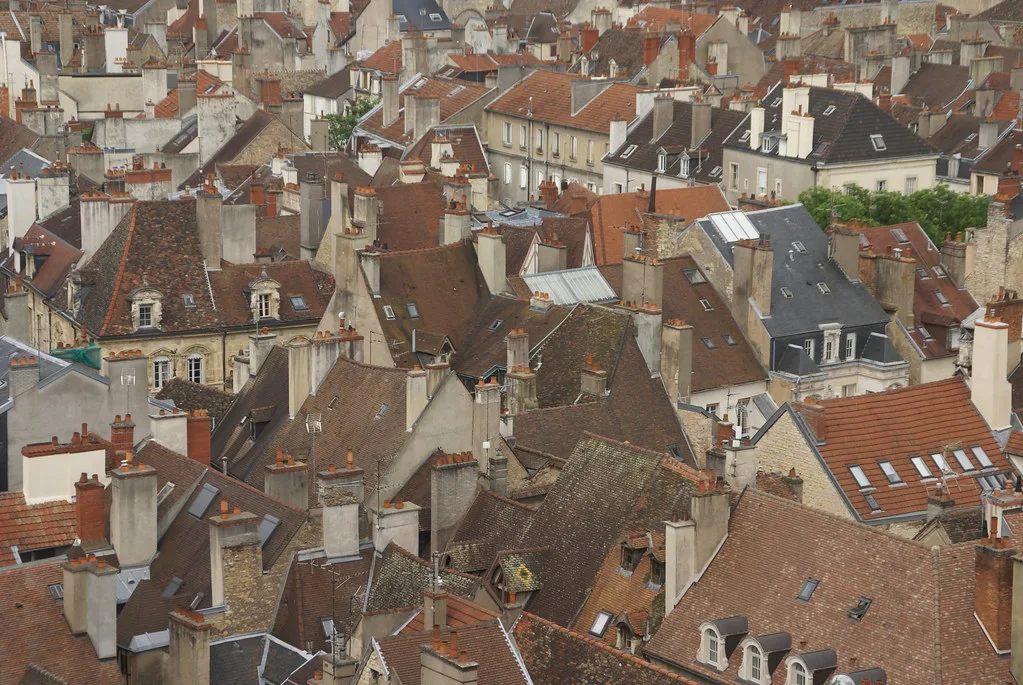
From the summit at 46 metres, the view covers Dijon and the surrounding area. Look for the patterned glazed roofs of Burgundy, the church towers and the ring of hills beyond the city, which together explain why this spot was chosen for a ducal residence. On a clear day this is the best orientation you will get before walking the streets yourself.
The viewing level is small, and groups are managed by letting people up in turns. Build in slack rather than arriving ten minutes before you need to be elsewhere. If the weather turns grey, the view loses most of its point and the climb becomes hard work for little reward — save it for a bright slot.
Tickets and Opening Times
The adult rate is a single flat tariff of six euros. Payment is accepted by card, holiday vouchers and cash, and pets are not allowed inside.
The tower does not run as an open-all-day monument: access is through guided slots and timed visits, and the tourist office publishes specific departures rather than continuous opening. Check the current timetable before you set out, because the slots fill and the days vary. The same page also lists themed evening and astronomy visits if you want something beyond the standard climb.
Because entry is tied to a slot, the sensible approach is to book or confirm your time first and plan the rest of the day around it. Turning up and hoping works better in low season than in summer, when Dijon's central sights are busiest. If the slot you want is gone, the palace and its galleries fill the gap without any planning at all.
How Long to Allow
Budget around an hour for the tower itself, including waiting for your slot, the climb, time at the top and the descent. Add the same again if you linger over the palace courtyard and the surrounding streets, which is easy to do. It is a filler for a half-day rather than a whole morning.
In a two- or three-day Dijon weekend, slot the climb into the first clear morning, when the light is good and your legs are fresh. It pairs naturally with the palace and the museum, then a late lunch, then a wander through the old town. Leave the tower for the last day and tired legs will resent those 316 steps.
What to See Around the Tower
The palace complex is the obvious next stop, and its courtyard and façades are free to walk through even if you skip the galleries. The Musée des Beaux-Arts occupies the palace itself, so the collections are literally underneath the tower. That makes the tower and the museum a single, efficient visit rather than two separate bookings.
The Cathédrale Saint-Bénigne is a short walk through the old streets, and its crypt and twin-spired front are worth the detour on the way to or from the palace. Nearby, the market halls give you a reason to plan the climb around a shopping morning. Both keep the day compact and on foot.
The Halles de Dijon, the city's covered market, sits a few minutes east and is best worked into a morning rather than an afternoon. Market halls in French cities typically trade on set days and pack up early, so check the schedule before you build a day around it. Pair the tower view with a market visit and you have a genuine sense of the city, old and working, in one loop.
Practical Trade-offs Before You Climb
The tower is a poor fit for anyone with limited mobility, a fear of heights or very young children who cannot manage a long spiral stair. There is no alternative route to the top described for visitors, and no shortcut down. Split the group if needed: the palace courtyard and the museum keep everyone else occupied at ground level.
Timing matters more than fitness. A grey, hazy afternoon turns a 46-metre view into a wall of cloud, while a clear morning gives you the whole city. Because tickets are tied to fixed slots, you cannot simply wait for better weather once you are up the stairs, so pick your day with the sky in mind.
It is also not a place to bring a pushchair or heavy bags, and pets are not admitted. Travel light, wear grippy shoes and leave the shopping until after the descent. The climb works best as the first thing you do in the day, not the last.
Fitting It Into a Dijon Weekend
Dijon rewards a walking weekend, and the tower sits at the centre of the loop. Start at the palace and Place de la Libération, climb early, then work through the museum, the cathedral and the market streets over the rest of the day. The city's own owl-trail markers make a self-guided walk easy to follow without a map. If you are weighing up another Burgundy stop on the same trip, our Lyon city guide covers a bigger city that rewards the same on-foot approach.
Saturday and Sunday mornings are the best fit, because central sights are open and the streets are lively without the weekday office crowd. Many French museums and shops close on one day of the weekend or at lunchtime, so check current opening days for each address before you set out. The Tour Philippe le Bon opening times in particular are worth checking, since the tower runs guided ascents rather than free access. Build the tower around your visit and let the rest of the day flex.
Plan Your Visit
The Tour Philippe le Bon is a small, sharp experience: a six-euro adult ticket, 316 steps and a 46-metre view over the best of central Dijon. Book or confirm your time first, climb on a clear morning, and let the palace and the old town fill the rest of the day. It is the kind of sight that turns a weekend from pleasant into memorable.
Frequently Asked Questions
How many steps are there up the Tour Philippe le Bon?
The climb takes 316 steps to reach the viewing level at the top of the tower. It is a continuous spiral stair with no shortcut, so pace yourself and wear comfortable shoes.
How tall is the Tour Philippe le Bon?
The tower stands 46 metres above the palace complex, and that is the height of the viewing level. From there the panorama covers Dijon and the surrounding countryside.
When was the Tour Philippe le Bon built?
It was built between 1450 and 1460 for Philip the Good, at the same time as the ducal residence. It was originally known as the Tour de la Terrasse.
How much does it cost to climb the Tour Philippe le Bon?
There is a single full-price adult tariff, with reductions for very young children. Check the current rate with the tourist office when you book your slot, as tariffs change.
Do I need to book the Tour Philippe le Bon in advance?
Access is through timed slots and guided visits rather than open-all-day entry. Confirm the schedule and availability before you travel, especially in high season when slots fill quickly.
Where exactly is the tower in Dijon?
It is at the Palais des Ducs de Bourgogne, 21000 Dijon, on the complex that faces the Place de la Libération in the historic centre. The Musée des Beaux-Arts occupies the same palace.
Is the climb suitable for children or people with limited mobility?
The spiral stair is steep and long, and there is no lift route to the top described for visitors. It suits confident walkers; anyone who struggles with stairs can wait in the palace courtyard or the museum.
What can I see nearby after the climb?
The palace courtyard, the Musée des Beaux-Arts, the Cathédrale Saint-Bénigne and the Halles de Dijon are all within a short walk. Together they fill a full day on foot without transport.