
Bastille Grenoble: A Visitor's Guide to the Fort de la Bastille
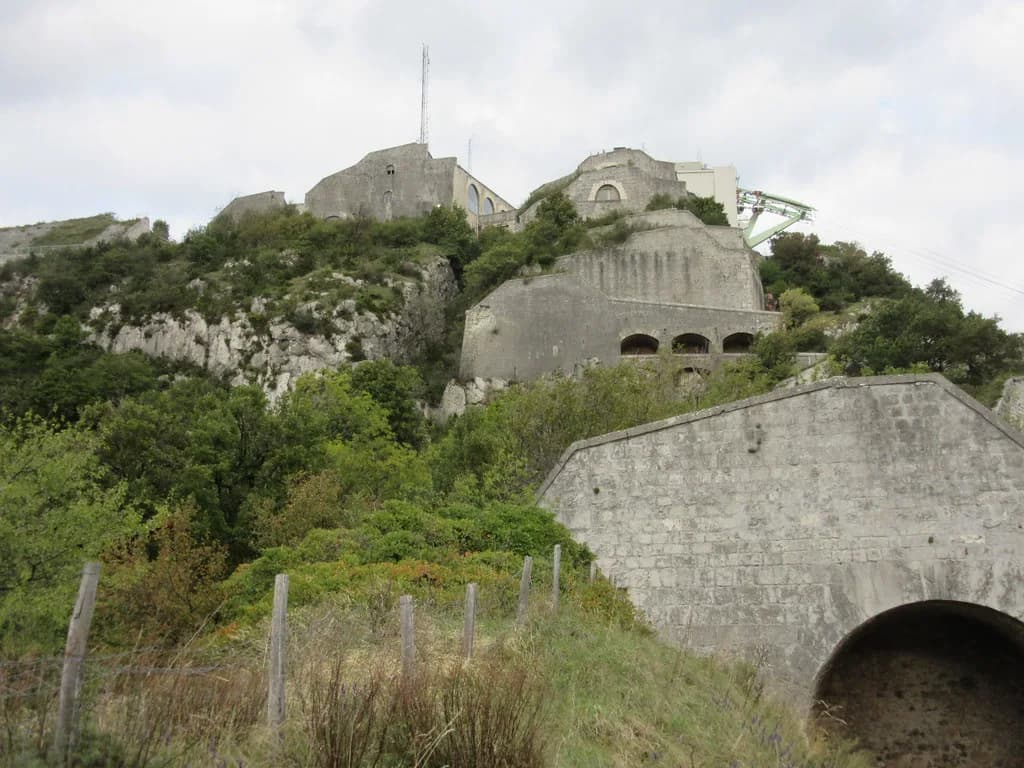
The Bastille in Grenoble is a fortress on the mountain that rises straight up from the city's northern edge, and the quickest way to understand it is to treat it as two things: a monument you walk around and a cable car ride that gets you there. Grenoble Alpes Tourisme dates the fortified complex to 1824-1848 and describes it as unusually well preserved.
Because the fort sits on the slope rather than in the street grid, you cannot simply stroll to it from a central square; the ascent is part of the outing. Plan on separating the two experiences when you book, since a cable car ticket and a guided fort visit are sold and run separately. This guide covers the fortress itself, and a separate guide covers the cable car in detail.
What the Bastille is and why it matters
This is a 19th-century military fortress, not a medieval castle, built between 1824 and 1848 and still standing as a complete fortified complex. Grenoble Alpes Tourisme calls it a not-to-be-missed site of the city and stresses how much of the original layout survives.
The build dates are the fastest way to place it: the Bastille belongs to the post-Napoleonic era of French fortification, when mountain passes and frontier cities were strengthened in stone. Knowing that changes what you look at inside, where thick masonry, covered galleries and ditches do the work rather than towers and turrets.
Where the fort sits above Grenoble
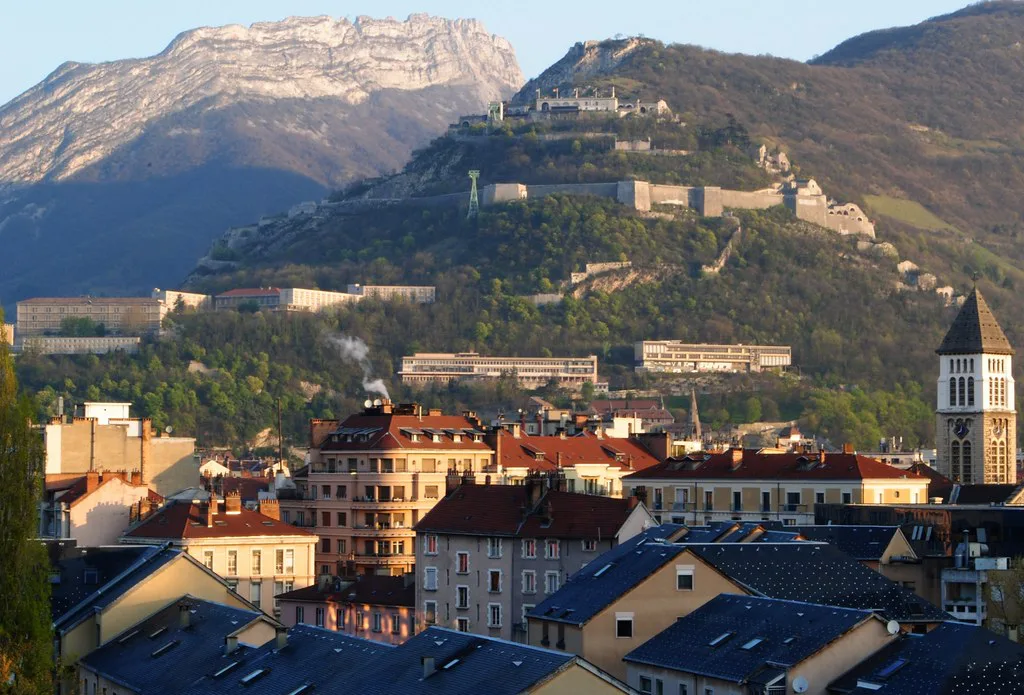
The fortress occupies the mountainside to the north of Grenoble, in the Isère department, looking down over the city and the river plain. That position explains the name visitors see on maps and signs: the Bastille is the fortified height above town, and the city spreads out beneath it rather than around it.
Grenoble sits in a basin ringed by mountain ranges, which is why the view from the fort is as much a part of the visit as the walls. The Grenoble Attractions: 6 Visitor Guides collection is the place to line up the rest of the city once you have decided how long to spend on the mountain.
Getting there: the cable car as the main approach
The standard approach is the Grenoble-Bastille cable car, which crosses the Isère and climbs to the fort in a few minutes, and the tourist office sells its group fort visit as a package that includes the cable car. That pairing is the clearest signal that the ride is the normal way up rather than an optional extra.
For the ride itself, including where the lower station sits and how the cabins work, use the dedicated Téléphérique de Grenoble Bastille guide so you know what you are buying before you queue.
Cable car and entry: what the published prices cover
Grenoble Alpes Tourisme lists the cable car at 6,60 € per person for adults within its group fort visit offer, and quotes the guided visit itself from 115,00 € as a starting price for a group. Treat both figures as group-booking terms rather than as the fare you will pay at the ticket window, because they appear on a page aimed at organised groups.
Visitors have posted other fares online, including a single trip around 6,50 € and a return around 9,60 €, but those are user-reported sums rather than official prices, so do not budget from them. Ask at the cable car ticket desk or check the Téléphérique de Grenoble Bastille's own fares for the day you travel.
The two purchases work differently: the cable car moves you up and down, while the fort visit is what puts a guide inside the walls. If your group is small, expect to buy the ride on its own and walk the fort independently.
Inside the fort: cavalier, casemates, moat and underground retreat
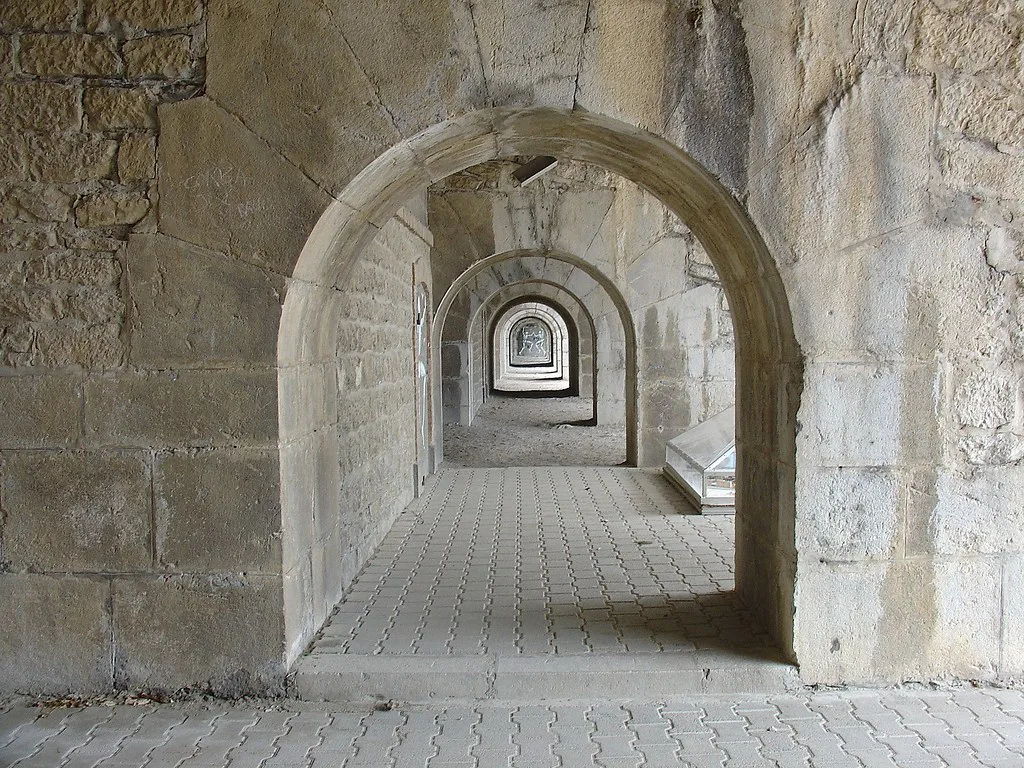
The guided route names four features worth looking for. The casemated cavalier is a raised, bomb-proof gun platform within the defences; the eastern casemates are vaulted chambers built into the ramparts; the moat rings the works; and the underground retreat is a covered space deep inside the complex.
Walk the fort with those four in mind and the interior stops reading as one long stone corridor. The vaulted chambers in particular show how soldiers lived and moved under cover, and the moat is best read from above before you descend into it.
Views over Grenoble and the mountains
The fort's terraces give wide views over the city and the surrounding ranges, and the tourist office lists those views among the reasons to make the climb. Look for the three massifs that frame Grenoble: the Chartreuse to the north, the Vercors to the west and south-west, and the Belledonne chain to the east.
Clear days reward the effort most, and the height means the weather on the mountain can differ from the streets below. Carry a layer even on a warm morning in town, and keep an eye on cloud building over the ridges.
How long to allow
The tourist office gives 60 minutes for its guided group tour of the fort, which is a realistic minimum for seeing the casemates, moat and viewpoints with someone explaining them. Add the cable car ride at each end, plus queueing time at the lower station on busy days.
Allow longer if you want to linger on the terraces or follow the paths around the outer works. Half a day is a comfortable shape for the round trip, and it leaves the afternoon free for the city centre.
Guided visits and group bookings
Grenoble Alpes Tourisme runs the guided fort visit with its own accredited guides, who lead tours in French, English and German, and caps each guide at 30 people. Book through the tourist office rather than turning up hoping to join, since the visit is organised as a group product.
School and adult groups are both catered for, and the office asks school groups to contact the cable car operator directly for tickets. If you are travelling as a family or a small party, ask the office which format fits before you commit to a quote.
Practical points on the mountain
The fort is an exposed military site with stone surfaces, steps and uneven ground between the works, so footwear matters more than it would on a city walk. Carry water, and remember that the open aspect makes sun and wind stronger than in the streets below.
Check conditions before you go up, because the cable car and the fort are outdoor experiences and mountain weather moves quickly. If the cloud is low, the viewpoints that justify the trip may be closed in, and a city museum makes a better use of the morning.
What else is nearby once you come back down
The cable car lands you close to the old centre, so the rest of the day belongs to the lower city. The Musée de Grenoble, with its fine art collections, is an easy indoor counterpart to a morning on the ramparts.
For a gentler loop, the Jardin de Ville sits in the heart of the centre near the river, and the cathedral quarter gives you a short, level walk after the climb. Both make a sensible pairing with a Bastille morning rather than a separate outing.
If you are planning the wider weekend, Grenoble Neighborhoods: 4 Area Guides helps you judge how the centre, the riverbanks and the slopes fit together before you commit your days.
Plan Your Visit
The Bastille rewards a simple plan: ride up, walk the walls with the four named features in mind, spend time on the terraces and come back down for the city. Build in an hour for a guided fort tour and the best part of a morning for the whole excursion.
For the fares, group terms and the current timetable, the tourist office and the cable car operator are the sources that matter, and a quick check before you travel settles both. Everything else is a matter of picking a clear day.
Explore more Grenoble guides
Frequently Asked Questions
Where is the Bastille fortress in Grenoble?
It stands on the mountainside directly north of the city centre, in the Isère department, looking down over Grenoble and the river plain. The cable car from the city side is the usual way up, and it lands at the fort.
How do you get up to the Fort de la Bastille?
The Grenoble-Bastille cable car is the standard approach, crossing the Isère and climbing to the fort in a few minutes. The tourist office's guided fort visit includes the cable car, which shows how the two are normally combined.
How much does the Grenoble-Bastille cable car cost?
Grenoble Alpes Tourisme publishes a per-person adult cable car figure within its group fort visit offer, which is a group-booking term rather than a walk-up fare. For the fare you will actually pay, check the cable car operator's own price list or ask at the ticket desk on the day.
How long does a visit to the Fort de la Bastille take?
The tourist office gives 60 minutes for its guided group tour of the fort, which covers the casemates, moat, underground retreat and viewpoints. Add the cable car ride at each end and queueing time, and half a day is comfortable.
When was the Bastille in Grenoble built?
Grenoble Alpes Tourisme dates the fortified complex to 1824-1848, making it a 19th-century work rather than a medieval castle. That era shaped the thick masonry, covered galleries and ditches you see inside.
Can you book a guided tour of the Fort de la Bastille?
Yes. Grenoble Alpes Tourisme runs guided fort visits with its own guides in French, English and German, capped at 30 people per guide, and books them as a group product. Contact the office in advance rather than turning up to join.
What should I wear for a visit to the Bastille?
Wear shoes with grip for stone steps, uneven ground and the moat, and carry a layer for the mountain weather. The site is exposed, so sun protection and water matter on bright days.
What can I do nearby after coming down from the fort?
The Musée de Grenoble offers fine art indoors, while the Jardin de Ville and the cathedral quarter give you a level walk in the centre. All sit close to where the cable car brings you back down.