
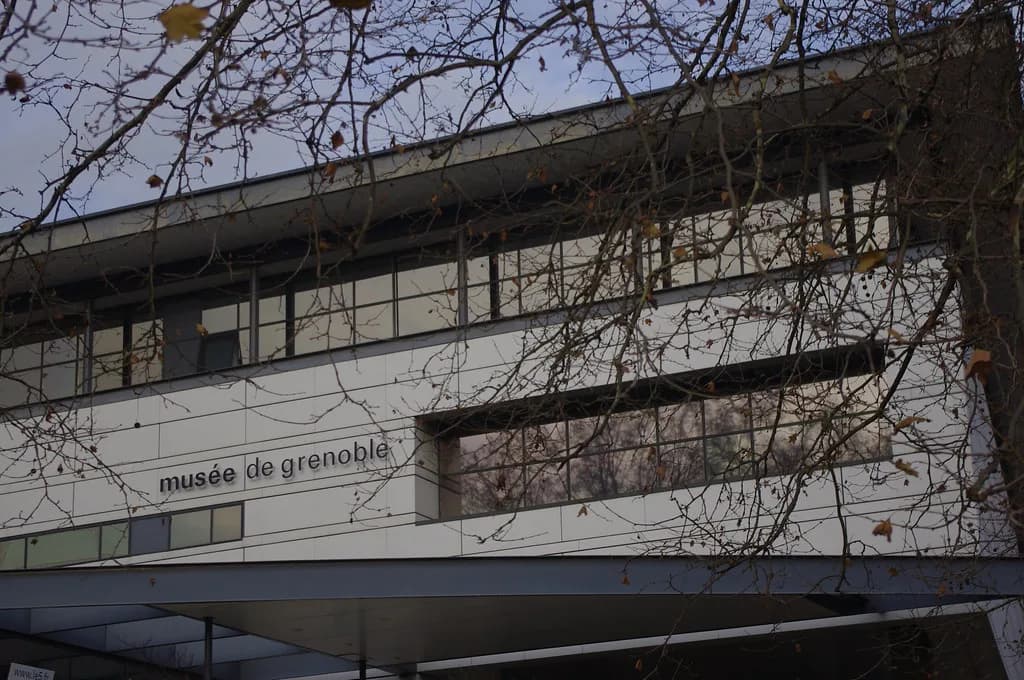
Musée de Grenoble: A Visitor's Guide to the Art Museum
The Musée de Grenoble is the city's big free art museum, sitting on Place de Lavalette on the bank of the Isère. Its permanent collection runs from 13th-century painting to work made in the 2000s, and you can walk the whole thing without buying a ticket. Allow two to three hours if you want both halves of the hang, or about ninety minutes for a highlights run.
The single fact that shapes most visits is the Tuesday closure, so build the day around Wednesday to Monday. The second is that only the main temporary exhibition carries a charge, which changes how you split your time and money.
What the Musée de Grenoble is and why it is worth your time
Founded in 1798, the museum holds one of the richest art collections in France, covering ancient, modern and contemporary work under one roof. Elsewhere in France those periods often sit in separate buildings; here they run through in a single chronological sequence. That makes it unusually efficient for a short break, because you can see a Rubens altarpiece and a Warhol in the same afternoon.
The building itself is modern, purpose-built and opened on its present site in 1994, with glazed rooms, an auditorium, a library, a bookshop and a café-restaurant. The collections amount to roughly 800 paintings and sculptures, displayed in two large sections. Plan around that division rather than trying to see everything in one sweep.
Where the museum is on Place de Lavalette and how to reach it
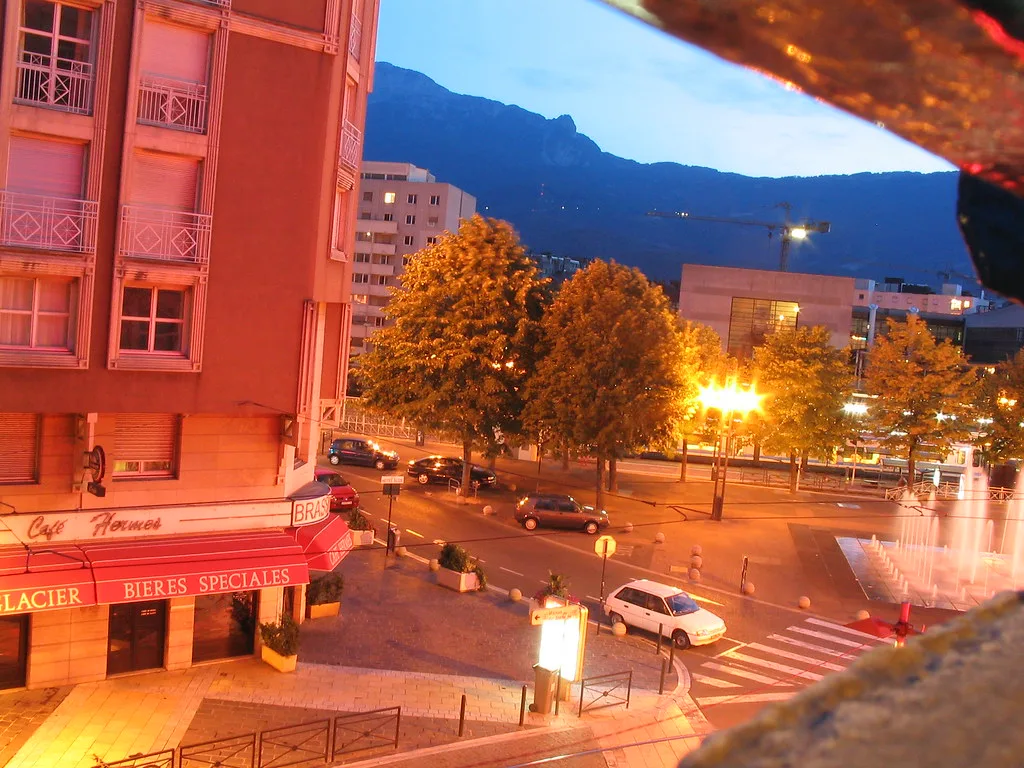
The address is 5, place de Lavalette, on the left bank of the Isère, a short walk from the city centre across the river. It is a straightforward walk from the older quarter and from the Jardin de Ville, Grenoble's central square, which makes it easy to fold into an afternoon.
If you are coming from further out, Grenoble's tram and bus network covers the centre, and the museum is a short walk from the riverside stops. The tourist office lists the museum among the city's main cultural stops, and the museum's own site carries the contact line and access details.
Opening hours, closing day and free entry days
The museum opens daily except Tuesday, from 10am to 6.30pm, and closes on 1 January, 1 May and 25 December. The Tuesday closure is the museum's own rule, so do not assume other Grenoble museums follow it.
Entry to the permanent collections is free for everyone, every day the museum is open. It is also free for all on the first Sunday of each month, along with museum events such as the Nuit des musées and the Journées Européennes du Patrimoine. That first-Sunday rule makes weekends busier, so a midweek morning is the calmer choice if you want the galleries to yourself.
The museum began in 1798 and moved to its riverside home in 1994, and its opening pattern has stayed stable since. If you are travelling on a public holiday, check the museum's site before you set out, because the three closure dates above are the only ones it publishes.
Tickets: permanent collection versus the main temporary exhibition
The permanent collection costs nothing. The main temporary exhibition is the paid element: full price is €14 and a reduced fee is €7 on production of proof, while other temporary exhibitions are free. Budget for one paid show if the programme appeals, and treat the rest of the museum as free.
Free entry applies to under-26s, jobseekers, people on minimum social benefits, disabled visitors plus one companion, and holders of an ICOM card, among others. Reduced rates cover large families, Grenoble City pass holders and SEMITAG season ticket holders. Bring proof of entitlement, because the reduction is not automatic.
Groups of 20 can book a guided visit for €150, available in French, English and Italian. For a solo weekend, the free permanent collection plus one paid show is usually the sensible spend.
How the collections are laid out, room by room through the centuries
The hang is chronological and split into two large sections. The first covers the great European painting schools from the 13th to the 19th century, with 17th-century Flemish, Dutch, Italian and Spanish work as its core. The second runs from 20th-century modern art into contemporary pieces from the 2000s.
Works are numbered by room, so you can navigate by the labels rather than by artist alone. Zurbarán's Annunciation sits in room 8, Rubens's St Gregory in room 2 and Georges de La Tour's St Jerome in room 7. Writing those numbers down before you go saves a lot of back-and-forth.
Ancient painting highlights: Rubens, Georges de La Tour, Zurbarán
Rubens's Saint Gregory the Great with Saints, painted in 1606-07, is the largest format in the museum at 477 by 288 cm. Commissioned for a Roman church that refused it, it hung in the artist's own funerary chapel in Antwerp before reaching Grenoble. It is the anchor of the Flemish room.
Georges de La Tour's penitent Saint Jerome, painted around 1628-30, came to the museum in 1800 from the abbey of Saint-Antoine-en-Viennois. Its single monumental figure against a dark ground shows the Caravaggesque strain in French 17th-century painting. The same room rewards a slow look rather than a quick pass.
Zurbarán's Annunciation of 1638-39, at 266 by 184.5 cm, came from a dismantled altarpiece at Jerez de la Frontera. It arrived as a gift from General de Beylié. Alongside it hangs Fantin-Latour's small engagement still life of 1869, a change of scale worth pausing for.
Modern art: Matisse, Picasso, Chagall, Delaunay
The modern section covers Neo-Impressionism, Fauvism, Cubism and Futurism, with Matisse, Picasso and Chagall among the names on the walls. Matisse's Still Life with Aubergines is the room's headline work, sitting somewhere between still life and landscape.
Picasso's Femme lisant of 1920, a gift from the artist in 1921, fuses classical figure painting with Cubist flatness. Chagall's Le Songe d'une nuit d'été, painted in 1939 and given by the artist in 1951, hangs near Delaunay's La Fenêtre of 1912. Together they make a compact run through the avant-garde.
Nicolas de Staël's Sicile of 1954, bought in 1982, pushes into the later modern period with thick slabs of colour. The collection also holds a substantial drawings cabinet, plus Egyptian and Greek and Roman antiquities. If you like works on paper, ask at the desk which sheets are on show.
Contemporary and graphic art, plus archaeology
The contemporary rooms pick up after 1945 with Soulages, Warhol, Namaan, Boltanski and Schütte, among others. The graphic art collection adds Japanese prints, European etchings and modern lithographs. Because rotation protects light-sensitive paper, prints change over time.
Archaeological material, Egyptian as well as Greek and Roman, sits alongside the paintings rather than in a separate building. That breadth is what makes the museum a half-day rather than a one-room stop.
The Parc Albert Michallon and the sculptures outside
The museum is wrapped by the Parc Albert Michallon, where fifteen 20th-century sculptures stand among medieval remains. Chillida's Zuhaitz of 1989, Venet's Three indeterminate lines of 1992 and Zadkine's Orphée of 1948 are among them. The glazed rooms open onto the park, so the two spaces read as one.
The park is a good way to decompress after the galleries and gives children somewhere to run. Pair it with a walk along the Isère bank back towards the centre.
Facilities: bookshop, library and Café Andry
Inside, the bookshop-boutique opens every day except Tuesday, from 10.30am to 1pm and again from 2pm to 6.30pm. The café-restaurant, Café Andry, has its own street entrance separate from the museum. That makes it useful if you only want lunch and are not visiting the galleries.
The library opens Monday to Friday except Tuesday, from 2pm to 6pm, and a youth reading corner opens on Wednesdays from 2pm to 6pm. If you want quiet time with the catalogue after the rooms, this is the corner for it.
How much time to allow and a sensible visiting order
For a highlights run, give yourself about ninety minutes: rooms 2, 7 and 8 for the ancients, then the modern rooms for Matisse, Picasso and Chagall. If you want both sections properly and a look at the park, plan on a half-day.
A sensible route starts with the ancient section at the top of the chronological hang, works forward in time through the modern galleries, then ends outdoors in the park. If a paid temporary show is on, see it first while your attention is fresh.
Practical trade-offs: Tuesday closure, first-Sunday crowds, exhibition timing
The Tuesday closure is the biggest planning hazard, so build the museum into Wednesday to Monday. The first-Sunday free day pulls a crowd, which can slow the popular rooms. A weekday morning after 10am is the calmer option.
If you are only in Grenoble for a weekend and the paid show is the pull, buy that ticket and treat the permanent rooms as a free bonus. If your interest is the permanent collection, the museum costs you nothing but the time.
Nearby: what to pair with a museum visit on the same day
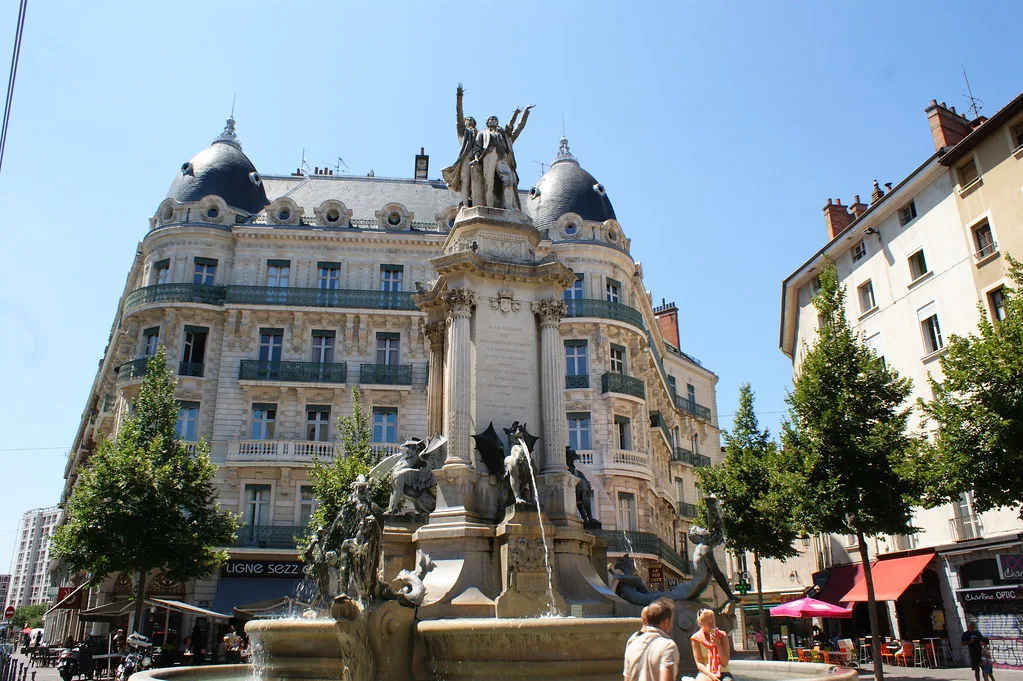
The museum's riverside position makes it easy to pair with the city's central sights. The Jardin de Ville, the cathedral quarter and the riverside walks are all within easy reach. For the full map of what to see, start with these Grenoble Attractions: 6 Visitor Guides.
If you want big views after the galleries, the Téléphérique de Grenoble Bastille climbs to the fort above the city. Pair the museum with the Bastille on a dry afternoon, and read the Fort de la Bastille guide before you go so you know what waits at the top.
Plan Your Visit
Book the museum around its Tuesday closure, keep the first Sunday or a midweek morning in mind depending on whether you want atmosphere or elbow room. The permanent collection is free, so put your money into one paid show if the programme is what draws you.
Round the visit off with the park and the sculptures, then walk back towards the centre. If you need the rest of Grenoble's sights mapped for the weekend, use these Grenoble Attractions: 6 Visitor Guides.
Explore more Grenoble guides
Frequently Asked Questions
Is the Musée de Grenoble free to visit?
The permanent collection is free for everyone on every open day. The main temporary exhibition carries a charge, with a full price and a reduced fee for visitors who bring proof of entitlement. Other temporary exhibitions are free.
What day is the Musée de Grenoble closed?
The museum is closed on Tuesdays. It also closes on 1 January, 1 May and 25 December. Other Grenoble museums follow their own schedules, so check separately if you are planning more than one stop.
How long do you need at the Musée de Grenoble?
Allow about ninety minutes for a highlights run covering the ancient rooms and the modern stars. Give it a half-day if you want both large sections, the archaeology, and a wander through the sculpture park.
What famous paintings are in the Musée de Grenoble?
Rubens's Saint Gregory the Great with Saints and Zurbarán's Annunciation anchor the ancient rooms. Modern highlights include Matisse's Still Life with Aubergines, Picasso's Femme lisant, Chagall's Le Songe d'une nuit d'été and Delaunay's La Fenêtre.
Where is the Musée de Grenoble located?
It sits at 5, place de Lavalette on the left bank of the Isère, a short walk from Grenoble's central squares. The park wraps around the building and is free to wander.
Can you visit the park and sculptures without a ticket?
The Parc Albert Michallon is outside the galleries and open to walkers. It holds fifteen 20th-century sculptures alongside medieval remains. The museum's own site is the place to confirm any temporary closures of the grounds.
Do you need to book tickets in advance?
The permanent collection does not need a ticket, so there is nothing to book for the main galleries. For the paid temporary exhibition, buy on arrival or online through the museum's own ticketing page, which lists current prices and any time slots.
How do you get to the Musée de Grenoble from the centre?
Walk across the Isère from the old town, which takes around fifteen minutes at an easy pace. Trams and buses serve the centre, and the museum's site gives the contact details if you want to check access before travelling.